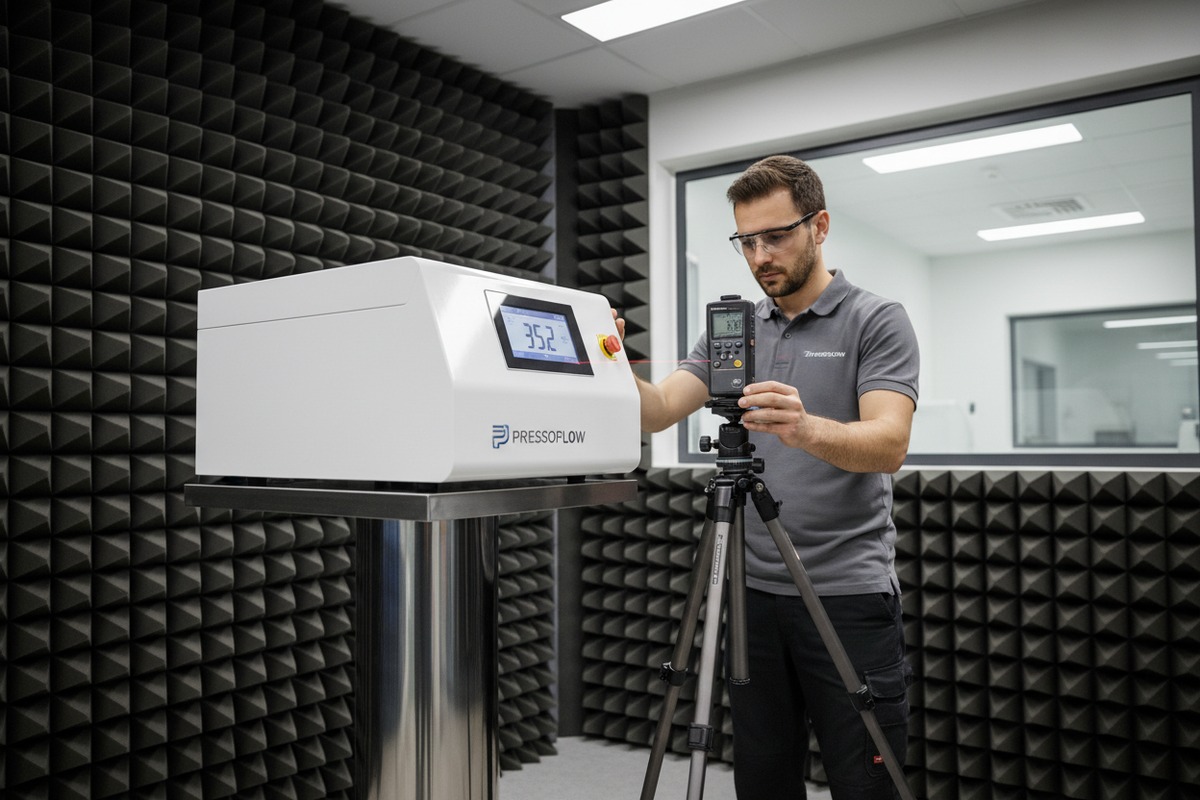
Loud, buzzing air pumps turn a relaxing lymphatic drainage session 1 into a stressful experience for your clients. We have seen how high noise levels lead to negative reviews and returned units in our production facility formal acoustic test report 2. You need a solution that ensures quiet operation without sacrificing pressure power.
To verify noise levels, request a formal acoustic test report specifying dBA at 1 meter. Demand data for various pressure settings (e.g., 200 mmHg) and modes. A reputable supplier should provide certifications like CE or ISO that include noise testing protocols under full load.
Sourcing from overseas requires a structured approach to communication sound level meter 3. Use these steps to ensure you get accurate data from your beauty machine manufacturer.
How do I ask my supplier for a formal decibel test report to verify the air pump's noise level?
In our experience exporting to the US, many buyers accept verbal promises that a machine is "silent." However, when we calibrate our systems, we rely on hard data rather than adjectives. You must demand proof that matches clinical standards to protect your brand.
Request a formal laboratory noise test report using a calibrated sound level meter. The report must state the ambient noise level, the distance from the pump (standard is 1 meter), and the specific operating pressure. This ensures the 45dB claim is actually verified, not guessed.

Understanding the Technical Validity of Reports
When you ask for a report, do not settle for a screenshot of a mobile app. Professional manufacturers use semi-anechoic chambers 4 to test their equipment. You should ask the supplier if their testing follows ISO 3744 5 or ISO 3745 standards. These standards define exactly how to measure sound power levels.
A legitimate report will include a "Background Noise" or "Ambient Noise" reading. If the room noise is 35 dB and the machine is 45 dB, the delta is clear. If the report does not mention background noise, the data might be fabricated or unprofessional.
Key Elements to Look for in the Document
A professional test report is more than just a single number. It should show a spectrum analysis. This helps you understand if the noise is a low-frequency hum or a high-frequency whistle. High-frequency noises are much more annoying to patients during a 45-minute treatment.
| Report Feature | Why It Matters | What to Look For |
|---|---|---|
| Test Distance | Sound drops over distance. | Must be 1 meter (standard). |
| Operating Load | Pumps get louder under pressure. | Should be tested at 200+ mmHg. |
| Calibration Date | Ensures the meter is accurate. | Must be within the last 12 months. |
| Ambient Noise | Prevents skewed results. | Should be at least 10 dB lower than the machine. |
Red Flags in Supplier Documentation
If a supplier tells you that the noise report is "confidential" or "internal only," they likely do not have one. Another red flag is a report that shows exactly 40.0 dB for every test. Real-world testing always shows slight variations. Ask for the raw data sheets if you suspect the PDF has been edited. In our factory, we provide these documents openly to build trust with our OEM partners.
What specific questions should I include in my RFQ to ensure the pressotherapy machine operates quietly?
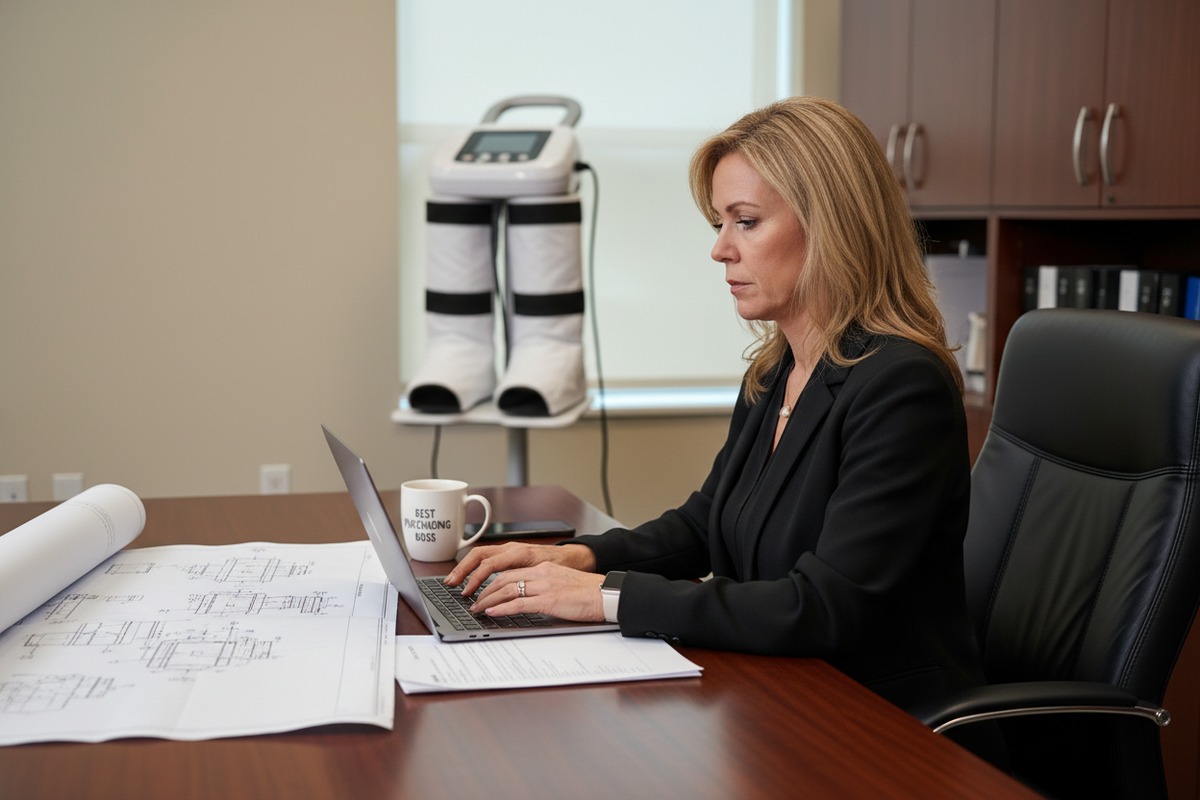
A vague RFQ leads to vague answers. In our export office, we notice that the most successful buyers ask extremely technical questions upfront to filter out low-quality factories. You need to pin the supplier down on specific engineering details before you send a deposit.
Include questions about the pump type (diaphragm vs. piston), vibration-damping materials, and dB ratings at maximum pressure. Ask if the noise level increases during the "inflation spike" and whether the housing uses acoustic foam to suppress sound. Specificity prevents suppliers from hiding behind vague marketing terms.
Investigating Pump Engineering
The heart of any pressotherapy machine is the air pump. Not all pumps are created equal. You should ask: "Is the pump a diaphragm-type or a piston-type?" Generally, high-quality diaphragm pump 6s are quieter and produce less vibration. Ask if the pump is suspended on rubber mounts (shock absorbers) or bolted directly to the frame. Direct bolting causes the entire machine case to vibrate, acting like a speaker.
Questions About Sound Insulation
Even a quiet pump makes some noise. The difference between a mid-range and a high-end machine often lies in the casing. Ask the manufacturer: "Do you use sound-absorbing cotton or acoustic foam 7 inside the shell?" Also, ask about the thickness of the ABS plastic housing. Thicker walls dampen sound better than thin, cheap plastic.
Performance Under Load
Pressotherapy machines often claim to be quiet when they are just idling. The real test is when they hit 200 mmHg or higher. Your RFQ should include this table or a similar list of questions:
| RFQ Question | Technical Reason | Preferred Answer |
|---|---|---|
| What is the dB at 240 mmHg? | Peak load noise is most critical. | Below 50 dB. |
| Is the pump oil-free? | Oil-free pumps are cleaner and quieter. | Yes. |
| Are there internal silencers? | Exhaust air makes a "hissing" noise. | Yes, on all exhaust valves. |
| What is the pump's RPM? | Lower RPM usually means lower noise. | Variable/Low speed. |
Asking for a Component Breakdown
Don't be afraid to ask for photos of the internal structure. A professional supplier who is proud of their engineering will show you the copper-core pump and the vibration pads. If they refuse to show the interior, they may be using a generic, loud industrial pump that wasn't designed for a medical or spa environment.
How can I request a live noise level demonstration from the factory during my pre-shipment inspection?
Videos can be edited, but a live call reveals everything. We often walk our clients through the production floor via WhatsApp to show our quality control in real-time. This level of transparency is essential when you are thousands of miles away and cannot visit the factory yourself.
Request a live video call during the pre-shipment inspection. Ask the inspector to place a digital decibel meter one meter from the machine while it runs at 240 mmHg. This live verification prevents the factory from sending a quieter "golden sample" instead of your actual order.

Setting Up the Live Test Environment
To get an accurate reading during a live call, you must control the environment. Tell the supplier to move the machine to a quiet office or a dedicated testing room. A busy factory floor with 80 dB of background noise will make it impossible to hear the machine. Ask them to show you the decibel meter's reading before they turn the machine on. This establishes the "base noise" of the room.
Observing the Machine's Behavior
During the live demo, don't just look at the meter. Watch the machine on the table. Does it vibrate or "walk" across the surface? If the machine is vibrating heavily, it will be loud when placed on a spa trolley. Ask the technician to cycle through all modes. Sometimes Mode A (Wave) is quiet, but Mode C (Intense) is loud because the valves are opening and closing rapidly.
Verification Tools and Apps
If the supplier claims they don't have a decibel meter, tell them to download a reputable sound meter app on a second smartphone. While not as accurate as a $500 professional tool, it provides a relative comparison. Have them place the phone 1 meter away. If the app shows 45 dB and their marketing says 45 dB, you are likely safe.
Key Steps for a Successful Live Demo:
- Check Ambient Noise: Ensure the room is quiet (below 40 dB).
- Verify Distance: Use a ruler or measuring tape to show the 1-meter distance on camera.
- Test Max Pressure: Run the machine at its highest possible setting (usually 240 mmHg).
- Check All Ports: Ensure noise doesn't spike when the air switches between different chambers (e.g., from legs to waist).
What noise decibel standards should I demand when private-labeling a high-end pressotherapy system?
High-end systems require high-end silence. When we develop custom ODM projects for US brands, noise is often the top performance metric requested by purchasing managers. If you are building a premium brand, you cannot afford to have a "budget-sounding" machine in a $150-per-hour treatment room.
Demand a standard of under 45 dB for premium home systems and under 50-55 dB for high-output clinical models. Ensure these standards are written into your Quality Agreement. Standards should cover both the steady-state operation and the peak noise during rapid chamber switching.

Benchmarking Against Industry Standards
In the world of beauty equipment, 45 dB is considered "whisper quiet." This is roughly the level of a quiet library. If your machine operates at this level, it will be almost imperceptible over the ambient music in a spa. For professional, heavy-duty machines that need to fill 44+ air bags, 50-55 dB is acceptable. Anything over 65 dB is considered industrial and will lead to customer complaints in a clinical setting.
Noise vs. Power Trade-off
It is a common myth that a powerful pump must be loud. In reality, noise is usually a byproduct of friction and poor air management. High-end machines use brushless motors and electronic valves that switch smoothly. When you negotiate your private-label specs, specify that the machine must maintain its dB rating even when all 24 or 44 chambers are active.
| Usage Environment | Target dB (at 1m) | Maximum Allowable dB |
|---|---|---|
| Home Recovery | 40 – 45 dB | 48 dB |
| Luxury Spa / MedSpa | 45 – 50 dB | 55 dB |
| Physiotherapy Clinic | 50 – 55 dB | 60 dB |
| Portable / Battery Powered | 42 – 47 dB | 50 dB |
Writing Noise Limits into Your Contract
To protect your investment, include a "Noise Ceiling" clause in your purchasing agreement. For example: "Any unit exceeding 55 dB at 1 meter under 200 mmHg load shall be considered defective." This gives you legal leverage during the inspection phase. In our company, we incorporate these thresholds into our final quality control checklists for every batch.
Future-Proofing Your Brand
As the home wellness market grows, customers are becoming more sensitive to noise. By 2026, we expect stricter regulations regarding acoustic labeling for medical and beauty devices. By demanding low decibel ratings now, you are future-proofing your product line against upcoming consumer protection standards and competitors who are still selling noisy, outdated models.
Conclusion
Professional sourcing requires technical noise verification to protect your brand reputation and ensure clinical success. Always prioritize verified data and live demonstrations over vague marketing promises to secure a quiet, high-performing system.
Footnotes
1. Explains the purpose and benefits of lymphatic drainage massage. ↩︎
2. Defines acoustic testing and the role of a formal acoustic report. ↩︎
3. Found a working URL from Wikipedia, a widely accepted informational source, providing a comprehensive overview of a ‘sound level meter’. ↩︎
4. Explains the specialized environment used for precise acoustic testing. ↩︎
5. Provides details about the international standard for sound power level measurement. ↩︎
6. Provides information on the working principle and characteristics of diaphragm pumps. ↩︎
7. Explains the properties and use of acoustic foam for sound dampening. ↩︎
8. Defines the purpose and components of a Quality Agreement in manufacturing. ↩︎


 English
 Español de México
 Deutsch
 Français
 العربية
 Русский
Join the Conversation
Have a question or insight to share? We read every comment — whether you're a distributor, salon owner, or just curious about the technology. Your real-world experience helps others make better decisions. Drop your thoughts below.