
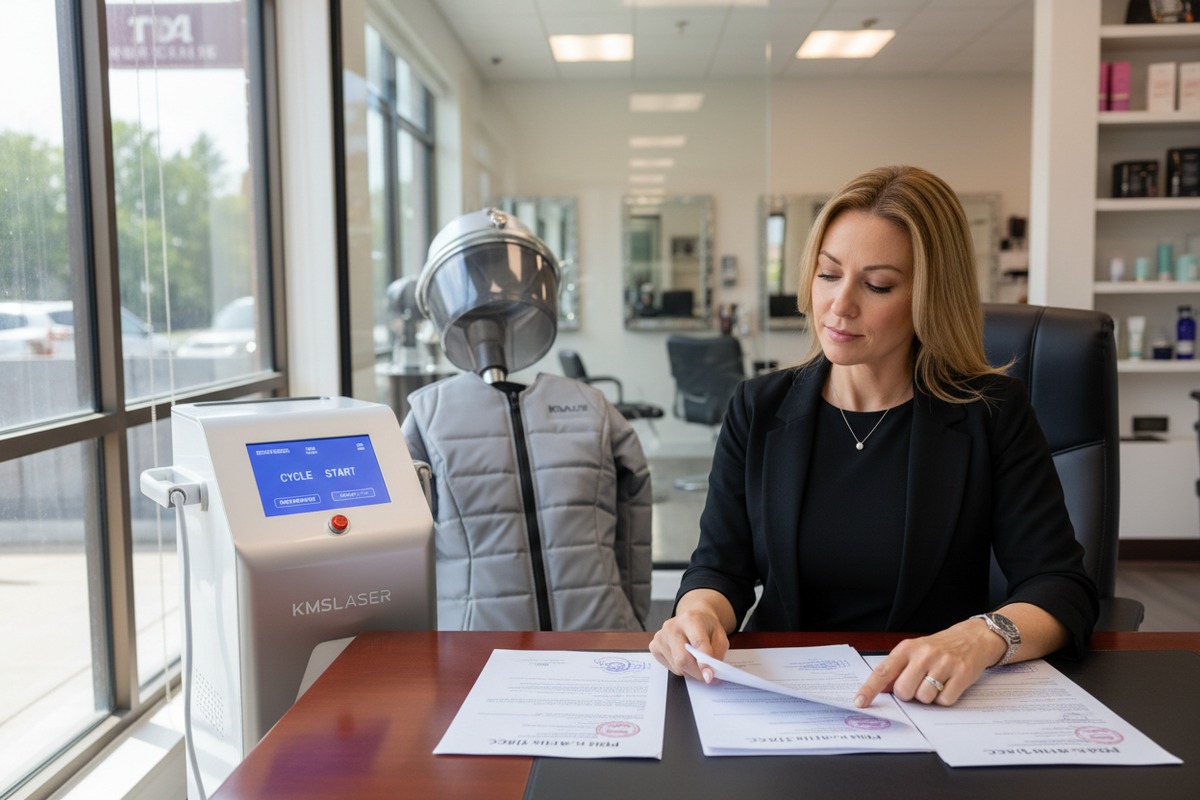
Every week, our customer service team fields calls from U.S. importers confused by conflicting claims about FDA requirements for pressotherapy equipment. Some suppliers promise “FDA approved” devices. Others show registration certificates. The confusion often leads to costly customs delays and compliance headaches.
When buying a pressotherapy machine for the US market, buyers must verify the device has valid FDA 510(k) clearance if classified as Class II, confirm the foreign manufacturer’s establishment registration with a designated US agent, and ensure proper device listing under 21 CFR Part 807—registration alone does not guarantee device safety or efficacy.
This guide breaks down the exact FDA requirements you need to understand before importing pressotherapy equipment. We will cover clearance versus registration, verification methods, OEM responsibilities, and customs documentation.
How do I determine if my pressotherapy machine requires FDA 510(k) clearance or just facility registration?
When we develop new pressotherapy models at our facility, the first question our regulatory team addresses is classification. This single determination shapes the entire compliance pathway. Many buyers assume all pressotherapy devices follow the same rules. They do not.
Pressotherapy machines typically fall under Class II medical devices, requiring FDA 510(k) premarket notification to demonstrate substantial equivalence to a predicate device. Class I exempt devices only need facility registration and listing. The device's intended use and risk level determine which pathway applies—contact FDA directly if classification is unclear.

Understanding FDA Device Classification
Class I includes devices with the lowest risk and Class III includes those with the greatest risk. For pressotherapy machines, classification depends on the device's intended use, features, and potential risks.
Class I or low risk devices are subject to so called general controls 1, such as current good manufacturing practices based upon a quality system, device registration and listing, premarket notification, and other basic regulatory tools. Class II or moderate-risk devices such as magnetic resonance imaging scanners or intravenous medication infusion pumps necessitate pre-market notification and require special controls 2 such as meeting FDA-recognized performance standards or certain post-market surveillance requirements.
The Critical Difference: Registration vs. Clearance
| Requirement | FDA Registration | FDA 510(k) Clearance 3 |
|---|---|---|
| What it means | Facility is recorded in FDA database | Device reviewed for safety/efficacy |
| Safety evaluation | No | Yes |
| Required for | All manufacturers/importers | Most Class II devices |
| Annual fee (FY 2026) | $11,423 | Separate submission fee |
| Processing time | Days | 142-180 days average |
Any establishment involved in the production, importation, reprocessing/relabeling, or developing specifications of a medical device or IVD for commercial sale in the United States must register annually with the US Food and Drug Administration. This is called "Establishment Registration 4" and it is a separate process from obtaining 510(k) clearance or PMA approval.
Key Indicators Your Device Needs 510(k)
Each person who wants to market in the U.S., a Class I, II, and III device intended for human use, for which a Premarket Approval application (PMA) 5 is not required, must submit a 510(k) to FDA unless the device is exempt from 510(k) requirements.
A 510(k) is a premarket submission made to FDA to demonstrate that the device to be marketed is as safe and effective, that is, substantially equivalent. Submitters must compare their device to one or more similar legally marketed devices and make and support their substantial equivalence claims.
Ask yourself:
- Does the device make medical claims for lymphatic drainage or edema treatment?
- Does it include advanced software for treatment protocols?
- Is it marketed for clinical or medical use?
If yes, 510(k) clearance is almost certainly required.
What 510(k) Exempt Means
Some medical devices are not required to undergo the traditional 510(k) submission process to obtain clearance from the FDA before marketing in the US. Devices that are considered low risk typically have well established safety profiles and do not present significant risks to patients; these devices may qualify for exemption.
If the device is exempt from submitting a 510(k), it still needs to comply with applicable regulatory requirements in accordance with FDA guidelines, such as medical device labeling 6, good manufacturing processes (GMPs), quality systems, and post-market surveillance.
How can I verify that my Chinese manufacturer's FDA registration is valid for the specific pressotherapy models I'm importing?
In our experience exporting to the US market, verification confusion causes more shipment delays than any other issue. Buyers often accept registration certificates at face value without checking the actual FDA database. This mistake can leave products stranded at customs.
To verify a Chinese manufacturer's FDA registration validity, search the FDA Establishment Registration database using the firm name or registration number, then cross-reference by requesting the Device Listing Number directly from the manufacturer—this number links specific models to the registered facility and confirms proper listing under 21 CFR Part 807.

Step-by-Step Verification Process
When an entry is transmitted to the FDA, we verify that the declared manufacturer and shipper are registered with the FDA by comparing the submitted information with CDRH's establishment registration and listing database. We also use CDRH's data system to verify that the declared importer is registered.
Your verification should follow this same process:
- Check establishment registration: Use FDA's online database to confirm the manufacturer is currently registered
- Request listing number: You may search the medical device registration and listing database for registration information for any medical device firm that is registered with the FDA. In order to obtain the listing number, you will have to contact the firm that listed the device.
- Verify 510(k) clearance: Search the FDA 510(k) database for the specific device
What to Request from Your Supplier
| Document | Purpose | Where to Verify |
|---|---|---|
| Registration Number | Confirms facility is registered | FDA Establishment Database |
| Device Listing Number | Links specific products to registration | Request from manufacturer |
| 510(k) Clearance Letter | Proves device cleared for market | FDA 510(k) Database |
| US Agent 9 Information | Required for foreign manufacturers | FDA Registration Records |
| Product Code | Identifies device classification | FDA Product Classification Database |
Foreign Manufacturer Requirements
The official correspondent for the foreign establishment shall facilitate communication between the foreign establishment's management and representatives of FDA for matters relating to the registration of device establishments and the listing of device products. Each foreign establishment required to register shall submit the name, address, and phone number of its United States agent as part of its initial and updated registration information. Each foreign establishment shall designate only one United States agent and may designate the United States agent to act as its official correspondent.
All medical device firms outside the U.S. must appoint a U.S. agent as the FDA's primary point of contact.
Consequences of Non-Verification
If the information submitted matches the CDRH establishment registration and listing database, then compliance is verified; if the information does not match, the FDA may gather additional information or may detain the product. If a firm lacks the required registration and listing, the product will be subject to refusal.
Registration vs. Listing: Why Both Matter
Registered establishments must list each of their medical devices individually through the FDA Device Listing process before distributing them commercially in the U.S. market. Without a valid establishment registration and device listing number, medical devices cannot be legally marketed in the United States.
If I use an OEM service to private-label my pressotherapy machines, what are my responsibilities for FDA listing?
Our team works with many US brands who want their name on pressotherapy equipment. They often assume the Chinese manufacturer handles all FDA obligations. This is partially true—but critical responsibilities fall on the US brand owner.
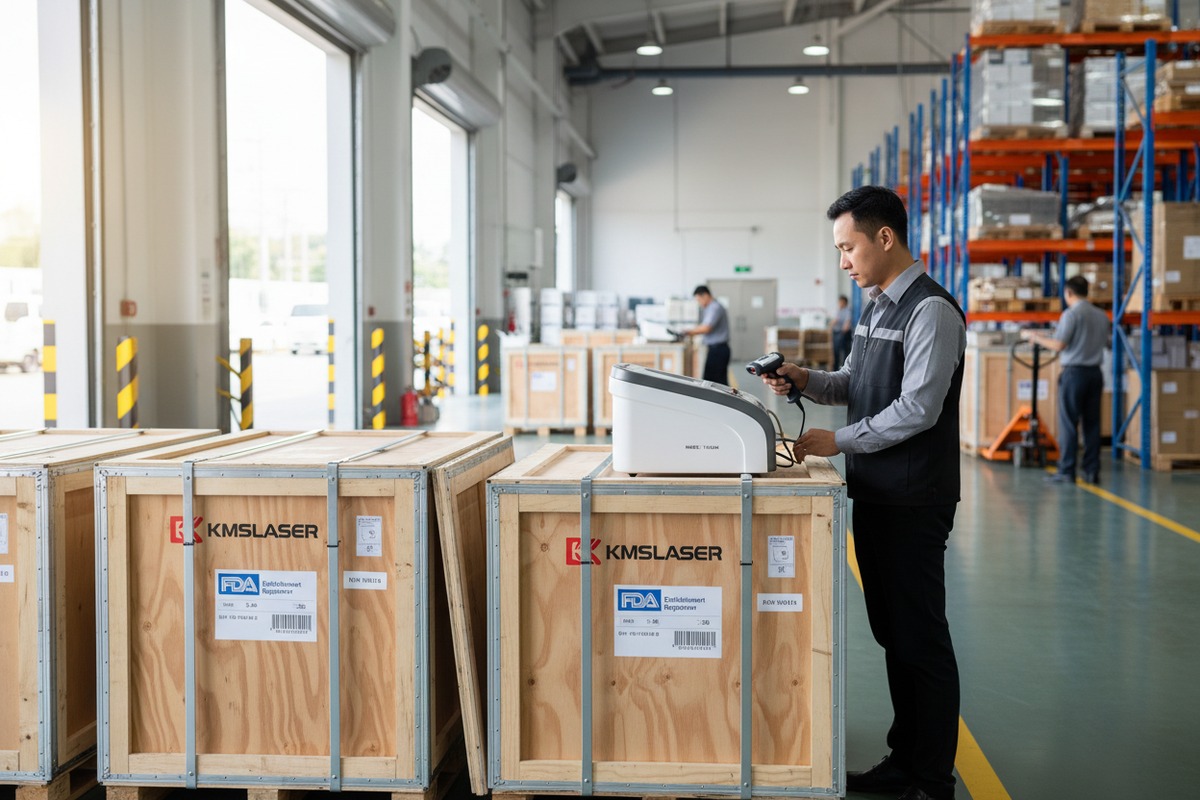
When private-labeling pressotherapy machines through OEM service, you must ensure all brand names appear in the FDA device listing, comply with UDI labeling requirements as the "labeler" since your name is on the product, and establish a quality agreement specifying complaint handling and recall responsibilities—the original manufacturer retains 510(k) holder obligations.
How Private Label Arrangements Work with FDA
There is no formal process for "getting a private label." The entire private label process is negotiated between the distributor and the OEM with no involvement of the FDA. However, in the listing of devices within the FDA FURLS database, all brand names of the device must be identified.
Your Responsibilities as a Private Label Distributor
| Responsibility | Your Obligation | Manufacturer's Obligation |
|---|---|---|
| 510(k) Clearance | Verify exists | Submit and maintain |
| Brand Name Listing | Ensure listed in FURLS | Submit listing with all names |
| UDI Compliance | Assign DI portion | Apply UDI to labels |
| Complaint Handling | Forward to manufacturer | Investigate root cause |
| Recall Execution | Cooperate | Execute and report |
| FDA Inspections | Limited exposure | Primary establishment |
Quality Agreement Essentials
The quality agreement must specify which company is responsible for complaint handling and medical device reporting. In this situation, the OEM is the specification developer, as defined by the FDA. Therefore, the OEM will be responsible for reporting and execution of recalls. Therefore, even if the distributor with a private label agreement is identified as the "complaint file establishment," the OEM will still need to obtain copies of the complaint information from the distributor, and determine if medical device reporting and/or corrections and removals are required.
Labeling Options and Their Implications
The manufacturer outside the USA may decide to label the product as a) "Manufactured by", b) "Manufactured for", or c) "Distributed by." Options "b" and "c" would list the importer's name, while option "a" would list the manufacturer's name. This situation often occurs when US companies want to be the distributor for a product made outside the USA, and the company wants a private labeled product. This also happens when the OEM wants the option to have multiple US distributors.
UDI Requirements for Private Label Products
If you're labeling a private label medical device, you are still responsible for ensuring that the UDI is properly applied and that all GUDID submissions reflect accurate data.
Since the distributor's name is on the product, the distributor will need to assign the "DI" portion of the UDI number.
What You Don't Need to Do
Private label distributors are not "manufacturers" subject to FDA regulation and are not required to register with FDA under 21 C.F.R. Part 807. The private label distributor does not own the 510(k), is not the specification developer, does not repackage or relabel, and does not manufacture the product.
However, private label agreements and OEM relationships should be reviewed carefully to determine which party is responsible for listing under FDA rules.
What specific FDA documentation must I provide to ensure my pressotherapy shipment clears US customs without delays?
When we ship pressotherapy equipment to US customers, documentation determines whether products clear in days or sit in customs for weeks. Getting this right requires understanding exactly what CBP and FDA verify at the point of entry.
To clear US customs without delays, provide the foreign manufacturer's FDA Registration Number, Device Listing Number, 510(k) clearance number (if applicable), correct FDA Product Code, and Affirmation of Compliance codes in your entry filing—CBP transmits this data to FDA, which cross-references against internal databases before releasing shipments.

What FDA Verifies at Import
At the time of importation, the FDA will verify compliance with the following requirements as applicable. The FDA conducts field examinations and analyzes samples of medical devices to ensure they comply with applicable standards and/or label requirements. The FDA checks the import alert database to ensure the manufacturer or product is not subject to detention without physical exam (DWPE) and listed on an import alert.
The FDA entry reviewers are trained to verify compliance with applicable product requirements using the information provided to the FDA in the importer's entry transmission. These entry declarations are compared to information in the FDA's internal data systems. The FDA uses the internal data systems to verify registration, listing, device approval (when required) or other product requirements.
Required CBP/ACE Filing Elements
An ACE filer must submit the following information at the time of filing entry in ACE for medical devices regulated by the FDA Center for Devices and Radiological Health. Registration and listing. For a medical device, the Registration Number for Foreign Manufacturers, Foreign Exporters, and/or Domestic Manufacturers, and the Device Listing Number, required under section 510 of the Federal Food, Drug, and Cosmetic Act and part 807.
| Required Data Element | Description | Source |
|---|---|---|
| Registration Number | Foreign manufacturer's FDA registration | Manufacturer |
| Device Listing Number | Specific product listing | Manufacturer |
| FDA Product Code | Alphanumeric device identifier | FDA database |
| 510(k) Number | Premarket clearance reference | FDA 510(k) database |
| Affirmation of Compliance Codes 10 | Compliance descriptors | FDA AOC list |
| Country of Production | Where device was manufactured | Shipping documents |
Affirmation of Compliance (AOC) Codes
FDA requires importers report the Affirmation of Compliance (AOC) code for all imports of medical devices, whether or not they are finished devices. The AOC is a descriptive data element that identifies specific information FDA requires to determine clearance, release from custody and entry of an imported item. FDA provides an online list of all AOC codes to help importers determine the correct AOC to report.
Initial Importer Registration Requirements
Foreign Establishment: Prior to importing device to United States for first time. Initial Importer: Prior to importing device to United States for first time—Only register; do not list device—Identify manufacturer of each imported device. If not done, FDA will work with Customs and Border Patrol to detain and hold shipment.
With the exception of Initial Importer, FDA also requires registered establishments to list the devices. An initial importer who is responsible for furthering the marketing of a device entering the US from a foreign manufacturer to the final distributor for sale of the device to the ultimate consumer or user must register their establishment, but is not required to list the devices.
Common Causes of Customs Delays
All medical device import entries undergo automated FDA review checking registration status, device listing, and compliance history. FDA uses risk-based criteria to select entries for enhanced review or physical examination.
Avoid these common errors:
- Registration number mismatch with FDA database
- Missing or incorrect device listing number
- Wrong product code assignment
- Expired registration (not renewed for current fiscal year)
- Import alert on manufacturer or product
Working with Customs Brokers
Work closely with a customs broker who is experienced in medical device imports. Ensure that all customs documentation is complete and accurate.
Most importers hire licensed customs brokers to facilitate the importation process and ensure accurate documentation and compliance. Importers remain ultimately responsible for compliance regardless of broker involvement and must provide accurate information and documentation.
Conclusion
Understanding FDA requirements before purchasing pressotherapy machines protects your business from costly delays and compliance failures. Verify 510(k) clearance for Class II devices, confirm manufacturer registration and listing, establish clear OEM agreements, and prepare complete customs documentation.
Footnotes
1. Official FDA information on general controls applicable to all medical devices. ↩︎
2. FDA’s official description of special controls for Class II medical devices. ↩︎
3. Official FDA page explaining the 510(k) premarket notification process for medical devices. ↩︎
4. FDA’s official guidance on who must register and list medical device establishments. ↩︎
5. Official FDA page detailing the Premarket Approval (PMA) process for Class III medical devices. ↩︎
6. FDA’s comprehensive guide to general labeling requirements for medical devices (21 CFR Part 801). ↩︎
7. FDA’s official definition and regulatory controls for Class II medical devices. ↩︎
8. Replaced HTTP 404 with an authoritative FDA page explaining predicate devices in the context of 510(k) submissions. ↩︎
9. Replaced HTTP 404 with the official FDA page detailing requirements and responsibilities of U.S. Agents for foreign establishments. ↩︎
10. FDA’s official explanation of Affirmation of Compliance codes for imported products. ↩︎

 English
 Español de México
 Deutsch
 Français
 العربية
 Русский
