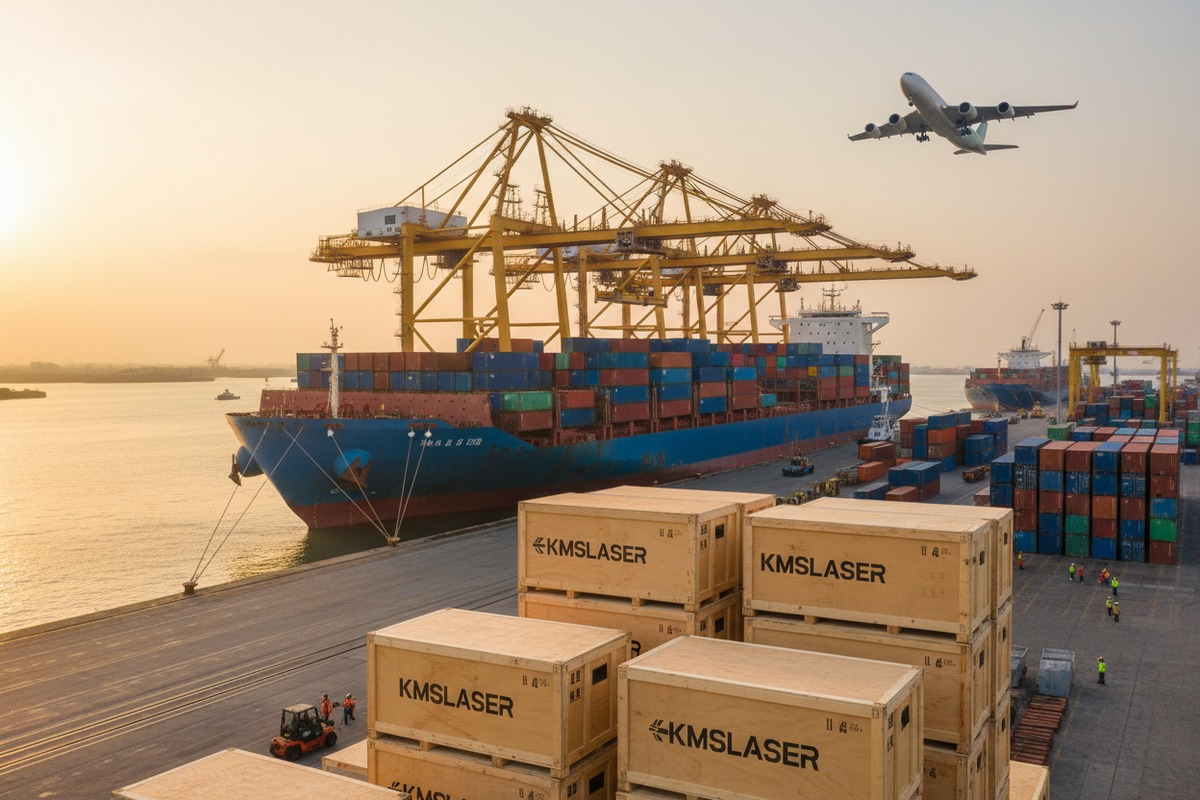
When we finalize a large order for our professional pressotherapy systems 1, the excitement of the sale often hits a wall when our clients see the shipping quote. I recall a recent conversation with a salon owner in California who nearly cancelled her project because the air freight quote for 20 units was higher than the manufacturing cost of the machines themselves Total Landed Cost 2. This is a common pain point we solve daily at our factory. While speed is addictive, the economics of shipping bulky beauty equipment requires a strategic approach to protect your profit margins.
Sea freight is generally more cost-effective than air freight for sourcing pressotherapy machines from China, especially for shipments over 100-200 kg or with volumes exceeding 1-2 cubic meters, due to per-kg costs dropping below $0.50 via ocean versus $4-12 via air.
To help you make the right logistical decision for your business, let’s break down the real numbers and operational realities behind these two shipping methods.
How do I compare the total landed cost of air versus sea freight for my pressotherapy machine orders?
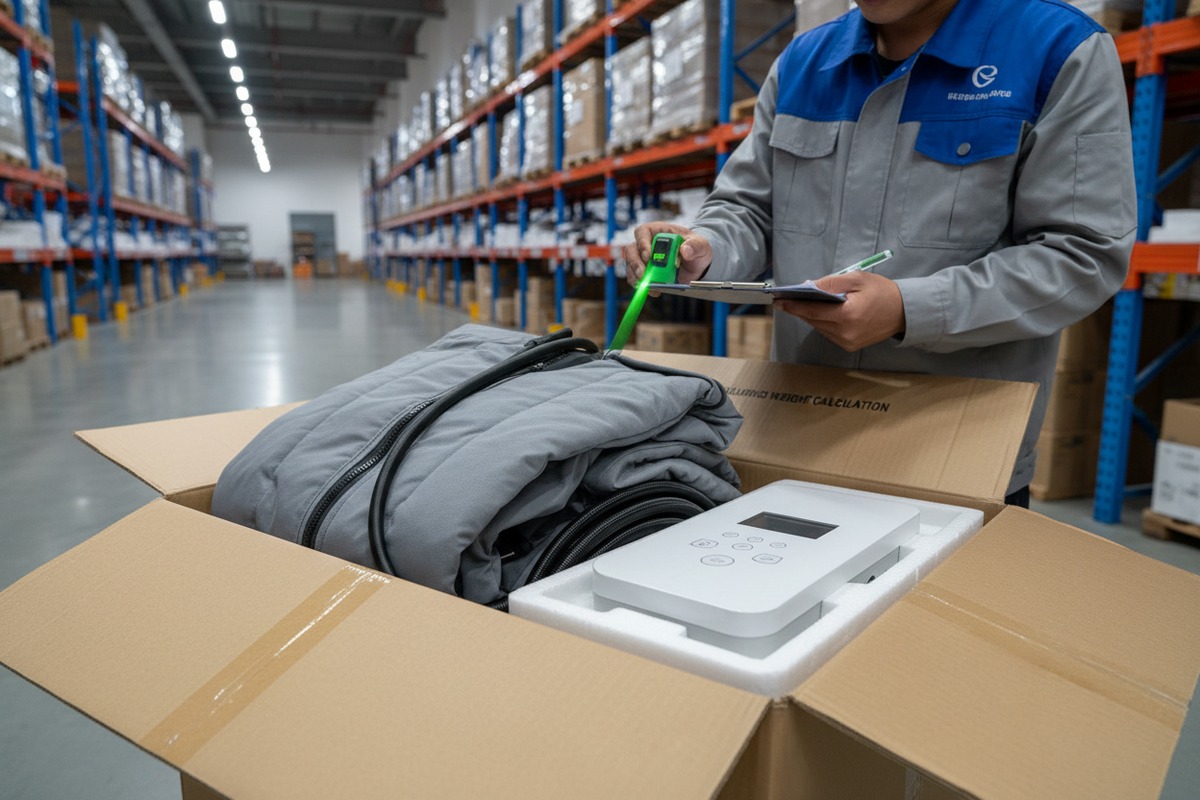
We frequently analyze shipping invoices with our purchasing partners to find the “sweet spot” for order volume rolling inventory forecast 3. In our experience helping distributors stock up for the holiday season, the math changes drastically once an order moves from a sample size to a pallet. We often see clients shocked by the concept of “volumetric weight 4,” which disproportionately affects pressotherapy devices due to their size relative to their weight.
Comparing total landed cost requires calculating the chargeable weight, where air freight penalizes the bulky nature of pressotherapy machines, often resulting in shipping fees that are 10 to 20 times higher than sea freight per unit. While air freight is viable for samples, sea freight is essential for bulk orders to keep logistics costs under 15% of the total product value.

Understanding the "Bulky Cargo" Penalty
When we manufacture pressotherapy machines, we deal with a unique physical profile moisture-barrier bags 5. The main console is compact, but the accompanying compression suits, air hoses, and blankets add significant volume without adding much weight. In the logistics world, this is a recipe for high air freight costs Cargo Insurance 6.
Air carriers charge based on the greater of actual weight or volumetric weight. For a standard pressotherapy unit, the actual weight might be 15 kg, but the box dimensions (e.g., 50x45x40 cm) create a volumetric weight that is much higher.
- Air Freight Formula: Length x Width x Height (cm) / 5000 or 6000.
- Sea Freight Formula: Charges are often based on Cubic Meters (CBM), not weight, for LCL (Less than Container Load) 7.
This difference means that for air freight, you are paying for "empty air" inside the box and the suit packaging. For sea freight, you are paying for the space on the ship, which is significantly cheaper.
The Landed Cost Breakdown
To truly compare the costs, we cannot just look at the freight rate. We must look at the Total Landed Cost. This includes the factory price (EXW), inland trucking to the port, export fees, freight, insurance, destination charges, and tariffs.
Below is a breakdown based on a typical 20-unit order of our standard pressotherapy systems going to the US West Coast.
Table 1: Cost Comparison for 20 Units (Approx. 2 CBM / 300kg)
| Cost Component | Air Freight (Door-to-Door) | Sea Freight (LCL – Shared Container) | Sea Freight (FCL – Full Container*) |
|---|---|---|---|
| Freight Rate | ~$5.00 – $8.00 / kg | ~$150 – $300 / CBM | Flat rate per container |
| Chargeable Weight | Based on Volume (~400kg vol. wt.) | Based on Volume (2 CBM) | N/A (Pay for whole box) |
| Est. Shipping Cost | $2,000 – $3,200 | $300 – $600 | ~$3,000 (total for huge capacity) |
| Destination Fees | Included in DDP usually | High warehouse/unloading fees | Lower per-unit fees |
| Transit Time | 5 – 8 Days | 25 – 40 Days | 20 – 35 Days |
| Cost Per Unit | +$100 – $160 | +$15 – $30 | <$5 (if container filled) |
Note: FCL is only viable if you are ordering 100+ units or mixing with other beauty equipment. FCL (Full Container Load) 8 For 20 units, LCL is the standard sea option.
The Profit Margin Impact
If you are selling these machines to salons for $1,500, adding $160 in air freight eats over 10% of your gross revenue 9 immediately. By switching to sea freight, that cost drops to roughly $30, saving you $130 per unit. On a 20-unit order, that is $2,600 in pure profit saved.
We always advise our clients: Use air freight for the initial sample to test quality. Once you validate the machine, move immediately to sea freight for stock orders. The only exception is if you have a pre-sold unit to a desperate customer who is willing to pay the premium.
Will the longer lead times of sea freight negatively impact my inventory and salon customer relationships?
We know that in the beauty industry, a “sold out” notice can send your customers running to a competitor. When we coordinate production schedules with our US distributors, the biggest anxiety is the gap between payment and delivery. Managing expectations is crucial, but we have found that the perceived risk of longer sea transit is often exaggerated if the supply chain is managed correctly.
The longer lead times of sea freight will not negatively impact your relationships if you utilize a rolling inventory forecast to order 60 days in advance. While air freight offers speed, the significant cost savings of sea freight allow you to invest in a larger buffer stock, ultimately ensuring better availability for your salon customers than relying on expensive, reactive air shipments.
The Trade-off: Speed vs. Capital Efficiency
It is true that sea freight takes longer. A shipment from our factory in Guangzhou to a warehouse in Los Angeles can take 25 to 35 days on the water, plus time for customs clearance and final delivery. Air freight takes about 7 days.
However, relying on air freight to fix poor planning is an expensive habit. The fear of "stockouts" often drives purchasing managers to overspend on logistics. We recommend a different approach: Reinvest the shipping savings into inventory.
If you save $2,600 on shipping for a 20-unit order (as calculated in the previous section), you have enough capital to buy 2 or 3 extra machines. These extra machines act as your "buffer stock."
Managing the Timeline
To make sea freight work, you must understand the full timeline, not just the "port-to-port" time. We help our clients build a "Critical Path 10" for their orders.
Table 2: Realistic Lead Time Breakdown (China to US Door)
| Stage | Air Freight Timeline | Sea Freight Timeline | Notes |
|---|---|---|---|
| Production | 7 – 10 Days | 7 – 10 Days | Standard lead time for 20-50 units. |
| Booking & Pickup | 1 – 2 Days | 3 – 5 Days | Sea containers have "Cut-off" dates. |
| Export Customs | 1 Day | 2 – 3 Days | Sea freight requires more documentation. |
| Transit (Main Leg) | 3 – 5 Days (Flight) | 18 – 35 Days (Vessel) | Depends on West Coast vs. East Coast. |
| Import Customs | 1 – 2 Days | 3 – 7 Days | Sea customs can face random exams. |
| Final Delivery | 1 – 2 Days | 3 – 7 Days | Trucking/Rail from port to warehouse. |
| Total Lead Time | ~15 – 20 Days | ~35 – 60 Days | Planning Horizon |
Strategies to Mitigate Delays
Since sea freight is slower, reliability becomes the main concern. We implement several strategies to protect our clients:
- Split Shipments: If you are running low on stock, we can ship 5 units via Air for immediate demand and the remaining 15 units via Sea to restock the warehouse. This "Hybrid Model" is very popular with our mid-sized distributors.
- Seasonality Awareness: We advise clients to order for Black Friday (November) by August. Sea freight rates and congestion peak in September/October. Ordering early avoids the "peak season surcharge" and ensures goods arrive on time.
- Sales Communication: Educate your salon customers. If a machine is coming via sea, give them a realistic installation date. Most professional salons plan their equipment upgrades months in advance; they rarely need a machine "tomorrow" unless it is a replacement for a broken unit.
By treating the transit time as a fixed constraint and planning around it, you turn the "slowness" of sea freight into a non-issue, while pocketing the massive cost savings.
How can I protect my high-end beauty machines from damage during the extended sea transit from China?
Our engineering team spends weeks perfecting the internal layout of our machines, but all that work is wasted if the unit arrives crushed or water-damaged. We treat packaging as part of the product itself. When shipping via sea, the environment is harsh—humid, salty, and subject to the constant motion of the waves—so our standard air-freight packaging simply isn’t enough to guarantee safety.
To protect high-end beauty machines during extended sea transit, we utilize a multi-layer defense system including moisture-barrier bags, desiccants, and reinforced customized foam within double-wall corrugated cartons. While air freight risks handling shocks, sea freight’s primary enemy is humidity, making palletization and professional waterproofing non-negotiable for preserving the electronics and finish of your equipment.
The Unique Risks of Sea Transit
Many buyers assume that because sea freight is "slower," it is gentler. This is a dangerous misconception. While air freight involves high-frequency vibration and hard landings, sea freight involves:
- Container Rain: As ships move through different climate zones (e.g., tropical to temperate), condensation forms on the ceiling of the steel container and drips down onto the cargo. This can destroy the electronics in a pressotherapy machine.
- Compression: In an LCL (Less than Container Load) shipment, your boxes might be stacked under other heavy cargo. Standard cardboard cannot withstand weeks of static compression.
- Saline Atmosphere: Salt in the air can corrode metal connectors if they are not sealed properly.
Our 4-Layer Protection Standard
To mitigate these risks, we do not just throw the machine in a box. We use a specific protocol for sea shipments that differs from domestic shipping.
Table 3: Packaging Layers for Sea vs. Air
| Layer | Purpose | Sea Freight Spec | Air Freight Spec |
|---|---|---|---|
| 1. Inner Wrap | Dust & Scratch Protection | Plastic Bag + Desiccant Silica Gel | Standard PE Bag |
| 2. Cushioning | Shock Absorption | High-Density EPE Foam (Custom Molded) | Standard EPE Foam |
| 3. Carton | Structural Integrity | 7-Layer Double Wall Corrugated Box | 5-Layer Box |
| 4. Outer Unit | Handling & compression | Plywood Pallet + Shrink Wrap + Strapping | Individual Box (to save weight) |
The Importance of Palletization
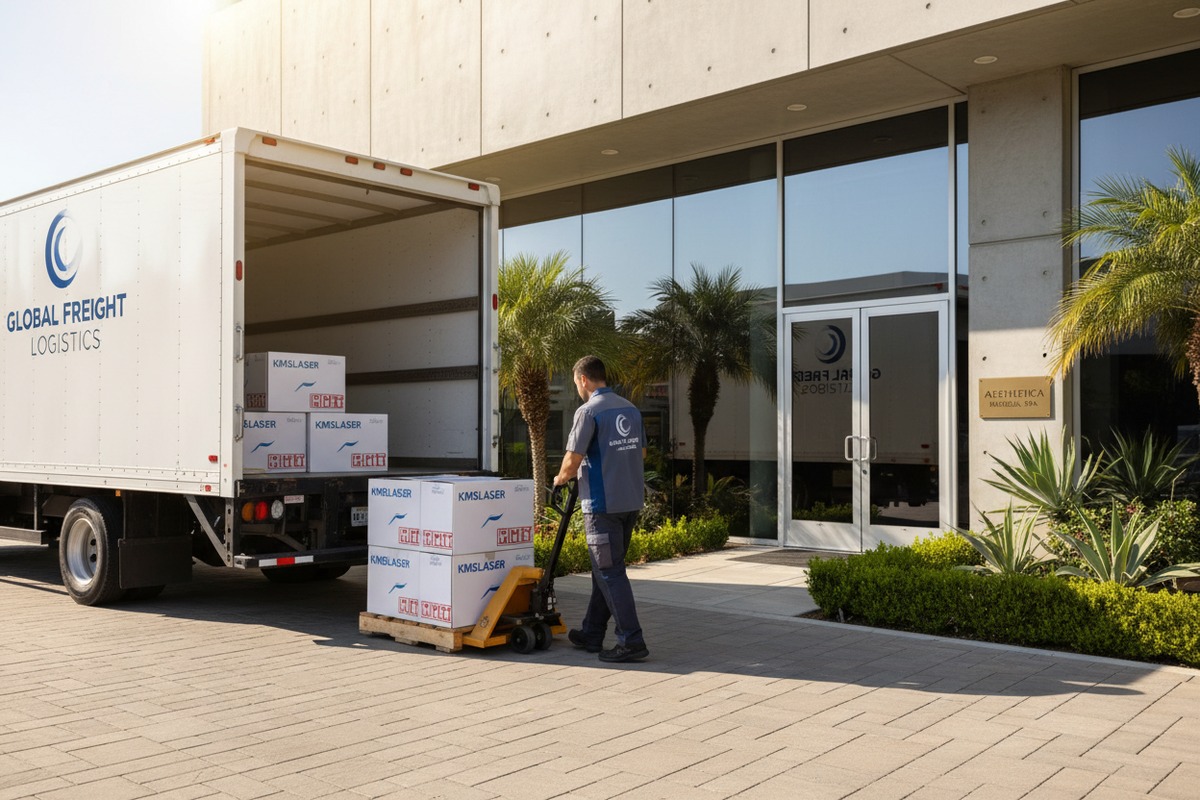
For any sea shipment, we strongly insist on palletization. Even if you only order 10 machines, putting them on a pallet ensures:
- Forklift Handling: Dock workers use forklifts to move the pallet, rather than throwing individual boxes by hand.
- Upright Storage: It forces the cargo to be kept upright, preventing heavy items from being stacked on top of your fragile screens.
- Loss Prevention: It is much harder to lose a 1.2-meter pallet than a single small box in a massive warehouse.
Insurance: The Final Safety Net
Regardless of how well we pack, accidents happen. A crane can drop a container; a ship can hit rough seas. We always include Cargo Insurance in our CIF or DDP quotes. It typically costs less than 0.5% of the cargo value but covers the full replacement cost. For high-value beauty machines, shipping without insurance is a gamble not worth taking.
Should I look for a supplier that manages the entire door-to-door logistics process for my sea freight shipments?
We often hear relief in our clients’ voices when we tell them they don’t need to hire their own customs broker. For busy purchasing managers who want to focus on marketing and sales rather than decoding Incoterms, handing off the logistics burden is a game-changer. We have found that for most small-to-medium distributors, the “DIY” approach to logistics often results in hidden fees that erase any theoretical savings.
You should look for a supplier that manages the entire door-to-door logistics process (DDP) if you lack a dedicated logistics team or import license, as this consolidates complex fees into a single price. While managing it yourself (FOB) offers more control for large corporations, DDP minimizes risk, eliminates surprise port fees, and saves valuable administrative time for most beauty equipment importers.

The Complexity of "The Last Mile"
Importing from China isn't just about getting goods to the port (e.g., Port of Long Beach or Rotterdam). That is the easy part. The nightmare usually begins when the ship arrives. You have to deal with:
- ISF Filing: Must be done 24 hours before loading (US specific).
- Customs Clearance: HTS code classification and duty payment.
- Port Handling Charges: Terminal Handling Charges (THC), Release fees.
- Trucking: Finding a drayage company to pick up LCL cargo from a bonded warehouse.
If you miss a deadline or file a document incorrectly, you get hit with Demurrage (storage fees), which can run hundreds of dollars per day.
DDP (Delivered Duty Paid): The "Hassle-Free" Option
When we offer DDP terms, we take responsibility for everything.
- We hire the freight forwarder.
- We pay the export and import duties.
- We handle the customs clearance.
- We arrange the truck to your warehouse door.
You pay one price to us. You receive the goods. There are no surprise bills from a random trucking company three weeks later. For a buyer like Elizabeth, who values efficiency and conciseness, this is usually the preferred method.
FOB (Free On Board): The "Control" Option
However, there is a case for managing it yourself. If you are a large company importing containers every week, you probably have a contract with a global forwarder (like DHL Global Forwarding or Flexport) with better rates than we can get. In this case, FOB is better. We deliver to the port in China, and your team takes over.
Decision Matrix: DDP vs. FOB
| Feature | DDP (Supplier Manages) | FOB (You Manage) |
|---|---|---|
| Convenience | High (Set and forget) | Low (Requires active management) |
| Cost Transparency | High (Fixed upfront cost) | Medium (Variable destination fees) |
| Control | Low (Supplier chooses carrier) | High (You choose carrier & route) |
| Risk | Supplier bears risk until delivery | You bear risk from China Port |
| Ideal For | SMBs, first-time importers, busy managers | Large corps with logistics depts |
The "Hidden" Valid Reason for DDP
Another reason many of our clients prefer DDP is Cash Flow. When you pay for shipping via DDP, it is part of the commercial invoice. This means you can often finance the shipping cost along with the product cost if you have payment terms or financing arrangements. If you pay a freight forwarder directly, they usually demand immediate payment before releasing the cargo.
Conclusion
Deciding between sea and air freight for pressotherapy machines ultimately comes down to a balance of urgency versus profitability. While air freight offers the speed required for samples or emergency replacements, the high volumetric weight of these devices makes sea freight the only sustainable choice for bulk inventory. By planning your orders 60 days in advance, utilizing robust packaging to combat ocean humidity, and leveraging DDP services to simplify the logistics, you can significantly lower your landed costs. At KMSLASER, we are ready to help you navigate these calculations to ensure your supply chain is as efficient as your beauty equipment.
Footnotes
1. Explains what pressotherapy is and how the systems work for therapeutic purposes. ↩︎
2. Provides a clear definition and components of total landed cost in supply chain management. ↩︎
3. Describes inventory forecasting methods for managing stock levels and supply chain. ↩︎
4. Defines volumetric weight and explains its calculation and importance in shipping costs. ↩︎
5. Explains how moisture barrier bags protect electronic components from humidity and static. ↩︎
6. Describes cargo insurance as protection against loss or damage to goods during transit. ↩︎
7. Explains LCL shipping, where multiple shippers share container space. ↩︎
8. Defines FCL shipping as booking an entire container for one shipper’s cargo. ↩︎
9. Explains gross revenue as total income before deducting expenses, useful for business growth. ↩︎
10. Defines the Critical Path Method as a project management technique for task sequencing. ↩︎



 English
 Español de México
 Deutsch
 Français
 العربية
 Русский
Join the Conversation
Have a question or insight to share? We read every comment — whether you're a distributor, salon owner, or just curious about the technology. Your real-world experience helps others make better decisions. Drop your thoughts below.