
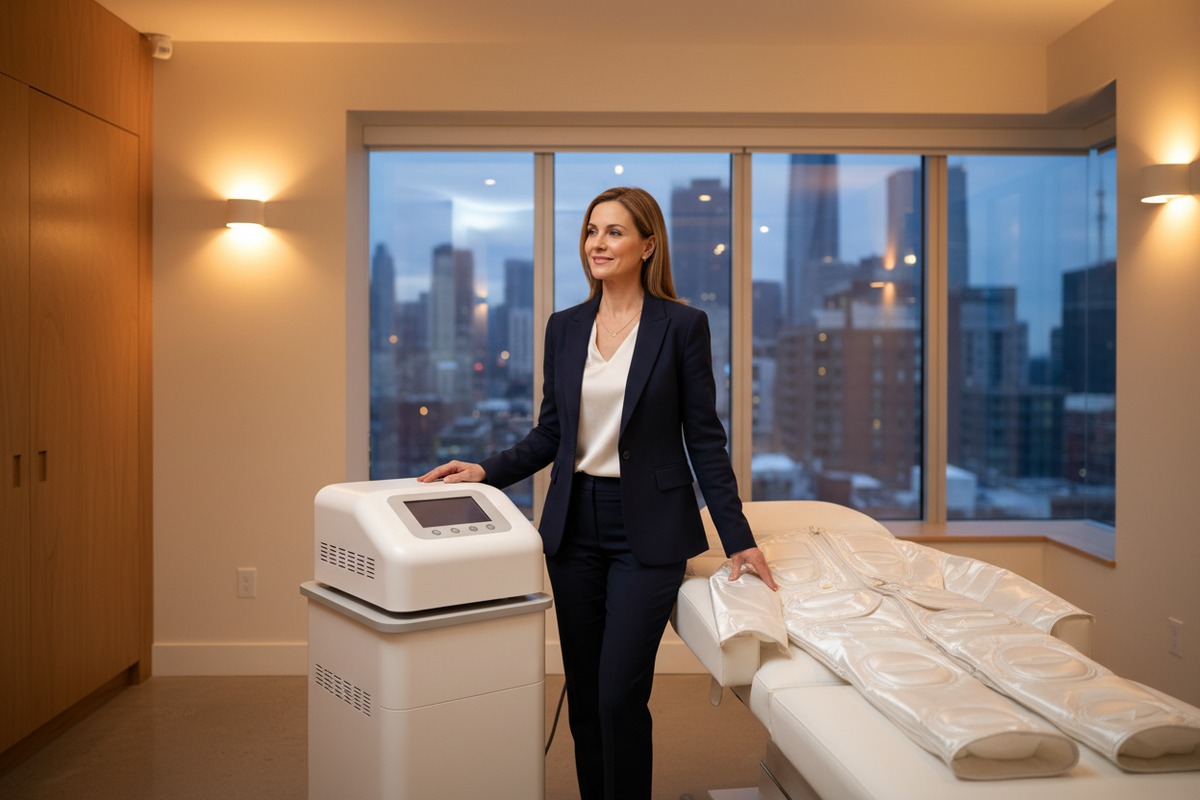
When we test our pressotherapy air pumps on the assembly line, we simulate thousands of compression cycles to ensure durability Lemon Clause 1. Yet, even with rigorous quality control 2, mechanical wear is inevitable in high-traffic salon environments. You invest thousands in equipment, but the fear of a breakdown disrupting your business is real. Is the standard coverage enough, or do you need more protection?
Requesting an extended warranty is highly recommended for professional pressotherapy machines used in high-volume salons, as it safeguards your investment against costly post-warranty repairs and international shipping fees. It provides long-term operational security, ensuring your business avoids revenue loss due to unexpected equipment downtime or expensive component failures.
Let’s analyze the real costs and benefits to help you decide if this extra expense is a smart business move.
How will an extended warranty impact my total cost of ownership for pressotherapy machines?
Our engineering team often reviews repair data, and we notice that costs spike significantly once the standard guarantee expires. You might think you are saving money by skipping the extension, but a single motherboard failure can wipe out those savings instantly. The financial risk of uncovered repairs is often higher than the upfront premium.
An extended warranty lowers your total cost of ownership by capping your expenses at the initial purchase price, eliminating unpredictable bills for replacement pumps, valves, or mainboards. While it adds an upfront premium, it prevents the financial shock of paying for international freight and specialized labor during a breakdown.

Analyzing the Real Costs of Repair
When you import professional beauty equipment, the "sticker price" is just the beginning. The Total Cost of Ownership 3 (TCO) includes maintenance, repairs, and potential downtime. Pressotherapy machines rely on complex pneumatic systems 4. These systems use air compressors, solenoid valves, and digital control boards to manage pressure distribution.
If a machine fails after the standard one-year warranty, you face three distinct costs:
- Spare Parts: A high-quality air pump or mainboard can cost between $200 and $500.
- Technician Labor: If you cannot replace the part yourself, hiring a local biomedical technician 5 in the US is expensive.
- Shipping: This is the silent profit killer. Shipping a bulky 20kg machine back to China for repair is rarely feasible due to high freight costs. You often have to pay to ship parts from the factory to your location.
The Math Behind the Warranty
Let’s look at a hypothetical scenario for a standard professional pressotherapy unit. We will compare the costs over a 3-year period between a standard warranty and an extended warranty 6.
Table 1: Cost Comparison Over 3 Years (Standard vs. Extended)
| Cost Category | Standard Warranty (1 Year) | Extended Warranty (3 Years) |
|---|---|---|
| Initial Machine Cost | $1,500 | $1,500 |
| Warranty Fee | $0 | $200 (approx. 10-15%) |
| Year 2 Repair (e.g., Valve failure) | $150 (Part) + $80 (Shipping) | $0 (Included) |
| Year 3 Repair (e.g., Screen glitch) | $300 (Part) + $80 (Shipping) | $0 (Included) |
| Downtime Opportunity Cost | High (Waiting for paid invoice) | Low (Priority dispatch) |
| Total Estimated Cost | $2,110 | $1,700 |
Hidden Savings in Logistics
One crucial aspect often overlooked is the logistics of spare parts. Without an extended warranty, suppliers typically require payment confirmation before shipping any replacement part. This process—invoicing, wire transfer, and bank clearance—can add 3 to 5 days of delay before the part even leaves the factory.
With an extended warranty, verified partners like us can dispatch parts immediately upon troubleshooting confirmation. We do not need to wait for a bank transfer. This speed reduces the days your machine sits idle. For a busy salon, every day a machine works means revenue. Therefore, the TCO is not just about the repair bill; it is about protecting your revenue stream.
Can I rely on my supplier to provide consistent technical support throughout an extended warranty period?
We have seen many trading companies vanish overnight, leaving their US clients with useless machines and voided contracts. It is frustrating to hold a piece of paper that promises three years of support when the issuer no longer exists. Trusting a supplier requires verifying their stability before you sign the deal.
You can rely on a supplier for long-term support only if they are an established manufacturer with a dedicated after-sales team and a proven track record. Verify their existence, check for a physical spare parts inventory, and ensure they offer video-based diagnostic support rather than just email correspondence.
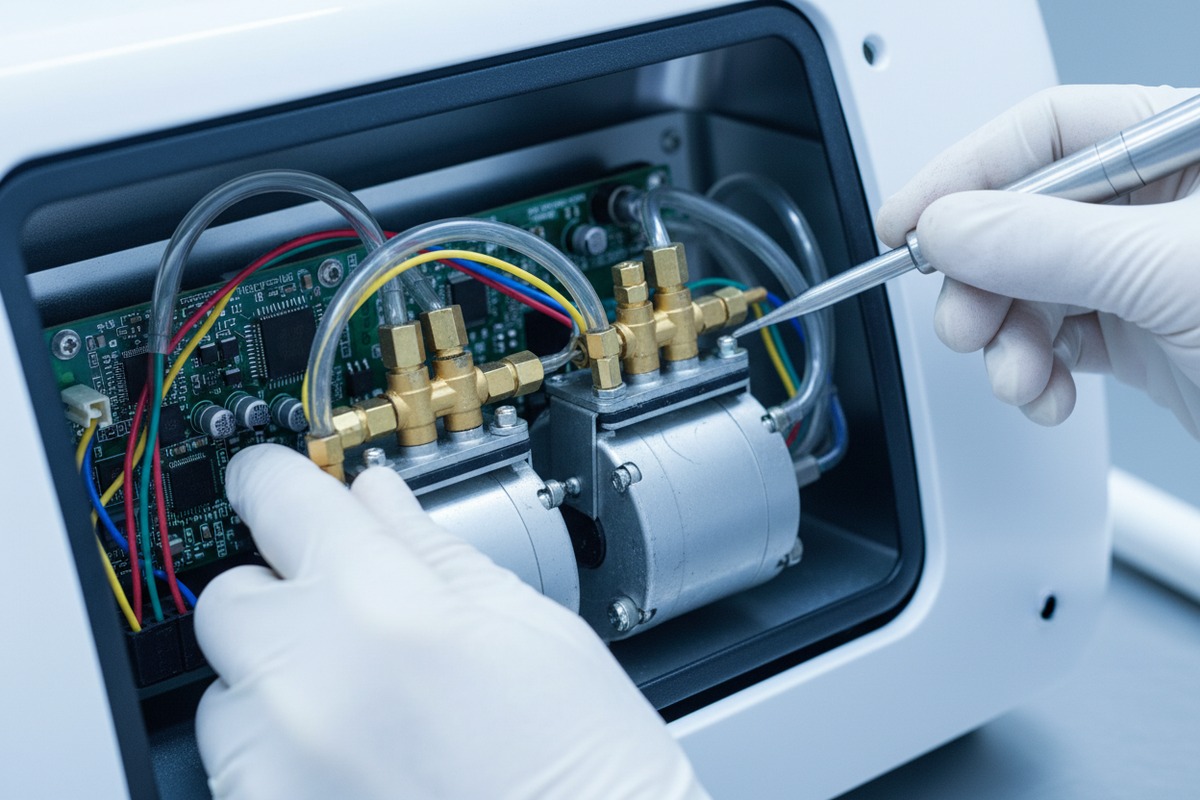
Verifying Supplier Longevity
The beauty equipment industry in China is vast. It includes both factories (like us) and trading companies. Trading companies often rebrand machines from various sources. If a trading company switches suppliers or goes out of business, your extended warranty becomes worthless.
To ensure your extended warranty is enforceable, you must vet the supplier. You need a partner who controls the production line. A manufacturer has a vested interest in the product's lifecycle. We keep blueprints, older firmware versions, and specific molds for years. A trading company might not have access to these resources two years down the line.
The Importance of Communication Infrastructure
An extended warranty is only as good as the communication channel behind it. If your machine breaks down, you cannot wait 24 hours for a simple email reply. You need a supplier who uses instant messaging apps like WhatsApp.
Modern technical support should involve video calls. Our engineers often guide US clients through repairs via live video. We show them exactly which screw to remove or which cable to reseat. If a supplier refuses video calls or insists on email-only tickets, their ability to support an extended warranty is questionable.
Table 2: Supplier Reliability Checklist
| Feature | Reliable Manufacturer | Risky Trading Company |
|---|---|---|
| Business Age | 5+ Years | Less than 2 Years |
| Spare Parts Inventory | In-house warehouse | Orders from factory on demand |
| Support Method | Video Call / WhatsApp | Email Ticket System Only |
| Engineering Team | In-house R&D Team | None / Outsourced |
| Warranty Terms | Clear contract | Vague verbal promises |
The "Right to Repair" Reality
In the context of international trade, "technical support" usually means "remote guidance." You will likely be the one holding the screwdriver. A reliable supplier empowers you to do this.
During the extended warranty period, your supplier should provide:
- Service Manuals: Detailed PDFs or videos showing how to open the casing.
- Modular Design: Good machines are built with easy-to-swap modules.
- Diagnostic Codes: The machine software should tell you exactly what is wrong (e.g., "Error 4: Low Pressure in Chamber 3").
If a supplier cannot demonstrate these capabilities during the sales process, their extended warranty is likely just a marketing gimmick. Do not pay extra for a promise they cannot keep physically.
Does an extended warranty effectively protect my brand reputation against unexpected equipment failures?
When we design the airflow sequences, we focus on consistency, because we know your client expects the same relaxation every time. Nothing damages a salon’s image faster than cancelling appointments due to equipment failure. Your clients do not care about technical glitches; they care about their missed treatment.
Yes, an extended warranty protects your brand reputation by minimizing equipment downtime through priority service and expedited parts shipping. It ensures you can resolve failures quickly, maintaining client trust and avoiding the negative reviews that stem from frequent appointment cancellations or unreliable treatment experiences.
Downtime is a Reputation Killer
In the beauty industry, reliability is your currency. If a client books a course of 10 pressotherapy sessions for cellulite reduction, they expect consistency. A machine failure in the middle of a treatment plan disrupts their progress.
If you have to cancel appointments for two weeks while waiting for a part, that client will go elsewhere. Worse, they might leave a negative review. In the digital age, a few 1-star reviews citing "unreliable equipment" can haunt your business for months.
Priority Status for Warranty Holders
Most suppliers categorize their support tickets. Customers with active, extended warranties often get "VIP" or priority status.
- Standard Customer: Might wait 24-48 hours for a reply and 5-7 days for parts dispatch.
- Extended Warranty Customer: Often gets same-day replies and immediate dispatch.
This speed difference is critical. It turns a potential two-week disaster into a 3-day minor inconvenience. By resolving the issue quickly, you demonstrate professionalism to your clients. You can tell them, "We have a replacement part on the way via express air," rather than, "We don't know when it will be fixed."
Consistency in Treatment Quality
Pressotherapy machines lose pressure accuracy over time if valves degrade. A standard warranty might run out just as these subtle issues start.
- Without Warranty: You might ignore a small pressure drop to save money on repairs. This leads to ineffective treatments and unhappy clients who don't see results.
- With Warranty: You are more likely to request a replacement valve immediately because it is free. This keeps your machine running at 100% performance.
Protecting the "High-End" Image
If you position your salon as a luxury provider, your equipment must reflect that. "Out of Order" signs look cheap. An extended warranty acts as an insurance policy for your brand's image. It allows you to maintain a standard of excellence. It shows you are committed to providing the best service, supported by a maintenance plan that ensures your tools are always ready.
What specific terms should I negotiate in my extended warranty to ensure my salon clients stay satisfied?
Our sales team often sees contracts where buyers focus only on the duration, ignoring the fine print about “consumables.” You need to be aggressive in defining what is covered, or you might find that the most expensive parts are excluded. A vague contract is a future liability.
You should negotiate terms that explicitly cover key components like the air pump and mainboard, while clarifying the coverage for “wearable” parts like the suit and air hoses. Insist on “Express Air Shipping” for replacement parts and a “Lemon Clause” that provides a full unit replacement after repeated failures.

Defining "Consumables" vs. "Core Components"
The biggest trap in pressotherapy warranties is the definition of "consumables."
- The Suit (Air Bags): These are made of TPU or Nylon. They flex thousands of times. Eventually, they might leak. Many standard warranties exclude suits after 3 months. You should negotiate for at least 1 year of coverage on the suit seams.
- The Hoses: Plastic connectors can crack. Ensure these are covered.
- The Core Unit: The warranty must cover the compressor, the solenoid valves 7, the power supply, and the touchscreen.
If the extended warranty only covers the "Main Unit" but 90% of failures happen in the suit connections, the warranty is useless. Be specific. Ask the supplier: "Is the suit covered for manufacturing defects in the second year?"
Shipping Terms Negotiation
By default, many warranties are "Ex-Works 8." This means they will give you the free part, but you must pay for shipping. As we discussed, shipping is expensive.
- Bad Term: "Free parts, customer pays freight."
- Good Term: "Free parts, supplier pays standard shipping."
- Best Term: "Free parts, supplier pays Express Air shipping."
Negotiate for the supplier to cover shipping costs for the first 2 years of the extended period. This incentivizes them to send you high-quality parts that won't break.
Table 3: Essential Warranty Clauses to Negotiate
| Clause | Standard Default | What You Should Negotiate |
|---|---|---|
| Shipping of Parts | Buyer pays 100% | Supplier pays (at least 50/50) |
| Suit/Cuff Coverage | 3 Months or None | 1 Year Minimum |
| Response Time | 48-72 Hours | < 24 Hours (Business Days) |
| Lemon Policy | Repair indefinitely | Replace unit after 3 major failures |
| Software Updates | Not mentioned | Free remote updates included |
The "Lemon Clause"
This is vital for imported electronics. Sometimes, a machine is just defective from the start. It keeps breaking, fixing it is a nightmare, and it damages your reputation.
Negotiate a clause that states: "If the machine requires more than 3 major repairs (involving the pump or mainboard) within the warranty period, the supplier agrees to replace the entire main unit free of charge." This protects you from a machine that is fundamentally flawed.
Conclusion
Deciding on an extended warranty for a pressotherapy machine comes down to your business volume and risk tolerance. If you are a high-traffic salon running the machine daily, the potential cost of downtime and international shipping for repairs far outweighs the upfront warranty fee. An extended warranty acts as a shield for your TCO and brand reputation 9. However, this protection is only valid if you vet your supplier's stability and negotiate clear terms regarding shipping and consumable parts. Don't just buy a promise; buy a guarantee that keeps your business running.
Footnotes
1. Explains the legal concept of Lemon Law, which provides remedies for defective products. ↩︎
2. Explains ISO 9001, a globally recognized standard for quality management systems. ↩︎
3. Defines Total Cost of Ownership (TCO) and explains how it is calculated. ↩︎
4. Provides a comprehensive guide to pneumatic systems, their function, and components. ↩︎
5. Describes the responsibilities and duties of a biomedical technician in healthcare. ↩︎
6. Found a comprehensive and authoritative definition of extended warranty on Wikipedia. ↩︎
7. Explains what solenoid valves are, how they work, and their common applications. ↩︎
8. Defines the Incoterms rule ‘Ex Works’ (EXW) and its implications for buyers and sellers. ↩︎
9. Discusses strategies for building and managing a strong brand reputation. ↩︎

 English
 Español de México
 Deutsch
 Français
 العربية
 Русский
