
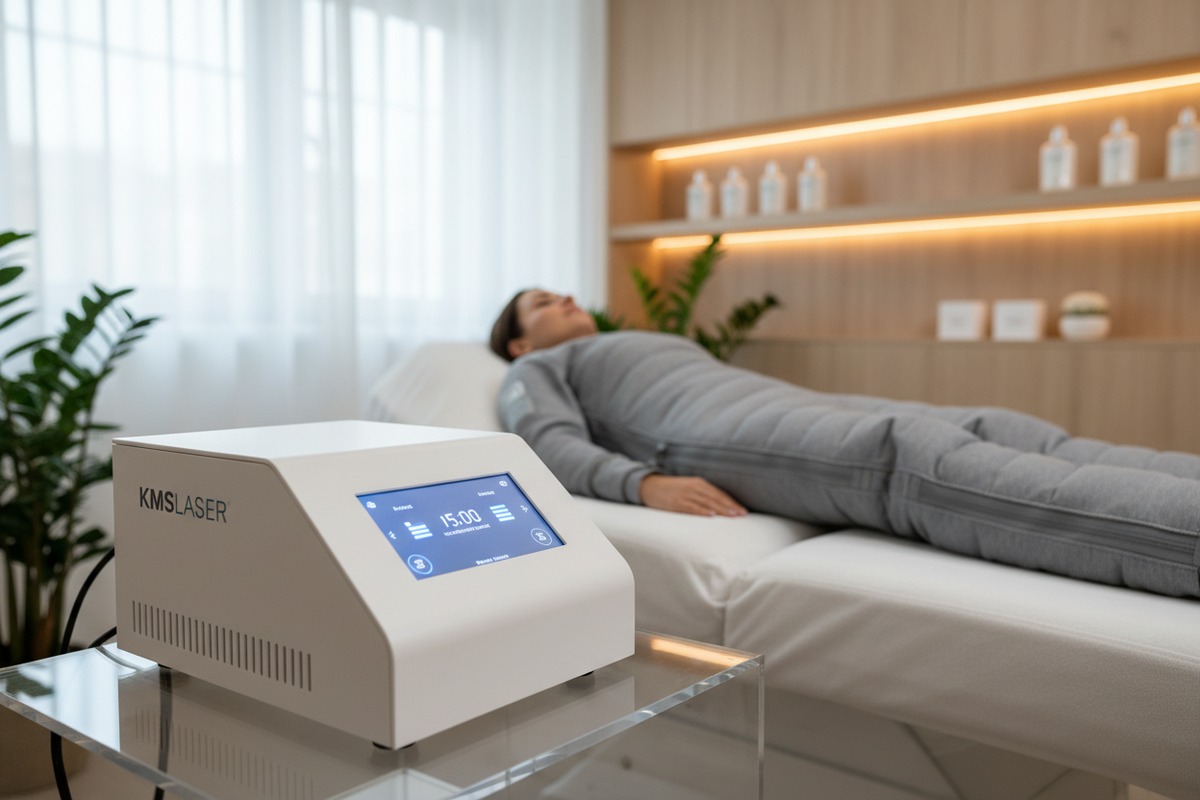
When our engineering team configures the software for new compression therapy units 1, we often debate which features actually add value to the end user and which are merely decorative. We understand that your clients want devices that seem advanced, but cluttering the interface with unnecessary variables can lead to confusion rather than clarity.
No, you generally do not need preset programs specifically tailored to skin types when purchasing a pressotherapy machine. Pressotherapy functions through mechanical air compression to stimulate lymphatic drainage and blood circulation, a process that relies on pressure intensity and inflation cycles rather than skin characteristics like oiliness or dryness.
Let’s explore why focusing on pressure modes and customizable intensity is a smarter investment for your brand than skin-specific presets.
How do preset programs for different skin types simplify the training process for my clients?
In our experience supporting distributors who sell to busy spas, we have noticed that staff turnover is high, making quick and effective training essential lymphatic drainage 2. Complex menus often lead to operational mistakes, so we strive to keep our interface designs intuitive.
Preset programs for skin types actually complicate the training process because they introduce irrelevant variables that distract from the critical settings: pressure and time. Since pressotherapy does not interact with the skin’s chemical barrier, training staff to select “oily” or “dry” settings creates a false understanding of the treatment’s mechanism.

The Reality of Staff Training
When you supply machines to a beauty salon, the technicians operating them need to understand the fundamental mechanics of the device blood circulation 3. Pressotherapy is a mechanical treatment. It uses air pressure to mimic the rhythmic pumping of the lymphatic system 4. Whether a client has dry, oily, or combination skin is mechanically irrelevant to how an air bag compresses a limb.
If your machine includes a menu asking the operator to select a skin type, you are forcing the technician to make a decision that has no impact on the physical treatment. This can lead to hesitation. A technician might worry, "If I choose 'Dry Skin' but the client is sweating, will I cause harm?" In reality, the machine likely applies the exact same pressure profile for both settings.
Focusing on Body Mass and Condition
True training simplification comes from presets based on body conditions, not skin types. When we design our logical boards, we focus on parameters that physically change the treatment needs. For example, a client with significant edema 5 requires a different inflation sequence than a client seeking muscle relaxation after a workout.
Effective training should teach operators to assess:
- Tissue Density: Is the cellulite soft or hard?
- Fluid Retention: Is there visible swelling?
- Tolerance: How much pressure can the client comfortably withstand?
Comparison of Interface Logic
To help you understand the impact on training, we have compared a standard logic interface against a skin-type based interface below.
| Training Aspect | Standard Logic (Recommended) | Skin-Type Logic (Gimmick) |
|---|---|---|
| Decision Speed | Fast. Operator selects "Lymph Drainage" or "Slimming." | Slow. Operator must analyze skin surface unnecessarily. |
| Safety Focus | High. Focuses on pressure limits and contraindications. | Low. Distracts operator with superficial skin attributes. |
| Client Explanation | Clear. "This mode helps flush out toxins." | Confusing. "I am selecting 'Dry Skin' mode to help your circulation." |
| Error Rate | Minimal. Direct correlation between setting and goal. | High. Staff may select wrong skin type, fearing nonexistent risks. |
Why We Avoid "Filler" Features
We believe in "Plain English" engineering. If a feature does not alter the voltage, pressure (Pa), or timing of the solenoid valves 6, it should not be on the screen. Adding skin type buttons might make a machine look more "digital" or "AI-driven," but it adds a layer of cognitive load to the user without improving the clinical result. For your brand, this means you can market a device that is easier to learn, allowing your salon clients to start generating revenue immediately without week-long training seminars.
Can I customize these skin-specific protocols when I private-label my pressotherapy machines?
When we collaborate with brand owners on OEM projects, we frequently receive requests to modify the software interface to match a specific marketing story. We understand that differentiation is key in the US market, where every brand needs a unique selling proposition.
Yes, you can customize protocols to include skin-specific labels during the private-labeling process, but we strongly advise mapping these labels to functional changes like pressure gentleness or cycle speed. We can program the interface to display “Sensitive Skin,” which technically triggers a lower intensity mode to prevent capillary stress.
The Flexibility of OEM Software
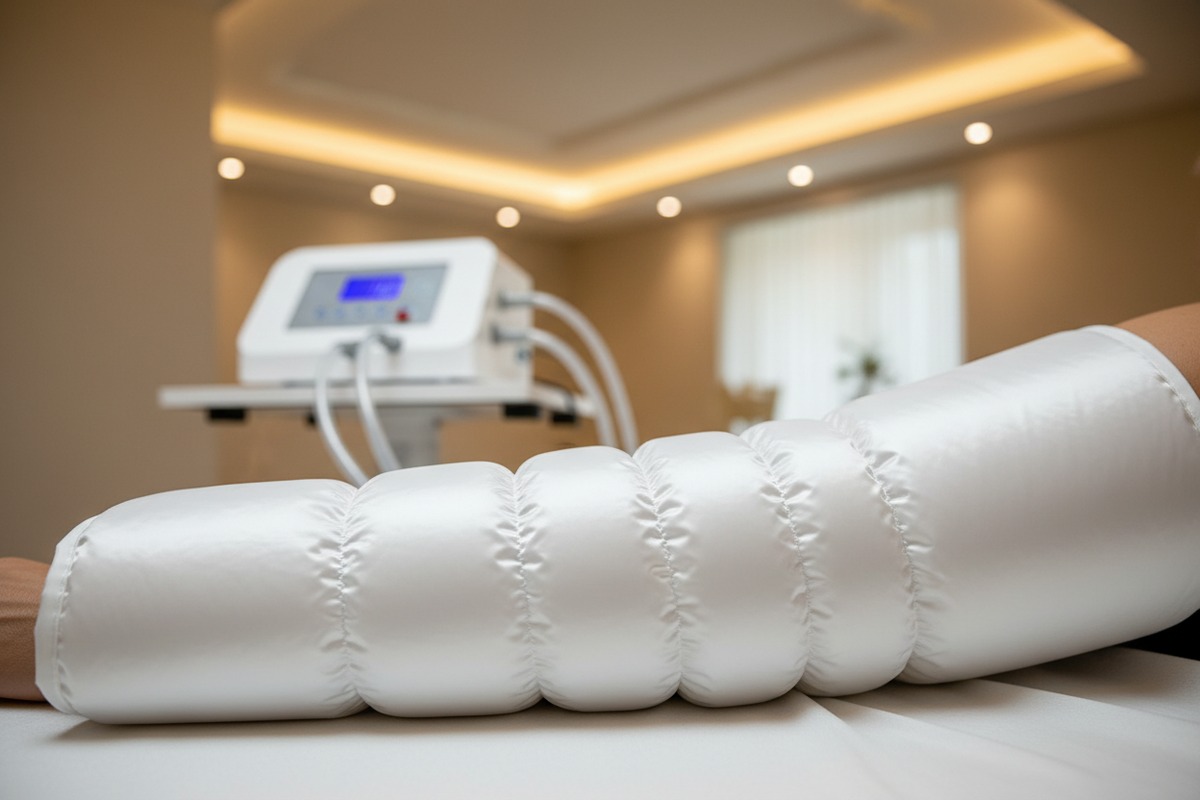
As your manufacturing partner, our goal is to bring your vision to life. If your brand strategy relies heavily on a "holistic skin health" narrative, we can adjust the LCD touch screen interface. The underlying control board manages the opening and closing of air valves. We can label these commands however you prefer.
For instance, if you want a button labeled "Mature Skin," we can program that button to execute a specific sequence:
- Pressure: Low to Medium (to avoid bruising fragile skin).
- Sequence: Wave motion (gentler than a hard squeeze).
- Duration: 30 minutes (standard safety limit).
This turns a marketing term into a functional safety protocol. The machine isn't "reading" the skin, but the label acts as a shortcut for a safe configuration for that demographic.
Designing Your Exclusive Protocol
When we develop these custom machines, we usually follow a three-step protocol design phase:
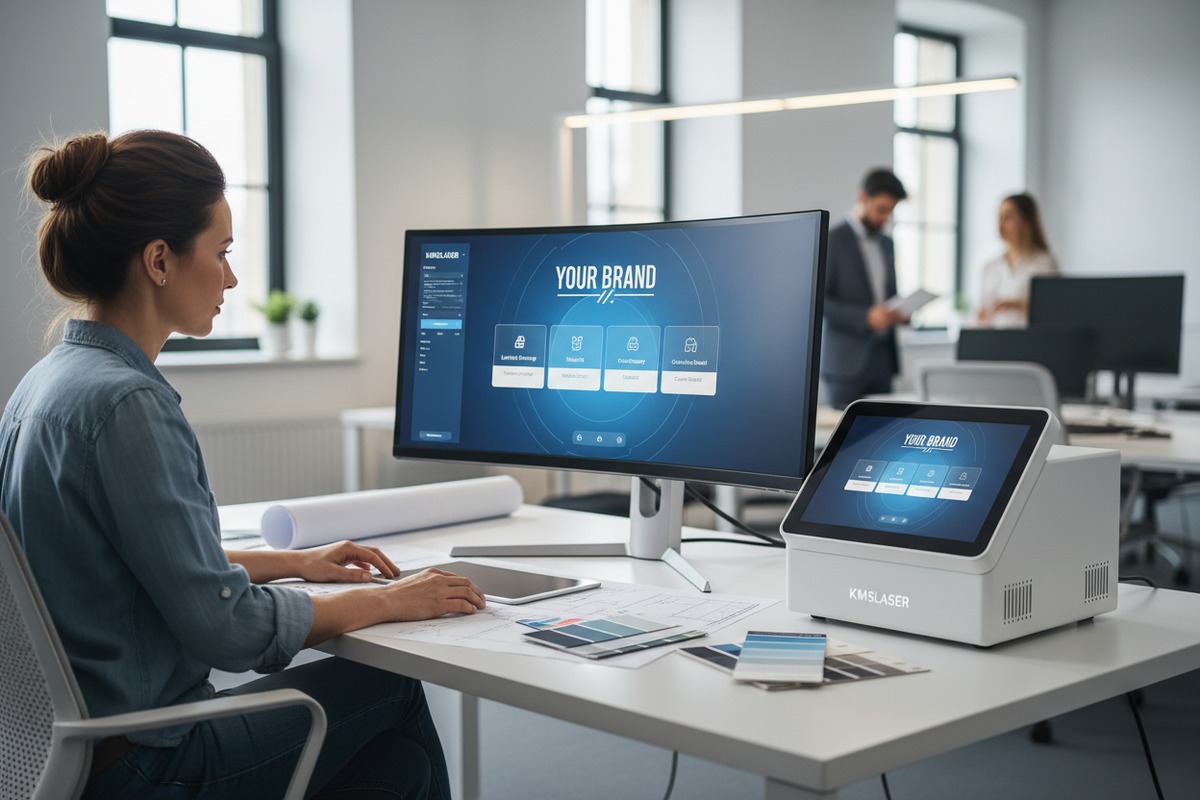
- UI Layout: We design the startup screen with your logo and the main menu structure.
- Parameter Mapping: We decide what happens when a button is pressed. This is where we can get creative. Instead of generic "Mode A, B, C," we can name them "Cellulite Smooth," "Skin Firm," and "Detox Flow."
- Testing: We run these new profiles on our testing rigs to ensure the pressure curves are smooth and comfortable.
Strategic Customization Options
Below is a table showing how we can translate marketing terms into engineering reality for your private label.
| Marketing Label (On Screen) | Engineering Reality (Inside Machine) | Target Client Benefit |
|---|---|---|
| Sensitive Skin Mode | Max pressure capped at 120 mmHg; Slow inflation ramp-up. | Prevents broken capillaries in thin skin. |
| Firming / Toning Mode | Rapid inflation/deflation cycles; Higher pressure (up to 180 mmHg). | Stimulates muscle and blood flow for tightening effect. |
| Post-Lipo Recovery | Sequential distal-to-proximal flow; Medium pressure. | Moves lymph fluid away from surgical areas safely. |
The Risk of Over-Customization
While customization is a powerful tool, we often advise our clients not to overcomplicate the logic. If you request 20 different presets for every conceivable skin variation, the software becomes heavy, and the user experience suffers.
A sleek, professional machine should feel like a medical device, not a slot machine. We recommend sticking to 3-5 core programs that cover the vast majority of use cases. By doing this, you maintain the perception of high-end engineering. Remember, your customers (distributors and salon owners) value reliability. If the software glitches because of overly complex menu trees, it reflects poorly on your brand. We ensure the code is stable, regardless of how we label the buttons.
Will having automated settings help me reduce the risk of treatment errors and product complaints?
Quality control is not just about checking parts on our assembly line; it extends to how the end-user interacts with the finished product. We have seen that user error is a leading cause of “product failure” reports, which are often just operation errors.
Automated settings can significantly reduce treatment errors, but this is due to regulated pressure limits, not skin-type classifications. By automating the maximum pressure and cycle time, you prevent operators from accidentally applying dangerous force, thereby reducing complaints about bruising or discomfort.

Safety Through Automation
The primary risk in pressotherapy is excessive pressure. If a technician manually sets a machine to 200 mmHg for a client with varicose veins, it can cause pain or worsen the condition. Automated settings act as guardrails.
However, "Skin Type" is a poor proxy for safety. A person with "Normal Skin" might still have deep vein thrombosis 7 (a contraindication) or low pain tolerance. Therefore, basing safety automation on skin type is flawed logic. Instead, we advocate for automation based on Intensity Levels (Level 1, Level 2, Level 3).
Common Complaints We See
As a manufacturer, we track why machines are returned or why parts are requested.
- "The suit exploded": Usually caused by manual settings pushed to the max without a client inside to provide resistance.
- "Client got bruised": Caused by pressure set too high for too long.
- "Machine stopped working": Often a thermal shut-off because the pump ran for 60 minutes straight without a break.
Automated programs solve this by:
- Cycling Pressure: The machine automatically deflates to let blood return, preventing ischemia.
- Timer Limits: Hard-coding a 30 or 45-minute max run time prevents overheating and over-treatment.
Intelligent Safety Features
Modern control boards, like the ones we use in our higher-end models, have real-time pressure monitoring. If the sensor detects that the pressure in an air chamber is rising too fast (indicating a blockage or a kink in the hose), it will dump the air immediately. This is a far more effective safety feature than a "Sensitive Skin" button.
Reducing Your After-Sales Burden
For a Purchasing Manager, reducing after-sales headaches is a priority. If you import a container of machines, you don't want to deal with 50 emails a week about "how to set the machine."
By choosing a machine with preset functional modes (e.g., Slimming, Drainage, Relax), you standardize the treatment. If a customer complains, you can ask, "Did you use the Drainage Mode?" If yes, you know exactly what parameters were used. This makes remote troubleshooting much easier for your support team.
| Safety Feature | Function | Benefit to Brand Owner |
|---|---|---|
| Auto-Pressure Dump | Releases air if pressure exceeds safety limit (e.g., 240 mmHg). | Prevents injury lawsuits and negative reviews. |
| Zone Isolation | Allows user to turn off specific chambers (e.g., over the knees). | Accommodates clients with injuries without skipping treatment. |
| Step-Up Logic | Pressure starts low and gradually increases over 5 minutes. | Improves client comfort and reduces "shock" complaints. |
Does the inclusion of advanced skin-type presets justify a higher price point for my brand?
We monitor the pricing strategies of our competitors and the retail prices of our clients in the US and Europe. We often see huge markups on machines that claim to feature “AI Skin Analysis” or overly complex program lists.
The inclusion of advanced skin-type presets rarely justifies a higher price point on its own because savvy buyers understand that the core technology—air compression—remains unchanged. Your brand value is better supported by investing in superior suit materials, quieter pumps, and robust connectors rather than superficial software features.
Where the Money Really Goes
When we calculate the Bill of Materials (BOM) 8 for a pressotherapy unit, the cost drivers are:
- The Air Pump: A heavy-duty pump that can maintain stable pressure for years costs significantly more than a weak diaphragm pump.
- The Suit Material: TPU (Thermoplastic Polyurethane 9) is durable, flexible, and easy to clean. Cheap PVC cracks and leaks.
- The Valves: High-precision solenoid valves allow for complex wave patterns.
Software presets cost us almost nothing to duplicate once programmed. Therefore, charging your customers a premium purely for "Skin Type Presets" is a fragile strategy. If a competitor offers a machine with the same pump power but without the fancy menu for $500 less, you will lose the sale.
Building a Premium Brand Without Gimmicks
Your target customers, the salon owners, are business people. They want ROI. Instead of justifying price through software menus, justify it through reliability and throughput.
- Durability: "This machine can run 10 hours a day without overheating."
- Hygiene: "Our suits use medical-grade, wipeable fabric."
- Versatility: "Includes an expander for larger clients."
These are the features that justify a high price tag.
The "Smart" Machine Trap
There is a trend in 2026 to label everything "Smart." While a touchscreen looks premium, it must be responsive and durable. We have seen "advanced" machines with laggy interfaces that frustrate users. A premium machine should have a premium feel—buttons that click satisfyingly or a screen that responds instantly.
If you want to position your private label as a luxury brand, ask us to upgrade the hardware housing (e.g., metal casing instead of plastic) or the connector quality. These physical touchpoints scream "quality" much louder than a software button labeled "Oily Skin."
Cost-Benefit Analysis for Upgrades
Here is a breakdown of where investment yields the best return for your brand reputation.
| Feature Upgrade | Manufacturing Cost Impact | Perceived Value to Salon | Recommended? |
|---|---|---|---|
| Skin Type Presets | Low (Software only) | Low/Medium (Marketing only) | No |
| Silent Pump Tech | High (Hardware) | High (Luxury experience) | Yes |
| TPU Suit Upgrade | Medium (Material) | High (Longer lifespan) | Yes |
| Wireless Remote | Low | Medium (Convenience) | Maybe |
Conclusion
In summary, when sourcing a pressotherapy machine for your brand, you do not need preset programs specific to skin types. The efficacy of pressotherapy lies in its mechanical action on the lymphatic and circulatory systems, which is managed through pressure intensity, cycle modes, and session duration—not skin classification. While we can customize interfaces to include these labels for marketing purposes, true value and safety come from robust hardware, intuitive functional modes, and automated pressure limits. Focusing on these core aspects will ensure you deliver a reliable, professional-grade device that builds trust with your salon clients and minimizes after-sales issues.
Footnotes
1. Explains what compression therapy is and its benefits. ↩︎
2. Defines lymphatic drainage and its therapeutic benefits. ↩︎
3. Explains the importance of blood circulation and its relation to health. ↩︎
4. Replaced HTTP 403 with an authoritative overview of the lymphatic system from NCBI Bookshelf (NIH). ↩︎
5. Replaced HTTP 404 with an article on edema symptoms and causes from Mayo Clinic, an authoritative source that covers the severity of edema. ↩︎
6. Replaced HTTP 404 with a Wikipedia article explaining solenoid valves, an authoritative and accessible source. ↩︎
7. Replaced HTTP 403 with a comprehensive article on deep vein thrombosis from Mayo Clinic, an authoritative source. ↩︎
8. Defines BOM and its importance in manufacturing. ↩︎
9. Replaced HTTP unknown with a Wikipedia article providing a general overview of Thermoplastic Polyurethane, an authoritative and accessible source. ↩︎

 English
 Español de México
 Deutsch
 Français
 العربية
 Русский
