
Every week, our production floor ships pressotherapy machines 1 to buyers across three continents. Yet I’ve witnessed countless orders get stuck at customs—not because of quality issues—but because buyers trusted suppliers without proper export documentation. The frustration of a delayed shipment can halt your entire business plan.
To verify a supplier’s export license for pressotherapy machines, request their FDA export certificate (CFG or COE), check their FURLS registration number, use the FDA’s FECV tool to authenticate documents via QR code, and confirm their business registration matches the export documentation. Cross-reference all details before placing your order.
In this guide, I’ll walk you through every step of the verification process. You’ll learn how to spot red flags, avoid third-party agent traps, and ensure your door-to-door logistics stay on schedule.
How can I verify that my pressotherapy machine supplier has a valid export license?
When our team prepares shipments for international buyers, we know proper documentation separates smooth deliveries from customs nightmares. Many buyers assume all suppliers have valid licenses—until their machines sit at port for weeks.
Verify your supplier’s export license by requesting their FDA Certificate to Foreign Government (CFG) or Certificate of Exportability (COE), checking their registration in the FDA’s FURLS database, and using the FECV authentication tool with the QR code on their electronic certificate to confirm validity.
Understanding FDA Export Certificates
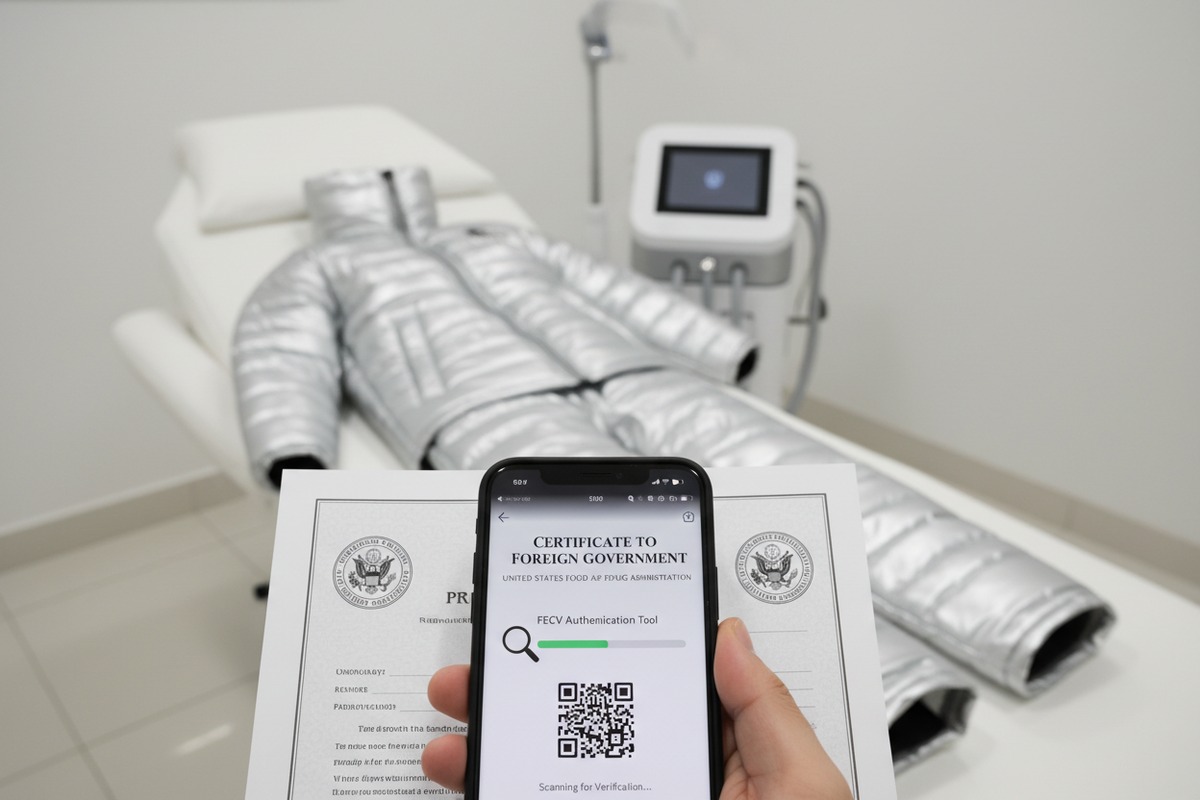
The FDA Center for Devices and Radiological Health (CDRH) 2 issues several types of export certificates for medical devices including pressotherapy machines. A CFG is a medical device export certificate that's used for items that can be legally marketed in the U.S. This is the most common certificate you'll encounter when buying from established suppliers.
A Certificate of Exportability (COE) 3 introduced by Section 802 is a document to be issued in the case of Class II and Class III medical devices intended to be exported, that are not approved by the FDA. Since most pressotherapy machines fall into Class I or Class II categories, understanding which certificate applies to your situation is critical.
Step-by-Step Verification Process
Here's my recommended verification workflow:
| Step | Action | Tool/Resource |
|---|---|---|
| 1 | Request export certificate copy | Direct from supplier |
| 2 | Check registration number | FDA FURLS database |
| 3 | Authenticate certificate | FECV tool (QR code scan) |
| 4 | Verify manufacturer details | Cross-check with business license |
| 5 | Confirm product listing | FDA product classification database |
Starting January 2, 2024, requestors and foreign governments will be able to verify the authenticity of an export certificate through CECATS and the FURLS Export Certificate Validator (FECV) databases. The U.S. Food and Drug Administration (FDA) Center for Devices and Radiological Health (CDRH) will be transitioning from paper export documents for medical devices to electronic export documents.
Using the FECV Authentication Tool
The FDA's electronic system makes verification easier than ever. Requestors and foreign governments can reach the FECV site by scanning the unique Quick Response (QR) code on the export document and entering the unique certificate number on the FECV site, enabling faster authentication.
Foreign governments, regulatory agencies, device distributors and other stakeholders may now verify authenticity of FDA-issued export certificates and documents using the FDA Unified Registration and Listing Systems (FURLS) Export Certificate Validator (FECV) tool during the time periods for which such documents are valid.
Key Documents to Request
When working with any pressotherapy machine supplier, demand these documents:
- FDA Certificate to Foreign Government (CFG) or Certificate of Exportability
- Owner/Operator registration number
- Device listing confirmation
- Business registration certificate
- ISO 13485 certification 4 (quality management)
Under the general rule, it takes up to 20 business days for the CDRH to review the application and either issue the certificate requested or inform the interested entity about the denial. Be wary of suppliers who claim they can provide certificates instantly—this may indicate falsified documentation.
What risks do I face if my manufacturer uses a third-party agent for my export documents?
In our years of handling export documentation, we’ve seen buyers burned by third-party agents who promised smooth shipping but delivered costly delays. The problem isn’t using agents—it’s using unvetted agents without proper oversight.
Using third-party agents for export documents creates risks including loss of control over customs processes, liability for agent errors, potential document fraud, inconsistent compliance standards, and difficulty tracing problems when shipments are held. You remain legally responsible for any documentation errors.
Understanding Agent Liability
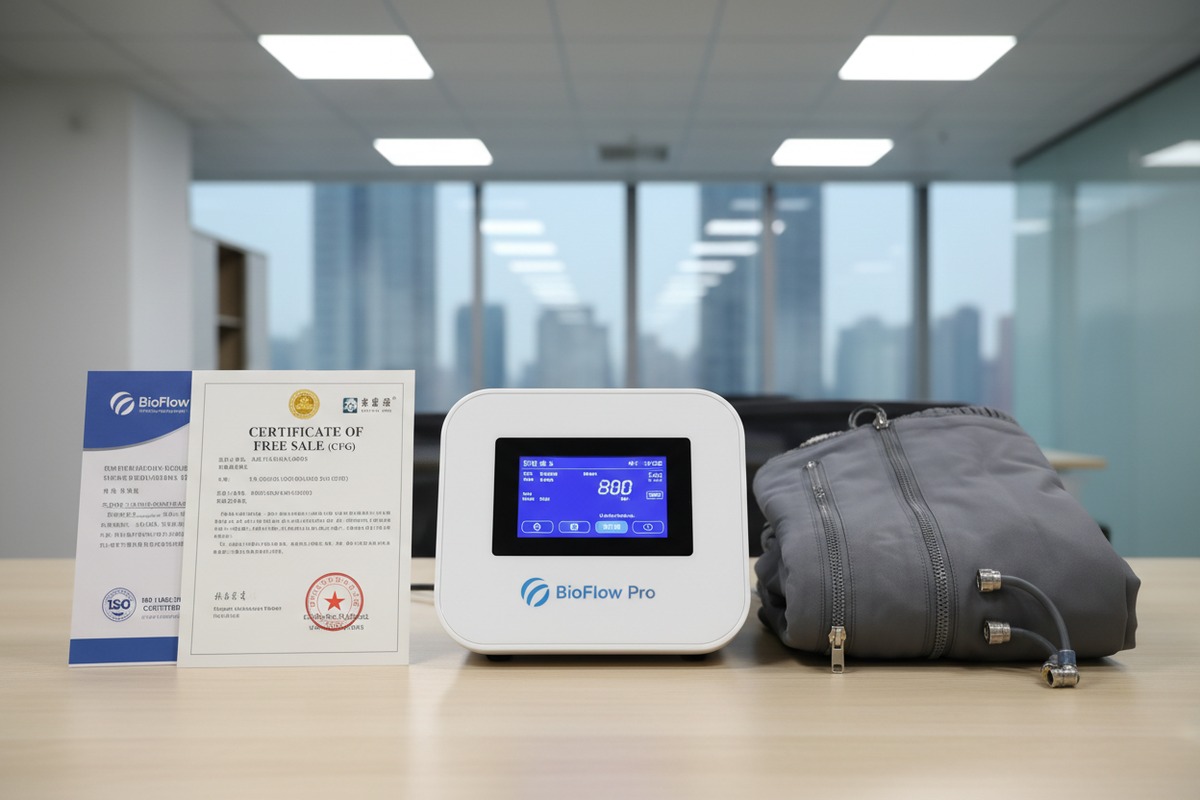
Remember, even when using a broker, you, the importer of record 6, are ultimately responsible for the correctness of the entry documentation presented to CBP and all applicable duties, taxes and fees. This is the fundamental risk most buyers overlook. Your supplier's agent makes a mistake—you pay the price.
BIS recommends that you know your freight forwarder and customers. Not doing so puts your organization at risk. An untested or unproven freight forwarder can mishandle your item and your documentation, possibly putting your organization at risk of penalty.
Common Third-Party Agent Risks
| Risk Type | Consequence | Mitigation Strategy |
|---|---|---|
| Document fraud | Customs seizure, legal penalties | Verify all certificates directly with issuing authority |
| Information mismatch | Shipment holds, delays | Cross-check agent docs with supplier records |
| Delayed filings | Fines up to $5,000 per incident | Set clear filing deadlines in contracts |
| Loss of control | Extended customs examinations | Maintain direct communication with customs broker |
| Compliance gaps | Rejected shipments | Audit agent's compliance procedures |
The Control Problem
Adjusted provisions raise the same risks as standard Incoterms: loss of control on customs processes and proceedings with customs authorities, problem of determination of the origin of the goods. When you hand over documentation responsibilities to a third party, you lose visibility into the process.
When you choose a third-party CHA, your freight forwarder will hand over the documents to your CHA to do the clearance. However, if the CHA causes any delays because they didn't clear customs on time, your freight forwarder won't be liable for any additional costs that you might incur.
Due Diligence for Third-Party Agents
If you must use a third-party agent, verify:
- Their customs brokerage license 7 and validity
- Experience with medical device shipments
- Track record with pressotherapy equipment specifically
- Direct references from other importers
- Insurance coverage for documentation errors
False statements are violations of United States Code Title 18, Chapter 47, Section 1001. This applies to whoever signs the export documentation—meaning both agents and suppliers face legal consequences for falsification.
Best Practices for Agent Management
Work directly with your supplier's export team when possible. The USPPI must document their due diligence to protect themselves from inaccurate Electronic Export Information entry 8, unauthorized shipping routes… Organizations may look to contractual agreements to help supplement regulatory requirements for each party.
Request that your supplier provide:
- Agent credentials and registration
- Signed compliance agreements
- Regular documentation audits
- Direct contact information for real-time updates
How do I confirm that a supplier's export license matches their business registration for beauty equipment?
Our quality control team has caught mismatched documents more times than I can count. A supplier shows you a valid export certificate—but it belongs to a different company. This disconnect creates massive problems at customs that can take months to resolve.
Confirm document matching by comparing the Owner/Operator Number (OON) on export certificates with the supplier’s business registration, verifying the manufacturer address on FDA records matches business license address, and checking that product listings correspond to actual devices being purchased.

The Registration Number Connection
Every legitimate medical device exporter has an Owner/Operator Number (OON) 9 that links their export certificates to their business registration. The manufacturer must be registered with FDA. The manufacturing facility must be in compliance with the registration requirements. The device must be in compliance with the listing requirements.
Document Cross-Reference Checklist
| Document Element | Where to Find | What to Match |
|---|---|---|
| Owner/Operator Number | Export certificate | FDA FURLS registration |
| Manufacturer name | Certificate header | Business license legal name |
| Facility address | FDA registration | Business license address |
| Product codes | Device listing | Actual products ordered |
| Inspection date | Certificate (optional) | Recent within 2-3 years |
Verification Steps
Step 1: Get the supplier's OON or registration number directly.
Enter the Registration Number or the Owner Operator Number (OON) and click on "Retrieve Registrations". This lets you pull their official registration details from the FDA database.
Step 2: Compare business names exactly.
This is the U.S. establishment that exports the devices from the United States. Do not include foreign distributors. For Chinese suppliers like our team, this means verifying that any U.S. distributor information matches as well.
Step 3: Verify product coverage.
In this section, you will be able to select one or more products from each manufacturer identified in sections 2. Class III products may be included only if all of the manufacturing facility(ies) have been inspected by the FDA.
Red Flags in Documentation
Watch for these warning signs:
- Different company names between certificate and business license
- Address variations that don't match
- Missing or invalid registration numbers
- Certificates listing products you're not purchasing
- Expired certificates presented as current
A US medical device company faced delays in obtaining a CFG due to missing documents and incomplete compliance checks. This happens frequently when suppliers try to use another company's documentation or have gaps in their compliance history.
International Supplier Considerations
For suppliers based in China exporting beauty equipment, additional verification layers apply:
Cosmetics are strictly regulated in all developed markets, including the European Union, the United States, and Australia. To import cosmetic or personal care products, such as makeup or hair care products, you need to verify that the products don't contain excessive amounts of restricted substances.
While pressotherapy machines are typically classified as medical devices rather than cosmetics, the verification principles apply equally. Ensure your supplier can demonstrate compliance with destination country requirements.
Will a missing export license from my supplier cause delays in my door-to-door logistics?
When we promise door-to-door delivery, our logistics team knows that a single missing document can turn a 30-day delivery into a 90-day nightmare. I’ve watched buyers lose tens of thousands of dollars in storage fees because their supplier couldn’t produce proper export documentation.
Yes, a missing export license will cause significant delays. Shipments lacking proper documentation face customs holds ranging from 24 hours to several weeks, potential seizure, storage fees averaging hundreds of dollars daily, and may be rejected entirely—requiring return shipment or destruction at your expense.

The Real Cost of Missing Documentation
According to DHL, 80% of customs delays are caused by incorrect or missing documentation. This isn't just an inconvenience—it's a direct hit to your bottom line.
For goods subject to special regulations—such as medical equipment, chemical products, or technological material—the absence of specific licenses or permits prevents the cargo from moving forward. An import clearance delay may range from 24 hours to several weeks, depending on the country, type of goods, and the complexity of the issue.
Financial Impact Breakdown
| Delay Duration | Typical Costs | Business Impact |
|---|---|---|
| 1-7 days | $200-1,000 storage fees | Minor schedule disruption |
| 1-4 weeks | $1,000-5,000+ storage and demurrage | Lost sales, customer complaints |
| 1-3 months | $5,000-20,000+ all fees | Contract breaches, reputation damage |
| Permanent hold | Total shipment value + fees | Complete loss, legal exposure |
Import clearance delays can lead to increased warehousing services costs, customs penalties, and revenue loss. They also disrupt logistics efficiency and negatively affect customer satisfaction.
What Customs Authorities Can Request
Customs authorities may request certificates of origin, import licenses, supplementary declarations, or proof of commercial value. Failure to provide these documents prolongs the clearance process.
For pressotherapy machines specifically:
- FDA export certificate (CFG or COE)
- Commercial invoice with accurate valuations
- Packing list with exact quantities
- Certificate of origin
- Product safety certifications
Seizure and Rejection Risks
Goods like medical devices, cosmetics, electronics, and children's products often require FDA, FCC, or CPSIA documentation. Missing these triggers seizure or re-export.
Goods such as medical devices, cosmetics, electronics, and children's products will often require FDA, FCC, or CPSIA documents. If these are absent, the goods are seized or re-exported.
Prevention Strategies
Before your shipment leaves the origin:
- Verify all export certificates are valid and authenticated
- Confirm documentation matches across all parties
- Pre-clear with destination customs broker
- Request documentation review from logistics provider
- Build buffer time into delivery schedules
The most common reason for shipments being held for Customs clearance is missing documentation and information. Documentation and information gaps can often be corrected at the origin location through process improvement, implementation, and training.
Working with Your Supplier
At our facility, we provide complete documentation packages before shipment. This includes:
- Authenticated export certificates
- Detailed commercial invoices
- Product specifications matching classifications
- Pre-shipment inspection reports
- Tracking integration for real-time updates
Incomplete paperwork is the most common reason for delays. Shipments can be held until all required information is received.
Conclusion
Verifying your pressotherapy machine supplier's export license protects your investment and keeps your supply chain running smoothly. Use FDA verification tools, demand complete documentation, audit third-party agents carefully, and always confirm that business registrations match export certificates. Your due diligence today prevents costly delays tomorrow.
Footnotes
1. Provides a comprehensive medical explanation of pressotherapy. ↩︎
2. Official FDA page for the center responsible for regulating medical devices and radiological health. ↩︎
3. Official FDA page detailing types of export certificates, including COE. ↩︎
4. BSI Group provides a comprehensive overview of ISO 13485 certification. ↩︎
5. Official FDA guidance on the types and requirements for medical device export certificates. ↩︎
6. Explains the Importer of Record role and responsibilities, referencing CBP requirements. ↩︎
7. Official CBP requirements and process for obtaining a customs brokerage license. ↩︎
8. Provides information on the Electronic Export Information (EEI) filing for export data. ↩︎
9. Official FDA guide on device registration and listing, including owner/operator details. ↩︎


 English
 Español de México
 Deutsch
 Français
 العربية
 Русский
Join the Conversation
Have a question or insight to share? We read every comment — whether you're a distributor, salon owner, or just curious about the technology. Your real-world experience helps others make better decisions. Drop your thoughts below.