

When our team started exporting pressotherapy machines 2 to the EU market, sleeve sizing quickly became our biggest headache. Clients returned products because sleeves were too tight or too loose circulation improvement 3. Pressure distribution failed. Treatments became ineffective. We learned the hard way that getting leg sleeve sizes right for European and North American clients requires more than guesswork.
To verify pressotherapy machine leg sleeve sizes for European body types when sourcing, request detailed measurement charts from suppliers showing maximum thigh, calf, and ankle circumferences in centimeters. Cross-reference these specs with European anthropometric data, demand physical samples for test-fitting, and verify CE marking compliance before committing to bulk orders.
This guide breaks down everything you need to know about sizing verification—from measurement protocols to factory quality control OEM services 4. Read on to protect your business from costly sizing mistakes.
How do I ensure the leg sleeve dimensions are accurately scaled for my European and North American clients?
Our engineering team has spent years refining our sleeve designs for Western markets EU Medical Device Regulation 5. The problem is clear: body proportions differ significantly between Asian, European, and North American populations. What works in one region fails in another. Standard sleeves often leave gaps or create uneven pressure points.
To ensure accurate leg sleeve dimensions for European and North American clients, focus on three core measurements: thigh circumference (50-75cm range for EU adults), calf circumference (35-50cm range), and full leg length from crotch to heel (70-90cm). Always request metric sizing charts and add a 10% buffer to accommodate regional variations.
Understanding Regional Body Differences
European body types are not uniform. Northern Europeans tend to be taller with longer limbs. Southern Europeans often have shorter statures but may have different circumference proportions. North American populations show even more diversity due to varied ethnic backgrounds.
When we calibrate our production line for EU exports, we consider these factors:
- Average EU female thigh circumference: 52-60cm
- Average EU female calf circumference: 36-42cm
- Average EU full leg length: 75-85cm
- Males typically run 10-15% larger in girth measurements
The Measurement Protocol That Works
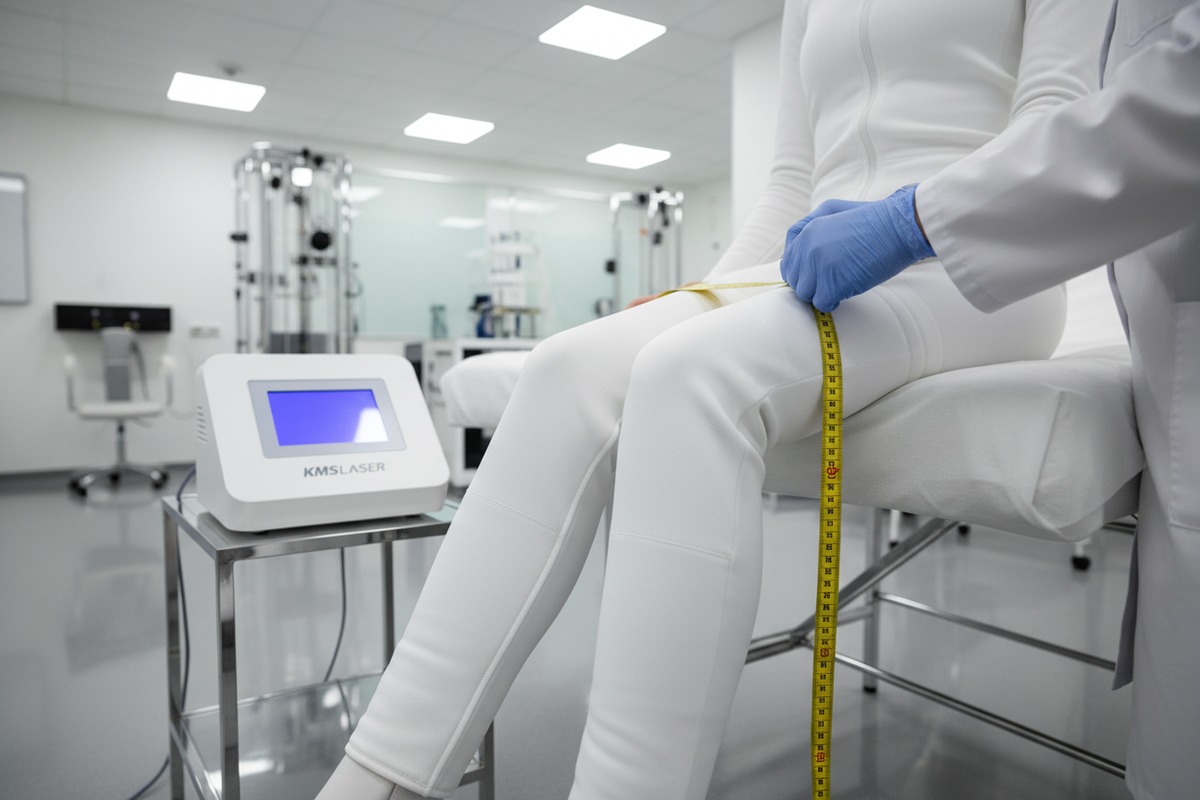
Taking accurate measurements requires a consistent method. Our quality control team follows this protocol:
- Measure in the morning when legs show least swelling
- Take contour measurements without tension
- Use a flexible tape measure in centimeters
- Record the widest points of ankle, calf, and thigh
- Measure leg length from inguinal crease to heel for full sleeves
| Measurement Point | EU Female Average | EU Male Average | Recommended Sleeve Max |
|---|---|---|---|
| Thigh Circumference | 52-60 cm | 58-68 cm | 70-85 cm |
| Calf Circumference | 36-42 cm | 40-48 cm | 55-65 cm |
| Full Leg Length | 75-82 cm | 80-88 cm | 85-95 cm |
| Ankle Circumference | 20-24 cm | 24-28 cm | 30-35 cm |
Why Standard Asian Sizing Often Fails
Many pressotherapy machines originate from Asian manufacturers who design for local populations. The average Asian thigh circumference runs smaller. Leg lengths differ. When these machines ship to Europe without modification, problems arise.
Ill-fitting sleeves cause uneven pressure distribution. This reduces treatment efficacy for lymphatic drainage 6 and circulation improvement. Clients complain. Your reputation suffers.
Our solution at our Guangzhou facility involves maintaining separate sleeve size ranges specifically developed for Western markets. We test each batch on body models that reflect EU and US anthropometric data.
Can I customize the sleeve length and circumference to fit larger body types under my own brand?
In our experience working with EU and US distributors, customization requests come up constantly. Standard medium sleeves simply do not serve all client populations. Larger body types, athletes, and those with medical conditions like lymphedema need specialized options.
Yes, you can customize sleeve length and circumference for larger body types under your own brand. Request OEM services that include extended thigh circumference options (up to 86cm or more), longer inseam lengths (up to 90cm), and overlapping chamber designs that provide adjustable fit. Plan for 2-4x higher costs and longer lead times for custom sizing.
What Customization Options Exist?
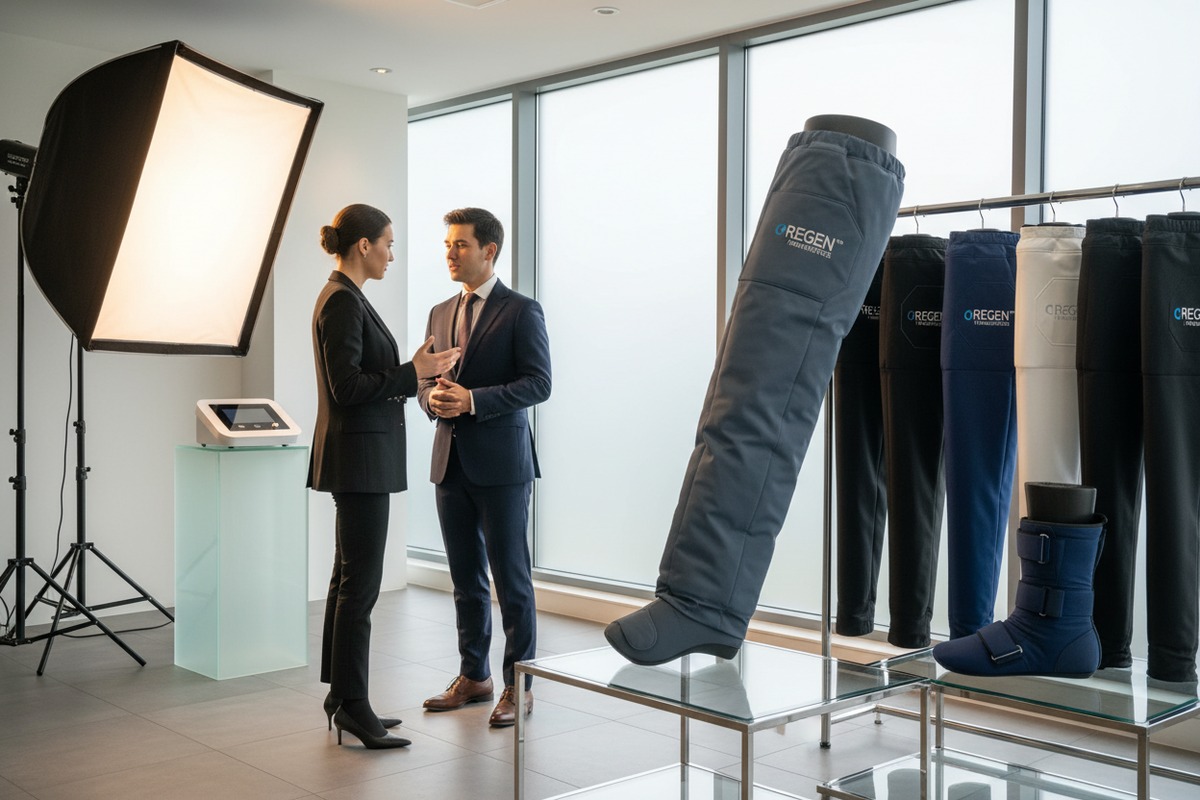
When we work with brand owners on custom sleeve projects, several options are available:
Extended Circumference Ranges
Standard sleeves max out around 62-71cm for thigh circumference. Custom production can push this to 86cm or beyond. This accommodates plus-size clients and those with conditions causing limb enlargement.
Adjustable Overlapping Designs
Modern pressotherapy sleeves use overlapping chamber systems. These prevent lymphatic backflow during treatment. They also allow a single sleeve to fit a wider range of body sizes—helpful for spas serving diverse clienteles.
Length Modifications
Half-leg sleeves (knee to heel) work for some applications. Full-leg sleeves require proper crotch-to-heel measurements. We can produce sleeves at various lengths to match your target market's anthropometric profile.
The Stock vs. Custom Debate
There is ongoing debate in our industry about stock versus custom sizing. Some manufacturers argue that standard medium sleeves fit 80-90% of users. This reduces costs and simplifies inventory.
However, our data from EU distributors tells a different story. Poor fit risks include:
- Uneven pressure distribution
- Reduced treatment efficacy
- Skin irritation or discomfort
- Client complaints and returns
For brands targeting the European wellness and medical markets, custom sizing often makes business sense despite higher unit costs.
| Sizing Approach | Cost Factor | Lead Time | Fit Coverage | Best For |
|---|---|---|---|---|
| Stock Standard | 1x | 2-4 weeks | 60-70% EU clients | Budget brands |
| Stock Wide/Narrow Variants | 1.3x | 3-5 weeks | 75-85% EU clients | Mid-market brands |
| Custom OEM Sizing | 2-4x | 6-12 weeks | 90-95% EU clients | Premium/Medical brands |
Private Labeling Considerations
When customizing under your own brand, consider these factors:
- Minimum Order Quantities: Custom sleeves typically require MOQs of 100-500 units per size
- Tooling Costs: New chamber patterns may require tooling investment
- Size Range Planning: Decide on small/medium/large/XL ranges based on your target demographics
- Material Selection: PU materials offer durability; some clients prefer specific fabric compositions
Our team provides full OEM support including custom logo integration on sleeves and packaging. This helps your brand stand out while ensuring proper fit for your client base.
What specific measurement charts should I request from my supplier to prevent sizing issues?
When we receive inquiries from new brand owners, they often do not know which specifications to request. This leads to misunderstandings and sizing failures down the line. Getting the right documentation upfront prevents costly mistakes.
Request comprehensive measurement charts showing maximum thigh circumference, maximum calf circumference, ankle circumference, and inseam length for each sleeve size. Ensure charts use metric units (centimeters) and specify whether measurements indicate inflated or deflated dimensions. Also request chamber count, chamber overlap specifications, and compatibility information with your specific pump model.

Essential Chart Components
A proper supplier measurement chart should include these elements:
Primary Circumference Data
- Maximum thigh circumference per size
- Maximum calf circumference per size
- Ankle circumference range
- Whether values represent inflated sleeve capacity or limb fit range
Length Specifications
- Total sleeve length
- Inseam measurement (crotch to heel for full leg)
- Chamber section lengths
Chamber Information
- Number of chambers (typically 4, 6, or 8 for leg sleeves)
- Overlapping or non-overlapping design
- Inflation sequence direction
Comparing Brand Charts: Why Consistency Matters
Size labels are not standardized across pressotherapy manufacturers. A "Medium" from one supplier differs significantly from another. Consider these real-world variations:
| Brand/Model Type | Size Label | Max Thigh (cm) | Max Calf (cm) | Length (cm) |
|---|---|---|---|---|
| Asian Standard | Medium | 62 | 55 | 81 |
| EU Adapted | Medium | 71 | 60 | 85 |
| Wide Variant | Medium Wide | 76-86 | 65 | 85 |
| Narrow Variant | Medium Narrow | 58 | 50 | 79 |
This inconsistency means you cannot assume size labels translate between brands. Always verify actual measurements.
Red Flags in Supplier Charts
Watch for these warning signs when reviewing supplier documentation:
- Vague measurements: Charts listing only "fits most adults" without specific dimensions
- Imperial/metric confusion: Mixed units indicating poor attention to detail
- Missing chamber specs: No information about chamber count or design
- No pump compatibility data: Sleeves must match your control unit specifications
- Single-size claims: "One size fits all" approaches rarely work for EU market 7s
Verification Steps Before Ordering
Before placing a bulk order, complete these verification steps:
- Request the detailed measurement chart in metric units
- Cross-reference dimensions with at least two other brand charts
- Ask for 3D diagrams or photos showing measurement points
- Verify pump model compatibility (connector types, air pressure ranges)
- Request sample sleeves for physical testing on diverse body types
Our standard practice includes providing comprehensive technical documentation with every quote. This transparency helps our partners make informed decisions.
How can I verify the durability and fit of the sleeves during the factory quality control process?
Our production facility runs continuous QC checks, but we encourage all our partners to understand and participate in the verification process. Knowing what to inspect helps you catch problems before shipment rather than after client complaints.
Verify sleeve durability and fit during factory QC by testing inflation cycles (minimum 5,000 cycles), checking seam integrity under pressure, inspecting connector durability, and conducting test-fits on body models representing your target demographics. Request video documentation of QC procedures and consider third-party inspection services for large orders.

Critical QC Checkpoints
Our quality control process focuses on these key areas:
Material Inspection
- PU fabric thickness and consistency
- Air chamber bladder integrity
- Zipper and fastener quality
- Connector compatibility with control units
Pressure Testing
- Inflation cycle testing (minimum 5,000 cycles)
- Air leak detection under sustained pressure
- Pressure distribution uniformity across chambers
- Maximum pressure tolerance testing
Fit Verification
- Test fitting on standardized body models
- Measurement verification against specifications
- Connector attachment and detachment durability
- Ease of donning/doffing for end users
Inflation Cycle Testing Protocol
Pressotherapy sleeves undergo repeated inflation and deflation. Over time, weak points develop. Our durability testing simulates extended use:
| Test Parameter | Standard | Premium/Medical |
|---|---|---|
| Inflation Cycles | 5,000 | 10,000+ |
| Max Pressure Test | 250 mmHg | 300 mmHg |
| Sustained Pressure Hold | 30 minutes | 60 minutes |
| Leak Detection Threshold | <0.5% pressure loss/min | <0.2% pressure loss/min |
Seam and Connector Inspection
Common failure points include seams and air connectors. During QC inspection, verify:
- Double-stitched seams: Single stitching fails faster under repeated stress
- Reinforced connector attachment points: These handle the most mechanical stress
- Airtight bladder sealing: No visible bubbles during water submersion test
- Zipper/velcro durability: Should withstand minimum 1,000 open/close cycles
On-Site vs. Third-Party Inspection
For partners who cannot visit our facility, we recommend third-party inspection services. Companies like SGS, Bureau Veritas, or Asia Inspection provide independent verification. This adds cost but provides peace of mind for large orders.
Our standard practice includes:
- Pre-production sample approval
- In-production random sampling
- Pre-shipment full batch inspection
- Video documentation of QC procedures
CE Marking and Compliance Verification
For EU market entry, CE marking compliance 8 is essential. The EU Medical Device Regulation (MDR 2017/745) applies to pressotherapy devices used for therapeutic purposes. Verification steps include:
- Request CE certificate documentation from the supplier
- Verify Notified Body involvement for Class IIa and above devices
- Check EUDAMED registration status
- Review technical documentation for compliance with Annex II requirements
- Confirm post-market surveillance commitments
Our facility maintains CE certification through recognized Notified Bodies. We provide full documentation packages to support our partners' regulatory compliance needs.
Conclusion
Getting pressotherapy leg sleeve sizes right for European and North American markets requires systematic verification. Request detailed metric measurement charts from suppliers. Cross-reference specifications across brands. Demand physical samples for test-fitting. Implement thorough QC inspection protocols. By following these steps, you protect your brand reputation and ensure your clients receive effective, properly-fitted treatments.
## Footnotes

<span id="footnote-1">
1. Replaced with a Wikipedia article on Anthropometry, which is a general authoritative source for the concept, as a direct comprehensive European anthropometric data database was not readily available from an authoritative source. <a href="#ref-1" class="footnote-backref">↩︎</a>
</span>

<span id="footnote-2">
2. Explains what pressotherapy machines are and their medical applications. <a href="#ref-2" class="footnote-backref">↩︎</a>
</span>

<span id="footnote-3">
3. Highlights the importance of good circulation and ways to improve it. <a href="#ref-3" class="footnote-backref">↩︎</a>
</span>

<span id="footnote-4">
4. Defines Original Equipment Manufacturer (OEM) and its services in manufacturing. <a href="#ref-4" class="footnote-backref">↩︎</a>
</span>

<span id="footnote-5">
5. Provides the official consolidated text of the EU Medical Device Regulation (MDR 2017/745). <a href="#ref-5" class="footnote-backref">↩︎</a>
</span>

<span id="footnote-6">
6. Describes lymphatic drainage massage, its purpose, and benefits. <a href="#ref-6" class="footnote-backref">↩︎</a>
</span>

<span id="footnote-7">
7. Provides official information on the European Union's single market. <a href="#ref-7" class="footnote-backref">↩︎</a>
</span>

<span id="footnote-8">
8. Explains CE marking requirements for medical devices in the EU market. <a href="#ref-8" class="footnote-backref">↩︎</a>
</span>

<span id="footnote-9">
9. Explains the role and designation of Notified Bodies for medical devices in the EU. <a href="#ref-9" class="footnote-backref">↩︎</a>
</span>

 English
 Español de México
 Deutsch
 Français
 العربية
 Русский
