
When we started developing our pressotherapy systems, fire safety was not just a checkbox UL 94 flammability certifications 1. It was a core engineering priority. Many buyers discover too late that their supplier cut corners on housing materials. This leads to costly recalls and brand damage.
To verify if your pressotherapy machine supplier uses fire-rated housing, request official UL 94 flammability certifications, review third-party test reports, check for recognized safety marks like CE or FDA approval, and ask for material data sheets specifying the plastic’s flame-retardant rating.
In the sections below, we break down exactly how to verify fire-rated certifications, request burn test videos, understand material standards, and protect your brand from liability in the US market.
How do I verify the fire-rated certifications my pressotherapy machine supplier provides?
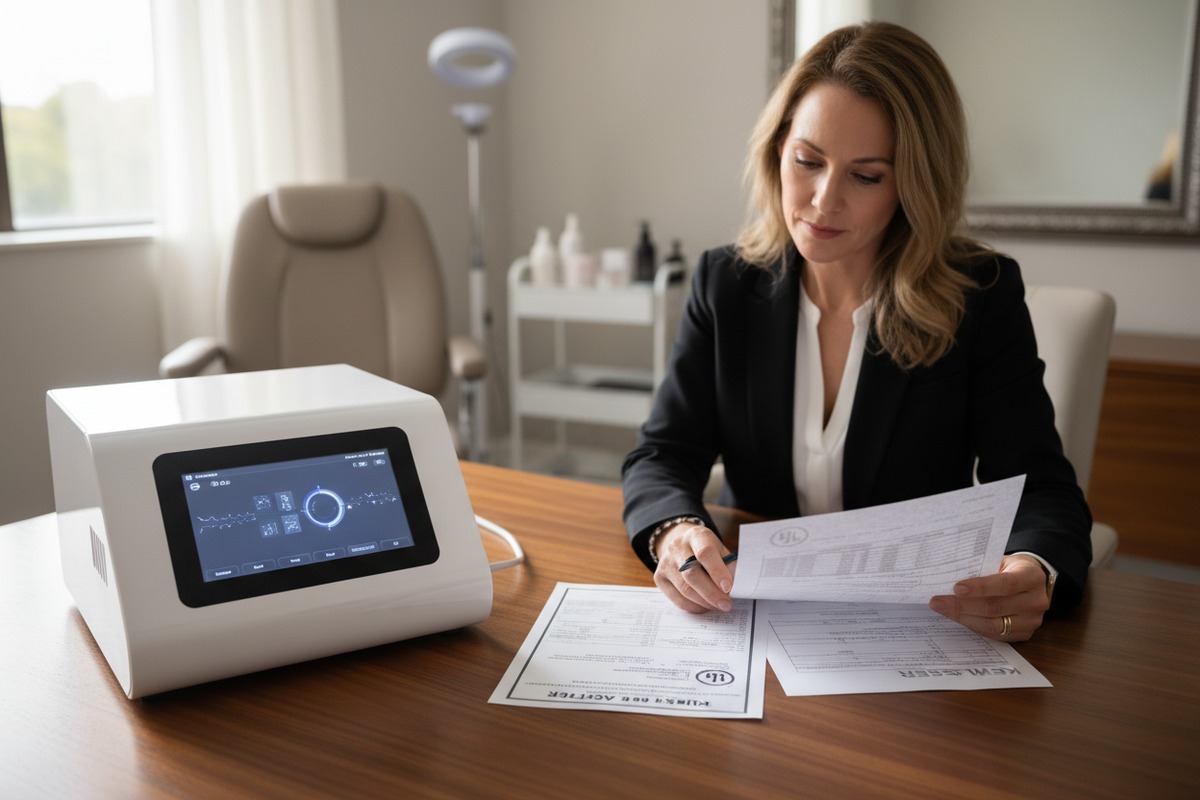
When we receive RFQs from US and European distributors, certification verification is often the first topic FDA approval 2. Many buyers assume all certifications are equal. They are not. Some suppliers show expired documents or certificates that belong to different product lines.
To verify fire-rated certifications, request the original UL 94 Yellow Card, cross-check the certificate number on the UL database, confirm the specific material grade matches your machine's housing, and ask for third-party audit reports from accredited labs like UL, TÜV, or SGS.

Understanding UL 94 Ratings
The UL 94 standard 3 is the most widely used flammability standard for plastic materials in devices and appliances. UL 94, the Standard for Safety of Flammability of Plastic Materials for Parts in Devices and Appliances testing, is a plastics flammability standard released by Underwriters Laboratories of the United States 4. The standard determines the material's tendency to either extinguish or spread the flame once the specimen has been ignited.
There are several ratings under UL 94. Not all ratings provide the same level of protection.
| UL 94 Rating | Test Method | Flame Behavior | Common Applications |
|---|---|---|---|
| HB | Horizontal Burn | Slow burning, self-extinguishing | Low-risk consumer products |
| V-2 | Vertical Burn | Self-extinguishes within 30 seconds, dripping allowed | General electronics |
| V-1 | Vertical Burn | Self-extinguishes within 30 seconds, no flaming drips | Industrial equipment |
| V-0 | Vertical Burn | Self-extinguishes within 10 seconds, no flaming drips | Medical devices, high-risk equipment |
| 5VA/5VB | Vertical Burn (larger flame) | Most stringent, tested with intense flame | Mission-critical applications |
Among these, V-0 is the most stringent vertical burn classification, indicating the highest level of flame resistance achievable under this test method. For pressotherapy machines, we recommend housing materials rated V-0 or higher.
How to Cross-Check Certificates
Many suppliers provide PDF certificates. But PDFs can be altered. The safest approach is to verify directly with the certification body. UL 94 flammability testing is the first step toward obtaining a plastic recognition and subsequent listing in the "Plastics Recognized Component Directory" (former known as "Yellow Cards").
Here is what to do:
- Ask your supplier for the UL Yellow Card number.
- Visit the UL database (Product iQ 5) and search for that number.
- Confirm the material grade and manufacturer match what your supplier claims.
- Check if the certificate is current or expired.
Why Third-Party Validation Matters
Though a third-party report may not always be required, it may be desirable to mitigate risk, liability and can be used as market differentiator. When we prepare documentation for our US clients, we always include third-party test reports. This builds trust and reduces liability exposure.
Many North American, European, and international public-sector tenders stipulate V-0 compliance, often requiring third-party certification from ISO/IEC 17025-accredited laboratories 6 (UL, TÜV, SGS, etc.).
Can I request a physical burn test video to confirm my machine's housing is truly flame-retardant?
In our experience working with quality-conscious buyers, video evidence of burn tests has become a standard request. This is especially true for buyers who have been burned before by substandard suppliers. Videos provide visual proof that words alone cannot match.
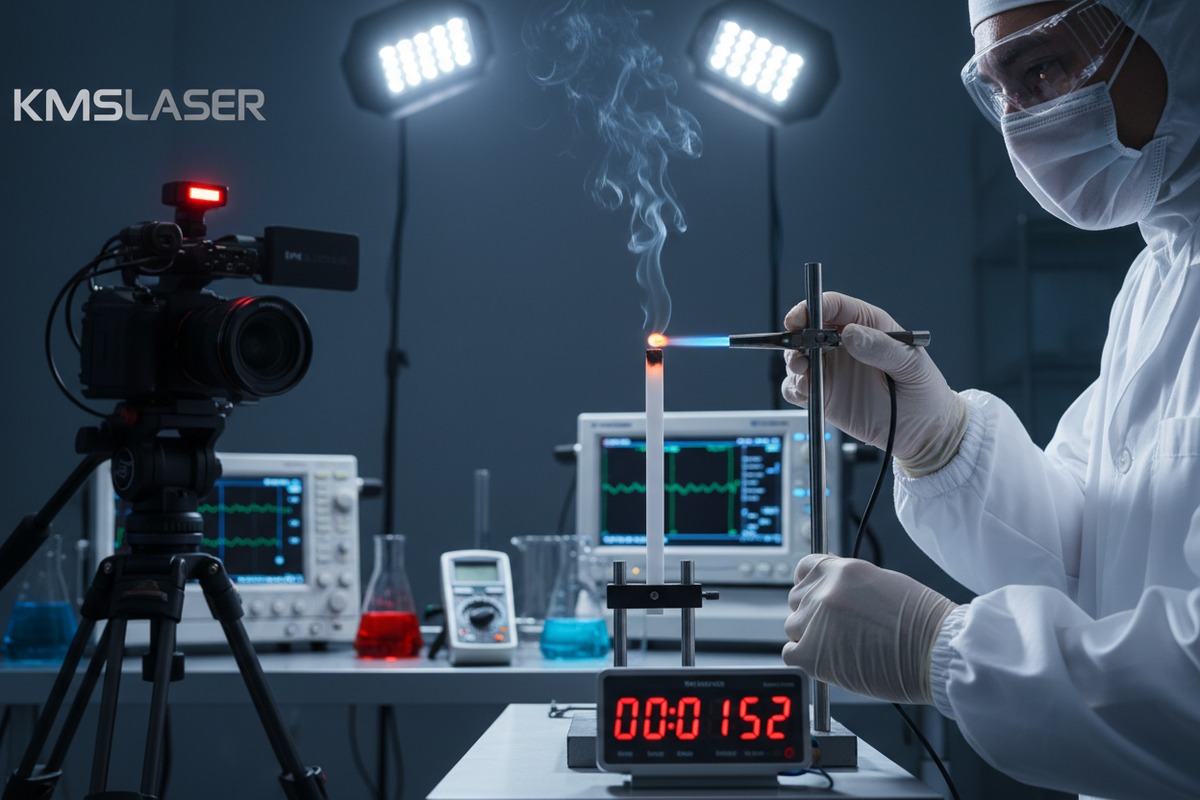
Yes, you can and should request a burn test video from your supplier. A legitimate manufacturer will conduct an in-house or third-party burn test on the actual housing material and record the test, showing flame application time, self-extinguishing behavior, and absence of flaming drips.
What a Proper Burn Test Video Should Show
A valid burn test video should follow the UL 94 vertical burn test protocol. UL 94 evaluates how plastics react to open flame, measuring ignition time, self-extinguishing behavior, and whether flaming drips ignite a secondary cotton indicator.
Key elements to look for in the video:
- Sample identification: The tester should show the material sample and label it clearly.
- Flame application: A calibrated Bunsen burner flame applied for the specified duration (10 seconds for V tests).
- Self-extinguishing time: The material should stop burning within the time limits for its claimed rating.
- Drip test: Cotton placed below the sample should not ignite from any drips.
- Multiple samples: Testing should cover multiple specimens, not just one.
In-House vs. Third-Party Testing
Our factory performs regular in-house burn tests during production. But for official certification, third-party testing is essential. The two labs – UL and ETL – provide very similar product testing services, and both are certified NRTL. The UL and ETL marks prove that the product has met the minimum requirements of established and accepted product safety standards.
| Test Type | Conducted By | Use Case | Credibility Level |
|---|---|---|---|
| In-House Test | Supplier's QC team | Routine production QC | Moderate |
| Third-Party Test | UL, SGS, TÜV, Intertek | Certification and liability protection | High |
| Independent Lab Test | ISO 17025 accredited lab | Buyer verification | High |
Red Flags in Burn Test Videos
Watch out for these warning signs:
- Video shows a different material or product than what you ordered.
- No visible sample labeling or batch numbers.
- Flame applied for too short a time.
- Material burns for extended periods before self-extinguishing.
- Video cuts or edits during critical moments.
- No cotton drip indicator visible.
When we send burn test videos to clients, we include unedited footage with timestamps. Transparency matters.
What specific material standards should I look for in my supplier's quality control reports?
Our engineering team reviews dozens of material specifications each month. We have seen buyers focus only on surface-level certifications while ignoring the underlying material data. The material data sheet tells the real story.
Look for UL 94 V-0 rating, specific resin grade identification, thickness-specific certification, halogen-free status if required, ISO 10993 biocompatibility for skin contact, and RoHS compliance in your supplier's quality control reports to ensure complete fire safety and regulatory alignment.

Key Material Specifications to Check
UL 94 ratings are thickness dependent. A resin that passes at 0.059 in. (1.5mm) may fail at 0.029 in. (0.74mm). This is critical. If your machine housing is 2mm thick but the certificate is for 3mm material, you may have a compliance gap.
| Specification | What to Check | Why It Matters |
|---|---|---|
| UL 94 Rating | V-0, V-1, or 5VA | Determines self-extinguishing behavior |
| Material Grade | Exact resin name (e.g., PC+ABS FR) | Confirms flame retardant formulation |
| Thickness Range | mm specification on certificate | Rating may not apply at your thickness |
| Color | Specific color code | Custom blends, colorants, additives, and other alterations to the base material may affect its rating. |
| RoHS Compliance 7 | Certificate or declaration | Required for EU and many US markets |
| Halogen Content | Halogen-free declaration if needed | Environmental and toxicity concerns |
Understanding Material Data Sheets
A proper material data sheet (MDS) should include:
- Manufacturer name and contact information.
- Resin type and trade name.
- UL file number and certification status.
- Physical properties (tensile strength, impact resistance, heat deflection).
- Flammability rating at specific thickness levels.
- Regulatory compliance (RoHS, REACH, FDA contact requirements if applicable).
If you are working in industries where multiple property standards apply, such as smoke, toxicity, or thermal aging, be sure to validate the full material profile before production.
Thermal Management Considerations
Fire-rated housing is only one part of the safety picture. Internal heat buildup can degrade material properties over time. When we design our pressotherapy machines, we include:
- Adequate ventilation slots in the housing.
- Thermal cutoff sensors.
- Low-heat electronic components.
- Proper spacing between heat-generating parts and the housing.
Ask your supplier if they have thermal management data showing operating temperatures under continuous use.
How does choosing fire-rated housing protect my brand from liability and safety risks in the US market?
From our work with US distributors, we know the legal landscape is unforgiving. A single fire incident can destroy years of brand building. Insurance claims, lawsuits, and product recalls cost far more than investing in proper materials upfront.
Fire-rated housing protects your brand by demonstrating due diligence, meeting OSHA workplace safety requirements, satisfying insurance policy conditions, reducing product liability exposure, and building consumer trust through visible safety certifications in the competitive US market.

Product Liability in the US
The US has strict product liability laws. Product Liability in the US 8 If a pressotherapy machine causes a fire injury, the entire supply chain can be held responsible. This includes the brand owner, the importer, and sometimes the overseas manufacturer.
The consequences of using non-certified devices can be severe. Without proper certification, there's no guarantee that the machine has been tested for safety and efficacy. This can lead to ineffective treatments or, worse, potential harm to the user.
Key liability risks include:
- Personal injury lawsuits from end users.
- Property damage claims from salon or spa owners.
- Class action suits if multiple incidents occur.
- Criminal liability in cases of gross negligence.
Insurance and Compliance Requirements
Most business insurance policies require products to meet recognized safety standards. If you sell equipment without proper fire certifications, your insurer may:
- Deny claims related to fire incidents.
- Cancel your policy.
- Increase your premiums significantly.
In terms of liability, the mark protects you just as much as the consumer, and that's not a "racket."
Building Trust with Your Customers
Salon and spa owners are increasingly safety-conscious. They ask about certifications before purchasing equipment. Having clear documentation of fire-rated housing helps you:
- Win competitive bids where safety is a factor.
- Build long-term customer relationships based on trust.
- Justify premium pricing with demonstrable quality.
- Protect your brand reputation in case of industry-wide safety concerns.
| Safety Investment | Short-Term Cost | Long-Term Benefit |
|---|---|---|
| UL 94 V-0 Housing | Higher material cost | Legal protection, insurance compliance |
| Third-Party Certification | Testing fees | Market credibility, reduced liability |
| Quality Documentation | Staff time | Customer trust, competitive advantage |
| Burn Test Records | Minimal cost | Evidence of due diligence |
Regulatory Framework in the US
The Occupational Safety and Health Administration (OSHA) defines the requirements for marking electrical equipment in a workplace setting only and states that they must be tested by a Nationally Recognized Test Laboratory (NRTL). While pressotherapy machines used in home settings may have different requirements, manufacturers of home healthcare equipment should consider that their devices could be used in clinical settings such as hospitals and home environments, as well as in non-clinical non-household settings such as nursing homes, salons, physiotherapy, etc.
This means your pressotherapy machines should meet the highest standard, as you cannot control where end users will operate them.
Conclusion
Verifying fire-rated housing on pressotherapy machines requires checking certifications, requesting burn test evidence, reviewing material data sheets, and understanding US liability requirements. Your brand's safety depends on it.
Footnotes
1. Official page from UL Solutions detailing UL 94 flame ratings and testing services. ↩︎
2. Official FDA guidance on the approval process for medical devices. ↩︎
3. Official page from UL Solutions explaining the UL 94 standard for flammability of plastic materials. ↩︎
4. Official history page from UL Solutions, detailing the origins of Underwriters Laboratories. ↩︎
5. Official UL Solutions database for verifying UL certifications. ↩︎
6. Official ISO page for the ISO/IEC 17025 standard for testing and calibration laboratories. ↩︎
7. Official European Commission page on the RoHS Directive. ↩︎
8. Legal information on product liability in the US from Cornell Law School. ↩︎

 English
 Español de México
 Deutsch
 Français
 العربية
 Русский
