
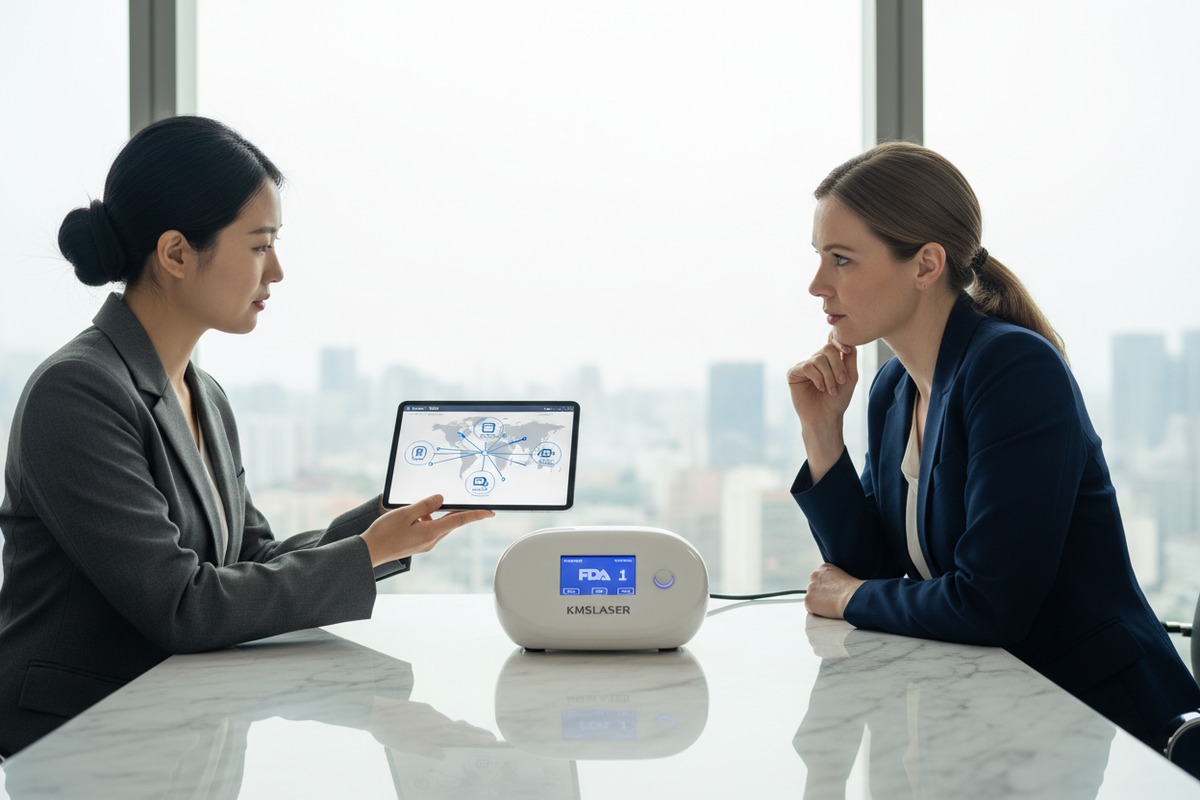
When our production team finishes assembling a batch of pressotherapy machines, the real challenge begins FDA registration expertise 1. Getting these beauty devices across the ocean and through US customs without delays can make or break your import timeline. A wrong freight forwarder choice leads to shipments stuck at port, FDA holds, and thousands in unexpected fees.
To verify a China freight forwarder’s medical device clearance capability for pressotherapy machines, request proof of FDA registration expertise, past shipment records for similar devices, documentation templates for 510(k) or device listing requirements, and references from medical device clients who have successfully cleared US customs.
The stakes are high. Let me walk you through exactly what to check before trusting any forwarder with your pressotherapy equipment.
What specific documentation should I request to verify a forwarder's medical device clearance expertise?
Our logistics team reviews dozens of forwarder proposals each year 510(k) or device listing requirements 2. Many claim medical device experience. Few can prove it. The gap between claims and reality shows up when shipments get detained 21 CFR Part 807 registration requirements 3.
Request copies of completed FDA entry forms (DEV/DFE codes, LST codes, PM# numbers), sample commercial invoices for past medical device shipments, and proof that the forwarder understands 21 CFR Part 807 registration requirements. Also ask for their documentation checklist specific to Class II beauty devices.

The Core Documentation Package
A capable freight forwarder should produce documentation that aligns with FDA and CBP requirements Class II beauty devices 4. When shipping pressotherapy machines to the US, the forwarder must handle several critical documents.
| Document Type | Purpose | Who Provides It |
|---|---|---|
| Commercial Invoice | Declares value and product details | Manufacturer/Exporter |
| Packing List | Details contents and weights | Manufacturer |
| Bill of Lading | Shipping contract | Forwarder/Carrier |
| FDA Prior Notice | Required for certain devices | Forwarder files it |
| 510(k) Clearance Letter | Proves FDA approval | Manufacturer holds it |
| Establishment Registration | Shows FDA registration | Manufacturer provides number |
The forwarder should know that medical device importers must ensure premarket compliance (510(k)/PMA), establishment registration and listing, proper CBP filing codes (DEV, LST, PM#), and ongoing MDR obligations.
Verify Their Understanding of Entry Codes
Ask the forwarder to explain the CBP filing codes for medical devices FDA PREDICT system 5. AofC entries include DEV/DFE for establishment registration and LST for device listing, plus PM# when premarket authorization applies. If they cannot explain these codes clearly, they lack the expertise you need.
Check Their Knowledge of Labeling Requirements
A qualified forwarder understands that devices must have proper labeling, including Unique Device Identification (UDI) 6. They should verify labeling before shipment leaves China.
Request Sample Documentation
Do not accept vague answers. Ask for redacted samples of documentation they have prepared for similar shipments. 510(k) clearance, PMA approval 7, or De Novo order numbers for ACE and the supporting letters must be ready if FDA requests them during review.
How can I confirm my forwarder has a proven track record of shipping pressotherapy machines to the US?
When we ship our pressotherapy units to US distributors, we need forwarders who have done this work before. Theory does not equal practice. A forwarder who has never handled lymphatic drainage equipment may underestimate its complexities.
Confirm track record by requesting case studies of pressotherapy or similar beauty device shipments, asking for at least three references from medical device clients, reviewing their clearance success rates, and checking if they have handled FDA detention resolution for similar products.
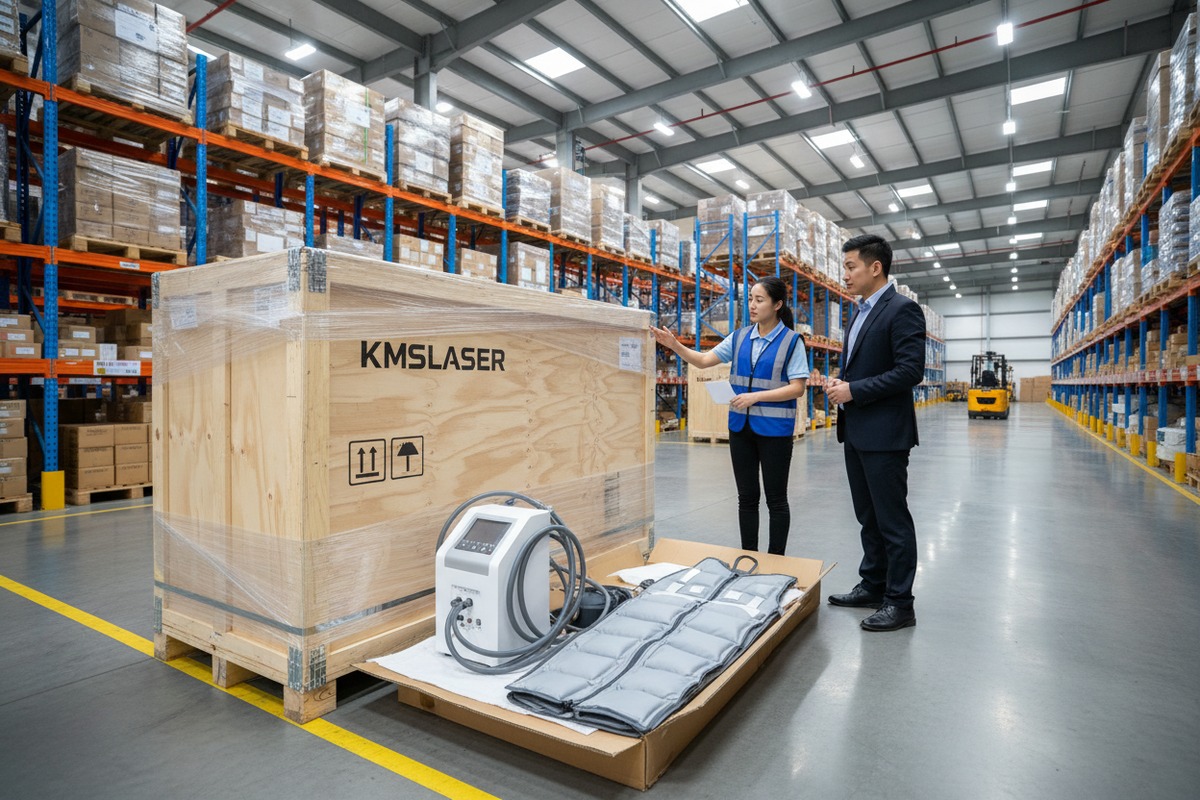
Why Pressotherapy Experience Matters
Pressotherapy machines fall into a specific category. All IPC devices meet industry safety and performance standards, holding certifications from the FDA, NRTL, CE, and Health Canada. A forwarder familiar with these certifications knows what documents to prepare.
Questions to Ask About Past Shipments
| Question | Why It Matters | Red Flag Answer |
|---|---|---|
| How many pressotherapy or IPC devices have you shipped in the past year? | Shows real experience | "We handle all kinds of medical devices" (too vague) |
| What was your average clearance time? | Indicates efficiency | Anything over 5 business days for routine shipments |
| Have you dealt with FDA detention for beauty devices? | Shows problem-solving ability | "We've never had any issues" (unlikely if volume is high) |
| Can you provide contact info for medical device clients? | Allows verification | Refusal or hesitation |
Verify Their Understanding of Device Classification
Pressotherapy machines may be classified differently depending on their intended use. Device classification includes Class I (low risk), Class II (moderate risk, may need 510(k)), Class III (high risk, requires Premarket Approval – PMA).
A competent forwarder will ask about your device's classification before quoting. They need this information to prepare proper documentation.
Check China Export Compliance
The forwarder should also understand export requirements from China. The CN exporter will need to provide an Export Declaration of Medical Supplies form as supporting document for export customs declaration. If the medical device is not listed in the whitelist, the shipment cannot be exported.
Request Performance Metrics
Good forwarders track their performance. Ask for their:
- First-pass clearance rate (percentage of shipments cleared without holds)
- Average time from port arrival to delivery
- Number of FDA detentions in the past 12 months
- Resolution rate and timeline for any detentions
What questions should I ask to ensure my freight forwarder can handle the complex FDA requirements for beauty machines?
Our engineering team designs pressotherapy systems to meet strict quality standards. But those standards mean nothing if the forwarder cannot navigate FDA entry requirements. I have seen shipments delayed for weeks because forwarders filed incorrect product codes.
Ask forwarders to explain the FDA PREDICT system, describe how they verify manufacturer registration status, outline their process for handling Notice of FDA Action holds, and demonstrate knowledge of 21 CFR Part 807 requirements for establishment registration and device listing.

Understanding the FDA PREDICT System
With FDA's PREDICT system automatically screening every entry, understanding import requirements is critical. Ask your forwarder to explain how this system affects your shipments.
The PREDICT system uses algorithms to flag high-risk shipments. A forwarder who understands this will:
- Ensure all data fields are accurate
- Avoid common errors that trigger automatic holds
- Know which product codes raise red flags
Key FDA Questions to Ask
| Question | Expected Response | Concerning Response |
|---|---|---|
| How do you verify our FDA establishment registration before shipping? | "We check CDRH's database using your registration number" | "We assume you're registered" |
| What happens if FDA issues a detention? | "We file a response with supporting evidence within the deadline" | "That rarely happens" |
| Do you understand DWPE (Detention Without Physical Exam)? | "Yes, it's when FDA detains based on history or alerts" | Confusion or unfamiliarity |
| How do you confirm product listing status? | "We verify the product description matches CDRH's database" | "That's your responsibility" |
The Foreign Manufacturer US Agent Requirement
Foreign manufacturers need US agents while initial importers must maintain complaint files in the US. Your forwarder should understand this requirement and may even offer US agent services or referrals.
Foreign medical device manufacturers importing products into the US have to designate a US agent. The details of a company's US agent should be provided to the FDA at the time of establishment registration. This information is submitted electronically through the FDA Unified Registration and Listing System (FURLS).
Registration and Listing Verification
Establishments that are involved in the production and distribution of medical devices intended for commercial distribution in the United States are required to register annually with the FDA. Most establishments that are required to register are also required to list the devices and the activities performed on those devices at that establishment.
A professional forwarder will request your FDA registration number and product listing information before accepting your shipment. They should also verify this information independently.
Handling Import Alerts
The FDA checks the import alert database to ensure the manufacturer or product is not subject to detention without physical exam (DWPE) and listed on an import alert. For example, import alert 89-04 lists foreign manufacturers not in compliance with Medical Device Good Manufacturing Processes.
Ask if your forwarder monitors import alerts relevant to your product category.
How do I evaluate if a China-based forwarder can truly manage my door-to-door logistics and customs risk?
When we promise our US clients door-to-door delivery, our reputation depends on the forwarder's capabilities. A forwarder who handles only the ocean segment leaves gaps that create delays and surprise costs.
Evaluate door-to-door capability by reviewing their network of US customs brokers, checking if they offer cargo insurance, confirming they provide real-time tracking, verifying their ability to handle last-mile delivery to your warehouse, and assessing their contingency plans for customs delays.

Components of True Door-to-Door Service
A genuine door-to-door forwarder manages every step from our Guangzhou factory to your US warehouse.
| Service Stage | What to Verify | Risk If Missing |
|---|---|---|
| Factory Pickup | Do they have trucks/partners in your manufacturing region? | Delays before shipment even begins |
| Export Customs | Do they handle China export declaration? | Shipment stuck at Chinese port |
| Ocean/Air Transport | Do they have carrier relationships for reliable booking? | Space allocation problems |
| US Import Customs | Do they have licensed US customs brokers? | Clearance delays and errors |
| Inland Transport | Can they arrange trucking to your destination? | Extra coordination needed |
| Final Delivery | Do they provide proof of delivery? | Disputes about shipment status |
Assessing China Export Capabilities
Freight Forwarders are responsible for arranging the transportation of goods from China to the destination country, including booking cargo space, arranging customs clearance, and handling logistics. Custom Brokers are responsible for facilitating the customs clearance process, including preparing and submitting the necessary documentation, paying duties and taxes, and ensuring compliance with regulations and laws.
Ask if the forwarder handles both roles or partners with separate customs brokers.
Medical Device Shipping Specialization
Shipping medical equipment is a sub-set of the global shipping industry that requires specialized expertise. Whether it's laboratory testing devices or large, diagnostic scanners, these machines can contain fragile gauges, lenses, mirrors, computer chips and other delicate internal items. Careful shipping is essential to maintain the integrity and functionality of the equipment since any damage in transit may have serious implications.
Your pressotherapy machines contain sensitive components. Ask about:
- Packaging recommendations
- Temperature monitoring if needed
- Shock indicators for transit monitoring
Risk Assessment Questions
| Risk Category | Question to Ask | What Good Looks Like |
|---|---|---|
| Financial | Do you offer cargo insurance? | Yes, with coverage options explained clearly |
| Timeline | What's your backup plan if primary carrier has delays? | Alternative carriers identified, not just "we'll figure it out" |
| Compliance | Who pays if documentation errors cause fines? | Clear liability terms in their contract |
| Communication | How often will you update us during transit? | Automated tracking plus human contact points |
Evaluating Their US Network
The submission of incorrect information related to the device Initial Importer is a common entry error occurring during the medical device import process. According to the FDA, "Submitting the incorrect device initial importer could result in either the distribution of products into U.S. commerce that may not meet the FDA's laws and regulations or the shipment being unnecessarily held for additional review."
Ask your forwarder how they verify Initial Importer information. This common error causes many delays.
Cost Transparency
Many medical devices are manufactured in and imported from China, resulting in a large number of these products being impacted by Section 301 tariffs 8. These tariffs impact thousands of products imported from China and can be as high as 25% in some cases.
Request a detailed breakdown of all costs, including:
- Freight charges
- Customs duties
- Section 301 tariffs (if applicable)
- Handling fees
- Insurance
- Last-mile delivery
Conclusion
Selecting the right China freight forwarder for pressotherapy machines requires careful verification. Request documentation samples, check track records, ask detailed FDA compliance questions, and evaluate true door-to-door capabilities. Your due diligence now prevents costly delays and compliance failures later.
Footnotes
1. Official FDA source for medical device establishment registration. ↩︎
2. Provides official FDA guidance on 510(k) premarket notification. ↩︎
3. Direct legal text for FDA establishment registration and device listing. ↩︎
4. Explains FDA’s classification system for medical devices, including Class II. ↩︎
5. Explains the FDA’s automated import screening system, PREDICT. ↩︎
6. Official FDA resource detailing the Unique Device Identification system. ↩︎
7. Official FDA information on the Premarket Approval process for Class III devices. ↩︎
8. Official government information regarding Section 301 tariffs on Chinese imports. ↩︎

 English
 Español de México
 Deutsch
 Français
 العربية
 Русский
