

When our engineering team first started developing shockwave therapy machines 1, we quickly discovered that button failures caused the most customer complaints. Clinics running 15 sessions daily need controls that survive millions of actuations without losing responsiveness.
To properly test tactile feedback and button lifespan, request manufacturers’ cycle-rated testing data, conduct hands-on force consistency checks, run 2,000-pulse marathon simulations at maximum settings, and verify buttons maintain uniform response after extended use. These steps prevent costly equipment failures in high-volume salon environments.
The following sections break down each testing method so you can confidently evaluate any shockwave machine before placing bulk orders.
During factory visits, our quality control engineers have seen buyers skip button testing entirely. They focus on laser power and applicator design. Then three months later, they call complaining about sticky frequency dials or unresponsive power buttons.
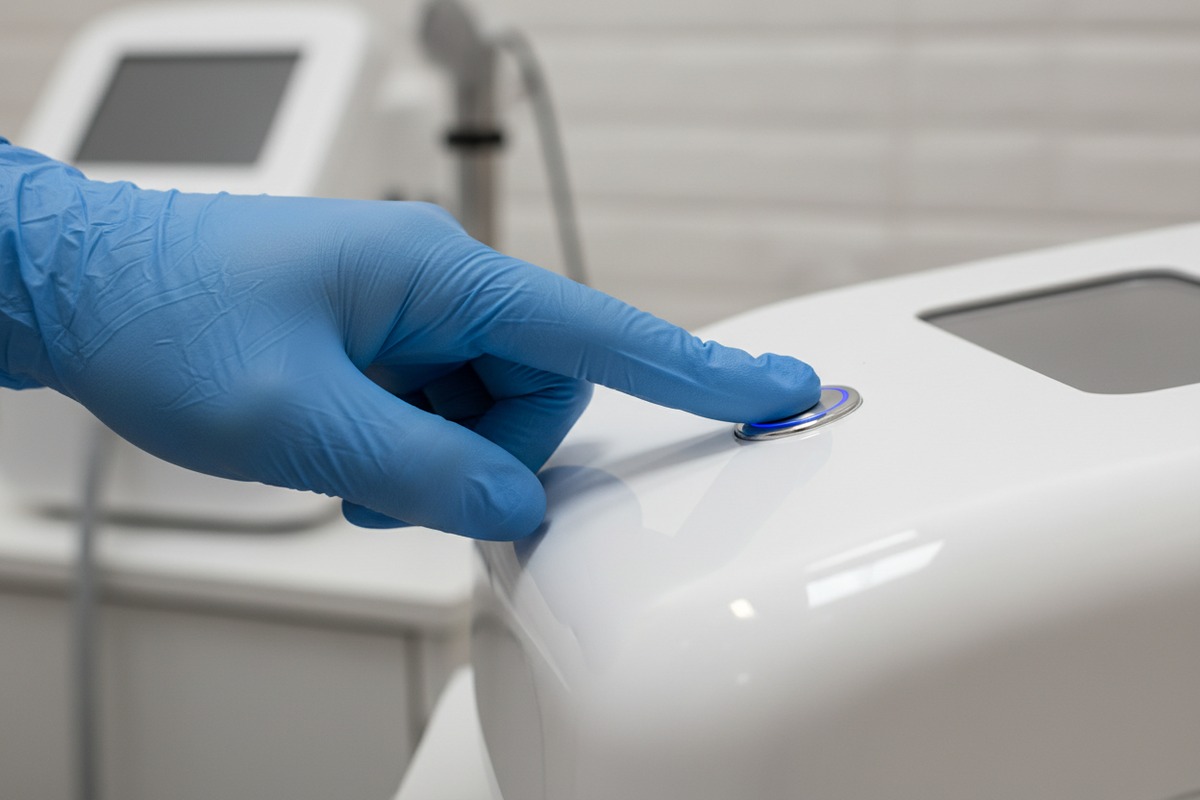
Accurate tactile feedback testing requires checking button force consistency, travel distance uniformity, audible click presence, and response latency across all interface controls. Wear medical gloves during testing to simulate real clinical conditions where operators cannot feel subtle feedback differences.
Why Tactile Feedback Matters in Clinical Settings
Shockwave therapy demands precise settings. A treatment for plantar fasciitis 2 might require exactly 4 bar pressure at 15 Hz. If the frequency dial gives inconsistent feedback, operators may accidentally set 12 Hz or 18 Hz. This dosing error reduces treatment effectiveness or causes patient discomfort.
In our production facility, we test every button using calibrated force gauges. The target is 0.5-0.8 N actuation force 3 with ±10% tolerance. Buttons outside this range feel either too mushy or too stiff.
Step-by-Step Tactile Testing Protocol
First, power on the machine and navigate through all menu screens. Press each button 50 times in rapid succession. Note any delay between press and screen response. Lag exceeding 100 milliseconds indicates poor software-hardware integration.
Second, close your eyes and press buttons randomly. Can you distinguish power from frequency controls by feel alone? Well-designed interfaces use different button shapes or resistance levels for critical functions.
Third, put on nitrile examination gloves. Repeat all button presses. Gloves reduce finger sensitivity by approximately 40%. If buttons feel indistinguishable with gloves, operators will make errors during actual treatments.
Tactile Feedback Scoring Matrix
| Test Parameter | Acceptable Range | Red Flag Signs |
|---|---|---|
| Actuation Force | 0.5-0.8 N | Requires excessive pressure or triggers accidentally |
| Travel Distance | 1.5-2.5 mm | No perceptible movement or excessive wobble |
| Click Sound | Audible, consistent | Silent or intermittent clicking |
| Response Latency | Under 100 ms | Visible delay between press and action |
| Gloved Operation | Distinguishable buttons | All buttons feel identical |
Comparing Against Benchmark Units
We always recommend bringing a trusted machine for side-by-side comparison. If you have a STORZ or BTL unit that performs well, test the new machine against it. Press the same button sequence on both devices. Document any differences in feel, sound, or response speed.
Pay special attention to the energy adjustment controls. These get used hundreds of times per day. Even slight inconsistencies compound into major usability problems over thousands of treatments.
When we quote shockwave machines to distributors, the first question smart buyers ask involves lifespan documentation. They want numbers, not marketing promises. Our engineering reports show exactly how we test component durability before shipping.
Request button cycle ratings (minimum 500,000 actuations), accelerated aging test results, environmental stress screening data, and failure mode analysis reports. Reputable manufacturers provide these documents because they conduct this testing anyway. Refusal to share data signals inadequate quality control.
Understanding Cycle Ratings
Button lifespan is measured in actuation cycles. One cycle equals one complete press and release. A busy clinic performing 15 treatments daily, each requiring 100 button presses, accumulates 1,500 cycles per day. Over five years, that totals 2.7 million cycles.
Quality membrane switches survive 1-5 million cycles. Cheap alternatives fail around 100,000-300,000 cycles. The difference determines whether your machine lasts six months or ten years.
Essential Documentation Checklist
| Document Type | What It Shows | Warning If Missing |
|---|---|---|
| Cycle Test Certificate | Number of actuations before failure | Untested components |
| Accelerated Aging Report | Performance after simulated 5-year use | Unknown long-term reliability |
| Environmental Testing Data | Function after humidity/temperature exposure | May fail in varied climates |
| Failure Mode Analysis | How buttons fail and early warning signs | No predictive maintenance possible |
| Supplier Component Specs | Original button manufacturer ratings | Generic or counterfeit parts |
Interpreting Manufacturer Test Data
Our test lab runs buttons through automated cycling machines. We program them to actuate 100,000 times at controlled force levels. Then we measure whether actuation force changed, whether contacts developed resistance, and whether any physical deformation occurred.
Good test reports include before-and-after measurements. They show force curves, contact resistance graphs, and photographs of wear patterns. Vague statements like "tested for durability" without quantitative data are meaningless.
Red Flags in Lifespan Documentation
Watch for these warning signs when reviewing supplier data:
Testing at lower force levels than actual use conditions inflates cycle ratings 5. Buttons tested at 0.3 N may fail quickly under typical 0.6 N operator pressure.
Sample sizes under 10 units provide statistically unreliable results. We test minimum 30 buttons from each production batch.
Missing environmental data suggests buttons were only tested in controlled lab conditions. Real clinics experience humidity, temperature swings, and cleaning chemical exposure.
Projectile Durability Connection
In radial shockwave machines, buttons control pneumatic systems that fire projectiles at speeds up to 90 kph. These systems create vibration and mechanical stress that transfers to interface components. Button lifespan testing must account for this operational context.
Ask whether buttons were tested on assembled machines running actual shockwave protocols. Isolated component testing does not capture the full stress environment.
Our factory receives returned units from distributors about twice monthly. When we analyze failures, button-related issues account for roughly 30% of problems. Most trace back to inadequate incoming inspection of switch components from sub-suppliers.
Ensure supplier quality control by auditing their incoming component inspection procedures, verifying they conduct 100% functional testing before shipping, requesting Statistical Process Control charts for button-related metrics, and confirming they perform batch sampling with accelerated stress testing.
Incoming Component Inspection Standards
Reliable manufacturers do not trust sub-supplier certificates blindly. They test incoming button components before assembly. Our QC team randomly samples 5% of each button shipment and tests actuation force, contact resistance, and physical dimensions.
Components outside specification get rejected entirely. We never sort good from bad within a batch because marginal components eventually fail.
Production Line Testing Checkpoints
Quality control happens at multiple stages, not just final inspection. Here is our checkpoint system:
| Stage | Test Performed | Reject Criteria |
|---|---|---|
| Incoming | Force gauge measurement | Outside 0.5-0.8 N range |
| Sub-assembly | Electrical continuity | Contact resistance over 100 mΩ |
| Final Assembly | 100-cycle functional test | Any actuation failure |
| Pre-shipment | Full protocol simulation | Response latency over 100 ms |
| Random Batch | 2,000-cycle stress test | Force drift over 15% |
Environmental Stress Screening
High-use salon environments expose equipment to challenges absent from factories. Air conditioning cycles create temperature swings. Cleaning between patients introduces disinfectant chemicals. Humid climates accelerate corrosion.
We subject sample units to accelerated environmental testing. This includes 48-hour humidity chamber exposure at 85% RH, temperature cycling from 10°C to 40°C, and chemical resistance testing with common disinfectants like quaternary ammonium compounds.
Auditing Supplier Quality Systems
When evaluating potential suppliers, request a factory tour specifically examining their QC processes. Ask to see their incoming inspection records, calibration certificates for test equipment, and training documentation for QC personnel.
Suppliers who hesitate or provide vague answers likely lack systematic quality control. Professional manufacturers welcome quality-focused buyers because it signals serious long-term partnership potential.
Statistical Process Control Implementation
Advanced manufacturers track button-related metrics using Statistical Process Control charts 6. These graphs show measurement trends over time, revealing process drift before it causes failures.
Ask suppliers to share their SPC data for actuation force measurements. Stable processes show data points clustering around target values. Unstable processes show wandering trends or frequent out-of-spec points.
What are the best ways for me to identify high-quality interface components before placing a bulk order?
Before we finalized our current shockwave machine design, our R&D team evaluated seventeen different button suppliers. The winner was not the cheapest or the most expensive. They provided the best documentation, most consistent samples, and fastest response to technical questions.
Identify high-quality interface components by requesting sample units for extended evaluation, conducting gel splash and tin foil pitting tests to verify actual output, checking component brand names against industry reputation databases, and assessing modularity for future replacement ease.
Hands-On Evaluation Methods
Paper specifications deceive. Marketing departments optimize numbers while engineering compromises go hidden. The only reliable evaluation method involves extended hands-on testing.
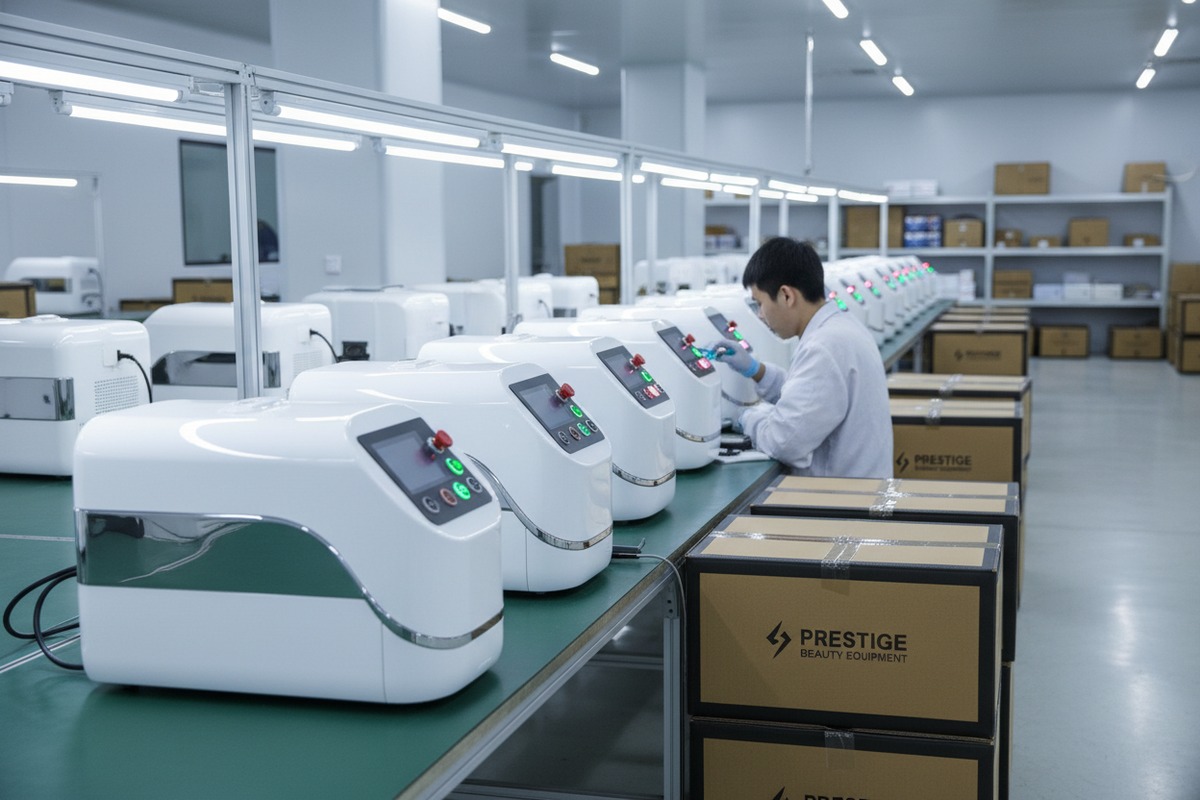
Request a sample unit for minimum 30-day evaluation. Run it through your standard treatment protocols daily. Document any changes in button feel, response consistency, or operational behavior. Manufacturers confident in their quality readily provide evaluation units.
The Tin Foil Pitting Test
This simple test reveals whether displayed settings match actual output. Place aluminum foil over gel, then fire pulses at displayed settings. Count and measure the pitting marks.
Compare results against a trusted reference machine at identical settings. If the test unit shows significantly less pitting at "5 bar" than the reference unit at "3 bar," the controls are inaccurate. This directly relates to button and sensor calibration quality.
Component Brand Verification
Quality machines use branded components from established suppliers. Generic or unmarked switches often come from factories with minimal quality control.
During factory visits, photograph the buttons and switches used. Research the brand names. Companies like Omron, Alps, and Panasonic manufacture reliable switches with published specifications and global support networks.
Modularity Assessment Criteria
| Feature | High Quality Indicator | Low Quality Indicator |
|---|---|---|
| Button Mounting | Socketed, tool-free removal | Soldered directly to PCB |
| Connector Type | Standard plugs | Proprietary or hard-wired |
| Replacement Parts | Available separately | Only as complete panel assembly |
| Documentation | Service manual with part numbers | No technical documentation |
| Spare Parts Pricing | Reasonable individual cost | Expensive or unavailable |
Long-Term Cost Analysis
Cheap interface components create expensive problems. A machine priced $500 lower but requiring button replacement every six months costs more over five years than quality equipment lasting a decade.
Calculate total cost of ownership 8 including expected repairs, downtime during service, and customer satisfaction impact. Our distributors report that button-related complaints damage brand reputation more than initial price savings justify.
Software-Hardware Integration Quality
Buttons are only half the interface equation. Software must reliably register and execute button inputs. Test for input lag, missed actuations, and consistent response across the entire operating range.
Run the machine through rapid setting changes while monitoring screen response. Quality integration shows instant updates. Poor integration shows visible lag, occasional missed inputs, or erratic behavior under stress.
Conclusion
Testing tactile feedback and button lifespan protects your investment in shockwave therapy equipment. Request documented cycle ratings, conduct hands-on evaluations with gloves, audit supplier quality systems, and verify component brands before committing to bulk orders.
Footnotes
1. Provides a comprehensive overview of extracorporeal shockwave therapy. ↩︎
2. Provides comprehensive information on the diagnosis and treatment of plantar fasciitis. ↩︎
3. Explains actuation force as a critical feature in keypad design. ↩︎
4. Defines tactile feedback and its role in human-computer interaction. ↩︎
5. Explains mechanical and electrical life cycles for switches and relays. ↩︎
6. Explains control charts as a key tool in statistical process control. ↩︎
7. Explains ASTM F1980, a standard for accelerated aging of medical devices. ↩︎
8. Provides a comprehensive definition and overview of total cost of ownership. ↩︎

 English
 Español de México
 Deutsch
 Français
 العربية
 Русский
