

When our production team first started exporting pressotherapy machines 1 to European distributors, we quickly learned that air pressure comfort testing was the single biggest factor separating successful orders from costly rejections. Buyers in France, Germany, and Spain would return entire shipments because the pressure felt “too aggressive” or “inconsistent across chambers.” The problem was clear: what feels acceptable in a factory demo rarely matches what high-end European salon clients expect during a 45-minute lymphatic drainage 2 session.
To test pressotherapy machine air pressure comfort when sourcing for Europe, conduct hands-on wear trials with diverse testers at 20-220 mmHg ranges, verify sequential chamber consistency using calibrated pressure gauges, request CE certification documentation, and evaluate the machine across 30-45 minute sessions to ensure the sensation remains a gentle squeeze rather than painful compression.
In this guide, we will walk through every practical step you need to confidently evaluate air pressure comfort before committing to a bulk order. Let us start with factory inspection protocols.
How can I verify that the air pressure levels remain consistent and comfortable during my factory inspection?
During our early days exporting to European wellness centers, we discovered that many machines performed perfectly in a 5-minute demo but showed serious pressure drift after 20 minutes of continuous operation. Our engineering team now runs extended wear trials on every batch before shipment, and we have developed a systematic approach that any buyer can replicate at a supplier’s factory.
Verify air pressure consistency during factory inspection by running 30-45 minute wear trials with testers of different body sizes, using a calibrated pressure gauge to measure each chamber’s output, checking for pressure drift beyond 5% from set values, and listening for air leak sounds that indicate valve problems.

Why Extended Wear Trials Matter
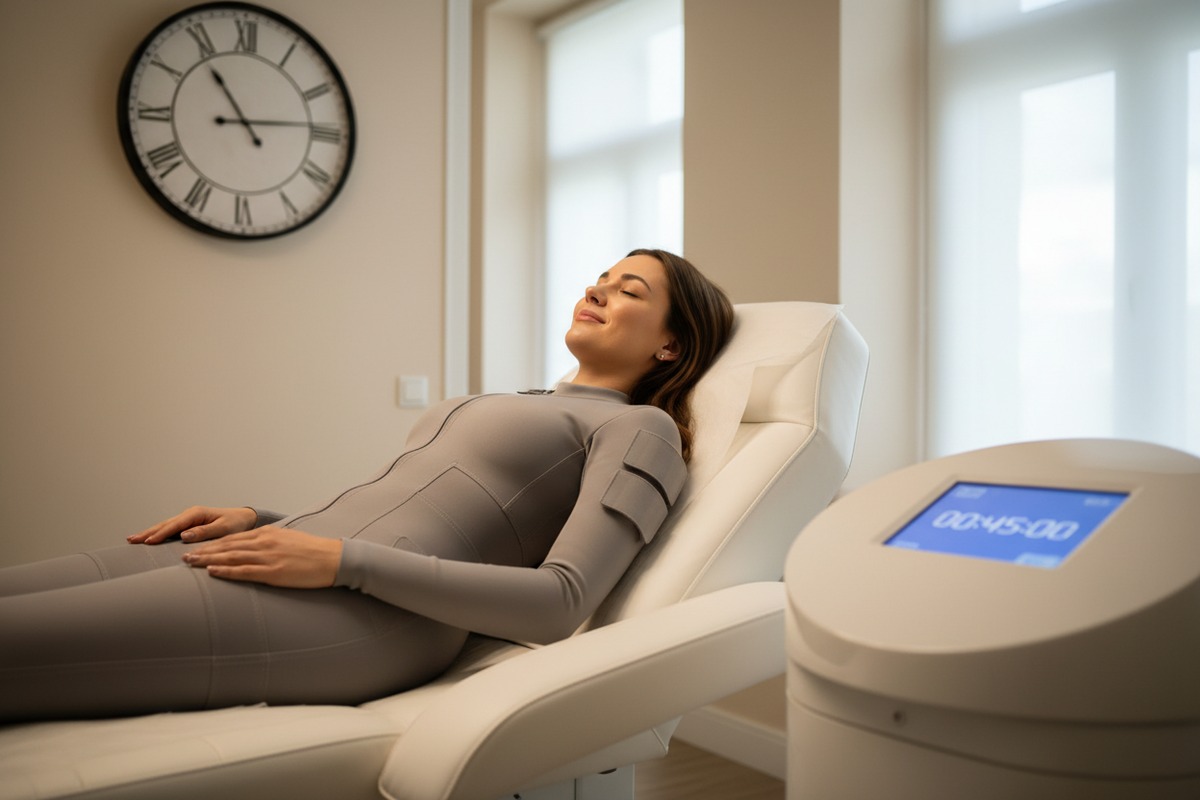
The garment will inflate with air and you will feel a squeezing sensation that should feel like pressure, not pain. This simple distinction defines comfort in pressotherapy. However, comfort during a brief demo does not guarantee comfort during a full treatment session.
The garment will inflate with air and you will feel a squeezing sensation that should feel like pressure, not pain. A typical session will last for 30 to 45 minutes. This means your factory inspection must simulate real-world usage conditions.
Setting Up Your Pressure Testing Protocol
When you arrive at a supplier's facility, request access to a pressure gauge that can connect to the machine's air output. calibrated pressure gauge 3 Professional units should maintain their programmed pressure levels within tight tolerances.
Pressure therapy boots for athletes typically move between 50 and 150 mmHg, although some go up to 250 mmHg. For European salon applications focusing on lymphatic drainage and relaxation, most treatments use the lower to middle portion of this range.
| Testing Checkpoint | What to Measure | Acceptable Range |
|---|---|---|
| Initial Pressure Output | mmHg reading at startup | Within 5% of set value |
| 15-Minute Pressure Check | mmHg drift from initial | Less than 3% deviation |
| 30-Minute Pressure Check | mmHg consistency across all chambers | All chambers within 5 mmHg of each other |
| Chamber Sequence Timing | Seconds between inflation cycles | Consistent 3-5 second intervals |
| Air Leak Detection | Audible hissing sounds | None detectable |
Using Diverse Body Types for Testing
Comfort scale: from 1 to 10, stay at 6–7 (firm, no pain or tingling). However, what registers as a "6" for one person may feel like an "8" for someone with a different body composition.
Our quality control team always includes testers with varying leg circumferences, arm sizes, and torso dimensions. European salon clients serve diverse populations, and a machine that only fits one body type will limit your market reach.
What Pressure Ranges Should You Test?
For gentle drainage or mild fluid retention: 20–40 mmHg for 20–25 minutes, preferably in the afternoon/evening. Start your testing at the lowest setting and work upward.
If you train constantly but without high volumes, a model with a range up to 120-150 mmHg will be sufficient. For professional salon equipment, you need machines that can deliver both gentle relaxation sessions and more intensive therapeutic treatments.
What testing protocols should I request to ensure the pressure sensors meet European safety and comfort standards?
When our team began working with European medical device distributors, we quickly realized that CE marking 4 was just the starting point. Buyers who understood the EU regulatory landscape asked much deeper questions about our testing documentation and quality management systems. These informed buyers consistently achieved better outcomes with their end customers.
Request documentation showing CE marking compliance under EU MDR 2017/745, ISO 13485 quality management certification, calibration certificates for pressure sensors, technical files detailing pressure accuracy specifications, and test reports demonstrating the machine maintains safe pressure levels (typically 20-220 mmHg) across all operational conditions.
Understanding CE Marking for Pressotherapy Devices
CE Marking: In Europe, pressotherapy machines must have a CE marking. This certification indicates that the product complies with the European Union's safety, health, and environmental protection requirements.
However, not all CE markings carry equal weight. Our medical devices are designed and manufactured in France, in compliance with ISO 13485 5, CE Medical IIa certified and FDA approved. The classification level matters significantly for pressotherapy machines used in clinical or professional salon settings.
Key Certifications to Verify
| Certification | What It Covers | Why It Matters for Pressure Testing |
|---|---|---|
| CE Marking | EU safety and health compliance | Baseline requirement for legal EU market access |
| ISO 13485 | Quality management systems | Ensures consistent manufacturing and testing processes |
| EU MDR 2017/745 6 | Medical device regulation | Stricter requirements for clinical-grade devices |
| Calibration Certificates | Pressure sensor accuracy | Verifies measurement equipment is properly maintained |
| Technical File | Design specifications | Documents pressure ranges and safety limits |
The EU MDR 2017/745 Framework
Regulation (EU) 2017/745 is a regulation of the European Union on the clinical investigation and placing on the market of medical devices for human use. This regulation has significantly raised the bar for medical device compliance in Europe.
The Medical Devices Regulation (EU) 2017/745 (MDR) establishes a robust regulatory framework for medical devices within the European Union. For pressotherapy machines marketed for therapeutic purposes, understanding this framework is essential.
Questions to Ask Your Supplier
When evaluating a pressotherapy machine supplier, request specific documentation rather than accepting vague assurances:
-
Can you provide the CE Declaration of Conformity? This document should specify which directives the product complies with.
-
What is the device classification? Look for certifications like the CE mark (for Europe), FDA approval (for the United States), ISO 13485, and other relevant local certifications.
-
How often are pressure sensors calibrated? Professional manufacturers maintain calibration schedules and can provide certificates.
-
What pressure testing was performed during product development? Request test reports showing how the machine performs under continuous operation.
Voltage Compatibility for European Markets
Beyond pressure testing, electrical safety is critical for European market access. European power systems operate at 220-240V, 50Hz. Machines designed for other markets may require modifications or may not function safely.
Some manufacturers offer machines with low-voltage designs (36V) for enhanced safety, which is particularly valued in spa environments where clients are in close contact with the equipment.
How do I evaluate the durability of the air valves to prevent pressure fluctuations after long-term salon use?
In our manufacturing facility, we have tracked warranty claims for years and found that air valve failures 7 account for the majority of performance complaints. When valves degrade, pressure becomes inconsistent, treatments lose effectiveness, and salon owners face frustrated clients. We now build extended durability testing into our quality control process, and we recommend that buyers evaluate valve quality before purchasing.
Evaluate air valve durability by requesting information on valve materials and expected lifespan, checking for reinforced connection points, testing machines through multiple full-cycle sessions to identify early wear signs, and selecting units with double-layer PU suit construction and fixed rather than removable air tube connections.

Why Valve Quality Determines Long-Term Performance
It functions similarly to lymphatic drainage massage, but unlike massage, pressotherapy is provided by a machine that consistently delivers the precise amount of pressure every time. This consistency depends entirely on valve integrity.
When air valves wear out or develop micro-leaks, you will notice:
- Pressure readings that fluctuate during a single session
- Some chambers inflating more slowly than others
- Hissing sounds during operation
- Longer inflation cycles as the compressor works harder
Key Components to Inspect
It is better to choose not a single suit but the one that includes different parts, so that you can use them separately and independently of each other. It is better if material is double-layered and sufficiently elastic so that it lasts longer and is not damaged under constant stress.
| Component | Quality Indicator | Warning Signs |
|---|---|---|
| Air Tubes | Reinforced connections | Loose fittings, easy disconnection |
| Suit Material | Double-layer PU or high-grade nylon-spandex | Single layer, thin fabric |
| Tube Mounting | Fixed/stationary type | Removable (less durable) |
| Chamber Seams | Heat-welded or double-stitched | Single stitching, visible gaps |
| Compressor | Oil-free design with rated lifespan data | No specifications available |
Fixed vs. Removable Air Tube Connections
They can be stationary or removable. At first glance, it seems more convenient to use removable – but in fact, they are much less durable and often break.
This is a critical consideration for salon use. Removable connections may seem convenient for cleaning and storage, but they introduce failure points that will cause problems after hundreds of uses. For professional environments, we recommend fixed connections despite the minor inconvenience.
How Chamber Count Affects Durability Testing
The system is equipped with a wearable accessory and 20 airbags that are suitable for the whole body or specific areas. More chambers mean more potential failure points, but they also provide smoother compression when functioning properly.
Higher chamber counts (16-24 chambers) distribute pressure more evenly, reducing stress on individual components. However, this also means more valves that could potentially fail. When evaluating durability, test all chambers individually to ensure consistent performance.
Warranty as an Indicator of Quality
1 year for the host machine and 3 months for the spare parts. Warranty terms often reflect manufacturer confidence in their products. Longer warranties on critical components like valves and compressors suggest better build quality.
We have manufactured pressotherapy machines for 22+ years. Our excellent manufacturing process and strict quality inspection ensure a low failure rate of the machine.
Running Durability Tests During Sourcing
During your factory visit or evaluation period, run the machine through:
- Multiple consecutive 45-minute sessions without rest
- Rapid program changes to stress the valve system
- Maximum pressure settings to test upper limits
- Minimum pressure settings to verify precision at low outputs
Document any changes in performance across these tests. Quality machines should maintain consistent output throughout.
Can I customize the pressure intensity settings to match the specific preferences of my high-end European clientele?
Our European distribution partners consistently tell us that customization capability is the deciding factor for premium salon buyers. Clients in high-end European wellness centers expect personalized treatments, and a machine with only basic presets cannot deliver this experience. When we developed our latest pressotherapy line, we built extensive customization features specifically to address this market demand.
Yes, professional pressotherapy machines offer extensive customization including adjustable pressure per chamber (1 mmHg increments), multiple preset programs (typically 5+), variable cycle timing (interval, hold, gradient settings), and the ability to create and save custom treatment protocols that match individual client needs and European salon preferences.
Understanding Pressure Customization Options
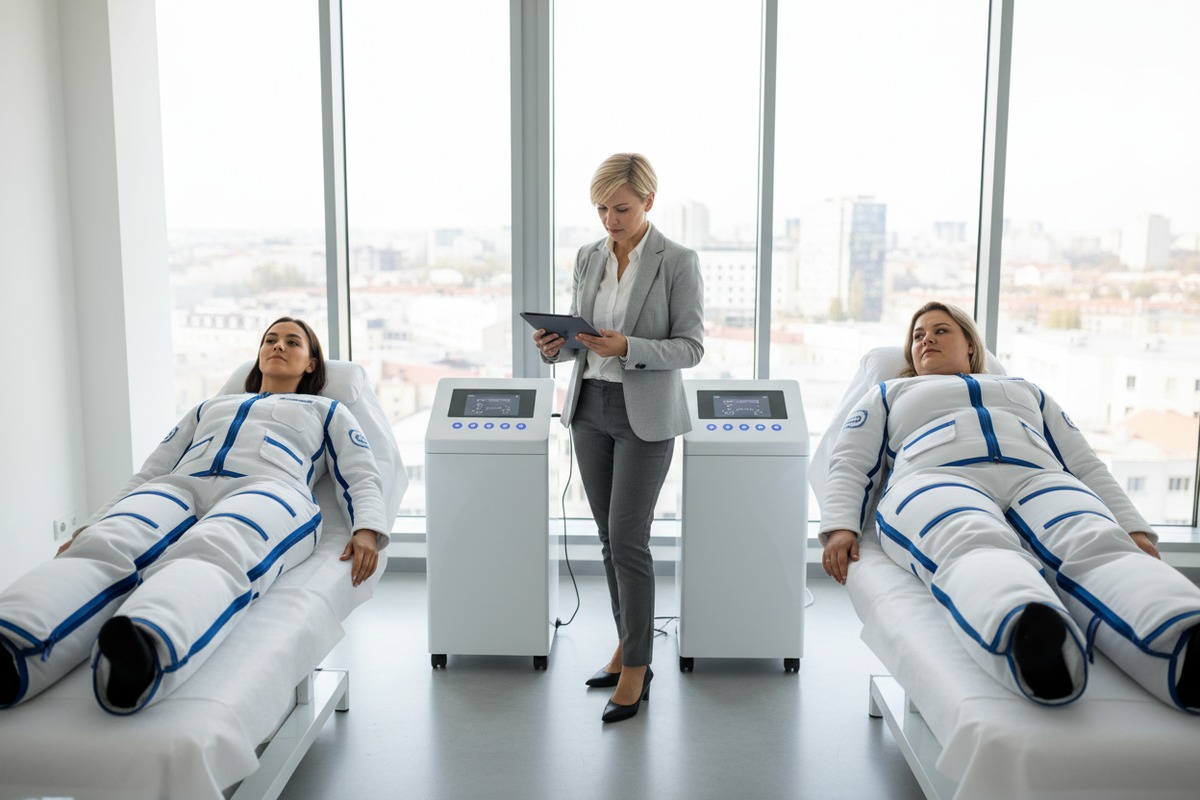
Thanks to the intelligent gradient function, interval, hold, setting individual pressure for each chamber in the cuff and the possibility of programming your own treatment algorithms, Expert8 allows you to adjust the parameters to the needs of each patient.
Professional-grade machines offer three levels of customization:
| Customization Level | Features | Best For |
|---|---|---|
| Basic | 3-5 preset programs, global pressure adjustment | Entry-level salons, home use |
| Professional | Per-chamber pressure control, multiple modes, save custom programs | Mid-range salons and spas |
| Advanced | Real-time adjustment, gradient programming, integration with client profiles | High-end wellness centers, medical clinics |
Sequential vs. Simultaneous Compression Modes
Sequential Compression 8: This technique involves applying pressure sequentially from the distal to proximal parts of the limbs or body. It starts at the extremities and gradually moves upward, mimicking the natural flow of lymphatic fluid.
For European clientele, sequential compression is typically preferred because it delivers a more natural massage sensation. However, the ability to switch between modes adds versatility.
But here's the important part: pressure is not everything: the number of chambers, how they are inflated (whether sequentially or all at once), and the progressiveness of the system also count. That's why 80 mmHg well distributed can feel better – and work better – than 120 mmHg poorly applied.
Gradient Pressure Settings
Gradient pressure 9 refers to the progressive decrease in pressure from the extremities toward the torso, which optimizes lymphatic flow. The patented control of double pressure gradient ensures a permanent well oriented drainage, avoiding any return flow.
When evaluating machines for the European market, look for:
- Adjustable gradient settings (typically 1-4 mmHg per chamber)
- Automatic gradient programs for common treatments
- Manual override capability for experienced therapists
Customization for Different Treatment Goals
| Treatment Goal | Recommended Pressure Range | Key Customization Features |
|---|---|---|
| Gentle Relaxation | 20-40 mmHg | Long hold times, slow sequential mode |
| Lymphatic Drainage | 40-80 mmHg | Progressive gradient, moderate timing |
| Cellulite Treatment | 60-100 mmHg | Higher pressure, faster cycles |
| Post-Surgery Recovery | 30-60 mmHg | Gentle mode, adjustable per-area settings |
| Athletic Recovery | 80-150 mmHg | Intense mode, short rest intervals |
Integration with Hybrid Technologies
The Canta Esthetic Pressotherapy Machine Pro is equipped with built-in infrared heating elements 10 inside the compression suit. Many European wellness centers request machines that combine pressotherapy with other technologies.
Common hybrid features include:
- Infrared heating (35-80°C)
- EMS (Electrical Muscle Stimulation)
- Far-infrared therapy
These combinations allow therapists to offer more comprehensive treatments while maintaining the core pressure customization capabilities.
User Interface Considerations
Intuitive controls and clear displays are essential for ease of use when operating a stress therapy machine. European salon staff need to quickly adjust settings between clients without extensive training.
Look for machines with:
- Large, clear LCD displays
- Touch controls or straightforward button layouts
- Language options (multiple European languages)
- Quick-access preset buttons
- Easy-to-navigate menu systems
Conclusion
Testing pressotherapy machine air pressure comfort before sourcing for Europe requires a systematic approach that goes beyond quick factory demos. Focus on extended wear trials, proper certification documentation, valve durability assessment, and customization capabilities. When you evaluate these factors thoroughly, you will select equipment that satisfies European salon clients and builds your reputation as a reliable supplier.
## Footnotes

<span id="footnote-1">
1. Explains what pressotherapy machines are, their function, and benefits. <a href="#ref-1" class="footnote-backref">↩︎</a>
</span>

<span id="footnote-2">
2. Defines lymphatic drainage and its medical benefits. <a href="#ref-2" class="footnote-backref">↩︎</a>
</span>

<span id="footnote-3">
3. Highlights the importance of calibrating pressure gauges for accuracy and reliability. <a href="#ref-3" class="footnote-backref">↩︎</a>
</span>

<span id="footnote-4">
4. Replaced with an authoritative government (.eu) source on CE marking for medical devices. <a href="#ref-4" class="footnote-backref">↩︎</a>
</span>

<span id="footnote-5">
5. Explains the international standard for quality management systems in the medical device industry. <a href="#ref-5" class="footnote-backref">↩︎</a>
</span>

<span id="footnote-6">
6. Provides an overview of the European Union Medical Device Regulation. <a href="#ref-6" class="footnote-backref">↩︎</a>
</span>

<span id="footnote-7">
7. Discusses common causes and troubleshooting for pneumatic valve failures. <a href="#ref-7" class="footnote-backref">↩︎</a>
</span>

<span id="footnote-8">
8. Replaced with an authoritative Wikipedia page on intermittent pneumatic compression, which includes sequential compression devices. <a href="#ref-8" class="footnote-backref">↩︎</a>
</span>

<span id="footnote-9">
9. Explains gradient compression and its role in fluid movement. <a href="#ref-9" class="footnote-backref">↩︎</a>
</span>

<span id="footnote-10">
10. Describes infrared heat therapy and its health benefits. <a href="#ref-10" class="footnote-backref">↩︎</a>
</span>

 English
 Español de México
 Deutsch
 Français
 العربية
 Русский
