
Managing a rehabilitation center in South America requires equipment that balances heavy patient loads with precision CE certifications 1. We have seen how the right specifications can transform recovery outcomes for sports injuries and post-surgical care.
Select professional pressotherapy machines with a pressure range of 30–250mmHg and at least 8–24 overlapping air chambers. Prioritize medical-grade certifications (CE/FDA), multi-modal programs for lymphatic drainage, and voltage compatibility (110V/220V) to ensure reliable performance across various South American clinical environments.
Understanding these technical details will help you choose a device that lasts for years in a high-traffic clinic OEM services 2.
What specific pressure ranges and chamber counts should I look for in a professional-grade pressotherapy machine?
When we test new garment designs at our facility, we look for the "gradient effect." This ensures fluid moves toward the torso without backflow, which is vital for South American patients recovering from DVT 3 or edema.
Professional-grade machines must offer an adjustable pressure range between 30mmHg and 250mmHg and feature 8 to 24 overlapping chambers. This configuration allows for precise control over different body zones, ensuring safe treatments for sensitive patients while providing enough power for deep-tissue sports recovery and lymphatic drainage.
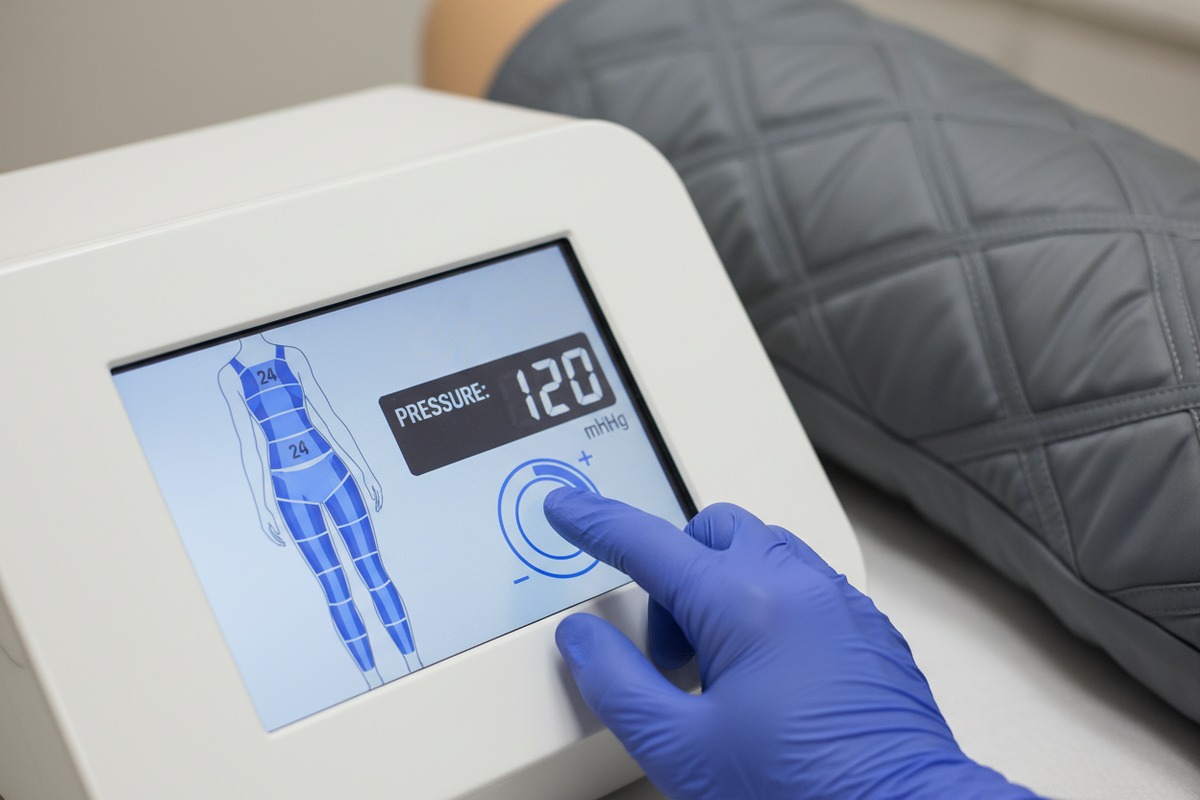
The Importance of Pressure Precision
In our production line, we calibrate sensors to ensure that 80mmHg on the screen is exactly 80mmHg in the sleeve. For a rehabilitation center, accuracy is a safety requirement. Most clinical protocols for lymphedema suggest staying between 30mmHg and 60mmHg. However, athletes in regions like Brazil or Argentina often require higher pressure—up to 200mmHg—to flush lactic acid 4 after intense training. A machine with a wide range allows one device to serve diverse patient needs.
Why Chamber Count Matters
The number of air chambers determines the "fluidity" of the massage. A 4-chamber suit creates a "pulsing" sensation that can be choppy. In contrast, 12 or 24 overlapping chambers create a smooth, wave-like motion. This prevents "fluid trapping," where swelling gets stuck between gaps in the garment.
Recommended Specifications Table
| Feature | Basic Rehab Requirement | Professional/High-End Spec |
|---|---|---|
| Pressure Range | 30 – 150 mmHg | 20 – 250 mmHg |
| Chamber Count | 4 – 6 Chambers | 12 – 24 Chambers |
| Garment Design | Non-overlapping | Overlapping (No gaps) |
| Adjustment | Global pressure only | Individual chamber control |
Individual Chamber Control
We often suggest units that allow therapists to deactivate specific chambers. If a patient has a localized wound or a fresh surgical incision on their calf, the therapist can turn off that specific air cell while still treating the rest of the leg. This flexibility is essential for medical-grade environments where patient conditions vary daily.
How can I customize the machine's interface and casing to align with my private label brand?
When we work with brand owners in the United States, they often ask for a "unique look" that feels premium. Customization is about more than just a logo; it is about creating a cohesive user experience.
Customize your machine by requesting OEM services for custom-colored ABS casings, touch-screen interfaces with localized Spanish or Portuguese languages, and branded garments. High-end manufacturers can also modify the software's startup screen to display your company logo, reinforcing brand authority in the rehabilitation market.
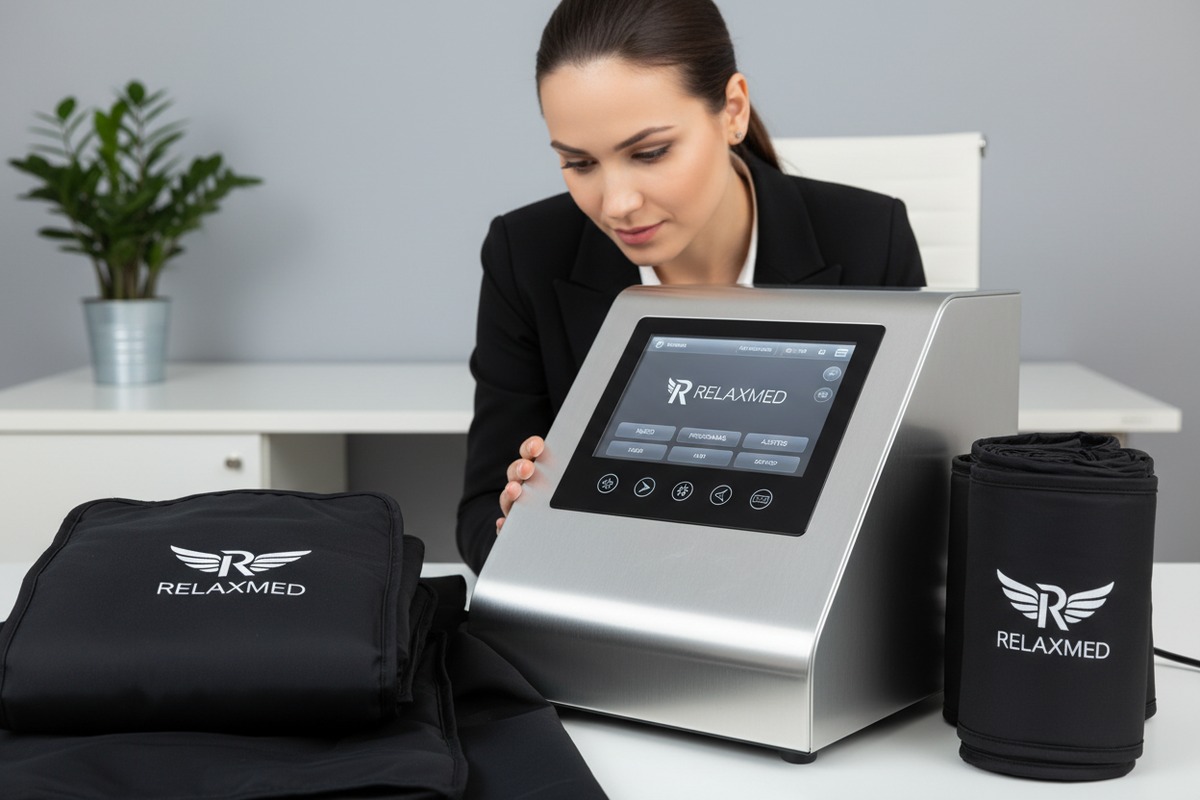
Visual Identity and Material Choice
The first thing a clinic owner notices is the exterior. We offer various finishes, from matte medical white to sleek metallic silver. For the South American market, durability is key. We use high-quality ABS plastic that resists yellowing and cracking under humid conditions. A custom-colored casing makes your brand immediately recognizable in a crowded market.
Software and UI Localization
A major pain point for South American therapists is English-only interfaces. We can reprogram the UI to offer Spanish and Portuguese. This reduces operator error and makes the machine feel like a local product rather than a generic import.
Customization Options Comparison
| Component | Standard Option | Custom (Private Label) Option |
|---|---|---|
| Casing | Generic White Plastic | Custom Colors / Logo Silk-screen |
| Interface | English Text / Buttons | Multi-language / Brand Logo on Boot-up |
| Garments | Blue/Grey Standard Nylon | Custom Color / Embroidered Logo |
| Packaging | Brown Shipping Box | Full-color Retail Box with Brand Specs |
The Value of Branded Accessories
The sleeves and boots are the parts that touch the patient. By adding your logo to the garments, you ensure that every patient who undergoes therapy sees your brand. We can use heavy-duty zippers and reinforced stitching, which not only looks professional but also extends the life of the product, reducing warranty claims for your business.
What quality control measures will ensure my machines withstand the high-volume usage of a rehabilitation center?
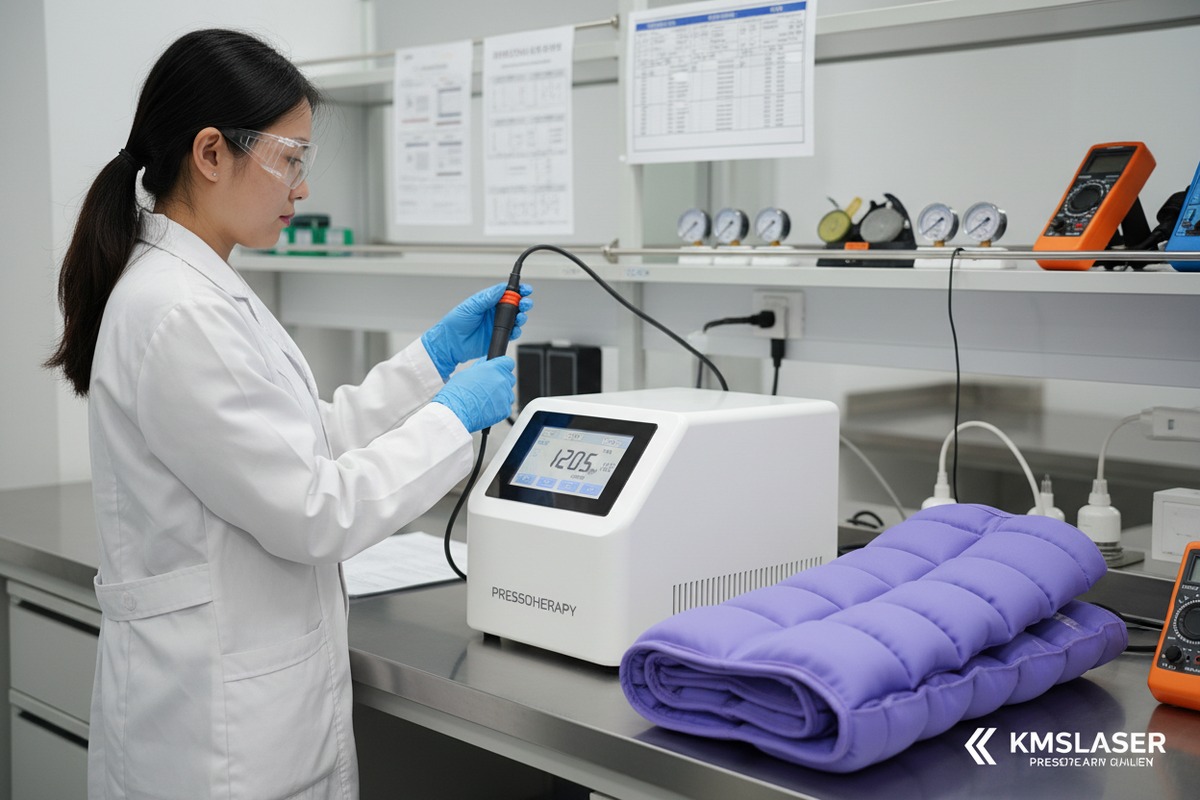
In our factory, we simulate "heavy-use" scenarios by running pumps for 72 hours straight. We know that a machine in a busy Brazilian clinic might run 10 sessions a day, every day.
Ensure durability by verifying the supplier uses industrial-grade air pumps rated for 5,000+ hours, reinforced heat-sealed garments, and multi-stage testing. Quality control should include a 48-hour burn-in test, pressure leakage checks for all sleeves, and rigorous vibration testing to ensure internal components remain secure during transit.
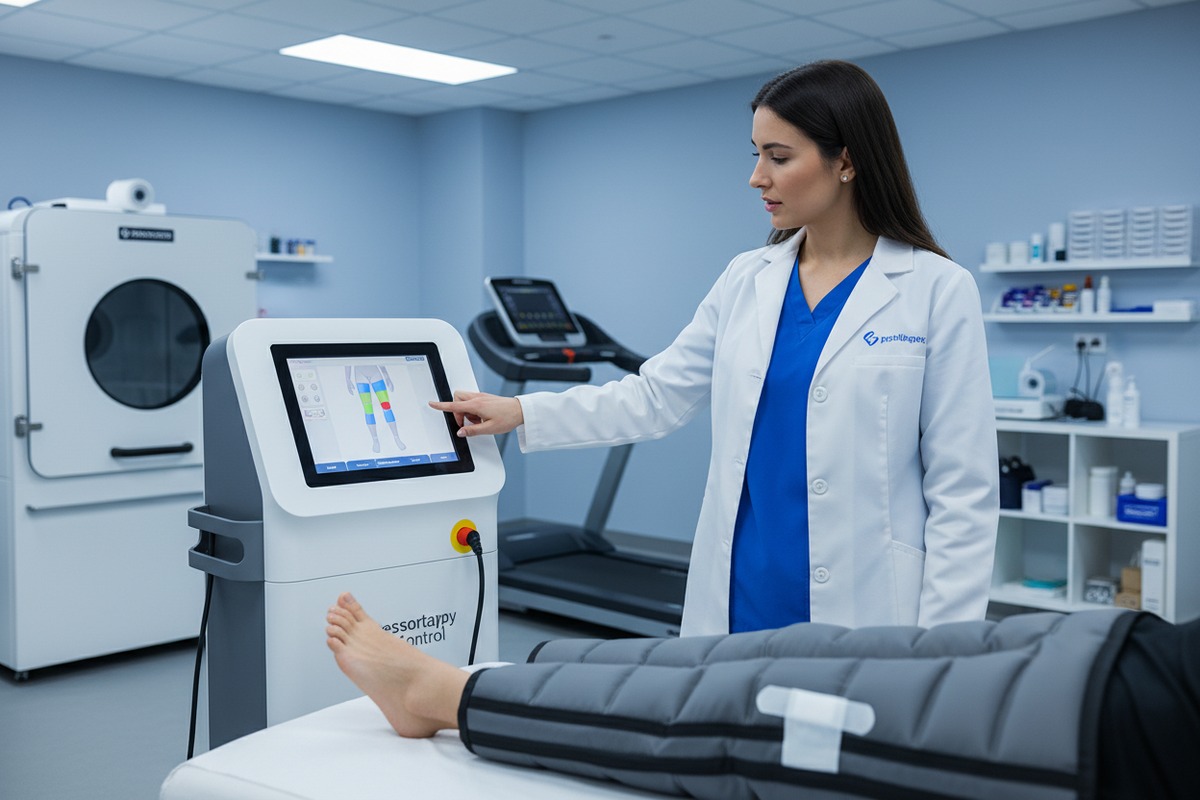
The Heart of the Machine: The Air Pump
The most common failure point in cheap machines is the pump. We use dual-pump systems in our high-end models to distribute the load. This ensures the machine runs quietly and stays cool. If one pump is underpowered, it will overheat and fail within six months. Ask your supplier for the decibel rating and the expected lifespan of the motor.
Garment Durability and Hygiene
In a rehab center, garments are zipped and unzipped constantly. We use medical-grade TPU 6 (Thermoplastic Polyurethane) materials that are easy to wipe down with disinfectants. Lower-quality PVC materials tend to stiffen and crack over time, especially in warmer South American climates.
Quality Control Checklist for Procurement
- Pressure Stability: Can the machine hold 200mmHg for 30 minutes without a 5% drop?
- Zipper Strength: Are they using YKK or reinforced industrial zippers?
- Connector Integrity: Do the air hoses click securely into the machine without air leaks?
- Electrical Safety: Does the unit have surge protection for unstable power grids?
Testing Protocol Table
| Test Type | Procedure | Success Criteria |
|---|---|---|
| Aging Test | Run machine continuously for 48-72 hours | No overheating or pump failure |
| Leakage Test | Inflate sleeves to 250mmHg and hold | Pressure drop < 2mmHg per minute |
| Voltage Test | Test at 110V and 220V settings | Consistent performance at both levels |
| Stress Test | Repeatedly connect/disconnect air hoses | No wear on the locking mechanism |
How do I verify that my supplier can handle the complex logistics and shipping requirements for South America?
Shipping to countries like Chile, Peru, or Brazil involves navigating strict customs and diverse electrical standards. We have managed many shipments where the documentation was just as important as the product quality.
Verify your supplier's capability by checking their experience with South American customs (e.g., ANVISA in Brazil), their ability to provide door-to-door DDP shipping, and their technical support for 110V/220V power grids. A reliable partner should offer detailed tracking and use robust, multi-layered packaging to prevent damage during long-distance ocean or air freight.
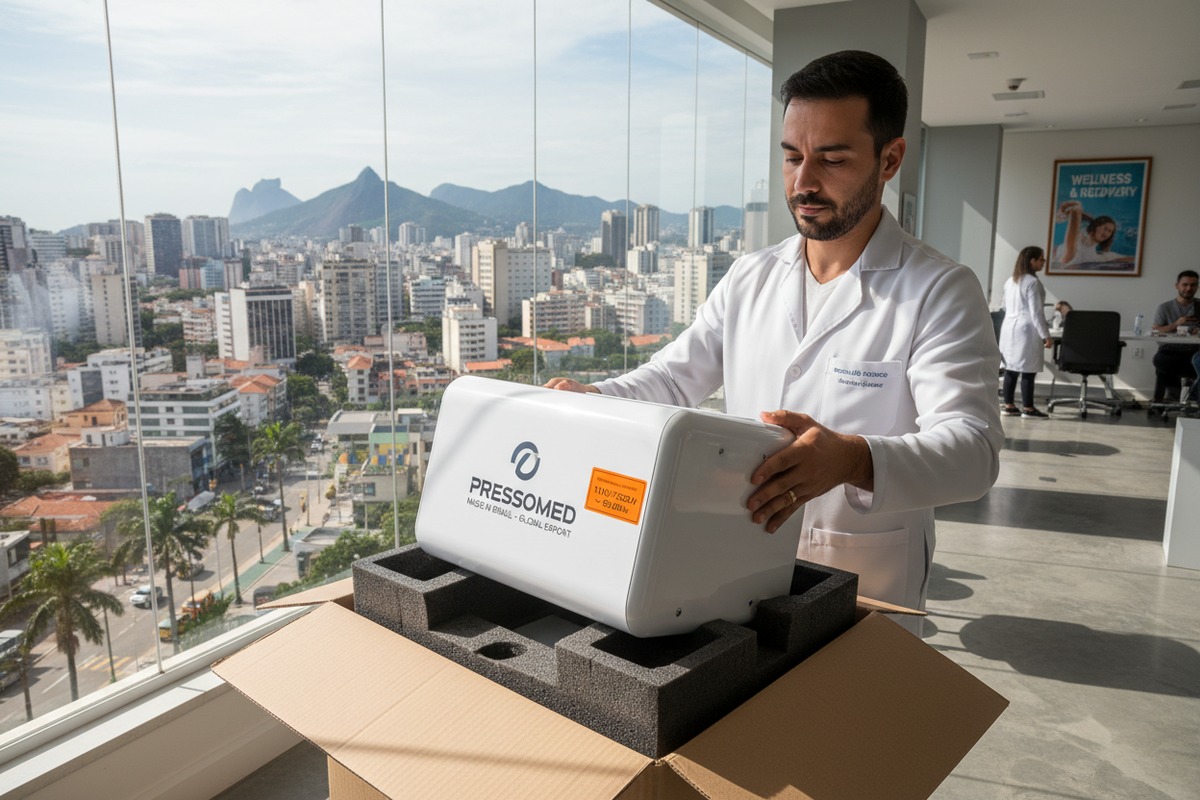
Navigating Customs and Certifications
South American customs can be difficult. For example, Brazil's ANVISA has very specific requirements for medical devices. ANVISA in Brazil 7 We recommend working with suppliers who have exported to the region before. They should be able to provide the necessary CE certificates or ISO 13485 documentation that helps your local customs broker clear the goods without expensive delays.
Electrical Compatibility
South America is unique because voltage varies by country and even by city. Some areas use 110V, while others use 220V. We build our machines with wide-voltage power supplies or clear voltage switches. Shipping a 220V-only machine to a 110V region will lead to immediate product failure and unhappy customers.
Protective Packaging
Shipping from China to South America takes time. The humidity on cargo ships can damage electronics if they aren't packed correctly. We use thick, double-walled corrugated boxes with custom-fit foam inserts. This ensures the "matte white" finish we talked about earlier arrives without a single scratch, despite the thousands of miles it travels.
Logistics Verification Questions
- Do you offer DDP (Delivered Duty Paid) services for my specific country?
- Can you provide a plug type that matches the local sockets (e.g., Type N for Brazil or Type L for Chile)?
- What is your protocol if a machine is damaged during international transit?
- Do you provide a "Certificate of Origin" to help reduce import tariffs under trade agreements?
Conclusion
Selecting the right pressotherapy machine for South American rehab centers requires focusing on high chamber counts, precise pressure, and localized branding. By partnering with a manufacturer that understands regional logistics and quality standards, you ensure long-term clinical success.
Footnotes
1. Official information on CE marking for medical devices in the EU. ↩︎
2. Replaced with a Wikipedia article defining Original Equipment Manufacturer (OEM), which is a widely recognized and authoritative source for general definitions. ↩︎
3. Provides comprehensive information on deep vein thrombosis (DVT) symptoms and causes. ↩︎
4. Replaced with a Wikipedia article providing a comprehensive and authoritative definition of lactic acid. ↩︎
5. Replaced with an authoritative source from Mayo Clinic on lymphedema diagnosis and treatment, which includes lymphatic drainage. ↩︎
6. Details the properties and benefits of medical-grade Thermoplastic Polyurethane (TPU) for healthcare. ↩︎
7. Explains the medical device regulations and requirements set by ANVISA in Brazil. ↩︎


 English
 Español de México
 Deutsch
 Français
 العربية
 Русский
Join the Conversation
Have a question or insight to share? We read every comment — whether you're a distributor, salon owner, or just curious about the technology. Your real-world experience helps others make better decisions. Drop your thoughts below.