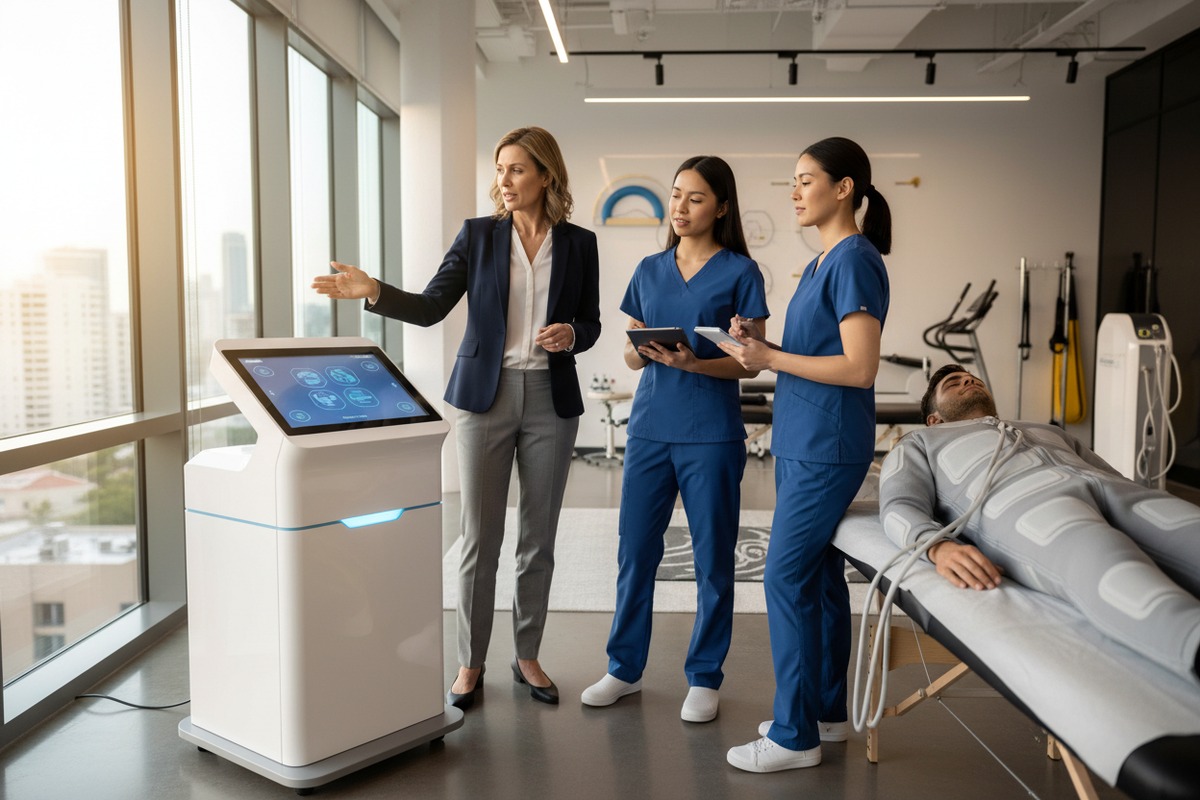
When we collaborate with clinic owners on new equipment designs, we often hear that the biggest hurdle isn’t the price, but convincing the clinical staff to adopt new technology Delayed Onset Muscle Soreness (DOMS) 1. Therapists are protective of their patients and their manual techniques, so introducing automated systems requires a strategic approach focused on care quality.
Pressotherapy empowers physiotherapy teams by automating lymphatic drainage and accelerating muscle recovery without increasing manual workload. It delivers consistent, measurable pressure for edema reduction and lactic acid flushing, allowing therapists to focus on hands-on rehabilitation while improving patient throughput and clinical outcomes.
Here is how you can effectively communicate these advantages to your skeptics.
How can I explain the clinical recovery benefits of pressotherapy to my senior therapists?
Our research and development team frequently analyzes clinical data to refine our pressure algorithms, and we have found that data is the only language senior therapists truly respect sequential pneumatic compression 2. Emotional appeals rarely work, but physiological evidence of improved fluid dynamics usually wins them over.
You can demonstrate clinical value by highlighting significant reductions in Delayed Onset Muscle Soreness (DOMS) and accelerated metabolite clearance. Clinical studies show that sequential pneumatic compression mimics the muscle pump effect, enhancing venous return and lymphatic flow more consistently than manual techniques alone.

The Physiology of Automated Drainage
Your senior therapists likely view manual lymphatic drainage 3 (MLD) as an art form. To win their buy-in, you must explain that pressotherapy is not a replacement for their skilled hands, but a powerful tool to handle the repetitive "heavy lifting" of fluid movement.
When we engineer the airflow in our compression suits, we replicate the specific rhythm of the lymphatic system medical-grade TPU chambers 4. The machine inflates chambers in a distal-to-proximal sequence (from the foot up toward the groin). This creates a traveling wave of pressure. This wave mechanically forces fluids—such as lymph and blood containing metabolic waste like lactic acid—out of the extremities and back into the central circulation ISO quality certifications 5.
Evidence-Based Recovery
Senior therapists care about outcomes. You need to present the physiological impacts clearly CE Marking 6. Research indicates that pneumatic compression significantly lowers creatine kinase (CK) levels 7 after strenuous exercise. High CK levels indicate muscle damage. By lowering them, the machine accelerates tissue repair.
Furthermore, the pressure helps reduce muscle stiffness and edema. This allows your team to work on patients who might otherwise be too sensitive or swollen for deep manual work immediately after an injury or intense competition. It serves as a preparatory step that makes their subsequent manual therapy more effective.
Comparison: Manual vs. Automated
To make this clear for your team, present this comparison of how the machine supports their existing workflow.
| Feature | Manual Lymphatic Drainage (MLD) | Professional Pressotherapy System |
|---|---|---|
| Consistency | Varies by therapist fatigue and technique. | 100% consistent pressure and timing every session. |
| Duration | Limited by therapist stamina (usually 20-30 mins). | Can run for 45-60 mins without fatigue. |
| Pressure Depth | Subjective and hard to quantify. | Precise, adjustable mmHg settings (e.g., 20-120 mmHg). |
| Coverage | One area at a time (e.g., one leg). | Simultaneous full-body or bilateral leg compression. |
| Staff Load | requires 100% active therapist attention. | Passive therapy; allows staff to chart notes or treat others. |
By framing the machine as a "consistency engine," you remove the threat. It does not replace their skill; it ensures that the basic fluid movement is handled perfectly every time, allowing them to focus on complex mobilization or diagnosis.
What technical quality benchmarks should I present to my team to prove the machine's durability?
We source components specifically for high-traffic environments, knowing that a machine in a busy US clinic might run eight hours a day. Therapists hate “out of order” signs, so proving reliability is key to their acceptance.
Focus on the compressor’s duty cycle ratings and the material integrity of the air bladders. High-quality systems use medical-grade TPU chambers with high-frequency welding to prevent leaks, alongside heavy-duty air pumps tested for thousands of continuous hours to ensure reliability under high clinic volume.

Assessing the Control Unit
When your team looks at the new equipment, the first thing they will notice is the build quality. The model you are considering features a sleek, white tabletop control unit with a slanted interface. This isn't just for looks. The slanted design makes it easier for therapists to read settings from a standing position without bending over, reducing ergonomic strain.
However, the internal components matter more. You should explain that professional-grade units use high-flow air compressors. Unlike home-use devices that vibrate and overheat, these pumps provide rapid inflation and deflation cycles. This speed is crucial for clinical efficacy. A slow pump fails to create the "wave" effect needed for drainage.
The Importance of Garment Material
The most common failure point in pressotherapy is the suit itself. Cheap systems use PVC (Polyvinyl Chloride). PVC is stiff, cracks over time, and feels sweaty against the patient's skin.
Your team needs to know that this system uses TPU (Thermoplastic Polyurethane). We choose TPU for our export lines because it is flexible, durable, and resistant to oil and alcohol. This means your staff can wipe down the suits with hospital-grade disinfectants between patients without the material becoming brittle.
Connector Durability
Ask your team to look at the connectors. In a busy clinic, hoses are connected and disconnected dozens of times a day.
- Home-grade: Simple plastic friction fits that loosen over time, leading to air leaks.
- Professional-grade: Quick-lock mechanisms or multi-pin connectors that snap securely into place.
Durability Checklist for Your Team
Present this checklist to your technical lead to prove the machine is ready for heavy use.
| Component | Standard/Home Grade | Professional Clinical Grade (Your Machine) |
|---|---|---|
| Chamber Material | PVC (stiff, cracks easily). | High-density TPU (flexible, durable). |
| Seams | Sewn or glued. | High-frequency welded (airtight, waterproof). |
| Pump Type | Membrane pump (low flow). | Piston or heavy-duty diaphragm pump (high flow). |
| Cooling | Passive cooling only. | Active cooling fans for continuous operation. |
| Housing | Thin, glossy plastic. | Matte white, impact-resistant ABS plastic. |
By highlighting the TPU material and the active cooling system, you assure your team that this investment will not become a pile of broken plastic in six months.
How do I demonstrate that these custom OEM features will integrate with my existing brand protocols?
When we configure machines for our US partners, we often adjust the software logic to match their specific treatment philosophies. Your team needs to see that this machine feels like your clinic’s tool, not just a generic import.
Showcase how programmable presets allow you to replicate your specific treatment protocols automatically, ensuring consistency across all therapists. Custom housing designs and branded interfaces help the equipment blend seamlessly into your clinic’s aesthetic, reinforcing your brand identity while streamlining the patient workflow.

Standardization of Care
One of the biggest headaches for a senior therapist is ensuring that junior staff deliver the same quality of care. With a standard off-the-shelf machine, staff might randomly choose settings.
Through our OEM capabilities, we can program specific "modes" that align with your clinic's services. For example, if you offer a "Marathon Recovery" package, we can configure a preset button that automatically selects:
- Pressure: 80 mmHg (firm but safe).
- Pattern: Peristaltic wave (distal to proximal).
- Time: 45 minutes.
You can demonstrate to your team that this feature eliminates guesswork. A junior therapist simply selects the "Recovery" mode, and the machine executes the protocol exactly as the senior team designed it.
Aesthetic and Brand Consistency
The physical appearance of the machine matters for the patient experience. The unit we are discussing features a matte white finish. This is a deliberate choice for modern medical aesthetics. It looks clean, sterile, and high-tech.
If your clinic uses specific colors or logos, our OEM service allows us to print your logo directly on the slanted control panel or the startup screen. When you show this to your team, explain that branding isn't just vanity—it builds patient trust. When a patient sees a machine with your clinic’s logo, they perceive it as proprietary technology unique to your practice, which validates the treatment price.
Workflow Integration Features
We can also customize features to match your floor plan. For instance, if your treatment rooms are small, we can provide longer connection hoses so the machine can sit on a shelf while the patient is on a table.
OEM Customization Options
| Feature Category | Standard Market Option | OEM/Customized Option for Your Clinic |
|---|---|---|
| User Interface | Generic icons and English/Chinese text. | Your logo on boot-up; Menu terms match your service list. |
| Treatment Modes | Fixed A/B/C modes. | "Leg Heavy," "Post-Op," "Relax" named modes. |
| Hardware Color | Standard Grey or Blue. | Matte White to match clinic decor. |
| Plug/Voltage | Requires adapters. | Native US 110V with hospital-grade plugs. |
By presenting these customization points, you prove to your team that you haven't just bought a gadget; you have co-developed a solution specifically for their needs.
What evidence can I provide to my team that this equipment meets our strict safety and performance standards?
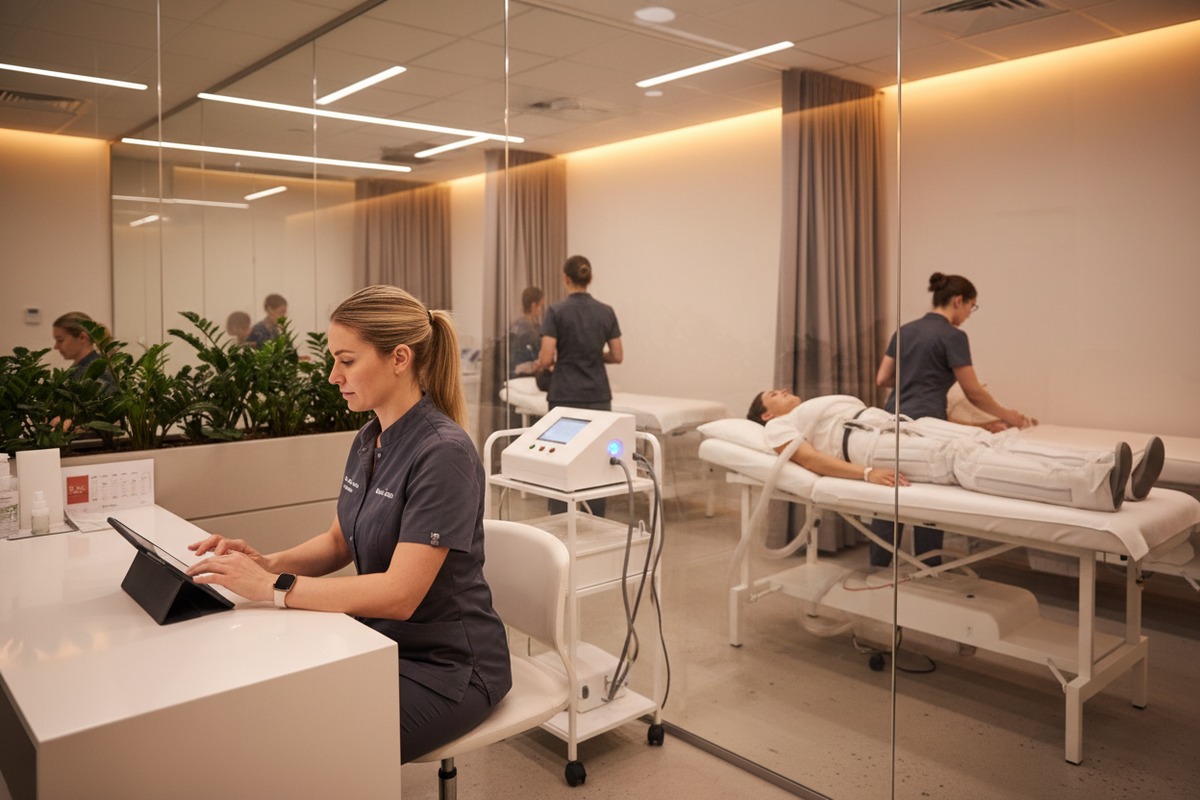
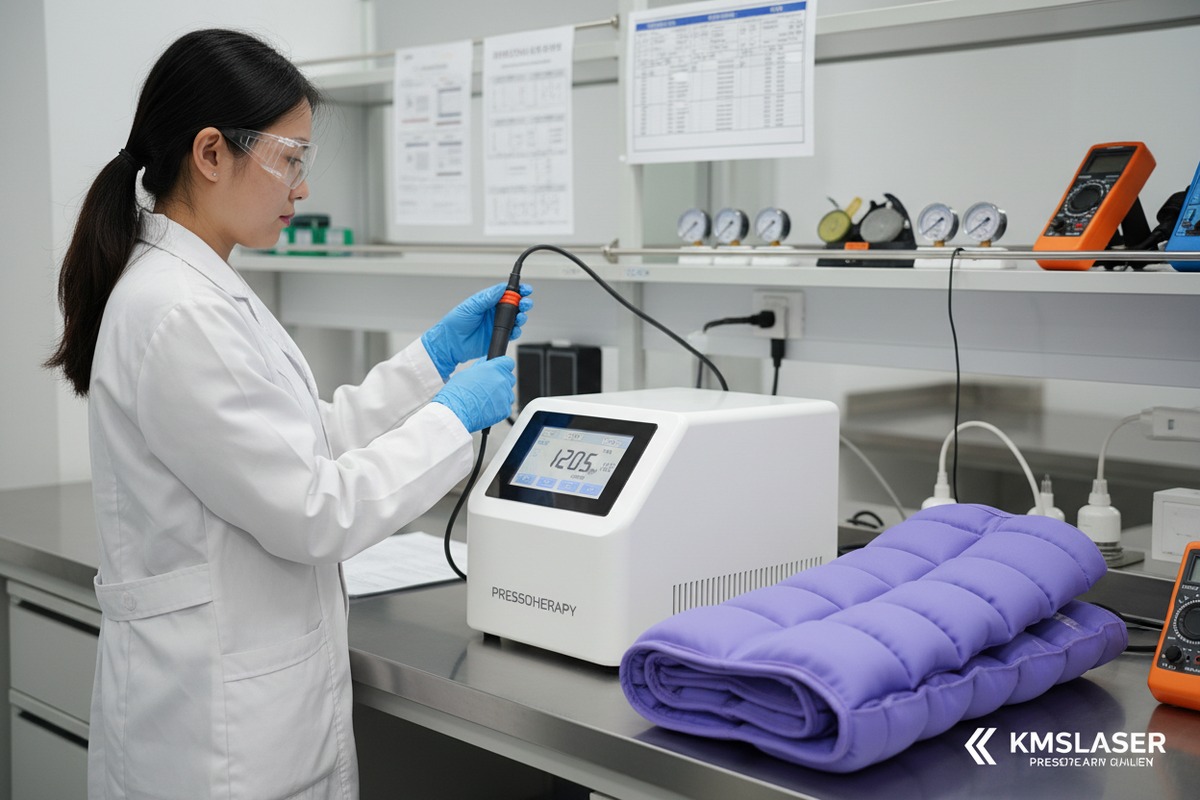
Our production line includes a dedicated station where every single sensor is calibrated against a master standard before packaging. We know that in a medical setting, safety is non-negotiable, and your team needs proof that the device prevents patient injury.
Present evidence of built-in pressure sensors that prevent over-inflation and automatic shut-off mechanisms for patient distress. Documentation should include rigorous ISO quality certifications and stress-test reports from the manufacturing line, proving the system maintains safe, precise pressure levels even during extended operation.
Real-Time Pressure Monitoring
The most significant safety concern your therapists will have is "What if it squeezes too hard?" This is a valid fear, especially with elderly patients or those with fragile skin.
You need to explain the "Real-Time Feedback Loop." Our professional systems do not just pump air blindly. They have internal pressure sensors that monitor the air resistance in the garment millisecond by millisecond. If the machine is set to 60 mmHg, and the patient moves their leg, increasing the pressure to 65 mmHg, the machine immediately vents air to return to the safe limit.
Demonstrate this to your team by putting your own arm in the cuff, setting a pressure, and then flexing your muscle. Show them how the machine adjusts. This visual proof of active safety is powerful.
Contraindication Management
Safety is also about knowing when not to use the machine. A responsible equipment presentation involves discussing contraindications. You should provide your team with a safety protocol chart that we can help supply.
Common contraindications include:
- Deep Vein Thrombosis (DVT) 8 – existing blood clots.
- Acute infection or inflammation in the limb.
- Severe congestive heart failure (moving too much fluid can overload the heart).
By presenting a clear "Stop/Go" protocol alongside the machine, you show your team that you are prioritizing patient safety over profit.
Emergency Features
Highlight the physical safety features of the hardware.
- Emergency Stop Button: A physical button that instantly cuts power and opens valves.
- Quick-Release Connectors: Explain that if a patient panics, the hoses can be disconnected in one second, instantly deflating the suit.
Certifications and Testing
Finally, provide the paperwork. Your team wants to know this isn't a cheap toy.
- CE Marking: Proves conformity with health, safety, and environmental protection standards.
- EMC Reports: Shows the machine won't interfere with other electronic medical devices in the room.
- Aging Test Reports: We run units for 72 hours straight to ensure no overheating.
Show them the "QC Pass" stamp on the chassis. It represents a specific series of safety checks (Grounding resistance, leakage current, dielectric strength) that protect both the patient and the therapist from electrical shock.
Conclusion
Presenting this technology to your team is about shifting the narrative from "replacement" to "enhancement." By proving the clinical efficacy of the wave-motion drainage, demonstrating the durability of the TPU materials and pumps, and highlighting the safety features like real-time monitoring, you can turn skeptics into advocates. This machine is not just equipment; it is a reliable partner in patient recovery.
Footnotes
1. Provides a clear explanation of DOMS, its causes, and typical duration. ↩︎
2. Details how sequential pneumatic compression devices work and their benefits for circulation. ↩︎
3. Explains the physiological function and importance of lymphatic drainage. ↩︎
4. Discusses the properties and diverse applications of thermoplastic polyurethane (TPU) in healthcare. ↩︎
5. Outlines ISO 13485 as the globally recognized standard for medical device quality management systems. ↩︎
6. Defines CE marking as a declaration of conformity with EU health, safety, and environmental protection standards. ↩︎
7. Explains creatine kinase, its function, and what elevated levels indicate regarding muscle damage. ↩︎
8. Provides a comprehensive overview of DVT, including symptoms, causes, and potential complications. ↩︎


 English
 Español de México
 Deutsch
 Français
 العربية
 Русский
Join the Conversation
Have a question or insight to share? We read every comment — whether you're a distributor, salon owner, or just curious about the technology. Your real-world experience helps others make better decisions. Drop your thoughts below.