

When our production team ships pressotherapy machines overseas, buyers often face a tough choice. They want full orders for better pricing. But they also worry about cash flow, warehouse space, and product testing. This tension is real. Many brand owners lose sleep over it.
To negotiate partial shipment logistics for pressotherapy machines, split your order into smaller batches with your Chinese supplier. Define clear payment milestones for each shipment. Schedule pre-shipment inspections before every batch leaves the factory. Coordinate delivery timelines with your freight forwarder to avoid inventory gaps and manage warehouse capacity effectively.
In this guide, I will walk you through payment structures, quality control steps, logistics coordination, and flexible delivery scheduling. Let us dive in.
How can I structure my payment terms to protect my cash flow during partial shipments of pressotherapy machines?
Cash flow problems kill more import businesses than bad products do. Our finance team has seen buyers struggle when they pay too much upfront for split orders. The result? They run out of working capital before the final shipment arrives.
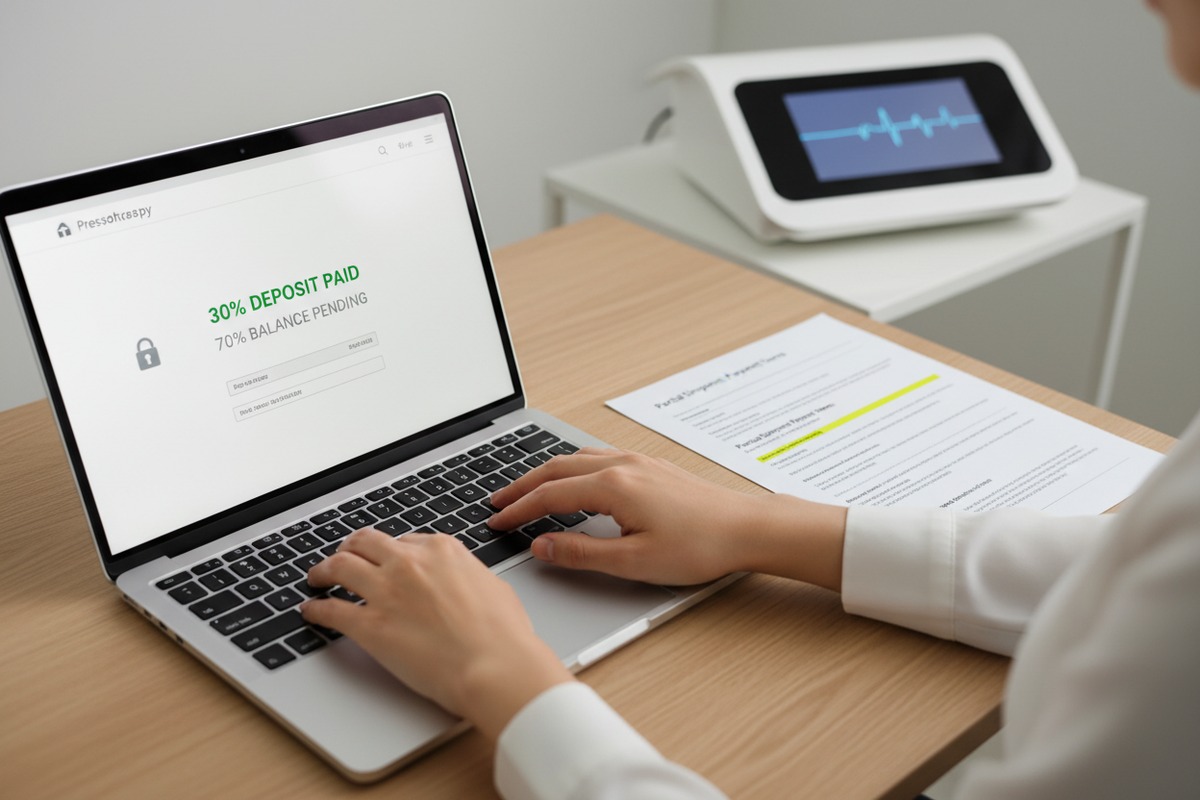
Structure your payment terms by negotiating a 30% deposit upfront, then pay the balance for each partial shipment upon inspection approval or against shipping documents. This protects your cash flow by linking payments to actual deliveries and verified quality, reducing financial exposure across multiple batches.
Understanding Payment Methods for Partial Shipments
International trade offers several payment options. Each one carries different risks for buyers and sellers. The key is finding a balance.
The most common payment arrangement in international trade is the 30-70 split. The buyer pays 30% when placing the order. The remaining 70% is paid upon delivery or against shipping documents. This setup helps the seller by providing partial payment upfront. The buyer pays the rest only after receiving and inspecting the goods.
For partial shipments, you can adapt this model. Pay 30% deposit for the entire order. Then pay the 70% balance in portions matching each shipment. For example, if you split a 10-unit order into two shipments of 5 units each, pay 35% balance for each batch.
Payment Milestone Table for Partial Shipments
| Milestone | Timing | Percentage | Purpose |
|---|---|---|---|
| Initial Deposit | Order Confirmation | 30% | Secure production slot |
| First Batch Balance | After PSI Report Approval | 35% | Release first shipment |
| Second Batch Balance | After PSI Report Approval | 35% | Release second shipment |
| Quality Holdback (Optional) | 30 Days Post-Delivery | 5-10% | Warranty protection |
Choosing the Right Payment Method
Wire transfer (TT) is the most popular method for pressotherapy machine imports. It is fast and secure. The buyer tells their bank to transfer money to the seller's bank account. For large orders or new suppliers, consider using a Letter of Credit (L/C) 1. This document gives bank-backed payment security to both parties.
Some suppliers exclude credit for high-value units. Many pressotherapy machines cost $300-1,299 per unit. For units over $1,500 USD, wire transfer is often the only option. Plan your payment strategy accordingly.
Protecting Your Working Capital
Open account terms are risky for suppliers. But they are common in competitive markets. With open account, goods are shipped and delivered before payment is due. This is typically 30, 60, or 90 days later. Foreign buyers often press for open account terms. Smart suppliers can mitigate risk using export credit insurance 2.
For partial shipments, consider a hybrid approach. Pay cash in advance for the first batch to build trust. Then negotiate open account or extended terms for subsequent batches. This rewards loyalty and shared risk.
What steps should I take to ensure each partial shipment meets my brand's quality standards before it leaves the factory?
Quality issues multiply with partial shipments. Each batch is a separate risk point. Our QC inspectors have caught problems in second batches that did not exist in the first. This happens more often than buyers expect.
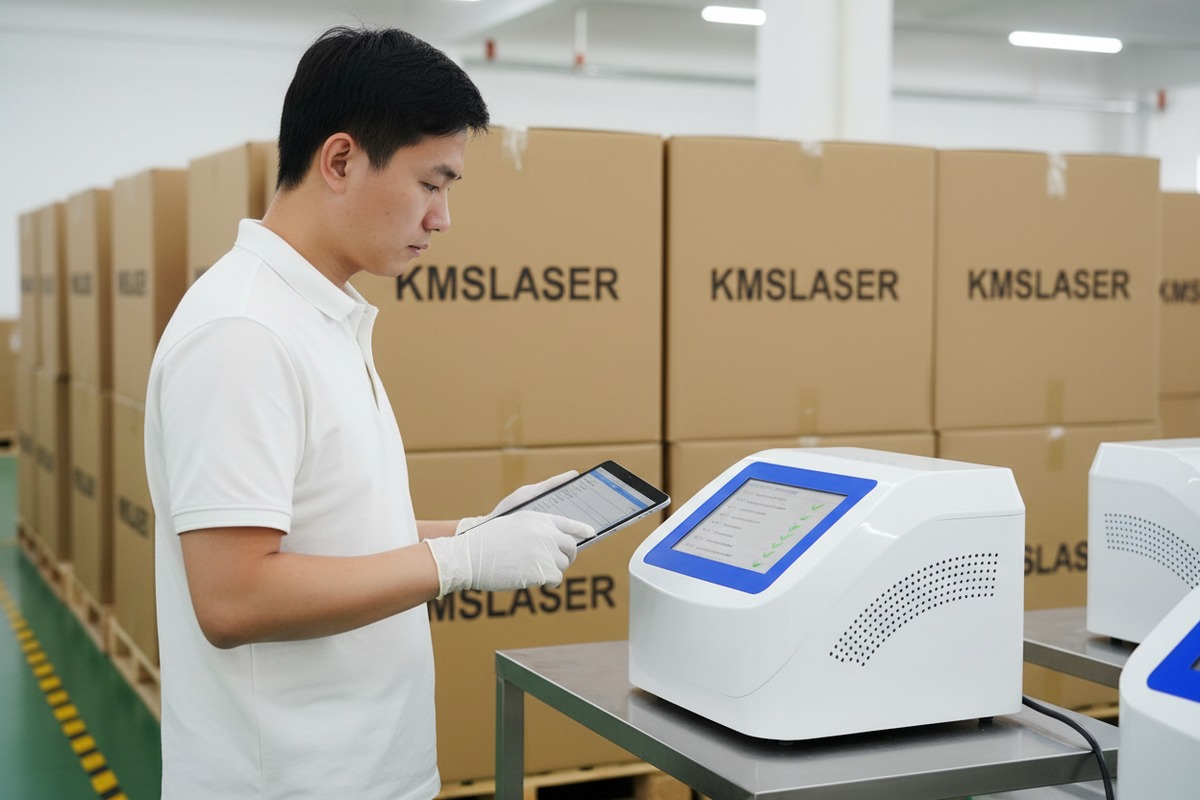
For each partial shipment, conduct a Pre-Shipment Inspection (PSI) when at least 80% of the batch is produced and packed. Use third-party inspection services in China. Create detailed QC checklists covering pressure settings, airbag seals, control unit functions, and packaging integrity. Only release payment after passing inspection.
The Three-Stage Inspection Process
Quality control in China works best with multiple checkpoints. Do not wait until the final product is ready. Catch problems early.
Stage 1: First Article Inspection (FAI)
Before mass production begins, inspect the first finished unit. This confirms the factory understands your specifications. First Article Inspection (FAI) 3 It is especially important for customized pressotherapy machines with your branding.
Stage 2: During Production Inspection (DPI)
This on-site inspection happens when about 20% of the batch is produced. It tracks quality and production progress. DPI helps you reduce costly defects early in the manufacturing process.
Stage 3: Pre-Shipment Inspection (PSI)
PSI is the final check. It uses ISO standard sampling procedures to detect quality or conformity issues before shipment. Pre-Shipment Inspection (PSI) 4 Conduct PSI when at least 80% of the units are produced and ready for delivery.
QC Checklist for Pressotherapy Machines
| Component | Check Points | Pass Criteria |
|---|---|---|
| Control Unit | LCD display, button response, power-on test | All functions operational, no dead pixels |
| Airbags | Seal integrity, inflation test, air leakage | Zero leakage, uniform inflation at 0.025 Mpa |
| Compression Suit | Stitching, fabric quality, chamber connections | No loose threads, secure connections |
| Packaging | Box condition, padding, labeling accuracy | No damage, correct SKU and brand labels |
| Accessories | Hoses, manuals, power adapters | Complete set, correct voltage for destination |
Working with Third-Party Inspection Companies
Do not rely on factory self-inspection. Hire independent QC agencies for unbiased results. Companies like SGS, Intertek, and specialized China-based firms provide professional inspection services.
Third-party inspection costs around $248-298 USD per man-day in China. This is a small price for peace of mind. Most inspection reports are delivered within 24 hours after the inspection. Some companies offer same-day reports.
Key Inspection Considerations for Medical-Adjacent Devices
Pressotherapy machines fall into a gray area. They are used in beauty salons and wellness centers. But they also have medical applications for lymphatic drainage 5 and DVT prevention. Ensure each partial shipment meets relevant certifications.
Check for CE marking 6 for EU markets. Verify FDA registration if selling in the US. Some markets require specific product testing for safety voltage, electromagnetic compatibility, and material safety.
How do I coordinate door-to-door logistics to avoid inventory gaps when my pressotherapy machines arrive in stages?
Inventory gaps hurt your sales. Out-of-stock situations cost you customers and revenue. Our logistics team has helped buyers time shipments perfectly. But it requires careful planning and clear communication with your freight forwarder.
Coordinate door-to-door logistics by mapping your sales forecast to shipment arrival dates. Choose shipping modes based on weight thresholds: air express for urgent orders under 35KG, sea freight for bulk over 35KG. Build in buffer time of 7-10 days between expected arrival and inventory depletion. Use tracking tools to monitor each partial shipment in transit.

Shipping Mode Selection by Weight and Urgency
Different shipping methods serve different needs. Your choice affects both cost and delivery timeline.
| Shipping Mode | Weight Threshold | Transit Time | Best For |
|---|---|---|---|
| Air Express (DHL/FedEx) | Any weight | 5-7 days | Urgent samples, critical restocks |
| Air Economy | Under 2KG | 21-30 days | Small parts, accessories |
| Sea/Air Hybrid | Over $500 USD | 14-21 days (<35KG) | Cost-effective medium orders |
| Sea Freight | Over 35KG | 30-45 days | Bulk orders, non-urgent stock |
Full pressotherapy systems typically weigh more than 35KG. This means standard sea freight timelines of 30-45 days apply. Plan your partial shipments with this lead time in mind.
Building Your Shipment Calendar
Start with your sales data. How many units do you sell per month? When are your peak seasons? Work backward from these numbers.
For example, if you sell 10 pressotherapy machines monthly and maintain a 2-month safety stock, you need 20 units on hand. If your first partial shipment is 5 units with 45-day transit, schedule it to arrive 60 days before expected stockout.
Managing Multiple Carriers and Ports
China has many shipping ports. Major hubs include Shenzhen, Guangzhou, Xiamen, and Shanghai. Your supplier's location affects which port is most efficient.
For pressotherapy machines from Guangzhou manufacturers, the local port offers faster consolidation. Xiamen port serves suppliers in Fujian province. Discuss port selection with your supplier and freight forwarder.
Some suppliers offer free sea or air hybrid shipping for orders over $500 USD. This threshold is easy to meet with pressotherapy machines. Negotiate to include partial shipments in this benefit.
Customs and Duty Considerations
Each partial shipment clears customs separately. This means:
- Separate customs entry filings
- Separate duty payments
- Potential for different inspection rates
Some suppliers cover duties as part of DDP (Delivered Duty Paid) 7 terms. Others use DAP (Delivered at Place) where buyers handle import clearance. Clarify this before your first partial shipment arrives.
Remote areas may incur additional fees. Standard delivery covers major cities in the USA, Canada, EU, and Asia-Pacific. Rural or remote destinations often cost extra.
Can I negotiate a flexible delivery schedule with my Chinese supplier to better manage my warehouse space?
Warehouse space is expensive. Storing 50 pressotherapy machines when you only sell 10 per month ties up capital and floor space. Our sales team works with buyers on flexible schedules every day. Most suppliers are open to discussion.
Yes, you can negotiate flexible delivery schedules by proposing a blanket purchase order covering your annual needs, with staggered release dates for each batch. Define specific quantities and shipping windows in your contract. Offer longer-term commitment in exchange for scheduling flexibility. This benefits both parties through predictable production planning.
The Blanket Order Approach
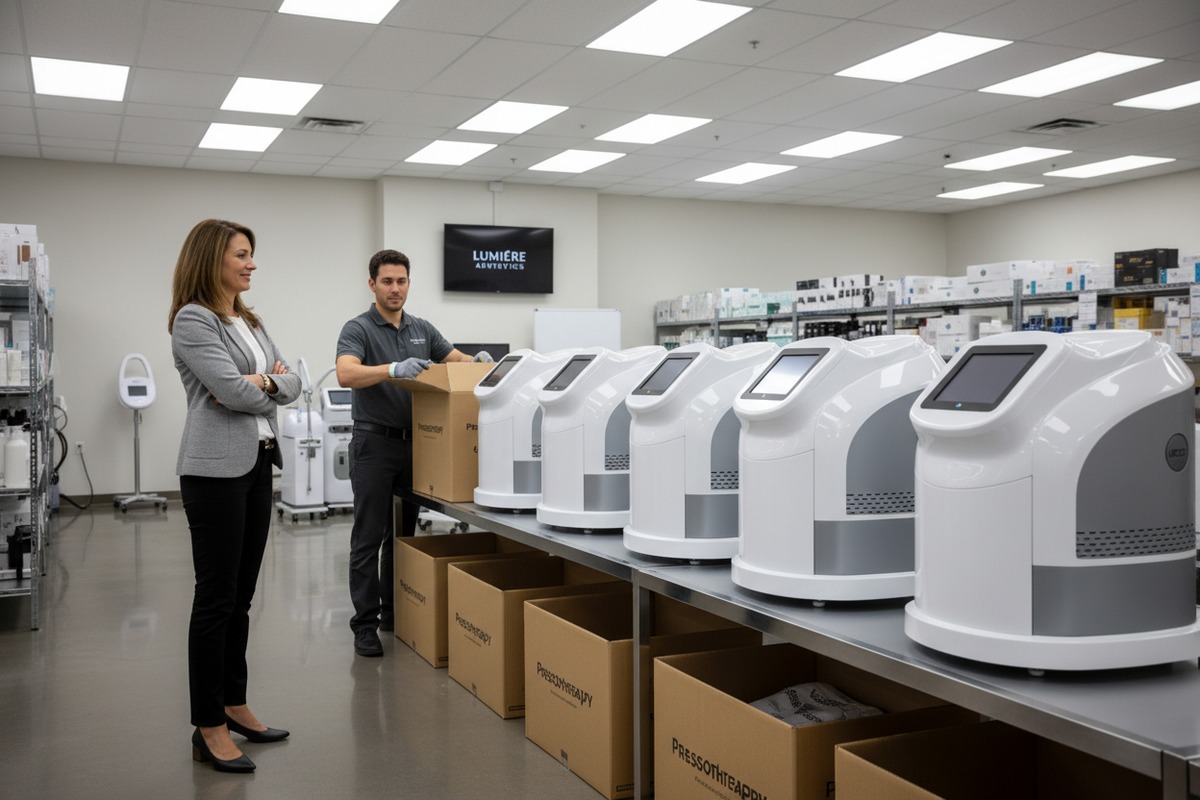
A blanket order 8 commits you to a total quantity over a period. But it does not require all units to ship at once. This gives suppliers production visibility while giving you inventory flexibility.
For example, commit to 60 pressotherapy machines over 12 months. Schedule 5 units monthly or 15 units quarterly based on your sales pattern. The supplier benefits from guaranteed volume. You benefit from just-in-time inventory.
Key Contract Terms for Flexible Delivery
Include these elements in your purchase agreement:
Quantity Brackets
Define minimum and maximum units per shipment. For example: "Each partial shipment shall contain not less than 3 units and not more than 10 units."
Scheduling Windows
Set timeframes for delivery requests. For example: "Buyer shall provide shipping instructions at least 15 days before desired shipment date."
Change Order Procedures
Describe how to modify the schedule. Include fees for expedited or delayed shipments if applicable.
Storage Responsibility
Clarify who bears warehousing costs if shipments are delayed by the buyer.
MOQ Considerations for Partial Shipments
Minimum Order Quantities (MOQ) vary by supplier. Many pressotherapy machine manufacturers accept MOQ of 1 piece or 1 set. This flexibility makes partial shipments practical.
However, low MOQ does not mean low minimum per shipment. Some suppliers require a minimum value per shipment for free shipping. The $500 USD threshold is common for free sea or air hybrid shipping. Below this amount, you may pay additional freight fees.
Negotiation Script Template
Here is a sample email for negotiating partial shipment terms:
"Dear [Supplier Name],
We are interested in ordering [Total Quantity] pressotherapy machines over the next [Time Period]. To better manage our inventory and warehouse space, we would like to discuss partial shipment arrangements.
Our proposal:
– Total commitment: [X] units over [Y] months
– Shipment frequency: [Monthly/Quarterly]
– Units per shipment: [Minimum]-[Maximum]
– Lead time from release order: [X] days
We are open to discussing payment terms that work for both parties. Please confirm if this arrangement is feasible and share any modifications you would suggest.
Best regards,
[Your Name]"
Balancing Supplier Needs with Your Requirements
Suppliers prefer larger, less frequent orders. Each shipment involves administrative work, documentation, and logistics coordination. Acknowledge this in negotiations.
Offer something in return for flexibility. This could be:
- Longer-term volume commitment
- Better payment terms (higher deposit or faster payment)
- Referrals or case study participation
- Willingness to accept slightly longer lead times
Building a trusting relationship with your supplier is essential. Clear communication manages the complexity of multiple deliveries. Prioritize suppliers who demonstrate responsiveness and flexibility.
Conclusion
Partial shipment logistics require planning, communication, and clear contracts. Structure payments around delivery milestones. Inspect every batch before release. Coordinate shipping modes and timing to maintain inventory. Negotiate flexible schedules with committed volumes. These steps protect your cash flow, quality standards, and customer relationships.
Footnotes
1. Defines Letter of Credit as a secure payment tool in international trade. ↩︎
2. Explains how export credit insurance protects exporters against non-payment risks. ↩︎
3. Provides a comprehensive overview of First Article Inspection and its purpose. ↩︎
4. Details the process and importance of Pre-Shipment Inspections for quality control. ↩︎
5. Describes manual lymph drainage as a therapy for reducing swelling in medical conditions. ↩︎
6. Replaced HTTP 404 with a working and authoritative page from the European Union’s official website regarding CE marking. ↩︎
7. Clarifies seller’s responsibilities under DDP Incoterms for international trade. ↩︎
8. Explains blanket orders as a procurement method for multiple deliveries over time. ↩︎

 English
 Español de México
 Deutsch
 Français
 العربية
 Русский
