

Every week, our customer service team fields calls from distributors who purchased shockwave machines elsewhere and now face costly repairs with no warranty support. The frustration in their voices tells a familiar story—unclear terms, voided claims, and unexpected downtime that hurts their business.
Warranty periods for shockwave therapy machines typically range from 1 to 3 years on the main unit, while handpieces often carry shorter coverage of 12 months or are limited by pulse counts such as 1 to 5 million shocks. High-end models and specialized generators may extend up to 5 years.
Understanding warranty structures before you sign a purchase order can save thousands in repair costs and prevent revenue-killing equipment downtime. Let me walk you through what our engineering and service teams have learned over years of manufacturing and supporting these devices worldwide.
What is the standard warranty duration I should expect for my professional shockwave therapy machine?
When we first started exporting shockwave machines to the United States a decade ago, warranty questions topped every buyer's checklist. The confusion was understandable—terms varied wildly between suppliers, and many distributors had been burned before.
The standard warranty for professional shockwave therapy machines covers the main unit for 1 to 3 years, including the control board, power supply, display screen, and housing. Premium manufacturers offer 2 to 3 years, while budget options typically provide only 12 months of coverage.

Breaking Down Main Unit Coverage
The main unit is the heart of your shockwave system. It houses the motherboard, power supply, touchscreen interface, and compressor. In our production facility, these components undergo rigorous testing before shipment, which is why reputable manufacturers can confidently offer longer warranties.
Most professional-grade machines from established brands provide 24 to 36 months of main unit coverage 1. This timeframe reflects the expected lifespan of electronic components under normal clinical use. Budget machines often cap coverage at 12 months because manufacturers lack confidence in component longevity.
What Gets Covered Under Main Unit Warranty
| Component | Typical Coverage Duration | Notes |
|---|---|---|
| Motherboard/Control Board | 2-3 years | Core electronic component |
| Power Supply | 2-3 years | High failure rates in cheap units |
| LCD/Touchscreen | 2-3 years | Excludes physical damage |
| Housing/Casing | 2-3 years | Cosmetic damage often excluded |
| Internal Compressor | 1-2 years | Wear component in some models |
| Software/Firmware | 1-3 years | Updates may require service agreement |
Why Coverage Duration Varies by Brand
Premium manufacturers like ourselves invest in quality components and pre-shipment testing. Our quality control team runs each machine through 48 hours of continuous operation before packaging. This investment allows us to offer longer warranties without excessive claim rates.
Budget suppliers often use lower-grade components to hit price points. Their shorter warranties reflect higher expected failure rates. When you see a 12-month warranty on a professional device, it raises questions about component quality and manufacturing standards.
The geographic origin also matters. Machines manufactured under ISO 13485 quality management systems 2 typically carry longer warranties because production follows documented, repeatable processes. Our facility maintains this certification specifically because international buyers require it for regulatory compliance 3.
Red Flags in Main Unit Warranty Terms
Watch for vague language around what constitutes the "main unit." Some suppliers exclude the compressor or power supply—components with higher failure rates—from standard coverage. Always request a written list of covered components before finalizing your order.
Another concern is warranty start dates. Coverage should begin at delivery, not at manufacturing date. We have seen suppliers ship machines that sat in warehouses for months, effectively shortening real-world coverage by the time equipment reaches your clinic.
Does my warranty cover the shockwave handle and other high-wear components?
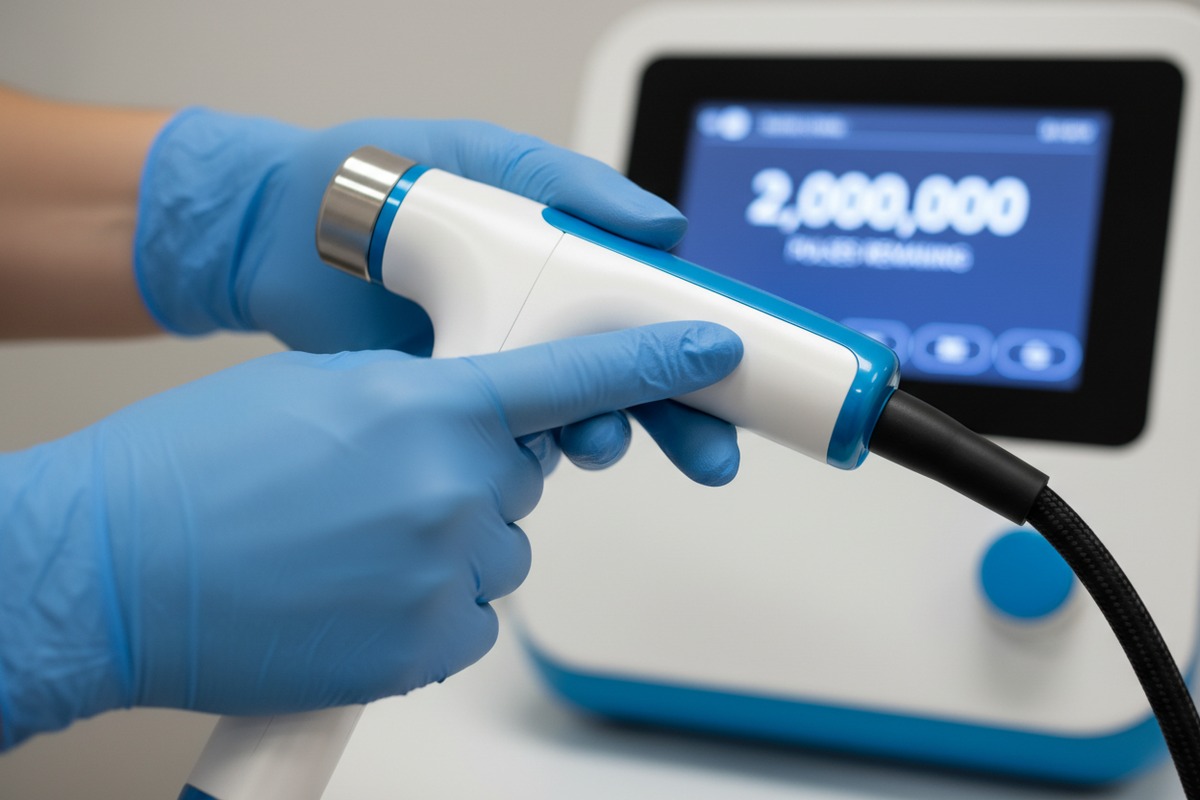
Our service engineers spend most of their time addressing handpiece issues 4 rather than main unit failures. This makes sense—the handpiece delivers millions of pressure waves directly to patient tissue, experiencing stress that electronic components never face.
Handpiece warranties are typically limited to 12 months or capped by pulse counts ranging from 1 to 5 million shocks, whichever comes first. Transmitters, applicator tips, and cables are often classified as consumables with 6 to 12 months coverage or excluded entirely from warranty protection.
Understanding Pulse Count Limitations
The industry has shifted toward pulse-based warranty limits because time alone does not reflect actual handpiece wear. pulse count limitations 5 A busy sports medicine clinic delivering 50,000 shocks daily will exhaust a handpiece far faster than a low-volume aesthetic practice.
When we design warranty terms, our engineering team calculates expected component lifespan based on accelerated fatigue testing. A typical pneumatic handpiece 6 can reliably deliver 2 to 5 million shocks before seals and projectile mechanisms show significant wear.
Handpiece Warranty Comparison by Brand
| Brand/Type | Time Limit | Pulse Limit | Notes |
|---|---|---|---|
| KMSLaser Standard | 12 months | 2 million shocks | Whichever comes first |
| Storz Medical | 12 months | 1 million hits | Via authorized distributors |
| Longest | 12 months | Not specified | Time-based only |
| Sheyera | Included in 3-year | Not specified | Premium positioning |
| Budget Imports | 6 months | Often not stated | Higher risk category |
What Counts as a High-Wear Component
Handpieces contain several elements that degrade with use. The projectile mechanism fires thousands of times per treatment session. Seals and O-rings face repeated pressure cycles. Cables experience constant flexing during clinical use.
Our production team classifies these as wear components:
- Projectile assemblies
- Internal seals and O-rings
- Handpiece cables
- Transmitter tips and applicators
- Contact gel chambers
The Time vs. Pulse Debate
This creates tension between manufacturers and buyers. Pure time-based warranties favor low-volume users but penalize busy practices. Pulse-based limits feel fairer to high-volume clinics but require accurate pulse tracking.
From our manufacturing perspective, pulse counts provide a more honest assessment of handpiece condition. We have seen 6-month-old handpieces worn beyond repair at high-volume clinics, while 2-year-old units at low-volume practices still function perfectly.
The challenge is standardization. Shock equivalents vary across machine types—a focused shockwave delivers different stress than a radial pressure wave. When comparing warranty terms, confirm how your specific handpiece type measures against stated limits.
Accessories and Peripheral Coverage
| Accessory Type | Typical Coverage | Common Exclusions |
|---|---|---|
| Handpiece Cables | 6-12 months | Physical damage, kinking |
| Control Tablets | 12 months | Screen damage, drops |
| Transmitter Tips | 6 months or excluded | Normal wear |
| Foot Pedals | 12 months | Liquid damage |
| Carrying Cases | None typically | Cosmetic wear |
Protecting Your Handpiece Investment
Request detailed pulse tracking features when evaluating machines. Our latest models include firmware that logs cumulative shock counts, making warranty claims straightforward and disputes rare. Without this data, disagreements about usage levels become difficult to resolve.
Consider purchasing backup handpieces for high-volume practices. Downtime during warranty repairs can cost more than a spare unit. Our customers running busy clinics typically maintain one backup handpiece per treatment room.
How do I handle warranty claims and technical repairs when sourcing from my Chinese supplier?
Last year, a distributor in California contacted us after their previous supplier went silent on a warranty claim. They had shipped a faulty machine back to China three months earlier and received no updates, no replacement, and no refund. This nightmare scenario is preventable with proper due diligence.
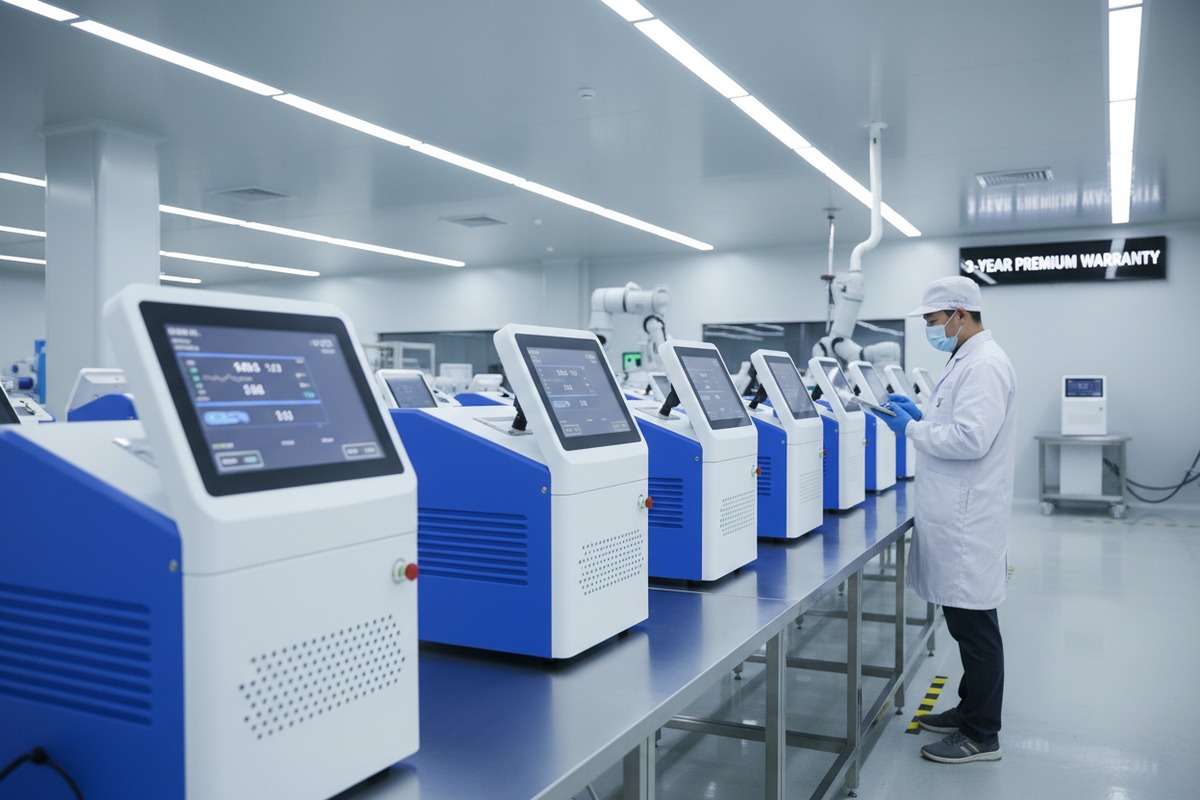
Warranty claims from Chinese suppliers typically require video documentation of the fault, serial number verification, and warranty card submission within 7 days of discovering the issue. Reputable manufacturers respond within 24-48 hours with diagnosis and ship replacement parts within 3-5 business days.
Establishing Clear Claim Procedures Before Purchase
Our service team developed a standardized claim process precisely because buyers need predictability. Before you place an order, confirm these details in writing:
- Notification deadline after discovering a fault
- Required documentation for claims
- Response time commitments
- Parts shipping timeframes
- Who pays return shipping costs
- Availability of loaner units during repairs
Step-by-Step Claim Process
When a machine fails under warranty, follow this sequence to ensure smooth resolution:
Step 1: Document the Problem
Record clear video showing the fault. Include the serial number plate in your footage. Note the pulse count if handpiece-related. Our technical team can often diagnose issues from video alone, eliminating unnecessary shipping.
Step 2: Submit Formal Notification
Send documentation through the specified channel—usually email with video attachment or cloud storage link. Include your purchase order number, delivery date, and warranty card copy.
Step 3: Await Diagnosis
Legitimate manufacturers respond within 24-48 hours with either a diagnosis or requests for additional information. Silence beyond 72 hours is a warning sign.
Step 4: Receive Resolution Plan
Options typically include replacement parts shipped to you for local installation, return of the faulty unit for repair, or full unit replacement in severe cases.
Common Warranty Exclusions That Void Claims
| Exclusion Type | Examples | Prevention Strategy |
|---|---|---|
| Improper Use | Exceeding rated pulse frequency | Follow operating manual strictly |
| Physical Damage | Drops, impacts, liquid spills | Train staff on handling |
| Unauthorized Repair | Opening sealed components | Contact manufacturer first |
| Power Issues | Voltage spikes, improper grounding | Use surge protection |
| Environmental | Extreme temperatures, humidity | Climate-controlled storage |
Navigating International Repair Logistics
Shipping machines internationally for repair is expensive and time-consuming. Our approach prioritizes remote diagnosis and parts replacement whenever possible. Simple component swaps—power supplies, control boards, handpieces—can often be performed by your local technician with video guidance from our engineers.
For complex repairs requiring factory service, establish who bears shipping costs upfront. Many suppliers require buyers to pay outbound shipping while covering return freight. This can add hundreds of dollars to your effective repair cost.
Consider suppliers with regional service centers or authorized repair partners. We maintain relationships with certified technicians in major markets who can perform warranty repairs locally, dramatically reducing turnaround time.
Response Time Benchmarks
Professional manufacturers should meet these standards:
- Initial response: Within 24 hours
- Diagnosis complete: Within 48 hours
- Parts shipped: Within 3-5 business days
- Repair turnaround: 7-14 days for returned units
If your supplier cannot commit to these timeframes in writing, their warranty may be worth less than the paper it is printed on.
Protecting Yourself from Warranty Disputes
Request clear warranty documentation before purchase—not generic terms buried on a website. The warranty card should list covered components, duration for each, claim procedures, and exclusions. Keep copies of all purchase documents and correspondence.
Document your machine's condition upon arrival with photos and video. This baseline evidence prevents disputes about pre-existing damage or wear. Our shipping team includes inspection checklists with every delivery specifically to establish this record.
Can I negotiate an extended warranty or a customized service agreement for my private-label brand?
Our largest distributor in Europe asked us this question five years ago. Today, they operate under a customized service level agreement 7 that includes extended warranties, guaranteed parts availability, and priority technical support. This arrangement benefits both parties—they get peace of mind, we get a committed long-term partner.
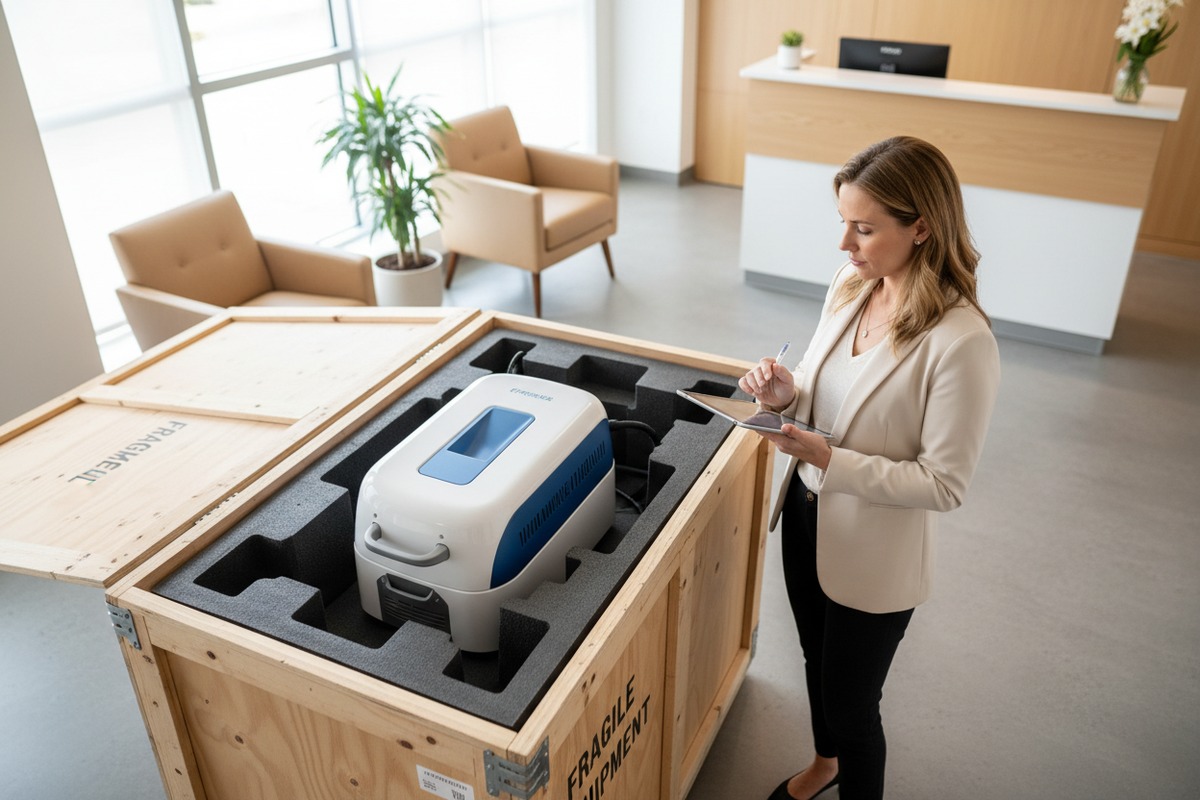
Extended warranties and customized service agreements are commonly available from established manufacturers, typically adding 1-2 additional years of coverage for a negotiated fee. Bulk order commitments often unlock premium terms including guaranteed spare parts availability for 5-7 years post-discontinuation and dedicated technical support channels.
What Extended Coverage Options Exist
Most professional manufacturers offer tiered warranty extensions. Our standard options include:
Basic Extension: Adds 12 months to main unit coverage for approximately 8-12% of equipment cost.
Comprehensive Extension: Adds 24 months with expanded handpiece coverage for 15-20% of equipment cost.
Premium Service Agreement: Multi-year contracts including priority support, loaner units, and guaranteed response times.
Negotiating Leverage Points
Larger order volumes create negotiating room. When you commit to annual minimum quantities, manufacturers can spread warranty risk across more units and offer better terms.
Consider these negotiation strategies:
- Bundle warranty extensions with initial purchase for lower rates
- Commit to multi-year purchasing agreements in exchange for extended coverage
- Request parts availability guarantees for discontinued models
- Ask for dedicated technical support contacts
Service Level Agreement Components
| SLA Element | Standard Terms | Premium Terms |
|---|---|---|
| Response Time | 48 hours | 24 hours |
| Parts Shipment | 5 business days | 3 business days |
| Loaner Unit | Not included | Available for critical repairs |
| Technical Support | Email only | Phone and video call |
| Parts Availability | 3 years post-discontinuation | 7 years post-discontinuation |
| Firmware Updates | 1 year | Duration of agreement |
Parts Obsolescence Protection
This often-overlooked clause matters tremendously for your business continuity. Medical device technology evolves rapidly—models get updated or discontinued every few years. Without contractual protection, you may face equipment write-offs when replacement parts become unavailable.
Our engineering team maintains parts inventory for discontinued models for a minimum of five years. For SLA partners, we extend this to seven years and provide advance notice before ending support. This commitment requires planning on our side but builds trust with long-term customers.
Building Custom Agreements for Private-Label Partners
Private-label relationships involve deeper collaboration than standard purchasing. Your brand reputation depends on our product quality and support. This mutual investment creates opportunity for customized terms.
Successful private-label agreements typically include:
- Co-branded warranty cards with your company contact information
- White-label service documentation for your brand
- Training for your technical staff to handle tier-one support
- Escalation paths for complex issues requiring factory involvement
- Quarterly performance reviews and continuous improvement commitments
Regulatory Considerations for Extended Warranties
If you sell into EU markets under your own brand, extended warranty commitments may intersect with EU MDR post-market surveillance requirements 8. Your service agreement should address how the manufacturer supports your regulatory obligations.
ISO 13485 certified manufacturers maintain complaint handling and vigilance systems that can feed into your quality management documentation 9. When negotiating SLAs, confirm that your supplier will provide necessary records for your regulatory files.
Cost-Benefit Analysis of Extended Coverage
Calculate your true exposure before deciding on extended warranties. Consider:
- Average repair cost without warranty
- Likelihood of failure based on component quality
- Revenue lost during equipment downtime
- Cost of maintaining backup equipment
- Value of business continuity and customer confidence
For high-volume practices dependent on a single machine, extended coverage often pays for itself with one avoided major repair. Low-volume users with backup equipment may reasonably accept more risk.
Conclusion
Warranty coverage for shockwave therapy machine 10s requires careful evaluation beyond headline numbers. Understanding the distinction between main unit and handpiece coverage, confirming clear claim procedures, and negotiating appropriate service agreements protects your investment and business operations. Choose manufacturing partners who back their products with transparent terms and responsive support.
Footnotes
1. Explains typical warranty durations and coverage for highly technical medical equipment. ↩︎
2. Explains ISO 13485 as the international QMS standard for medical devices and its regulatory importance. ↩︎
3. Details the FDA’s role in regulating medical devices and the basic compliance requirements for manufacturers. ↩︎
4. Provides best practices for maintaining radial pressure wave handpieces, addressing wear and cleaning. ↩︎
5. Discusses optimal treatment protocols for ESWT, including the number of impulses per session. ↩︎
6. Describes the mechanism, energy transfer, and biological effects of pneumatic shockwave therapy. ↩︎
7. Provides a comprehensive definition of a Service Level Agreement and its common components. ↩︎
8. Explains the fundamental requirements for a Post-Market Surveillance (PMS) system under EU MDR. ↩︎
9. Details the structured approach and control needed for quality management system documentation under ISO 13485. ↩︎
10. Provides a general overview of extracorporeal shockwave therapy and its medical uses. ↩︎

 English
 Español de México
 Deutsch
 Français
 العربية
 Русский
