
Every week, our customer service team receives messages from US distributors worried about equipment breakdowns. They fear their salon clients will lose trust. Without proper maintenance guidance, expensive machines fail early. This costs money and damages reputations.
Yes, reputable Chinese shockwave therapy machine suppliers do provide comprehensive maintenance and cleaning guides. These guides typically cover daily cleaning protocols, weekly inspections, monthly deep maintenance, quarterly consumable replacements, and annual calibration procedures. Professional manufacturers include these documents with every unit shipped.
This article answers the key questions brand owners and distributors ask before importing from China. We will explore documentation quality, customization options, and how to evaluate supplier support systems.
Can I get professional maintenance and cleaning manuals for my private-labeled shockwave machines?
When our engineering team develops a new shockwave therapy 1 model, they create detailed documentation alongside the product. Many importers wonder if private labeling affects the quality of support materials they receive.
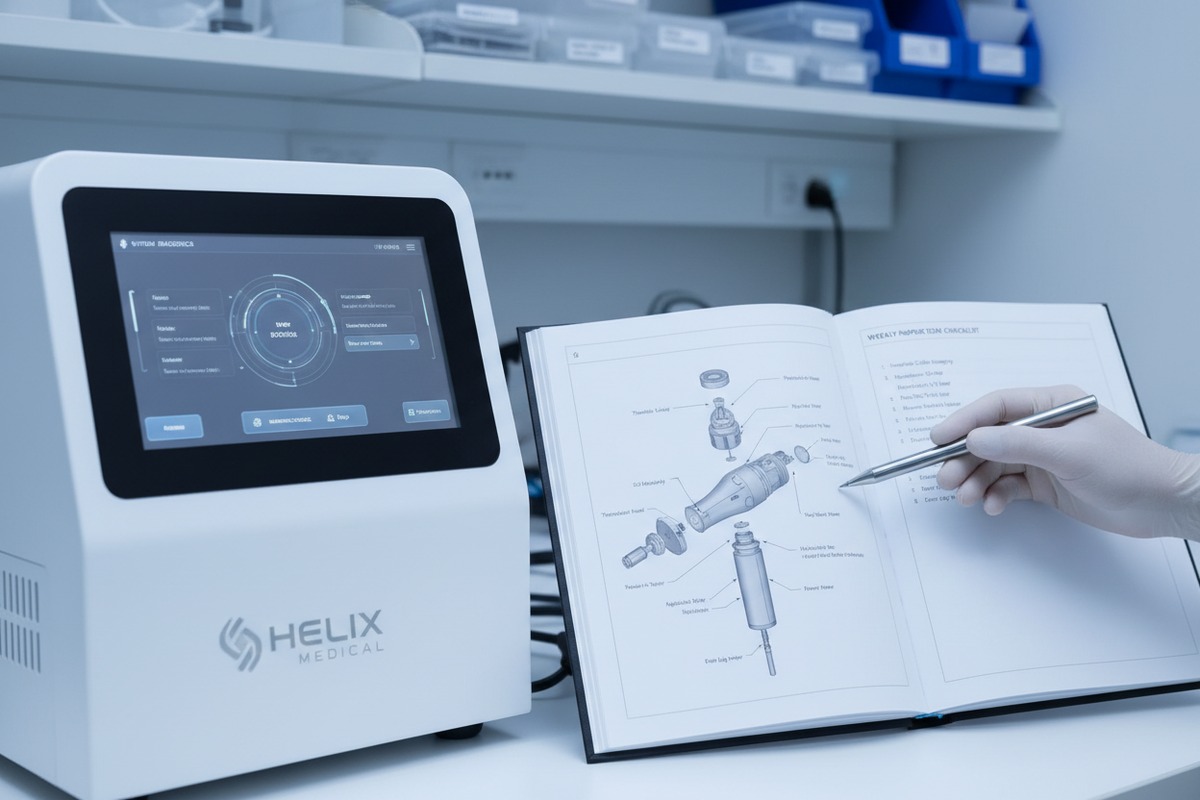
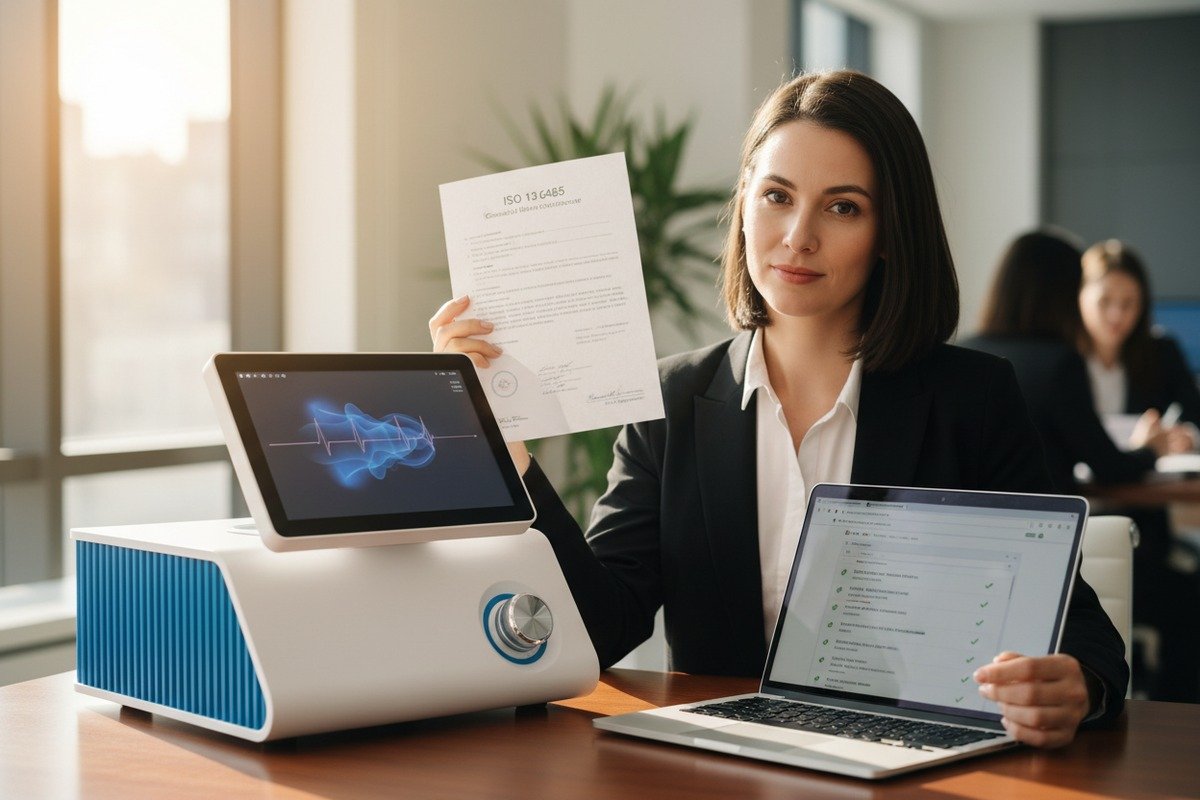
Yes, professional Chinese manufacturers provide complete maintenance and cleaning manuals for private-labeled shockwave machines. These manuals include daily cleaning procedures, weekly inspection checklists, monthly maintenance schedules, spare part care instructions, and troubleshooting guides. Quality OEM suppliers customize these documents with your brand identity.
What Professional Maintenance Manuals Include
Our documentation team structures every manual following international standards. Professional guides cover several key areas that help your technicians maintain equipment properly.
Daily tasks form the foundation of any maintenance program. This includes handpiece cleaning after each treatment session, coupling gel removal from applicator heads, and console surface wiping. These simple tasks prevent buildup that causes long-term damage.
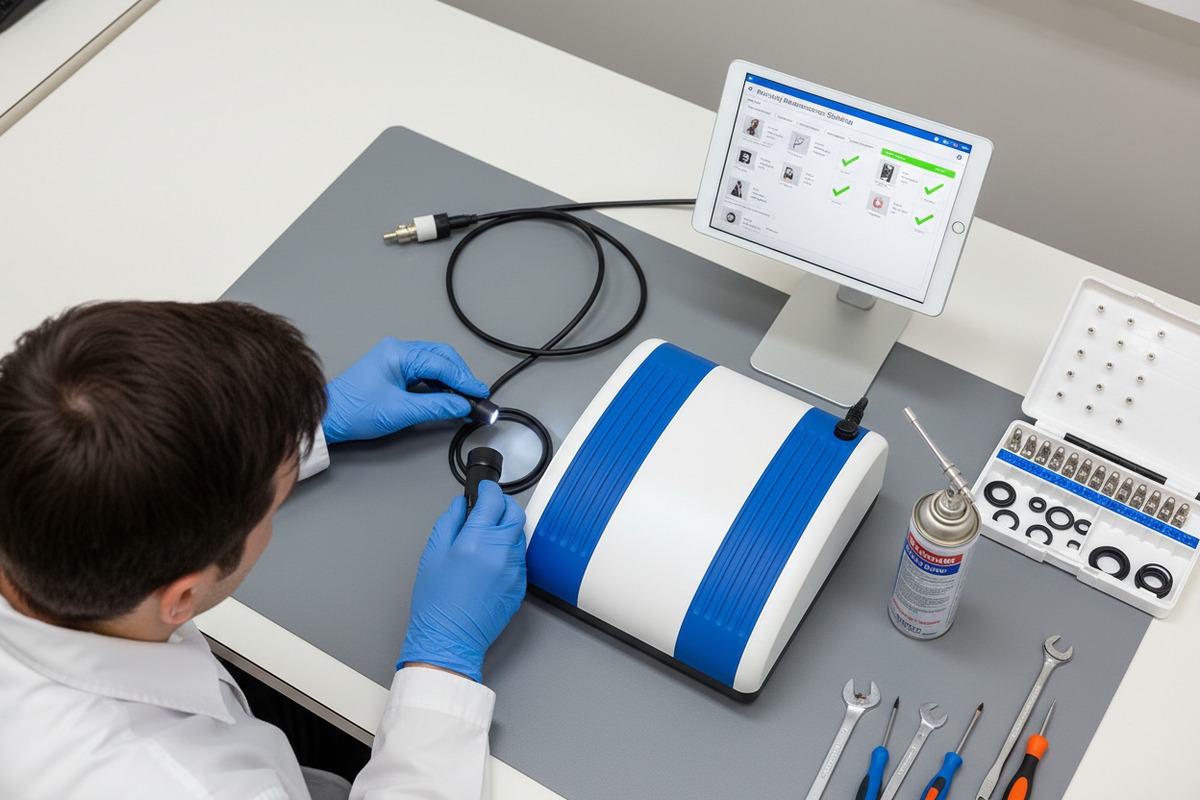
Weekly inspections go deeper. Technicians check O-rings 2 for wear, examine cables for fraying, and inspect applicator tips for damage. Catching small problems early prevents expensive repairs later.
Standard Maintenance Schedule Breakdown
| Frequency | Tasks | Time Required | Tools Needed |
|---|---|---|---|
| Daily | Handpiece cleaning, gel removal, console wiping | 10-15 minutes | Soft cloth, mild disinfectant |
| Weekly | O-ring inspection, cable check, tip examination | 20-30 minutes | Inspection mirror, flashlight |
| Monthly | Shot counter review, fan vent cleaning, filter check | 45-60 minutes | Compressed air, replacement filters |
| Quarterly | Consumable replacement, bullet inspection, lubrication | 1-2 hours | Lubricating oil, spare parts kit |
| Annual | Full calibration, firmware update, professional inspection | 2-4 hours | Calibration tools, computer |
Documentation Quality Differences Between Suppliers
Not all Chinese suppliers provide equal documentation. The difference between professional OEMs and casual sellers becomes clear when you review their maintenance materials.
Professional manufacturers like our team create structured documents with clear timelines. We assign responsibility for each task. We explain why each step matters. We include visual diagrams showing exact procedures.
Casual sellers often provide minimal guidance. Their documents might be single-page PDFs with generic instructions. This leads to improper maintenance and early equipment failure.
When evaluating suppliers, request sample maintenance documentation before ordering. Quality guides include logging requirements, service history templates, and warranty terms that specify consumable versus core component coverage.
How do I ensure my supplier's cleaning protocols meet the standards expected by my US salon clients?
Our export team has shipped equipment to over 200 US-based beauty brands. We understand that American salon owners expect strict hygiene standards. Your reputation depends on providing guidance that matches these expectations.
Verify your supplier's cleaning protocols meet US standards by checking alignment with IEC 62353 and IEC 60601-1 frameworks. Request detailed cleaning agent specifications, material compatibility charts, and sanitation frequency guidelines. Professional suppliers provide protocols that satisfy both FDA registration requirements and state cosmetology board expectations.
Understanding US Salon Hygiene Expectations
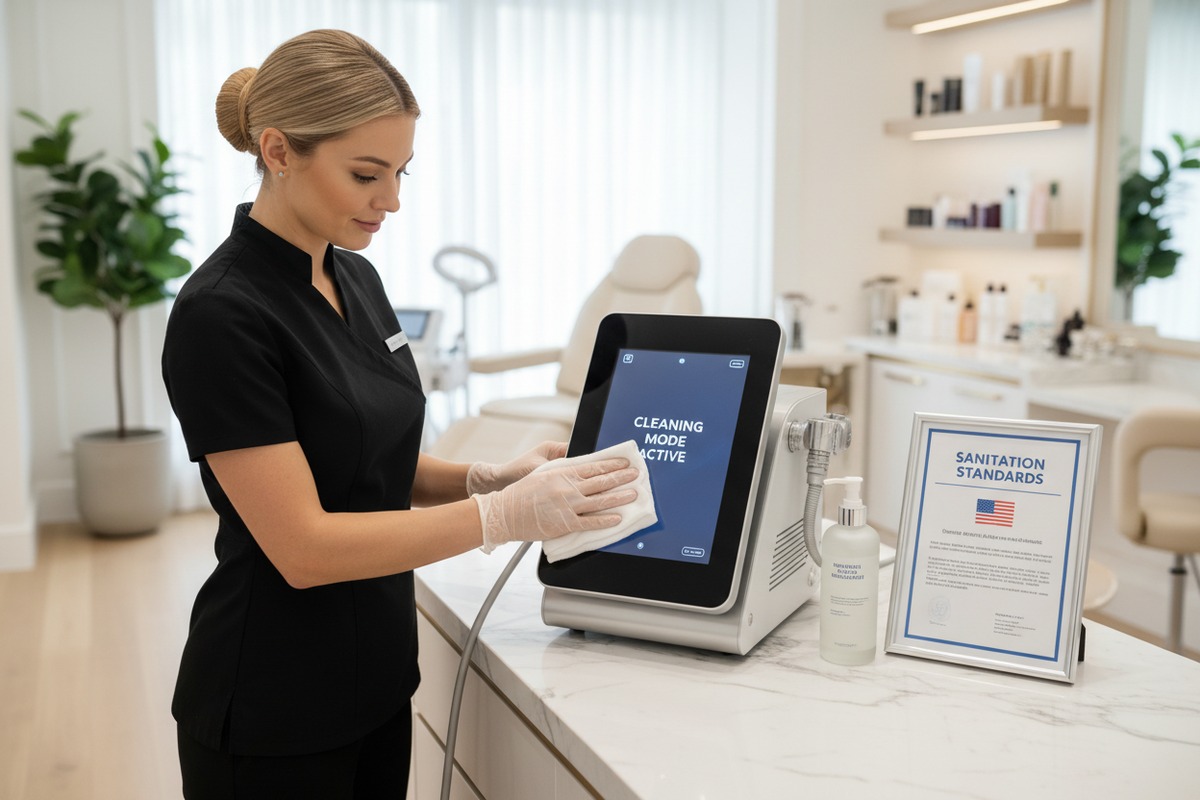
American beauty salons operate under strict state regulations. Cosmetology boards require documented cleaning procedures for all equipment. Your downstream customers need protocols they can show during inspections.
When we prepare documentation for US markets, we focus on several key elements. First, we specify EPA-registered disinfectants 3 compatible with machine surfaces. Second, we detail contact times required for proper sanitation. Third, we explain safe cleaning methods that protect sensitive electronic components.
Cleaning Agent Compatibility Guide
| Machine Component | Recommended Cleaners | Avoid Using | Contact Time |
|---|---|---|---|
| Treatment handpiece | 70% isopropyl alcohol, quaternary ammonium | Bleach, hydrogen peroxide | 2-3 minutes |
| Applicator tips | Medical-grade disinfectant wipes | Abrasive cleaners | 1-2 minutes |
| Console surface | Mild soap solution, electronics cleaner | Ammonia-based products | Wipe and dry |
| Control knob | Damp microfiber cloth | Spray cleaners directly | Wipe only |
| Touchscreen display | Screen-safe cleaning solution | Paper towels, alcohol | 30 seconds |
Regulatory Framework Alignment
Professional Chinese manufacturers design cleaning protocols following international standards. IEC 62353 4 governs recurrent testing and inspection for medical electrical equipment. This standard shapes preventive maintenance concepts in professional guides.
IEC 60601-1 5 addresses electrical safety testing. When your technicians follow proper cleaning procedures, they maintain the safety certifications required for commercial use. Post-repair compliance also depends on following these protocols.
Our quality assurance team reviews all documentation against these frameworks before release. We also consider FDA 510(k) requirements when preparing materials for US-bound equipment. FDA registration requirements 6
Verifying Protocol Quality
Ask potential suppliers specific questions about their cleaning procedures. Request material safety data sheets 7 for recommended cleaning agents. Ask how they determined contact times. Inquire about testing methods used to verify surface compatibility.
Strong suppliers answer these questions confidently with technical details. They explain the reasoning behind each recommendation. Weak suppliers give vague responses or copy generic cleaning instructions from unrelated products.
Will my Chinese manufacturer provide detailed troubleshooting and upkeep guides to help me reduce product failure rates?
During our fifteen years manufacturing beauty equipment, we have learned that good troubleshooting guides dramatically reduce warranty claims. Your service costs drop when end users can solve simple problems themselves.
Yes, quality Chinese manufacturers provide comprehensive troubleshooting guides that address common issues. These guides cover 80-90% of typical problems including low air pressure, weak shockwave output, software errors, and handpiece malfunctions. Detailed upkeep instructions extend equipment lifespan and reduce failure rates significantly.
Common Problems and Solutions
Our technical support data shows certain issues appear repeatedly. Professional troubleshooting guides address these patterns directly. They walk users through diagnostic steps before recommending repairs.
Low air pressure ranks among the most frequent complaints. Guides explain how to check connection points, inspect sealing rings, and verify compressor function. Most cases resolve through simple adjustments rather than component replacement.
Weak shockwave output often relates to consumable wear. Bullets and guide tubes require replacement after approximately two million uses. Guides specify these intervals and explain inspection procedures to determine remaining life.
Troubleshooting Decision Matrix
| Symptom | Likely Cause | First Check | Solution |
|---|---|---|---|
| No power | Fuse blown, cable loose | Power connections | Replace F10A 250V fuse |
| Weak output | Worn bullet, low pressure | Shot counter reading | Replace consumables |
| Error codes | Software glitch, sensor fault | Display messages | Firmware reset procedure |
| Unusual noise | Loose components, worn bearings | Visual inspection | Tighten or replace parts |
| Overheating | Blocked vents, dirty filters | Airflow passages | Clean cooling system |
| Water leakage | Failed seals, blocked drain | Drainage connections | Replace O-rings, clear tubes |
Remote Support Infrastructure
Most Chinese suppliers cannot provide on-site maintenance services abroad. Distance and cost make this impractical. Instead, professional manufacturers develop robust remote support systems.
Our technical team offers video call troubleshooting. Technicians guide your staff through diagnostic procedures in real time. They watch through smartphone cameras as users perform tests. This approach resolves most problems without shipping equipment back to China.
We also provide firmware updates 8 remotely. Software-related issues often clear after updating to the latest version. Our engineers create instructional videos showing exact update procedures.
Upkeep Best Practices
Preventive maintenance reduces failure rates more effectively than reactive repairs. Professional guides emphasize scheduled checks rather than waiting for problems to appear.
Handpiece care deserves special attention. After 100,000 uses or one month of idle time, internal tubes need cleaning and lubrication. Neglecting this allows residue buildup that damages precision components.
Sealing rings and colloids require regular inspection. Small leaks worsen quickly if ignored. Prompt replacement costs little but prevents water damage to electronics.
The automatic water outlet system needs periodic verification. Drainage pipes must remain connected and unblocked. Water buildup inside the machine causes serious damage to circuit boards and motors.
Can I customize the maintenance documentation with my brand logo to provide a better experience for my customers?
Our OEM customers consistently request branded documentation. They want their salon clients to see professional materials that reinforce brand identity. This attention to detail separates premium distributors from generic resellers.
Yes, professional Chinese manufacturers offer full customization of maintenance documentation with your brand logo, colors, and contact information. This service typically includes branded user manuals, cleaning protocol sheets, troubleshooting guides, and maintenance log templates. Custom documentation strengthens your brand image and improves customer experience.
Customization Options Available
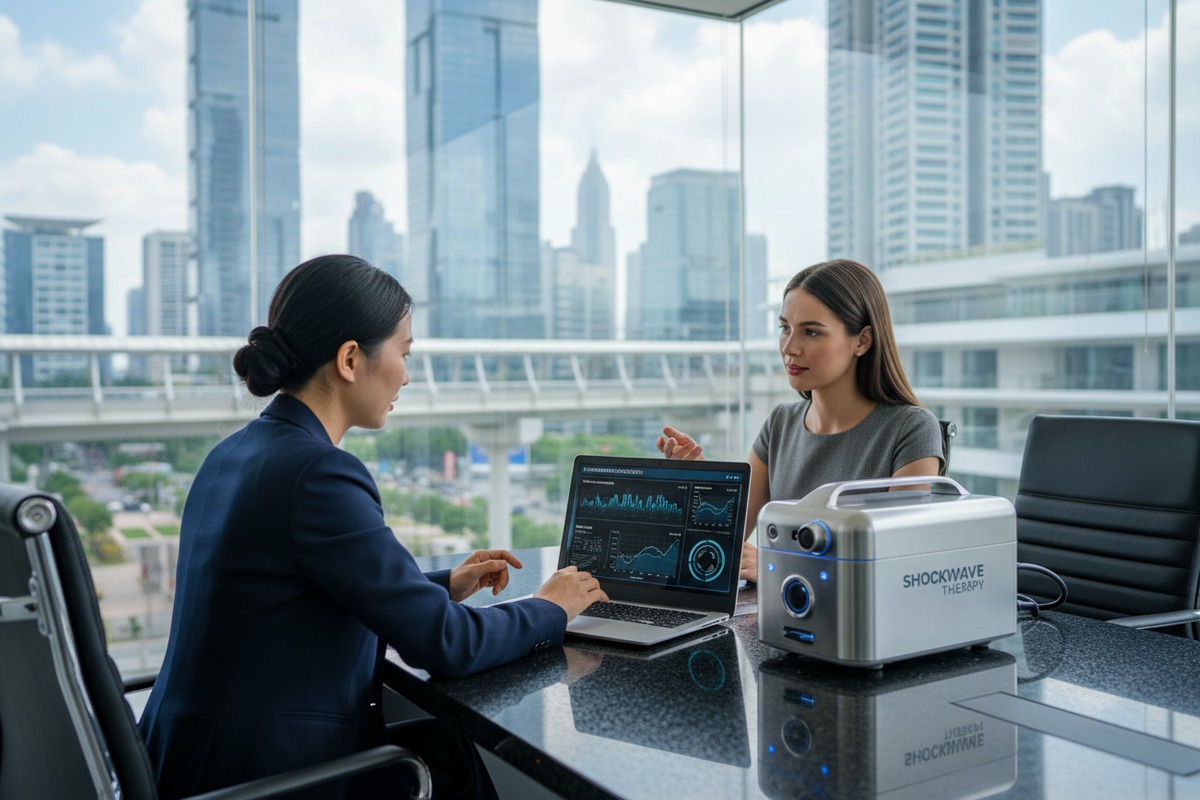
When you partner with a quality OEM supplier, documentation customization becomes part of the package. Our design team works with your brand guidelines to create cohesive materials.
Logo placement appears on every page header and footer. We match your corporate colors throughout the document design. Contact information directs users to your support team rather than the factory.
Some customers request deeper customization. They want unique safety warnings reflecting their market requirements. They need specific language translations for regional markets. They prefer custom photography showing their branded equipment rather than generic stock images.
Branded Documentation Components
| Document Type | Standard Elements | Customizable Features | Typical Format |
|---|---|---|---|
| User Manual | Operating instructions, safety warnings | Logo, colors, contact info, language | PDF, printed booklet |
| Cleaning Guide | Procedure steps, agent recommendations | Brand header, custom photography | Laminated card, PDF |
| Maintenance Schedule | Task timeline, responsibility chart | Logo, branded template design | Wall poster, digital file |
| Troubleshooting Guide | Diagnostic flowcharts, solutions | Support contact details, brand styling | PDF, printed insert |
| Service Log | Recording templates, history tracking | Custom fields, logo watermark | Bound booklet, digital form |
Benefits of Branded Documentation
Professional documentation elevates your brand perception. When salon owners open equipment packages and find polished materials, they feel confident about their purchase. This first impression affects their entire relationship with your brand.
Branded materials also reduce support burden. Users contact your team first rather than searching online for the Chinese manufacturer. You control the customer relationship and gather valuable feedback about common issues.
Documentation customization creates barriers against knockoff competitors. Generic importers cannot replicate your branded materials. Your professional presentation distinguishes legitimate products from gray market alternatives.
Implementation Process
Our typical customization process takes two to three weeks. Customers provide brand guidelines including logo files, color codes, and preferred fonts. Our design team creates draft layouts for approval.
After approval, we produce final files in multiple formats. Digital PDFs work for online distribution and email attachments. Print-ready files go to our documentation printing partners for physical materials.
Minimum order quantities for printed materials vary by document type. Simple cleaning cards might require 500 piece minimums. Full color manuals typically need 200 or more copies for cost-effective production.
We store your approved templates in our system. Future orders automatically include updated branded documentation without repeating the design process. Changes to contact information or minor updates happen quickly at no additional design cost.
Conclusion
Quality Chinese shockwave therapy machine suppliers do provide comprehensive maintenance and cleaning guides. Professional documentation protects your investment and satisfies your salon clients. Choose suppliers who offer customization, clear protocols, and responsive remote support.
Footnotes
1. Explains what shockwave therapy is and its applications in medical treatment. ↩︎
2. Defines O-rings as mechanical gaskets used for sealing in various applications. ↩︎
3. Provides information on EPA-registered disinfectants and their efficacy against pathogens. ↩︎
4. Official standard for recurrent testing and repair of medical electrical equipment. ↩︎
5. Globally recognized standard for basic safety and essential performance of medical electrical equipment. ↩︎
6. Official FDA guidance on establishment registration and device listing for medical devices. ↩︎
7. Official OSHA information on Safety Data Sheets (formerly MSDS) for chemical safety. ↩︎
8. Replaced with an authoritative IBM page explaining what firmware is and mentioning updates. ↩︎
 English
 Español de México
 Deutsch
 Français
 العربية
 Русский
Join the Conversation
Have a question or insight to share? We read every comment — whether you're a distributor, salon owner, or just curious about the technology. Your real-world experience helps others make better decisions. Drop your thoughts below.