

Every week, our design team reviews feedback from US distributors asking the same question visual aesthetics 1. Their KOL partners reject machines that perform well but photograph poorly. The problem is clear: clinical excellence alone no longer wins deals.
KOLs evaluate Instagrammable shockwave therapy machines by assessing visual aesthetics, social media functionality, patient-facing appeal, and brand storytelling potential. They prioritize sleek finishes, compact forms, intuitive interfaces, and photogenic designs that enhance their professional image while meeting clinical performance standards.
Understanding exactly what KOLs look for can help you source machines that sell themselves through social proof social media functionality 2. Let me walk you through the complete evaluation framework our team has developed from years of working with US brand owners.
How do I identify which shockwave machine designs will capture the attention of the KOLs I work with?
Our export team has shipped over 500 shockwave units to North American clinics in the past two years Color Psychology 3. We noticed a pattern. Machines with certain design elements get featured on Instagram repeatedly. Others collect dust in storage rooms despite excellent performance specs Medical Device Design 4.
To identify KOL-approved designs, focus on devices with neutral or metallic finishes, compact footprints, clean geometric lines, and integrated digital displays. KOLs favor machines that photograph well under clinic lighting, look non-intimidating to patients, and offer easy-to-capture demo opportunities for social content.

What Makes a Design "KOL-Ready"?
KOLs think differently than traditional buyers. They evaluate equipment through a dual lens. First, will this device deliver results for my patients Unboxing Experience 5? Second, will this device make me look professional and innovative online?
When we develop new molds at our facility, we now run what we call a "camera test" before finalizing any design CE/FDA certifications 6. Our team photographs prototypes under various lighting conditions. We simulate how the machine will appear in Instagram Reels, TikTok videos, and static posts.
Here are the key visual elements that consistently capture KOL attention:
| Design Element | Why KOLs Care | What to Look For |
|---|---|---|
| Surface Finish | Reduces glare in photos and videos | Matte or satin finishes in white, black, or rose gold |
| Form Factor | Fits easily in frame; looks high-tech | Angular edges, compact base, minimal bulk |
| Display Screen | Shows treatment data for content | HD touchscreen, readable at arm's length |
| Cable Management | Avoids messy backgrounds | Integrated channels, wireless handpiece options |
| Branding Area | Allows private-label visibility | Flat surfaces for logo placement, backlit options |
The Three-Second Rule
KOLs scroll through hundreds of posts daily. Your machine needs to stand out in three seconds or less. This means bold silhouettes beat subtle curves. Contrast colors beat monochrome. Unique shapes beat generic rectangles.
Our engineers learned this lesson after a client returned an order. The machines worked perfectly. But they looked identical to five other devices already popular on social media. The KOLs refused to feature them because there was no visual differentiation.
How KOLs Source Machines Today
The sourcing journey has changed dramatically. KOLs no longer rely solely on trade shows. They discover devices through:
- Instagram posts from peer KOLs
- TikTok videos showing treatments in action
- Alibaba searches filtered by design keywords
- Supplier websites with high-quality product renders
- WhatsApp groups where distributors share finds
This shift means your machine must look exceptional online before any hands-on evaluation happens. If the photos fail to impress, KOLs never request demos.
When clients visit our showroom in Guangzhou, they often ask which features justify premium pricing. The answer surprises many. It is not always about internal components. Surface-level aesthetics drive perceived value more than raw specifications.
Prioritize matte or glossy white finishes, chrome accents, backlit displays, seamless panel joints, and premium handpiece ergonomics. These elements photograph as "luxury" under studio and clinic lighting, commanding 20-30% higher perceived value compared to utilitarian designs with visible screws and plastic textures.
Color Psychology in Medical Device Design
Color choice affects both KOL preference and patient perception. Our R&D team tested several colorways with US focus groups. The results were clear.
| Color Option | KOL Preference Rating | Patient Comfort Rating | Photo Performance |
|---|---|---|---|
| Matte White | 9.2/10 | 9.5/10 | Excellent in all lighting |
| Gloss Black | 8.8/10 | 7.2/10 | Shows fingerprints; needs cleaning |
| Rose Gold Accents | 9.0/10 | 8.8/10 | Exceptional for beauty-focused clinics |
| Medical Gray | 6.5/10 | 8.0/10 | Looks dated; poor engagement |
| Blue Accents | 7.0/10 | 8.5/10 | Good but common; lacks differentiation |
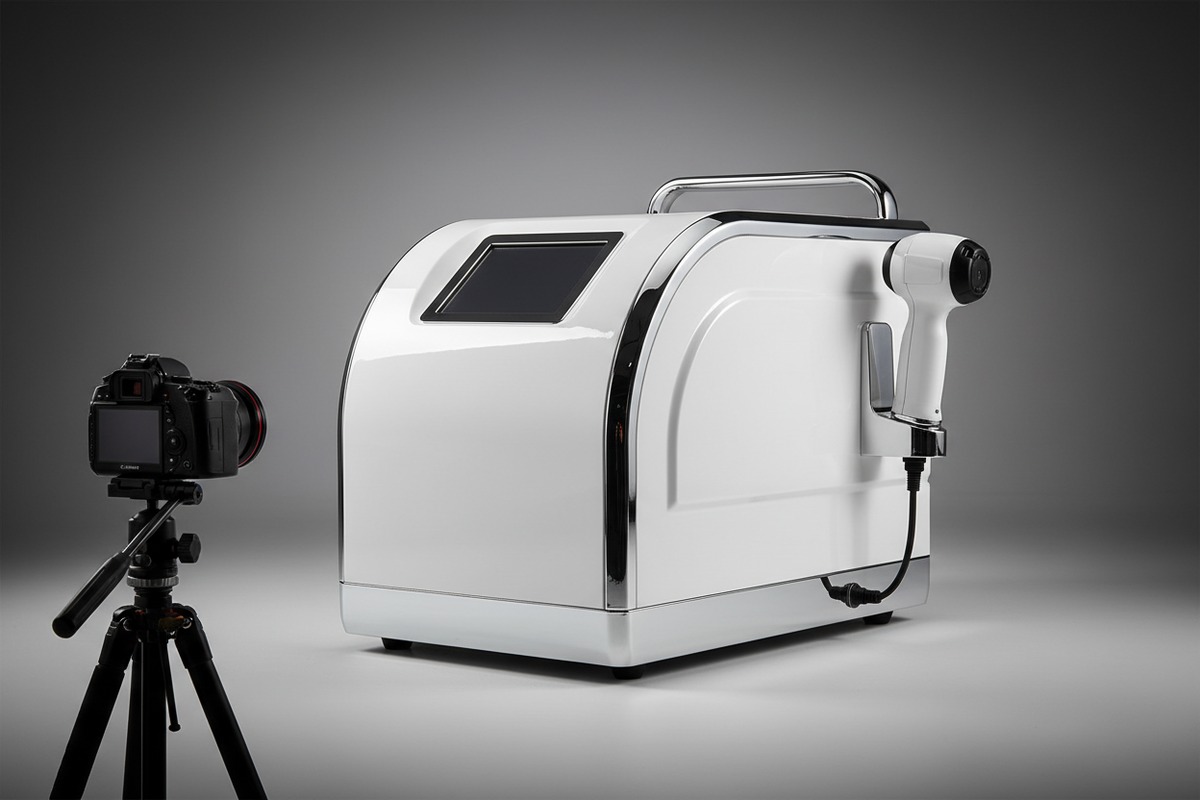
White machines consistently outperform others. They look clean, modern, and clinical without appearing intimidating. The sleek white chassis with high-gloss finish that our latest models feature photographs exceptionally well under typical clinic fluorescent lighting.
Details That Signal Premium Quality
KOLs notice details that casual buyers miss. These small touches communicate quality in photos:
Panel Gaps: Premium devices have panel gaps under 1mm. Cheap devices show visible seams that look unprofessional in close-up shots.
Button Quality: Tactile, silent buttons with LED backlighting suggest high-end electronics. Clicky, plastic buttons feel dated.
Display Resolution: HD touchscreens with responsive interfaces photograph sharply. Low-resolution displays look blurry in video content.
Handpiece Design: Ergonomic curves with soft-touch grips appear comfortable. Angular, plastic handpieces look painful to hold.
The "Unboxing Experience" Factor
Social media has created demand for unboxing content. KOLs film themselves opening new equipment. This moment matters.
Our packaging team redesigned shipping containers specifically for this trend. We now use:
- Magnetic closure boxes instead of cardboard flaps
- Custom foam inserts that cradle each component
- Branded tissue paper and ribbon details
- Quick-start guides with QR codes to tutorial videos
These touches add minimal cost but dramatically increase the likelihood that KOLs will film and share unboxing content. One viral unboxing video can drive more inquiries than months of traditional marketing.
Texture and Material Considerations
The modern medical therapy device featuring a sleek white rectangular main unit with rounded vertical edges performs better than angular alternatives in patient-facing contexts. Rounded edges communicate safety. Sharp corners suggest industrial equipment.
Material selection also matters:
- ABS plastic with soft-touch coating: Warm to touch, reduces anxiety
- Aluminum accents: Communicates durability and precision
- Tempered glass displays: Premium feel, easy to clean for photos
- Silicone grips: Practical and photogenic
How can I balance a trendy, "Instagrammable" exterior with the high-performance standards my salon customers expect?
This question comes up in nearly every client call. There is a perception that beautiful design compromises function. Our engineering team disagrees. In fact, premium aesthetics often correlate with better internal quality.
Balance aesthetics and performance by selecting machines with modular internal architectures, CE/FDA certifications, proven wave intensity specifications, and user-friendly interfaces. The best 2026 designs integrate smart connectivity, AI-enhanced protocols, and hybrid treatment capabilities within sleek exteriors—proving that form and function can coexist.

Why the Best Designs Achieve Both
When we engineer a new shockwave device, we start with internal specifications. The casing design follows. This sequence ensures performance never suffers for aesthetics.
However, premium casing materials often protect internals better than cheap alternatives. Consider this comparison:
| Component | Budget Design Impact | Premium Design Impact |
|---|---|---|
| Casing Material | Thin plastic; cracks under pressure | Reinforced ABS; absorbs impact |
| Ventilation | Visible slots; dust ingress | Hidden channels; filtered airflow |
| Display Mount | Exposed screws; vibration damage | Flush integration; shock absorption |
| Cable Ports | Loose connections; signal loss | Precision-machined; secure fit |
| Control Board | Cramped layout; overheating | Spacious design; optimal cooling |
The professional aesthetic therapy device featuring a sleek, glossy white plastic base in our newest line actually houses more sophisticated internals than our previous generation. The premium exterior justified higher-quality components throughout.
Performance Metrics KOLs Actually Measure
KOLs who understand their business track specific performance data:
Wave Intensity Range: Measured in bars or mJ/mm². Effective devices deliver 1.5-5 bars for various applications.
Pulse Frequency: Shots per minute. Higher frequencies enable faster treatments.
Treatment Protocols: Pre-programmed settings for cellulite, pain management, and skin tightening.
Handpiece Options: Multiple heads for different body areas and treatment depths.
Noise Level: Below 60dB allows comfortable patient conversations and clean audio for content creation.
Our quality control team tests every unit against these metrics before shipment. Clients receive documentation showing exact performance data. This transparency builds trust with KOLs who need to verify claims before endorsing products.
Smart Connectivity: The 2026 Standard
Connectivity features have evolved from luxury to necessity. KOLs expect:
- Bluetooth/Wi-Fi syncing for treatment data export
- Cloud monitoring for multi-location clinics
- App integration for before-after photo organization
- Real-time analytics for treatment optimization
These features generate shareable content automatically. A KOL can post treatment statistics directly from the device app to Instagram Stories. This seamless workflow dramatically increases content output.
However, connectivity raises data privacy concerns. HIPAA and GDPR compliance matters. Our software team ensures all patient data remains encrypted and never appears in shareable content without explicit consent toggles.
Hybrid Treatment Capabilities
The most Instagrammable machines in 2026 combine multiple technologies. Shockwave devices integrating RF microneedling, ultrasound, or EMS modules offer more content opportunities. One machine produces before-after visuals for several treatment types.
This approach benefits distributors economically too. Instead of stocking five separate devices, clinics purchase one hybrid system. The reduced footprint photographs better and simplifies inventory management.
Can I collaborate with my supplier to develop a unique machine casing that differentiates my brand from other US distributors?
Absolutely. This is exactly what separates successful distributors from commodity resellers. Our ODM services exist specifically for clients who want exclusive designs. But collaboration requires understanding the process, timeline, and investment involved.
Yes, you can collaborate with qualified suppliers on custom casings through ODM partnerships. The process typically involves design consultation, 3D rendering, rapid prototyping, mold development, and pilot production. Expect 90-180 days for custom casing projects and tooling investments of $15,000-$50,000 depending on complexity.

The Custom Casing Development Process
Our design team walks clients through a structured workflow:
Phase 1: Consultation (Weeks 1-2)
We discuss your brand identity, target KOL profiles, competitive landscape, and budget parameters. You share mood boards, competitor analysis, and specific feature requests.
Phase 2: Concept Design (Weeks 3-4)
Our industrial designers produce 3-5 concept renders. These show different aesthetic directions based on consultation insights. You select one direction for refinement.
Phase 3: Detailed Design (Weeks 5-8)
Engineers develop precise CAD models with accurate dimensions, material specifications, and manufacturing considerations. This phase includes display integration, ventilation planning, and structural analysis.
Phase 4: Rapid Prototyping (Weeks 9-12)
Using micro 3D printing, we produce physical prototypes for evaluation. You test ergonomics, visual appeal, and fitment. Revisions happen quickly at this stage.
Phase 5: Mold Development (Weeks 13-20)
Once designs are approved, we create injection molds for production. This is the major cost center but enables consistent mass production.
Phase 6: Pilot Production (Weeks 21-24)
First production run validates quality. Minor adjustments ensure perfect fit between casing and internal components.
Investment Requirements
Custom development requires financial commitment. Here is what our clients typically budget:
| Development Phase | Cost Range | Notes |
|---|---|---|
| Design Consultation | $0-$2,000 | Often included with order commitment |
| Concept Rendering | $1,500-$3,000 | 3-5 variations |
| Detailed CAD Development | $3,000-$8,000 | Production-ready files |
| Rapid Prototyping 7 | $2,000-$5,000 | 2-3 iterations typical |
| Mold Tooling | $15,000-$35,000 | Primary cost; owned by client |
| Pilot Production (50 units) | $10,000-$25,000 | First batch at premium pricing |
Total investment ranges from $30,000-$75,000 depending on complexity. However, exclusive designs command premium pricing that recovers investment within 100-200 unit sales for most distributors.
Protecting Your Investment
Custom molds belong to you. We store them at our facility but they remain your property. This prevents competitors from accessing your exclusive design.
We also recommend trademark registration for distinctive design elements. Some clients patent unique ergonomic features or interface layouts. These protections ensure your investment creates lasting competitive advantage.
When Custom Development Makes Sense
Not every distributor needs custom casings. Consider ODM collaboration if:
- You target a specific niche (luxury med-spas, sports medicine clinics)
- Your brand identity requires visual consistency across products
- You plan to sell 200+ units over 24 months
- Competitors already dominate with existing designs
- KOL partners specifically request differentiated aesthetics
For smaller operations, our OEM service with custom branding on standard models offers faster time-to-market and lower investment.
Working Effectively with Chinese Suppliers
Successful collaboration requires clear communication. Based on our experience with US clients, here are best practices:
Provide Visual References: Photos and videos communicate better than descriptions. Share examples of designs you admire and explain what you like about each.
Define Non-Negotiables Early: If certain features are mandatory (specific color, button placement, display size), state them upfront before design work begins.
Plan for Iterations: First prototypes rarely achieve perfection. Budget time and money for 2-3 revision cycles.
Visit If Possible: Clients who visit our facility during development achieve better outcomes. Video calls work, but in-person collaboration accelerates decisions.
Establish Communication Protocols: Regular WhatsApp updates, weekly video calls, and detailed email documentation prevent misunderstandings.
Conclusion
KOLs have transformed how shockwave therapy machines 9 get evaluated and sourced. Visual appeal, social media functionality, and brand storytelling potential now rank alongside clinical performance. Understanding these criteria helps you select devices that win KOL endorsements and drive sales growth.
Footnotes
1. Discusses the importance of aesthetics in medical device design beyond just appearance. ↩︎
2. Identified an article detailing how medical device companies can leverage social media for brand building and engagement. ↩︎
3. Provides a comprehensive overview of color psychology and its applications. ↩︎
4. Outlines key principles for designing medical devices, including user-centered design and regulatory compliance. ↩︎
5. Located an article explaining the benefits of unboxing marketing and its impact on consumer engagement and brand loyalty. ↩︎
6. Compares medical device regulations for CE marking in the EU and FDA approval in the US. ↩︎
7. Provides a definition and overview of rapid prototyping techniques and applications. ↩︎
8. Explains the concept of Original Design Manufacturing (ODM) and its process. ↩︎
9. Provides a general overview of extracorporeal shockwave therapy. ↩︎

 English
 Español de México
 Deutsch
 Français
 العربية
 Русский
