
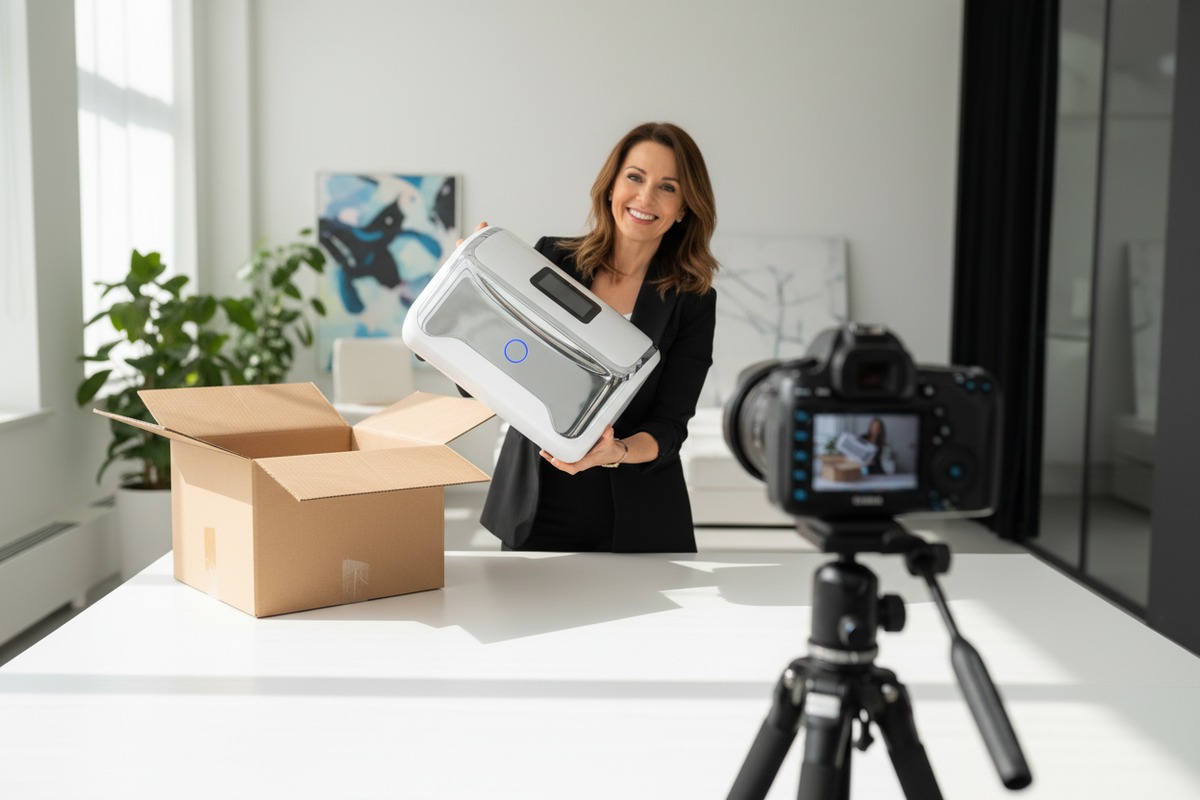
Every week, our production line ships dozens of shockwave therapy machines 1 to KOLs worldwide. Yet many influencers struggle to create compelling unboxing content that resonates with their audience. The problem? They don’t know what to look for.
To evaluate a shockwave therapy machine unboxing experience as a KOL, assess four key areas: packaging protection and presentation, build quality indicators, accessory professionalism, and custom branding execution. Document each element systematically to create authentic, engaging content that builds trust with your audience.
In the sections below, I’ll walk you through each evaluation criterion 5-ply corrugated cardboard 2. You’ll learn exactly what separates a premium unboxing experience from a disappointing one. Let’s dive in.
How do I assess if the packaging is sturdy enough to protect my investment during transit?
When we design packaging at our factory, we consider drops, vibrations, and compression during international shipping. Your viewers want to see machines arrive flawless. Nothing kills credibility faster than showing damaged goods.
Assess packaging sturdiness by checking three layers: outer carton thickness and compression resistance, inner foam density and custom-molded fit, and component separation to prevent scratching. Quality packaging uses at least 5-ply corrugated cardboard and high-density EVA foam that holds each part securely in place.

The Three-Layer Protection System
Professional shockwave machine packaging follows a proven structure. The outer layer must withstand warehouse stacking and rough handling. We use 5-ply or 7-ply corrugated cardboard rated for heavy equipment. Look for edge crush test ratings 3 printed on the box.
The middle layer involves shock absorption. High-density EVA foam 4 or molded pulp should cradle the main unit. When you lift the device, it shouldn't shift or rattle. Custom-cut foam prevents movement during transit.
The inner layer protects surfaces. Look for plastic wrapping on glossy components, silica gel packets for moisture control, and protective film on screens. These details matter.
What to Check During Your Unboxing Video
| Inspection Point | What to Look For | Red Flag |
|---|---|---|
| Box corners | Sharp, undented edges | Crushed or soft corners |
| Tape seals | Factory tape intact | Resealed or damaged tape |
| Foam fit | Snug, custom-molded | Generic loose padding |
| Component slots | Each part in designated spot | Items floating freely |
| Moisture indicators | Dry silica packets | Wet or missing packets |
Weight Distribution Matters
Shockwave machines vary from 7 kg for portable units to 21 kg for clinical systems. Heavy units need reinforced bases. Check if the box has "This Side Up" markings and handles positioned correctly.
During your unboxing, demonstrate the weight. Show viewers how the packaging supports safe lifting. If you struggle to remove a 21 kg unit safely, your audience needs that honest moment. It builds trust.
KOL Pro Tip: Document Before Opening
Before cutting any tape, film the exterior condition. Show shipping labels, handling stickers, and any visible damage. This documentation protects you and creates authentic content. Our quality control team always photographs packaging before dispatch—you should do the same upon receipt.
Our engineering team spends months perfecting chassis design and material selection. When you unbox a machine, those details should be immediately visible. Premium quality announces itself.
Confirm premium build quality by examining seam alignment, material finish consistency, button feedback, and connector precision. Look for uniform gaps between panels, scratch-resistant coatings, responsive tactile controls, and medical-grade ports that click firmly into place without wobbling.

Surface Finish and Material Analysis
A high-gloss white chassis looks stunning on camera. But look closer. Run your fingers along edges. Premium machines have smooth, rounded corners without sharp burrs. Mold lines should be invisible or perfectly aligned.
Check plastic quality by gently pressing panels. Cheap housings flex and creak. Quality ABS plastic 5 holds firm. The angular white chassis with high-gloss finish you see on premium units comes from careful mold engineering—not just spray paint.
Control Panel and Interface Quality
The display is your machine's face. Evaluate these elements:
| Component | Premium Indicator | Budget Indicator |
|---|---|---|
| Screen | Bright, wide viewing angle | Dim, narrow viewing angle |
| Buttons | Solid click, consistent feel | Mushy, inconsistent feedback |
| Labels | Laser-etched, permanent | Printed stickers, peel risk |
| Bezels | Flush with surface | Raised edges, gap variations |
Handpiece Construction
The handpiece gets the most use. Examine the cable attachment point—it should have strain relief. Check the grip texture. Premium handpieces use medical-grade silicone 6 or soft-touch coating.
Weight balance matters too. Hold the handpiece naturally. It shouldn't feel front-heavy or awkward. Our design team tests ergonomics extensively because practitioners use these for hours daily.
Internal Quality Indicators
You can't see inside during unboxing, but you can evaluate external signs:
- Ventilation slots: Clean cuts, no rough plastic
- Screw holes: Properly countersunk, not stripped
- Rubber feet: Firmly attached, level placement
- Power input: Secure socket, proper grounding indicator
The Sound Test
Power on the device. Listen. Premium machines operate quietly. Fans should whisper, not whir loudly. Compressors should produce smooth, consistent sounds. Rattling, buzzing, or grinding signals quality issues.
When we test units before shipping, silence is golden. Your viewers will appreciate you demonstrating this simple check.
Are the included accessories and manuals professional enough for my high-end salon brand?
When we assemble accessory kits, we think about the end user's brand image. Your salon clients notice details. Cheap accessories undermine expensive equipment investments.
Professional accessories feature consistent branding, medical-grade materials, organized storage solutions, and comprehensive documentation. Look for matching color schemes across all components, individually wrapped items with clear labeling, and manuals that include troubleshooting guides, maintenance schedules, and safety certifications.

Standard Accessory Inventory
Professional shockwave therapy machines include essential components. Use this checklist during your unboxing:
| Category | Essential Items | Premium Additions |
|---|---|---|
| Applicators | Handpiece, 2+ transmitters | Multiple sizes (10-35mm), titanium options |
| Consumables | Acoustic gel, silicon oil | Water bags, regeneration kits |
| Setup tools | Power cord, standoffs | Fixation rings, calibration tools |
| Storage | Basic carrying case | Wheeled cart, holster mount |
| Documentation | User manual, warranty card | Training videos, quick-start guide |
Transmitter Quality Evaluation
Transmitters directly affect treatment results. Steel transmitters in 10-35mm sizes handle most applications. Titanium options offer lighter weight and patient comfort.
Check energy density specifications 7. Quality transmitters clearly mark their ratings—expect ranges from 0.38 mJ/mm² for gentle work to 0.95 mJ/mm² for deep tissue treatments. This information should appear on the transmitter or in documentation.
Documentation Standards
Your manual reflects the manufacturer's professionalism. High-quality documentation includes:
- Clear assembly diagrams with numbered steps
- Parameter guidelines (pressure 1-5 bar, frequency 1-25 Hz)
- Maintenance schedules with specific intervals
- Troubleshooting flowcharts
- Safety warnings in multiple languages
- Certification copies (CE, FDA registration if applicable)
Flip through the manual on camera. Show viewers the depth of content. Point out helpful sections. This adds value to your review while demonstrating product quality.
Storage and Organization Solutions
Premium kits include thoughtful organization. Holsters for handpiece storage should accommodate left and right-handed users. Compartments for transmitters prevent scratching. Water cartridge holders keep consumables accessible.
If the machine includes a wheeled cart option, test its mobility. Smooth-rolling casters and secure locking mechanisms matter for clinic environments. Our portable cart designs prioritize both aesthetics and function.
Consumables and Replacement Parts
Evaluate the consumables package critically. Quality acoustic gel should be medical-grade, not generic lubricant. Water bags for focused shockwave units need proper sealing. Silicon oil for maintenance should include application instructions.
Check if regeneration kits are available for extended use. Machines rated for 2 million shocks need periodic component replacement. Professional manufacturers provide clear pathways for consumable reordering.
How can I evaluate the quality of the custom logo and private labeling on my new device?
Our branding team handles hundreds of private label requests yearly. We know what separates professional customization from amateur attempts. Your brand deserves perfect execution.
Evaluate custom logo quality by examining print durability, color accuracy, placement precision, and finish integration. Quality private labeling withstands alcohol wipe tests, matches Pantone specifications, aligns perfectly with device geometry, and blends seamlessly with the original surface finish without bubbling or peeling.

Logo Application Methods Compared
Different application methods suit different budgets and durability needs:
| Method | Durability | Cost Level | Best For |
|---|---|---|---|
| Laser etching | Permanent | High | Metal surfaces, premium units |
| UV printing | 5+ years | Medium | Plastic housings, detailed logos |
| Vinyl decal | 2-3 years | Low | Budget orders, temporary branding |
| Silk screen | 3-5 years | Medium | Simple logos, large batches |
| Embossing | Permanent | High | Premium plastic, tactile branding |
The Alcohol Wipe Test
During your unboxing, demonstrate logo durability. Take an alcohol wipe and gently rub the branded area. Quality prints won't smear, fade, or lift. This simple test separates professional work from cheap alternatives.
Our UV printing process cures under specialized lamps, creating chemical bonds with the surface. Vinyl decals, by contrast, rely on adhesive that degrades over time.
Color Accuracy Assessment
Compare the printed logo against your original brand guidelines. Professional manufacturers request Pantone codes 8 and match them precisely. Eyeballing colors leads to inconsistencies.
Check logo appearance under different lighting. Studio lights, natural daylight, and fluorescent bulbs reveal color shifts. Quality prints maintain consistency across lighting conditions.
Placement and Alignment
Logo positioning should follow design principles. Center alignment needs perfect measurement. Corner placements require consistent margins. Any visible tilt or offset signals poor quality control.
Examine the logo from multiple angles. Perspective shouldn't reveal bubbles, wrinkles, or lifting edges. Surface preparation before printing determines these outcomes.
Branding Consistency Across Components
Premium private labeling extends beyond the main unit. Check accessory branding:
- Handpiece logos matching main unit style
- Packaging bearing your brand colors
- Manual covers featuring your logo
- Warranty cards with your contact information
When we execute private label orders, we treat every touchpoint as a branding opportunity. Your viewers should see unified brand presentation throughout the unboxing.
Software and Interface Customization
Advanced private labeling includes digital elements. Boot screens can display your logo. Interface color schemes can match brand guidelines. Preset program names can use your terminology.
Ask your manufacturer about these options. They differentiate truly custom products from simple logo slaps. Show viewers the full depth of customization during your review.
Long-Term Durability Considerations
Your review influences purchase decisions. Address longevity honestly. Ask the manufacturer about warranty coverage for branding elements. Professional companies stand behind their work.
Consider environmental factors. Clinics use disinfectants daily. Logos must withstand cleaning chemicals without degradation. UV-cured prints and laser etching handle this challenge best.
Conclusion
Evaluating shockwave therapy machine unboxing experiences requires systematic attention to packaging, build quality, accessories, and branding. Use these criteria to create authentic KOL content that genuinely helps your audience make informed decisions.
Footnotes
1. Explains the technology and benefits of shockwave therapy devices. ↩︎
2. Details the construction and benefits of 5-ply corrugated boxes. ↩︎
3. Comprehensive guide on the edge crush test for packaging materials. ↩︎
4. Explains EVA foam properties and benefits for packaging applications. ↩︎
5. Wikipedia is an authoritative source providing a comprehensive overview of Acrylonitrile Butadiene Styrene (ABS) plastic, including its properties, uses, and chemical composition, suitable for general information. ↩︎
6. Explains properties and applications of medical-grade silicone in healthcare. ↩︎
7. Clarifies energy density definitions and levels in shockwave therapy. ↩︎
8. Official source for Pantone color systems and brand guidelines. ↩︎

 English
 Español de México
 Deutsch
 Français
 العربية
 Русский
