
Running our pressotherapy production lines for over a decade, we have seen buyers struggle with unclear energy specs ROHS certifications 1. Many purchase machines only to face 2 unexpected electricity costs or compliance issues later. This problem gets worse when suppliers lack detailed datasheets or ignore standby power 3 altogether.
To inquire about energy efficiency for pressotherapy machines, request detailed power consumption reports showing wattage during active use and standby mode. Ask for certifications like CE, verify voltage compatibility (110V/220V), and confirm auto-shutoff features. Compare standby power specs to the EU benchmark of under 0.5W for optimal efficiency.
In the sections below, we will break down exactly what questions to ask your supplier, how to verify standby power claims, and what energy-saving features you can request during private-label development.
How can I get a detailed energy consumption report for your pressotherapy machines?
When we ship units to Europe or the US, buyers often realize too late that energy specs matter Kill-A-Watt meter 4. Without a proper energy report, you cannot plan operational costs or meet local regulations. This gap leads to surprises that hurt your bottom line.
Request a detailed energy consumption report by asking your supplier for active power draw (wattage), standby power consumption, voltage/frequency specs, and estimated annual kWh usage. Reputable manufacturers provide datasheets with CE or ROHS certifications to verify these claims against international standards.
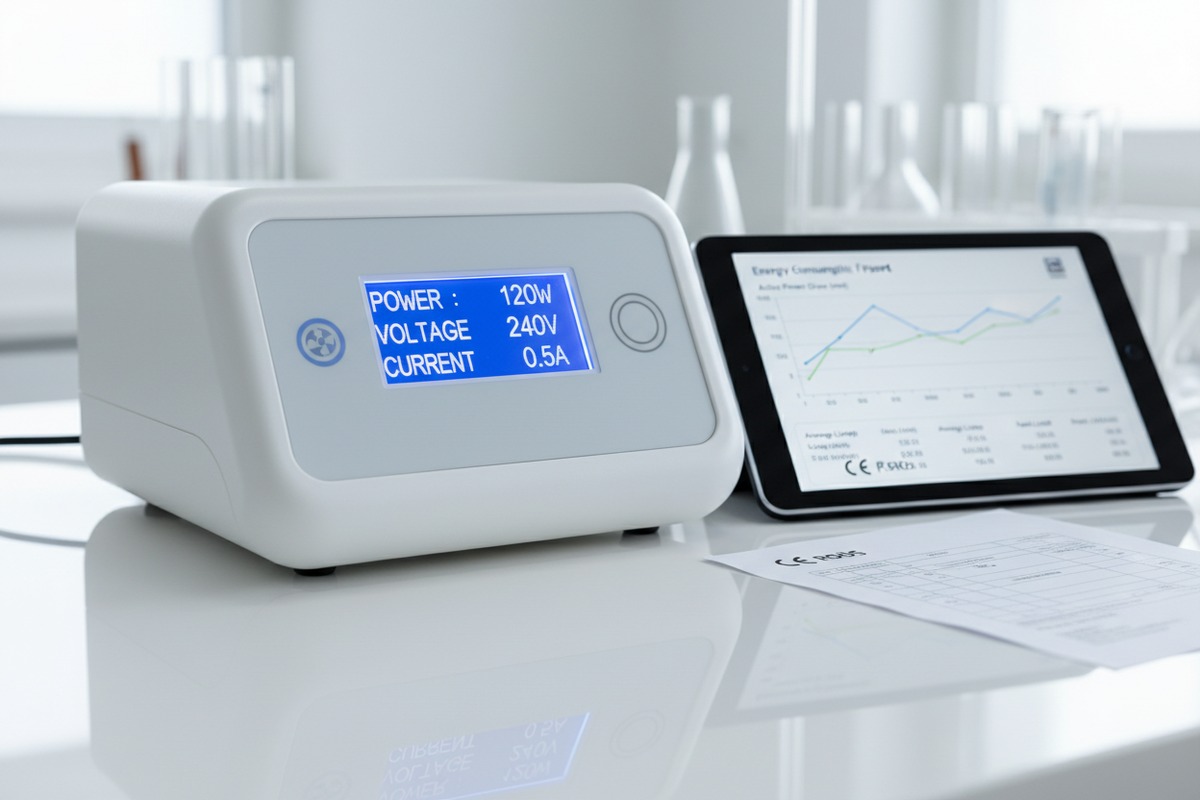
What to Include in Your Energy Report Request
When you reach out to a supplier, be specific. A vague request gets a vague answer. Here is what your email should ask for:
- Active power consumption – The wattage when the machine runs at full capacity.
- Standby power draw – Energy used when plugged in but idle.
- Voltage and frequency – Confirm compatibility with your region (110V/220V, 50Hz/60Hz).
- Estimated annual kWh – Based on typical clinic usage patterns.
- Certification documents – CE, ROHS, or other regional marks.
Sample Energy Consumption Table
| Parameter | Typical Range | What to Ask |
|---|---|---|
| Active Power | 300W–500W | "What is the max wattage during operation?" |
| Standby Power | 1W–10W (varies) | "What is the idle consumption in watts?" |
| Voltage | AC 110V–240V | "Is the unit dual-voltage compatible?" |
| Frequency | 50Hz/60Hz | "Does it auto-switch for US and EU grids?" |
| Safe Output | 36V DC | "What is the garment voltage for safety?" |
Why Manufacturers May Not Offer This Data Upfront
Here is the truth. Many suppliers do not publish standby power figures because no one asks. The focus stays on treatment features, not electrical specs. But this creates risk for you.
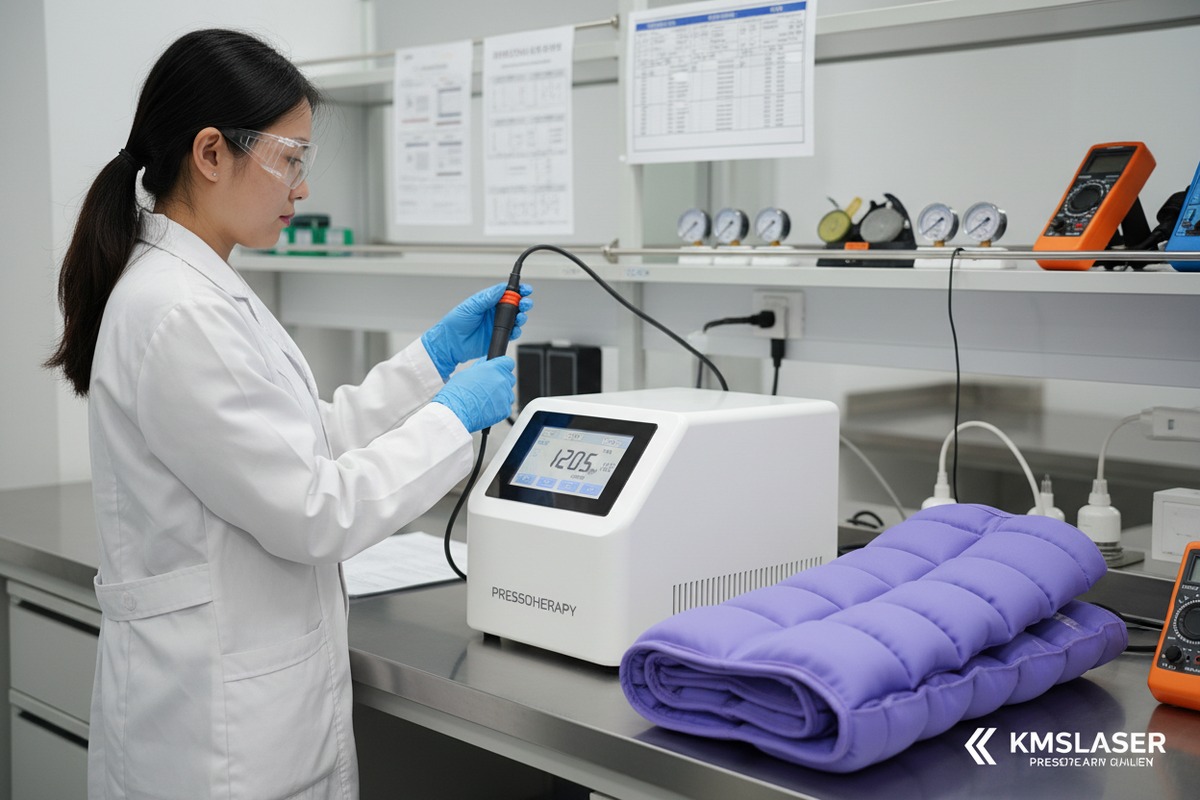
Our engineering team can provide test reports upon request. We measure power at multiple load points. This practice follows how suppliers for medical power adapters work. They test at 100%, 75%, 50%, 25%, and even 10% load to show real-world efficiency.
Tools You Can Use to Verify Claims
If your supplier sends specs, you can double-check them:
- Kill-A-Watt meter – Plug it between the outlet and machine. It shows real-time and cumulative power use.
- Smart power strips – Some record usage over weeks.
- Third-party lab reports – Ask if an independent lab tested the unit.
Verification matters. Manufacturer claims and real-world performance sometimes differ. Trust but verify.
What should I ask my supplier to verify the standby power efficiency of my order?
At our factory, we have seen buyers focus only on treatment performance. They overlook standby mode. But a machine plugged in all day accumulates “vampire power” costs. Over a year, this adds up.
Ask your supplier for the exact standby power consumption in watts, whether the machine has an auto-shutoff feature, and if it meets EU standby limits (under 0.5W for off mode). Request test reports showing idle power draw and confirm the unit does not exceed 2W in networked standby mode.

Key Questions to Ask About Standby Power
Standby power is the energy a machine uses when plugged in but not running. Some call it phantom load. Here are the specific questions to send your supplier:
- "What is the standby power consumption in watts when the machine is idle?"
- "Does the unit have an auto-shutoff or sleep mode timer?"
- "How long before the machine enters low-power standby after the last session?"
- "Does your machine comply with EU Ecodesign standby requirements?"
- "Can you provide a test report showing off-mode and standby-mode power draw?"
Understanding EU Standby Regulations
The EU has strict rules for energy-using products. According to Commission Regulation (EU) 2023/826 5, equipment in off mode shall not exceed 0.50W, dropping to 0.30W two years after the regulation takes effect. Equipment with status displays can use up to 0.80W. Networked equipment has a higher limit of 2.00W.
These rules apply to many electronic devices. While medical devices may have exemptions, wellness equipment like pressotherapy machines often falls under general product categories.
Standby Power Comparison Table
| Standby Mode Type | EU Limit (2023/826) | What to Request |
|---|---|---|
| Off mode | ≤ 0.50W (later 0.30W) | "Confirm off-mode power is under 0.5W" |
| Reactivation only | ≤ 0.50W | "Does the unit draw under 0.5W when only standby light is on?" |
| Status display | ≤ 0.80W | "What does the display draw in idle?" |
| Networked standby | ≤ 2.00W | "If Wi-Fi enabled, what is networked standby?" |
Auto-Shutoff and Timers
Many modern pressotherapy machines include timers ranging from 10 to 120 minutes. After the session ends, the machine should power down or enter sleep mode. Ask:
- "Does the machine automatically shut off after a session?"
- "How long does it stay active before entering sleep mode?"
- "Can users set a custom idle timeout?"
These features reduce energy waste. They also extend the life of air compressors and electronic components.
Why This Matters for Your Business
Let us do quick math. A machine with 10W standby power running 24/7 for a year uses about 87.6 kWh. At $0.15 per kWh, that is $13 per year per machine. If you run 10 machines in a clinic chain, multiply that. Now compare to a 1W standby machine—just $1.30 per year per unit. The savings compound across your fleet.
How do I ensure the power supply components meet the energy standards for my region?
Our engineers calibrate every unit before shipment. But we know voltage standards differ globally. A machine built for 220V will not work safely on a 110V US outlet without proper design. Getting this wrong creates safety hazards and compliance failures.
Ensure power supply compliance by verifying the machine supports your regional voltage (110V or 220V), checking for dual-voltage auto-switching capability, and confirming certifications like CE for Europe or UL/FCC for the US. Request IEC 60601 compliance documents if the device contacts patients.

Regional Voltage and Frequency Requirements
Different countries use different electrical systems. Your pressotherapy machine must match your grid:
| Region | Voltage | Frequency | Common Certifications |
|---|---|---|---|
| United States | 110V–120V | 60Hz | UL, FCC, DOE Level VI 6 |
| European Union | 220V–240V | 50Hz | CE, ROHS, EU CoC Tier 2 7 |
| Canada | 110V–120V | 60Hz | CSA, UL |
| Australia | 230V | 50Hz | RCM, SAA |
| China | 220V | 50Hz | CCC |
What Dual-Voltage Means
A dual-voltage machine can operate on both 110V and 220V systems. This matters if you sell globally or relocate equipment. Ask your supplier:
- "Does the machine auto-switch between 110V and 220V?"
- "Or must I manually select voltage with a switch?"
- "What happens if the wrong voltage is applied?"
Auto-switching units are safer. Manual switches risk user error and damage.
Understanding IEC 60601 for Patient-Contact Devices
Pressotherapy machines place garments directly on patients. This makes electrical safety critical. IEC 60601 8 is the international standard for medical electrical equipment safety.
Key points from IEC 60601:
- Means of Patient Protection (MOPP) – Requires insulation to protect patients from electric shock.
- Safe voltage output – Many machines use 36V DC for garments to reduce shock risk.
- Risk assessment – Manufacturers must follow ISO 14971 for lifecycle risk management.
When your supplier provides CE marking, ask if it covers IEC 60601-1 compliance. This confirms proper safety design for patient-contact applications.
Power Adapter Efficiency Standards
External power adapters have their own rules. In the US, DOE Level VI sets efficiency requirements. In the EU, CoC (Code of Conduct) Tier 2 applies. For the EU standard, no-load power must stay below 0.1W, and efficiency is tested at multiple load points including 10%.
Ask your supplier:
- "Does the external adapter meet DOE Level VI for the US market?"
- "Does it meet EU CoC Tier 2 efficiency requirements?"
- "Can you provide adapter test reports showing no-load power draw?"
Practical Verification Steps
- Check the nameplate – Every device should have a label showing voltage, frequency, wattage, and certifications.
- Request certificates – Ask for copies of CE, UL, or other relevant certificates.
- Review test reports – Independent lab reports offer more confidence than self-declarations.
- Inspect the adapter – If external, confirm it matches the machine's requirements.
Can I request custom energy-saving features during the development of my private-label equipment?
In our development process, we work with brand owners to customize everything from software to hardware. Energy-saving features are no exception. But you need to request them early—before production starts—or changes become costly.
Yes, you can request custom energy-saving features during private-label development. Ask your OEM supplier to integrate programmable auto-shutoff timers, low-power standby modes, efficient compressor designs, and smart power management. Specify these requirements in your product brief to ensure engineering builds them into the design.

Energy-Saving Features You Can Customize
When developing a private-label pressotherapy machine, you have leverage to add features that reduce energy use. Here is what to discuss with your OEM partner:
| Feature | Benefit | Development Consideration |
|---|---|---|
| Programmable auto-shutoff | Cuts power after sessions | Requires firmware modification |
| Adjustable sleep timer | User-defined idle timeout | Minor software change |
| Efficient air compressor | Lower active power draw | Hardware selection at design phase |
| Low-power standby mode | Reduces vampire power | Circuit design adjustment |
| Smart sensors | Detects when garments are disconnected | Adds sensor hardware and logic |
| Battery backup option | Enables unplugged portable use | Significant design change |
When to Request These Features
Timing matters. The best time to request energy features is during the initial product specification phase. If you wait until prototyping or mass production, changes become expensive and may delay your launch.
Here is a typical development timeline:
- Product brief submission – Include all energy requirements here.
- Design review – Engineers confirm feasibility.
- Prototype build – Test energy performance.
- Certification testing – Verify compliance before production.
- Mass production – Changes at this stage are costly.
Questions to Ask Your OEM Supplier
Be direct when discussing customization:
- "Can you add a programmable auto-shutoff timer to this model?"
- "What is the minimum standby power achievable with the current design?"
- "Can you source a more efficient air compressor for lower active power?"
- "Is it possible to add a sleep mode that activates after X minutes of idle?"
- "What additional cost does a low-power standby circuit add?"
- "Can the machine support battery operation for portable use?"
Cost vs. Benefit Analysis
Adding energy features has costs. But these features also create selling points:
- Marketing advantage – Eco-friendly claims attract conscious buyers.
- Operational savings – Lower bills for your clinic customers.
- Regulatory compliance – Easier approval in markets with strict energy rules.
- Future-proofing – Regulations trend toward stricter efficiency requirements.
Work with your supplier to calculate return on investment. Sometimes a $5 component saves your customers $50 in electricity over the machine's life.
Sustainability as a Competitive Edge
Brands now prioritize recyclable materials and energy-efficient designs to attract conscious consumers. Your private-label machine can stand out by emphasizing sustainability:
- Low-power standby
- Modular, replaceable parts
- Recyclable packaging
- Reduced heat output (less cooling needed)
These features align with modern buyer expectations and may support premium pricing.
Documentation for Your Brand
When you customize energy features, ask your supplier to document them:
- Updated datasheets with new power specs
- Test reports confirming standby draw
- Marketing materials highlighting efficiency
- Compliance certificates reflecting any new certifications
This documentation supports your sales team and helps your customers make informed decisions.
Conclusion
Getting clear energy efficiency and standby power data for pressotherapy machines starts with asking the right questions. Request detailed reports, verify standby specs against EU benchmark 9s, confirm regional voltage compliance, and specify custom energy features early in development. These steps protect your budget and your brand reputation.
Footnotes
1. Official EU information on the RoHS Directive restricting hazardous substances in electronics. ↩︎
2. Replaced with an authoritative page from the European Commission explaining CE marking. ↩︎
3. Defines standby power and its measurement for energy consumption. ↩︎
4. Provides information on a common tool for measuring electricity usage of appliances. ↩︎
5. Links to the official EU regulation on ecodesign requirements for standby power consumption. ↩︎
6. Official US Department of Energy regulation for external power supply efficiency standards. ↩︎
7. Official European Commission Joint Research Centre page for external power supply efficiency. ↩︎
8. Provides a comprehensive overview of the international standard for medical electrical equipment safety. ↩︎
9. Details EU Ecodesign requirements for standby and off-mode power consumption limits. ↩︎


 English
 Español de México
 Deutsch
 Français
 العربية
 Русский
Join the Conversation
Have a question or insight to share? We read every comment — whether you're a distributor, salon owner, or just curious about the technology. Your real-world experience helps others make better decisions. Drop your thoughts below.