
When our engineering team first designed pressotherapy units for export, we quickly learned that American physical therapists operate differently ISO 13485 quality management certification 2. Their clinics run faster. Their documentation demands are stricter. Their patients expect measurable outcomes. Many overseas manufacturers miss this completely, shipping machines with software that frustrates US clinicians instead of empowering them.
To evaluate pressotherapy machine logic for American physical therapist habits, assess sequential pneumatic compression patterns, customizable pressure protocols (typically 30-80 mmHg), EHR integration capabilities, intuitive interface design, and durability for high-volume clinic use. Focus on FDA compliance, safety sensors, and programmable session parameters that align with evidence-based PT workflows.
This guide breaks down exactly what to look for when selecting pressotherapy equipment for US physical therapy clinics. We cover software customization, engineering standards, user interface evaluation, and quality control protocols that matter most to your business.
How can I customize the machine's software logic to match the specific treatment protocols my American therapists prefer?
Our R&D team spends significant time studying how US-based physical therapists actually use compression therapy equipment. Their workflows differ from European or Asian clinics. Session lengths are shorter. Documentation requirements are heavier. Protocol variety is essential. A machine that cannot adapt to these realities becomes shelf clutter.
Customizable software logic requires adjustable pressure sequences (peristaltic, wave, or segmented patterns), programmable intensity ranges from 30-80 mmHg, variable session durations, and body-zone targeting for legs, arms, and abdomen. Look for machines offering at least 6-10 pre-set protocols with full manual override capabilities for individualized patient care.
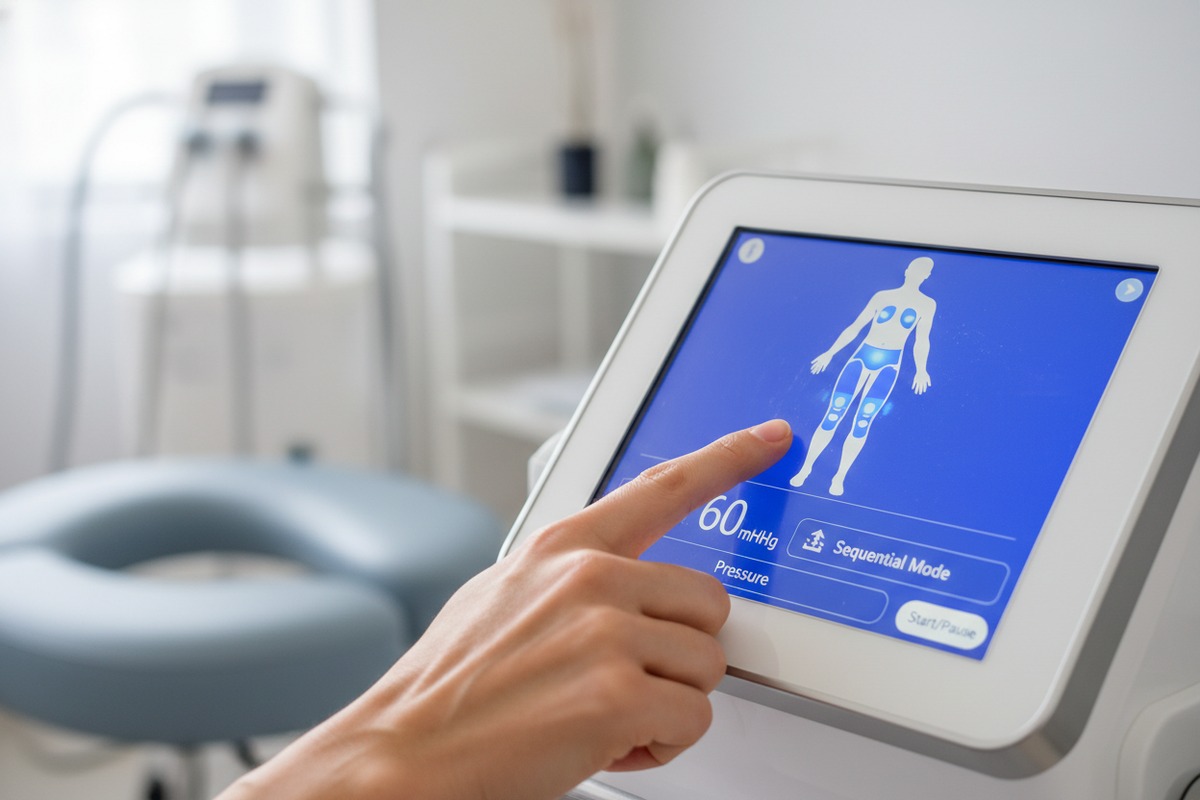
Understanding Sequential Compression Logic
The core function of any pressotherapy machine is sequential pneumatic compression 3. This means the device inflates air chambers in a specific order—typically from distal to proximal (toes toward thighs)—to mimic natural lymphatic flow 4. The air inflates and deflates the sleeve sequentially to generate circulating pressure on the human body, squeezing the proximal and distal parts of the limbs to promote blood circulation and the lymphatic system.
American PTs need software that lets them modify this sequence. Some patients respond better to alternating patterns. Others need longer compression phases. The best machines offer these options:
| Feature | Basic Machine | Advanced Machine |
|---|---|---|
| Pressure Patterns | 2-3 fixed modes | 6+ customizable modes |
| Pressure Range | 40-60 mmHg | 30-80 mmHg adjustable |
| Zone Control | Leg only | Legs, arms, abdomen |
| Session Timer | Fixed 30 min | 5-60 min variable |
| Memory Slots | None | 10+ saved protocols |
Protocol Customization for Common PT Applications
Pressotherapy is highly effective at mobilizing trapped fluid, leading to immediate visible results. Lymphedema management 5 Post-surgical edema reduction 6 It is often recommended by doctors for patients recovering from surgery to reduce post-operative swelling and bruising. American physical therapists commonly use pressotherapy for:
- Post-surgical edema reduction – Requires gentle pressure (30-40 mmHg) with longer sessions
- Lymphedema management – Needs progressive staging protocols
- Athletic recovery – Benefits from higher pressure and shorter bursts
- Chronic venous insufficiency – Demands consistent, moderate compression
Your machine's software should allow therapists to create, save, and recall protocols for each application. The usual schedule involves sessions lasting 30 minutes on average, with compression and resting phases lasting 45 seconds and 15 seconds respectively. However, US clinics often prefer 20-30 minute sessions due to scheduling constraints.
Integration with Electrostimulation
Some advanced units combine pressotherapy with electrical muscle stimulation (EMS). This hybrid approach targets muscle activation in patients who cannot exercise normally. When evaluating such machines, verify that the EMS and compression programs can run independently or together based on therapist preference.
What engineering standards should I look for to ensure the device handles the high-volume usage in my US clinics?
During production line testing at our facility, we simulate thousands of compression cycles before any unit ships. American PT clinics often run 15-30 patients daily through a single machine. Equipment that cannot handle this volume fails within months. I have seen competitors' units break down because they were designed for spa environments, not clinical workloads.
For high-volume US clinic use, verify FDA 510(k) clearance or registration, IEC 60601-1 electrical safety compliance, ISO 13485 quality management certification, duty cycle ratings above 80%, commercial-grade air compressors, and reinforced pneumatic tubing rated for at least 50,000 cycles. These standards ensure reliability under continuous clinical operation.
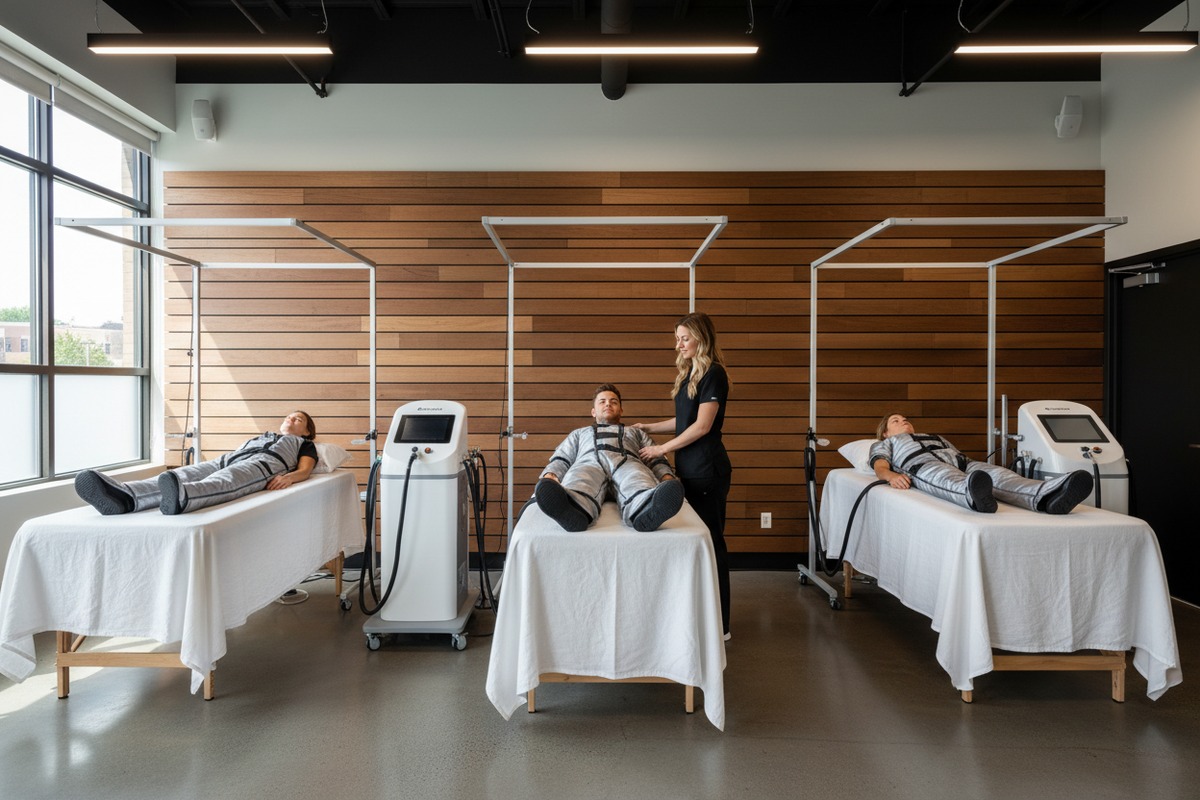
FDA Regulatory Considerations
Whether you need FDA approval, FDA clearance, or no regulatory submission at all depends on your device's risk classification and intended use. FDA 510(k) clearance 7 FDA approval (PMA) is required for high-risk Class III devices. FDA clearance (510(k)) is needed for most Class II devices and some Class I devices.
Pressotherapy machines used for medical rehabilitation typically fall under Class II. This means they require 510(k) clearance demonstrating substantial equivalence to legally marketed devices. Ask your supplier for:
- FDA establishment registration number
- 510(k) clearance documentation (if applicable)
- Product listing with FDA database
All companies planning to sell a medical or in vitro diagnostic device in the United States need to register their products with the FDA. Most low-risk devices do not require premarket review. Most medium- and all high-risk devices require either premarket clearance or approval prior to reaching the market.
Mechanical Durability Standards
| Component | Minimum Standard | Premium Standard |
|---|---|---|
| Air Compressor | Oil-free, 0.5 HP | Oil-free, 1.0 HP, dual piston |
| Tubing Material | PVC | Medical-grade silicone |
| Cycle Rating | 30,000 cycles | 100,000+ cycles |
| Duty Cycle | 60% | 80-100% continuous |
| Warranty | 1 year | 3+ years |
Electrical Safety Requirements
Appropriate analysis and nonclinical testing must validate electromagnetic compatibility and electrical safety according to AAMI/ANSI/IEC 60601-1-2 standards. This certification ensures the device:
- Does not emit harmful electromagnetic interference
- Operates safely in environments with other medical equipment
- Has proper grounding and insulation
- Includes circuit protection against power surges
Build Quality Indicators
When inspecting sample units, check these physical elements:
- Housing material – Medical-grade ABS plastic resists cracking and sanitizer damage
- Connection ports – Metal reinforced ports outlast plastic ones
- Display screen – LCD or LED with protective overlay prevents scratches
- Cuff construction – Double-stitched seams and industrial zippers extend garment life
- Air chambers – TPU bladders perform better than PVC under repeated inflation
How do I evaluate if the interface is intuitive enough to minimize training time for my busy physical therapy staff?
When we demo equipment to American clinic managers, the first question is always about training time. Staff turnover in US PT clinics averages 25% annually. Every new hire needs to learn your equipment quickly. Complicated interfaces with multiple menu layers and unclear icons create friction. Our design philosophy focuses on reducing button presses between power-on and treatment start.
Evaluate interface intuitiveness by testing the number of steps to start a standard treatment (ideally under 5 taps), icon clarity without text labels, touchscreen responsiveness, screen visibility under clinic lighting, and language options. Request a 30-minute trial where staff members with no prior experience attempt to run a session independently.
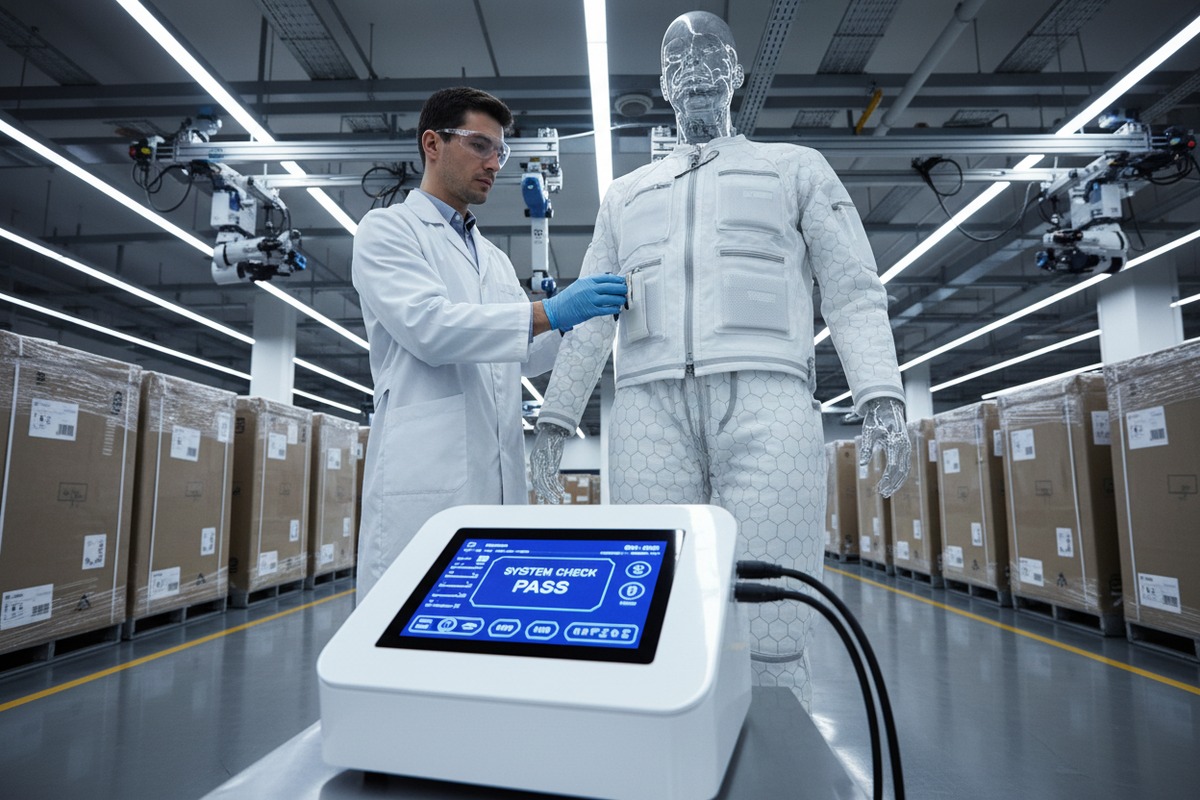
User Experience Metrics That Matter
Physical therapists document extensively. In the fast-paced environment of physical therapy clinics, efficient and accurate documentation is crucial. EMR software is specifically designed to streamline clinical workflows, reduce administrative burdens, and enhance patient care. Your pressotherapy machine should not add to this burden.
Test these interaction points:
| Task | Poor Design | Good Design |
|---|---|---|
| Power to treatment ready | 60+ seconds | Under 20 seconds |
| Protocol selection | Nested menus | One-screen access |
| Pressure adjustment | Numeric keypad entry | Slider or quick buttons |
| Emergency stop | Hidden or small | Large, visible, tactile |
| Session pause/resume | Requires restart | Single button toggle |
| End-of-session report | None | Auto-generated summary |
Screen and Display Considerations
Consider your clinic environment. Screens need adequate brightness for rooms with fluorescent lighting. Touch sensitivity must work with gloved hands. Font sizes should accommodate staff who wear corrective lenses.
Look for these display features:
- Screen size – Minimum 7 inches for comfortable viewing
- Brightness – 300+ nits for visibility in bright rooms
- Touch type – Capacitive screens offer better responsiveness
- Angle adjustment – Tilting displays reduce neck strain
- Multi-language – English plus Spanish covers most US clinic needs
Training Time Benchmarks
Based on feedback from our US distributor network, here are realistic training expectations:
- Basic operation – 15-30 minutes for experienced PT staff
- Protocol customization – 1-2 hours with manufacturer guidance
- Troubleshooting common issues – 30 minutes with documentation
- Full mastery including maintenance – 1-2 training sessions over a week
If your supplier cannot provide clear training materials, video tutorials, or remote support, reconsider the partnership. Smart charting systems can reduce documentation time by 30% with text expanders and auto-population features. Your equipment should offer similar efficiency gains.
EHR Integration Capabilities
Modern US PT clinics rely heavily on electronic health records 8. The electronic health records market isn't just growing; it's revolutionizing how medical practices operate. With 96% of US hospitals now using certified EHR systems, the question isn't whether to adopt advanced features—it's how quickly you can leverage them.
Ask whether the pressotherapy machine can:
- Export session data in standard formats (CSV, PDF)
- Connect via USB or wireless to clinic computers
- Integrate with common PT platforms like WebPT or Raintree
- Generate HIPAA-compliant treatment reports 9
In settings such as physical therapy, remote monitoring, and post-surgical recovery, wearable devices could effectively complement traditional EHR data. For instance, wearables might track movement and exercise compliance, providing therapists with valuable data for customizing rehabilitation programs. This integration has the potential to streamline workflows, improve care quality and enhance patient satisfaction.
What quality control steps can I take to verify that the pressure consistency meets my brand's high performance standards?
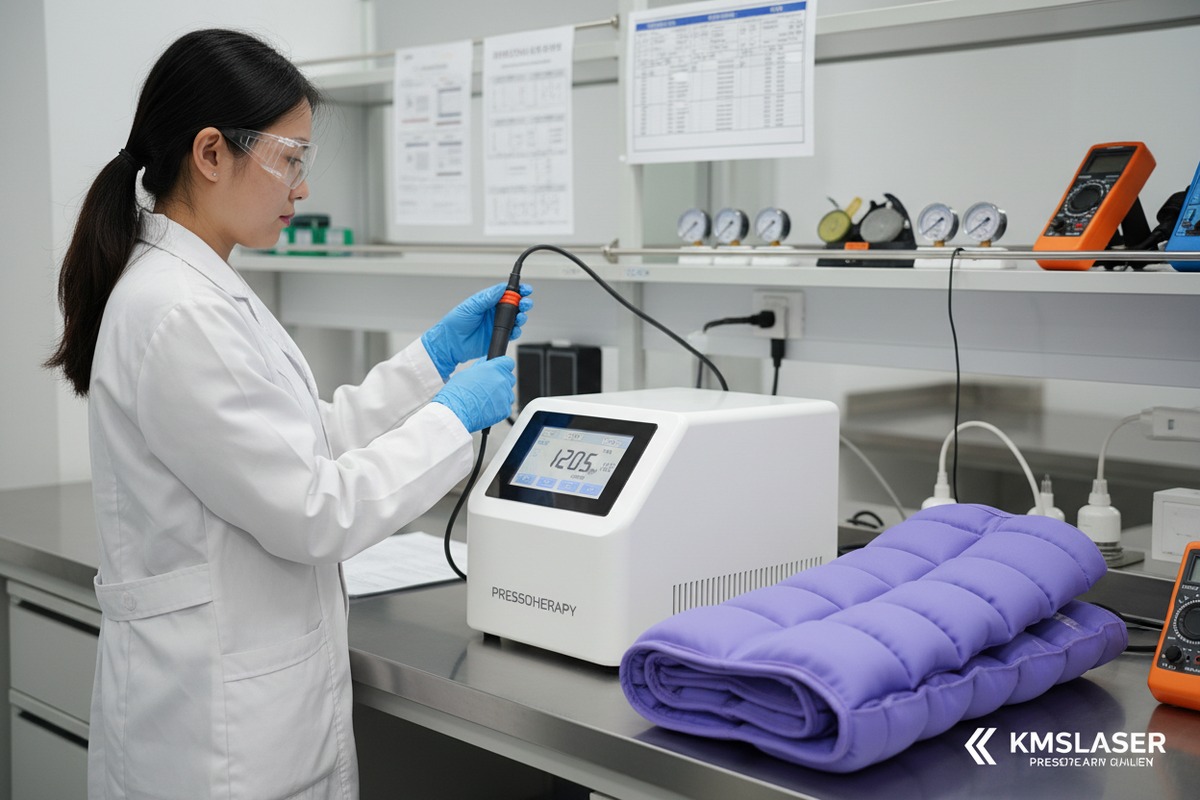
Our QC department tests every pressotherapy unit at three stages: component inspection, assembly verification, and final function testing. But your responsibility as the brand owner does not end when equipment arrives at your warehouse. Pre-shipment inspections and ongoing performance monitoring protect your reputation. I have seen distributors lose accounts because machines delivered inconsistent pressure—patients noticed, and therapists complained.
Verify pressure consistency through third-party pre-shipment inspection, calibrated manometer testing at multiple pressure settings, chamber-by-chamber inflation timing analysis, long-term cycling tests (100+ sessions), and documented quality reports from your manufacturer. Establish acceptable tolerance ranges (typically ±5 mmHg) and reject units exceeding these limits.

Pre-Shipment Inspection Protocol
Before any container leaves the factory, implement these verification steps:
| Inspection Point | Test Method | Pass Criteria |
|---|---|---|
| Pressure accuracy | Calibrated manometer at 30, 50, 70 mmHg | Within ±5 mmHg |
| Chamber inflation sequence | Visual + timer | Correct order, ±2 sec timing |
| Leak detection | 5-minute hold test at max pressure | No pressure drop |
| Electrical safety | Ground continuity, insulation resistance | Per IEC standards |
| Interface function | Complete menu navigation | All features operational |
| Cosmetic inspection | Visual examination | No scratches, damage, defects |
Pressure Calibration Methods
The effectiveness of pressotherapy is recognised in the medical field, and its benefits have been confirmed in many clinical studies for the treatment of venous ulcers and the prophylaxis of deep vein thrombosis. The fundamental role of pressotherapy in the integrated treatment of lymphedema is well established.
To deliver these benefits, pressure must be accurate and consistent. Here is how to verify:
- Connect a calibrated medical manometer to the air output port
- Set the machine to deliver 40 mmHg and record actual output
- Repeat at 60 mmHg and 80 mmHg settings
- Test each chamber individually if the machine allows zone control
- Document all readings with timestamps and unit serial numbers
Acceptable variance is ±5 mmHg. Larger deviations indicate compressor issues, software calibration errors, or sensor problems.
Long-Term Performance Monitoring
The conducted systematic review and meta-analysis assessed 12 randomized controlled studies investigating the outcome of pressotherapy on the recovery of absolute and subjective outcomes. The findings indicate moderate benefits of using pressotherapy as a recovery intervention, dependent on the type of exercise and used protocol.
Consistent outcomes require consistent machine performance. Establish a monitoring schedule:
- Weekly – Staff report any pressure variations noticed during treatment
- Monthly – Quick pressure spot-check with manometer
- Quarterly – Full calibration verification across all settings
- Annually – Factory service or certified technician inspection
Garment Quality Verification
The pneumatic cuffs and sleeves are consumables that directly affect treatment quality. Inspect incoming garments for:
- Seam integrity – No visible gaps or weak stitching
- Bladder condition – No wrinkles, holes, or thin spots in air chambers
- Connector quality – Metal fittings preferred over plastic
- Sizing accuracy – Measure against stated specifications
- Material consistency – Uniform thickness and texture
Establishing Quality Standards for Your Brand
Document your requirements clearly for your manufacturer:
| Quality Metric | Acceptable Range | Testing Frequency |
|---|---|---|
| Pressure accuracy | ±5 mmHg | Every unit |
| Cycle timing | ±2 seconds | Batch sample (10%) |
| Noise level | <55 dB | Type approval |
| Heating | <40°C surface | Type approval |
| Garment fit | ±1 cm sizing | Batch sample (5%) |
For more severe conditions, such as lymphedema or chronic edema, a longer course of treatment may be necessary, potentially involving multiple sessions per week for several weeks or even months. It's essential to work with a qualified healthcare provider who can assess individual needs and develop a personalized treatment plan. Equipment that delivers inconsistent pressure undermines these treatment plans.
Conclusion
Selecting pressotherapy equipment for American physical therapy clinics demands attention to software customization, engineering durability, interface usability, and rigorous quality control. Partner with manufacturers who understand US clinical workflows and can support your brand's performance standards long-term.
## Footnotes

<span id="footnote-1">
1. Overview of IEC 60601-1 standards for medical electrical equipment safety. <a href="#ref-1" class="footnote-backref">↩︎</a>
</span>

<span id="footnote-2">
2. Explains ISO 13485 as a quality management system for medical devices. <a href="#ref-2" class="footnote-backref">↩︎</a>
</span>

<span id="footnote-3">
3. Explains sequential compression devices and their function. <a href="#ref-3" class="footnote-backref">↩︎</a>
</span>

<span id="footnote-4">
4. Describes the lymphatic system and how lymph flows naturally. <a href="#ref-4" class="footnote-backref">↩︎</a>
</span>

<span id="footnote-5">
5. Replaced with a detailed guide on lymphedema diagnosis and treatment from a leading medical center. <a href="#ref-5" class="footnote-backref">↩︎</a>
</span>

<span id="footnote-6">
6. Discusses managing post-surgical edema, including physical therapy. <a href="#ref-6" class="footnote-backref">↩︎</a>
</span>

<span id="footnote-7">
7. Explains the FDA 510(k) clearance process for medical devices. <a href="#ref-7" class="footnote-backref">↩︎</a>
</span>

<span id="footnote-8">
8. Replaced with an authoritative definition and overview from a government health agency. <a href="#ref-8" class="footnote-backref">↩︎</a>
</span>

<span id="footnote-9">
9. Explains individuals' rights under HIPAA to access their health information. <a href="#ref-9" class="footnote-backref">↩︎</a>
</span>


 English
 Español de México
 Deutsch
 Français
 العربية
 Русский
Join the Conversation
Have a question or insight to share? We read every comment — whether you're a distributor, salon owner, or just curious about the technology. Your real-world experience helps others make better decisions. Drop your thoughts below.