
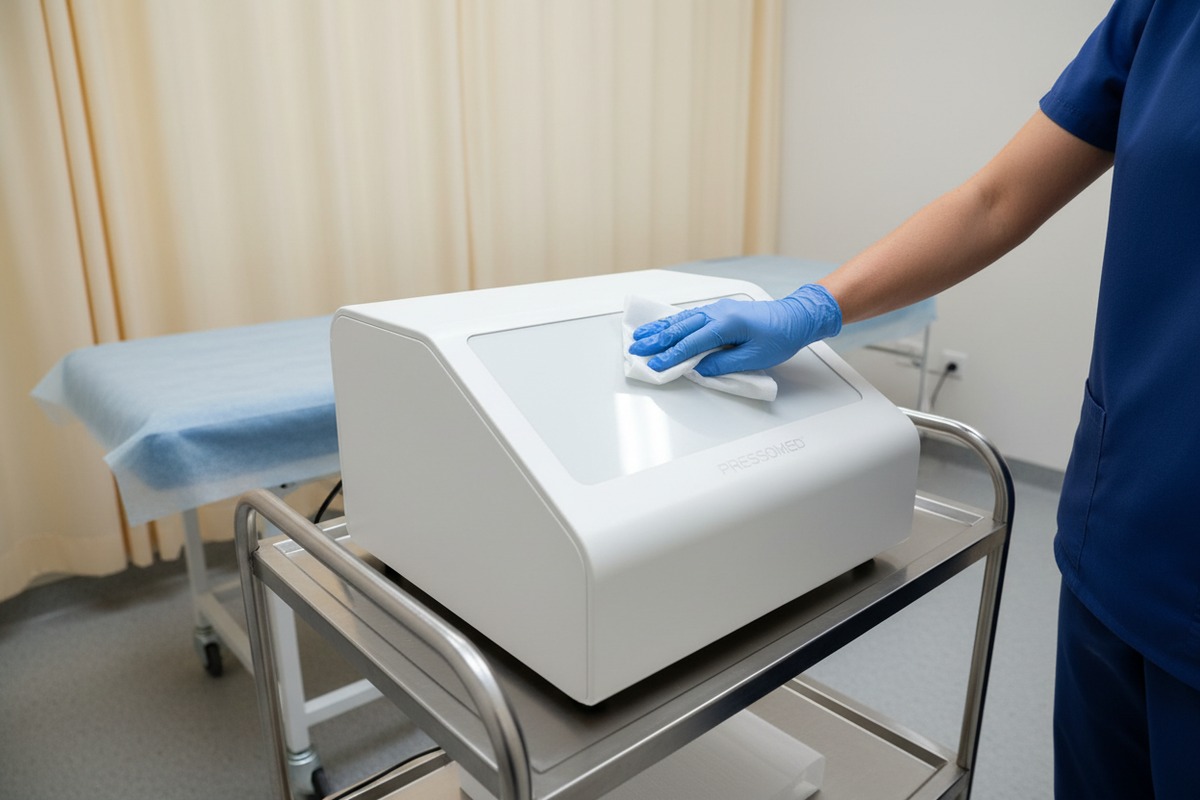
In our Guangzhou production facility, we often see how a single design oversight in the chassis can lead to a hospital rejecting an entire shipment of devices IEC 60601 safety standards 1. When we develop new models for the US market, we prioritize materials that survive the harsh reality of daily clinical sanitation, because nothing damages your brand reputation faster than a machine that cracks or discolors after a few weeks of use.
To evaluate pressotherapy machine housing for infection control, prioritize non-porous ABS plastics or stainless steel that resist hospital-grade disinfectants like bleach and quaternary ammonium. Ensure the design features seamless, rounded edges to eliminate bacteria-trapping crevices, and verify compliance with IEC 60601 safety standards for frequent wipe-downs.
Here is the detailed breakdown of what you need to inspect to ensure your equipment meets strict hospital hygiene protocols.
How do I verify that the housing materials can withstand medical-grade disinfectants without degrading?
When we source raw plastic pellets for our injection molding machines, we specifically look for high-impact grades that do not react poorly to chemical solvents the CDC 2. We have learned that standard consumer-grade plastics will eventually develop stress fractures when exposed to the aggressive cleaning agents used in American hospitals.
Verify material durability by requesting chemical resistance test reports for common hospital disinfectants like Isopropyl alcohol and bleach. Look for high-density ABS or polycarbonate specifications, and ask your supplier for “stress-cracking” resistance data to ensure the housing maintains structural integrity under repeated chemical exposure.
Understanding Environmental Stress Cracking (ESC)
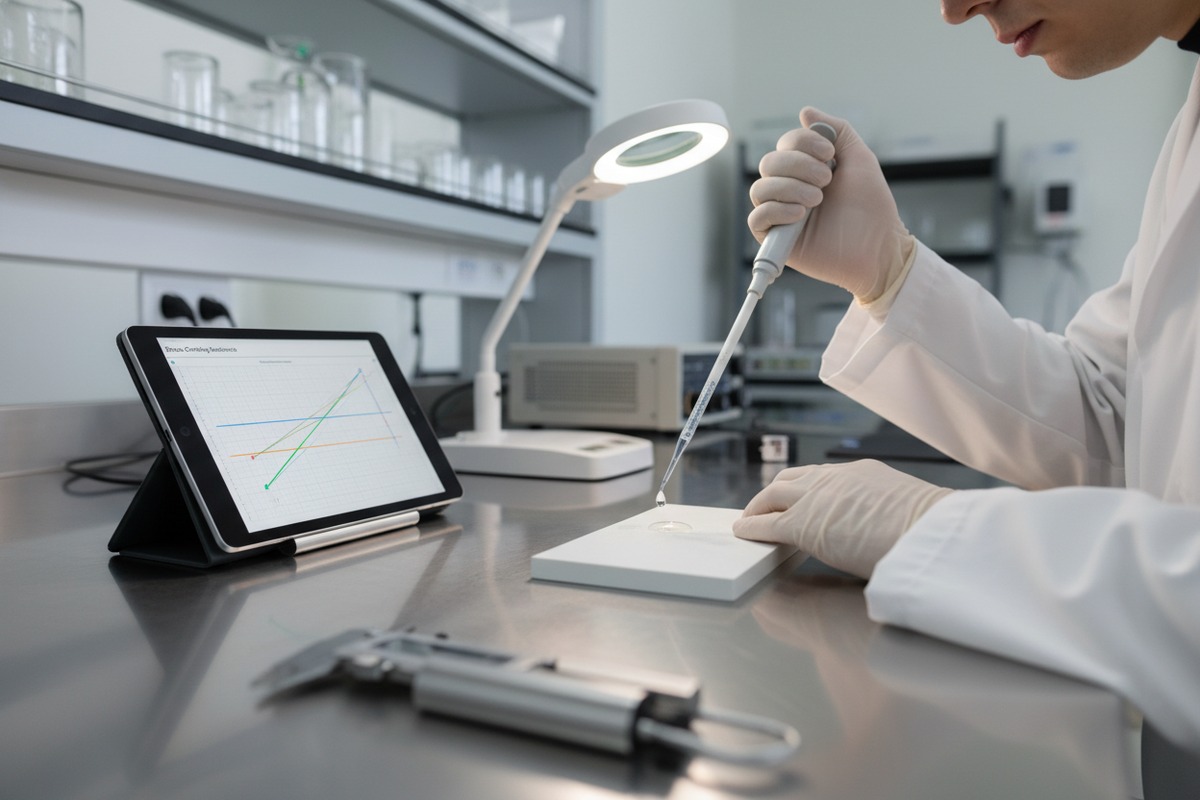
The primary reason pressotherapy machine housings fail in hospital environments is a phenomenon called Environmental Stress Cracking (ESC) 3. This occurs when a plastic material is under tensile stress—either from the internal molding process or external assembly screws—and is simultaneously exposed to a chemical agent. The chemical does not necessarily dissolve the plastic, but it weakens the intermolecular bonds, leading to catastrophic failure over time IP Rating 4.
For a Purchasing Manager, simply seeing "ABS Plastic" on a spec sheet is insufficient. You must dig deeper into the specific grade of the material ASTM D3359 Cross-Hatch Tape Test 5. In our engineering lab, we conduct immersion tests where sample coupons of the housing material are soaked in various disinfectants for 24 to 72 hours. We then check for weight change, discoloration, or surface crazing AQL (Acceptable Quality Limit) 6.
Recommended Materials for Medical Housings
Not all plastics are created equal. For hospital-grade pressotherapy systems, which are wiped down between every patient (potentially 10-15 times a day), the material must be chemically inert to a wide range of pH levels.
- PC/ABS Blends: Polycarbonate mixed with ABS offers a balance of high impact strength and better chemical resistance than pure ABS. This is often the gold standard for mid-to-high-end medical devices.
- High-Gloss ABS: While standard ABS is common, high-gloss variants often have a denser surface structure that is less porous, making it harder for liquids to penetrate micro-fissures.
- Polypropylene (PP): Extremely resistant to chemicals but often feels "cheaper" and softer. We rarely use this for the main control unit housing but sometimes for internal components.
Chemical Compatibility Checklist
When evaluating a supplier's housing, ask if they have tested against the specific "List N" disinfectants 7 often referenced by the CDC. Below is a compatibility table based on our manufacturing data regarding common housing materials.
| Housing Material | Isopropyl Alcohol (70%) | Bleach (Sodium Hypochlorite) | Quaternary Ammonium (Quats) | Phenolic Disinfectants |
|---|---|---|---|---|
| Standard ABS | Good | Excellent | Fair (Can cause cracking over time) | Poor (Avoid) |
| PC/ABS Blend | Excellent | Good | Good | Fair |
| Polycarbonate | Fair (Prone to crazing) | Good | Good | Poor |
| Painted Plastic | Varies (Topcoat dependent) | Good | Excellent | Good |
The Role of Surface Tension
Another technical aspect we consider is surface tension. A material with low surface energy makes it difficult for liquids to wet the surface, which sounds good, but it can actually make cleaning harder if the disinfectant beads up and rolls off too quickly before achieving the required contact time. We aim for a surface energy that allows the disinfectant to spread evenly for effective sanitation without absorbing into the matrix of the plastic.
What design features should I check to ensure the machine housing has no bacteria-trapping crevices?
When our engineers model the 3D designs for a new chassis, we actively work to eliminate deep grooves and unnecessary seams where dirt loves to hide. We believe that a beautiful design is functionally useless if your end-users cannot clean it effectively, leading to cross-contamination risks in a sterile environment.
Inspect the housing for a seamless, unibody design with rounded corners (fillets) rather than sharp 90-degree angles. Avoid textured surfaces or unnecessary decorative grooves that accumulate organic matter, and ensure membrane switches are flush-mounted to create a continuous, wipeable surface that prevents fluid ingress.

The Danger of Dead Zones
In infection control terminology, a "dead zone" is any area on a device surface that cannot be easily reached by a standard disinfectant wipe. In pressotherapy machines, these usually occur at:
- The junction between the top and bottom housing shells.
- Around the air connector ports.
- The edges of the display screen or buttons.
If a nurse has to use a cotton swab or a toothbrush to clean a crevice, the design has failed. We design our molds with "draft angles" that not only help release the plastic from the mold but also ensure that external transitions are smooth.
Seamless Interfaces and Ingress Protection
For the control panel, mechanical buttons are a nightmare for hygiene. They have gaps that allow fluid to seep inside, damaging the electronics and harboring bacteria. We strongly recommend Capacitive Touch Panels or Flush Membrane Switches. These create a single, continuous glass or plastic surface that can be wiped clean in one motion.
Furthermore, check the IP Rating (Ingress Protection). While a full waterproof rating isn't necessary for a tabletop device, a rating of IP54 is ideal. This ensures protection against dust ingress and splashing water (or disinfectant) from any direction.
Design Feature Evaluation Table
When you are evaluating a sample unit from China, run your finger across every joint. If your fingernail catches, it’s a potential bacteria trap. Use this checklist to evaluate the physical design.
| Feature | Hygienic Design (Preferred) | Poor Design (Avoid) | Why it Matters |
|---|---|---|---|
| Housing Texture | High-Polish Smooth / Satin | Heavy Matte / Sandblasted Texture | Texture acts like sandpaper, trapping microscopic organic matter. |
| Corner Radius | Large Fillets (>3mm radius) | Sharp 90° Corners | Rounded corners allow wipes to maintain contact; sharp corners cut wipes. |
| Shell Assembly | Ultrasonic Welding / Hidden Screws | Exposed Screw Heads (Phillips/Flat) | Exposed screw heads rust and trap dirt in the drive slots. |
| Screen Bezel | Flush (Zero-Bezel) | Recessed Screen | Recessed screens collect dust in the corners that is impossible to wipe out. |
| Air Ports | Quick-Connect with smooth collars | Threaded screw-on connectors | Threads are difficult to disinfect thoroughly between patients. |
Air Vent Placement
Pressotherapy machines contain pumps that generate heat and require cooling. However, where we place the vents matters. Vents on the top of the machine are a major risk because liquids spills (or heavy spraying of cleaners) will drip directly into the motor. We always design vents on the sides or rear, angled downward (louvered), to prevent liquid entry while maintaining airflow. This "drip-proof" design is a requirement for many IEC medical safety standards.
Can I request a custom, high-end housing finish that meets my brand’s specific infection control requirements?
We frequently collaborate with US brand owners to apply specialized coatings that look premium while offering functional benefits against microbes. Customizing the finish is not just about changing the color; it is a strategic engineering decision that allows you to align your aesthetic goals with the strict clinical safety standards of your hospital clients.
Yes, you can request custom antimicrobial coatings, such as silver-ion additives or UV-cured glossy finishes, which inhibit bacterial growth and withstand heavy cleaning. Specify a smooth, high-gloss UV coating during the ODM process, as this seals the plastic pores better than matte finishes and enhances wipe-down efficiency.

Antimicrobial Additives vs. Surface Coatings
There are two main ways we can customize the housing for better infection control:
- In-Mold Antimicrobial Additives: We mix additives (like silver ions or zinc) directly into the plastic pellets before injection molding. This means the antimicrobial property is inherent to the material itself. Even if the housing gets scratched, the material underneath still fights bacteria. This is a premium option but highly effective for long-term durability.
- Surface Coatings (UV Painting): We apply a clear, hard UV-cured topcoat over the painted plastic. This seals the microscopic pores of the ABS plastic.
The Power of UV High-Gloss Finishes
Many of our clients initially ask for "Soft Touch" rubberized paint because it feels expensive. We strongly advise against this for hospital use. Soft-touch paint degrades rapidly under alcohol exposure, turning sticky and gross. Instead, we recommend a High-Gloss UV Hard Coat.
- Durability: It is extremely hard (pencil hardness 2H-3H), resisting scratches from abrasive sponges.
- Chemical Shield: It creates a barrier that prevents disinfectants from reacting with the base plastic.
- Visual Inspection: On a high-gloss white surface, contaminants (blood, gel, dust) are immediately visible, prompting staff to clean them.
Cost vs. Benefit Analysis of Custom Finishes
When you are negotiating your OEM/ODM contract, these finishes add to the unit cost. Here is how to evaluate the ROI.
| Finish Type | Estimated Cost Impact | Infection Control Rating | Durability | Recommendation |
|---|---|---|---|---|
| Raw ABS (Polished) | Base Cost | Medium | Medium | Good for budget home-use models. |
| Soft-Touch Paint | +$3 – $5 / unit | Very Poor | Poor (Peels) | Do not use for hospitals. |
| UV High-Gloss Paint | +$5 – $8 / unit | High | High | Best Value for professional clinics. |
| Antimicrobial Additive | +$10 – $15 / unit | Very High | Excellent | Ideal for premium hospital contracts. |
Color Psychology and Hygiene
For medical settings, we almost always recommend White (RAL 9003) or very light Grey. While black or dark blue machines look sleek, they hide dust and organic residue. Hospital infection control 9 officers prefer light colors because they allow for "visual verification of cleanliness." If you request a custom color, ensure it is light enough to show dirt clearly.
How will my supplier inspect the housing surface quality to prevent cleaning issues caused by manufacturing defects?
Before we pack any shipment for export, our QC team meticulously scrutinizes every unit for micro-scratches or molding flaws that could compromise hygiene. We understand that even a tiny hairline crack or a rough edge can become a breeding ground for pathogens, leading to failed audits for your customers.
Your supplier should implement a strict visual inspection protocol under high-intensity lighting to detect micro-cracks, burrs, or molding flash. Ensure they perform “wipe tests” using standard hospital wipes to verify surface smoothness and conduct adhesion tests on any logos or coatings to prevent peeling that creates contamination risks.

The "White Glove" and Tactile Inspection
Visual inspection is not enough. We train our QC staff to use tactile inspection methods. They run gloved hands over every parting line (where the two halves of the mold meet). In injection molding, if the mold is not clamped tightly enough, excess plastic seeps out, creating "flash."
- Flash: Thin, razor-sharp plastic protrusions. If present, these can tear the protective gloves of nurses or shred the cleaning wipes, leaving lint behind. Lint traps moisture and bacteria.
- Burrs: Rough edges around the screw holes or air ports.
We enforce an AQL (Acceptable Quality Limit) standard where any sharp flash is a "Critical Defect," resulting in immediate rejection of the part.
The Cross-Hatch Adhesion Test
If your logo is printed on the housing, or if the unit is painted, we must ensure it doesn't flake off. Flaking paint creates a rough surface that is impossible to sanitize.
We perform the ASTM D3359 Cross-Hatch Tape Test:
- We use a blade to cut a grid pattern into the paint.
- We apply specialized pressure-sensitive tape over the grid.
- We rip the tape off rapidly.
- If any paint comes off with the tape, the batch fails. This ensures that even after years of cleaning, your brand logo and the protective coating remain intact.
Detecting Micro-Cracks (Crazing)
Sometimes, stress cracks are invisible to the naked eye until they absorb dirt. In our factory, we use a "Wetting Test" on random samples. We apply a dye penetrant or a surfactant solution. If there are micro-cracks, the solution will seep in and make the cracks highly visible. This is crucial for verifying that the screw bosses (where internal screws hold the machine together) haven't been over-torqued, causing the plastic to crack from the inside out.
Checklist for Pre-Shipment Inspection (PSI)
If you hire a third-party inspector (like SGS or Intertek) to visit our factory, give them this specific checklist for the housing:
- Wipe Test: Use a standard fibrous disinfectant wipe. Rub vigorously over parting lines. Pass Criteria: No fibers caught, no snagging.
- Alcohol Rub Test: Rub a cotton swab soaked in 95% Alcohol over the logo for 30 seconds. Pass Criteria: No color transfer or fading.
- Gap Gauge Check: Measure the gap between the top and bottom case. Pass Criteria: Gap must be uniform and less than 0.5mm (to prevent fluid ingress).
Conclusion
Evaluating pressotherapy machine housing goes beyond aesthetics; it is a critical component of patient safety and product longevity. By prioritizing chemical-resistant materials like PC/ABS, insisting on seamless designs with IP54 ratings, and enforcing strict QC protocols for surface finish, you ensure your equipment meets the rigorous demands of hospital infection control. This attention to detail protects your brand reputation and maximizes the ROI for your clients.
Footnotes
1. Explains the international safety and performance requirements for medical electrical equipment. ↩︎
2. Official website of the Centers for Disease Control and Prevention, a leading public health authority. ↩︎
3. Details the phenomenon of plastic degradation caused by stress and chemical exposure. ↩︎
4. Explains the international standard for ingress protection against solids and liquids for enclosures. ↩︎
5. Details the standard method for assessing the adhesion of film coatings to substrates. ↩︎
6. Defines the maximum number of defective items allowed in a sample during quality control inspections. ↩︎
7. Official EPA list of disinfectants effective against SARS-CoV-2 and other emerging viral pathogens. ↩︎
8. Describes the properties and applications of PC/ABS plastic, ideal for medical devices. ↩︎
9. Provides comprehensive guidelines and resources for preventing infections in healthcare settings. ↩︎

 English
  Español de México
  Deutsch
  Français
  العربية
  Русский