

During our years supplying pressotherapy machines 1 to beauty brands in the US and Europe, we have seen carry bag failures damage client relationships. A broken zipper. A torn seam. A logo that peels off after one month. These small defects hurt your brand image and cost you money in returns and lost trust.
To evaluate carry bag quality for pressotherapy machines, assess material durability using tests for abrasion and tear resistance, verify construction through stitching inspections and hardware checks, confirm customization options for branding alignment, and require documented quality control protocols from your supplier to prevent defects before shipment.
This guide walks you through the key evaluation criteria. We will cover material selection, customization, logistics durability, and quality control steps. Each section offers practical advice you can apply immediately when negotiating with suppliers.
How can I ensure the carry bag material is durable enough to protect my pressotherapy machines during frequent salon use?
When we first started designing carry bags for our pressotherapy units, we underestimated how hard salon environments treat equipment. Bags get dropped, dragged, and stuffed into car trunks. Clients expect everything to look perfect after months of use. The wrong material choice leads to complaints and warranty claims.
Select carry bag materials rated for at least 1,000 denier nylon or high-density polyester with reinforced stress points. Require suppliers to provide abrasion resistance test results. Check for water-resistant coatings and padded interior linings to protect sensitive pneumatic components during daily salon transport.
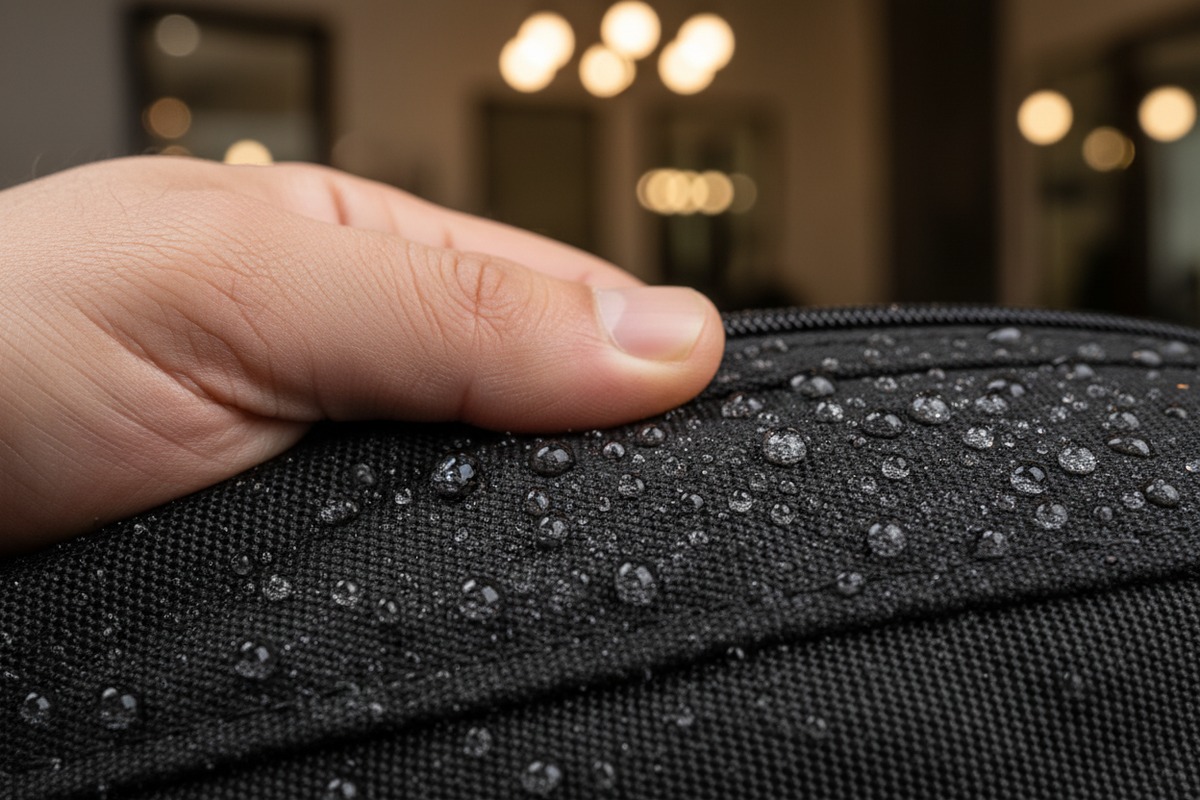
Understanding Material Options for Equipment Bags
The material you choose directly affects how long your carry bag lasts. Pressotherapy machines typically weigh between 1.5kg to 5kg, depending on the model. The bag must handle this weight plus accessories like cuffs, hoses, and leg covers without stretching or tearing.
Common material options include:
| Material Type | Denier Range | Best For | Durability Rating |
|---|---|---|---|
| Nylon | 600D – 1680D | Heavy daily use | High |
| Polyester | 300D – 600D | Light to moderate use | Medium |
| Canvas | 10oz – 18oz | Premium aesthetics | Medium-High |
| EVA Foam | N/A | Interior padding | Protective |
| TPU Coating | N/A | Water resistance | High |
The garments and accessories are made of PU material, easy to clean, with a durable double-layer structure. This principle applies to carry bags as well. A double-layer construction prevents wear-through at contact points.
Key Durability Tests to Request
Ask your supplier for test documentation before placing orders. abrasion resistance test 2 The bags quality control process is a critical phase in bag manufacturing and distribution. It ensures that bags meet established quality standards, performance criteria, and safety regulations.
Essential tests include: Tensile strength test 3
- Abrasion resistance test: Simulates repeated contact with surfaces
- Tensile strength test: Measures how much force the material can handle before tearing
- Colorfastness test: By using a wet white cloth, rub on the inspected cloth back and forth 5 times, to see if there is any color left on the white cloth.
- Load-bearing test: Load the specified weight, hang it on for 2 hours, no damage should be revealed during or after the test.
Protecting Sensitive Components
Pressotherapy machines contain pneumatic systems 4 that operate at specific pressure ranges. Air pressure power ranges from 20 to 360 mmHg. The carry bag must cushion these components against impact.
Interior padding requirements:
- Minimum 10mm EVA foam on all sides
- Reinforced corners with additional padding
- Secure straps to prevent internal movement
- Separate compartments for hoses and accessories
What customization options are available to align the carry bag design with my brand's high-end identity?
Our team learned early that clients judge equipment quality by its packaging. A generic black bag makes even premium machines look cheap. When we started offering branded carry cases with custom colors and embossed logos, our partners reported stronger client reception and easier upselling.
Customization options for branded carry bags include embroidered or screen-printed logos, custom fabric colors and patterns, branded hardware and zipper pulls, interior label printing, custom compartment layouts, and packaging inserts with your brand guidelines. Minimum order quantities typically range from 100 to 300 units for custom work.

Logo Application Methods
Different logo application techniques suit different brand aesthetics and durability requirements. Go big and bold with vibrant all-over prints of your branding. Or keep it subtle yet eye-catching with sleek embroidered logos and monograms.
| Application Method | Best For | Durability | Cost Level |
|---|---|---|---|
| Embroidery | Logos with limited colors | Very High | Medium-High |
| Screen Printing | Large single-color designs | Medium | Low |
| Heat Transfer | Full-color complex logos | Medium | Medium |
| Sublimation | All-over patterns | High | Medium-High |
| Debossing/Embossing | Premium leather/vinyl | Very High | High |
| Metal Tags | Minimalist branding | Very High | Medium |
Personalize your product with in-house embroidery to make permanent, long-lasting impressions, or select screen-printing, heat-press, or laser-engraving image options.
Color and Material Matching
Your carry bag should complement your machine design. Look for uniformity in color across the luggage or backpack. Fading or uneven color distribution could signal inferior materials or poor quality control.
When specifying custom colors:
- Provide Pantone color codes 6 for exact matching
- Request fabric swatches before production
- Consider how colors will look after cleaning
- Test color samples under different lighting conditions
Interior Customization
The inside of your carry bag matters as much as the outside. The interior of your luggage or backpack plays a significant role in making packing and organization convenient and efficient. It's essential to inspect the interior to ensure that it provides adequate space and functionality.
Interior branding options include:
- Printed lining fabric with your logo pattern
- Branded accessory pouches
- Custom foam inserts shaped to your machine
- Instruction card holders with your branding
- QR code labels linking to your support resources
Hardware and Detail Elements
Premium hardware elevates perceived quality. Hardware components such as buckles, clasps, D-rings, and rivets play a vital role in a bag's functionality and aesthetics. Inspectors evaluate the quality of hardware, checking for factors like security, rust resistance, and defects. High-quality hardware ensures that bags can endure regular use and continue to perform their intended functions effectively.
Consider customizing:
- Zipper pulls with your logo
- Branded metal plates or badges
- Custom-colored hardware finish
- Engraved buckles and clasps
How do I verify that the carry bag construction will withstand the rigors of international door-to-door logistics?
Shipping pressotherapy machines from our factory in Guangzhou to clients in the United States puts packaging through extreme stress. We have tracked packages that traveled 15,000 kilometers, changed hands twelve times, and experienced temperature swings from warehouse storage. Your carry bag must survive this journey while protecting your product.
Verify logistics durability by requiring ISTA 3A or equivalent transit simulation testing. Check for reinforced handles with bar-tack stitching, YKK or equivalent quality zippers, padded corners, and water-resistant exterior coatings. Request drop test results from heights matching standard handling scenarios of 80-100cm.

Understanding Transit Stress Factors
International shipping exposes products to multiple risk factors. Medical device testing standards 7 are essential to demonstrate no potential threats posed during transport and aging of the packaging material. To meet these rigorous regulatory requirements, medical device packaging must undergo a spectrum of validation tests to prove its ability to withstand various environmental factors.
Key stress factors include:
| Stress Type | Source | Risk Level | Mitigation |
|---|---|---|---|
| Impact | Drops during handling | High | Padded corners, rigid inserts |
| Compression | Stacking in containers | Medium | Reinforced structure |
| Vibration | Truck and air transport | Medium | Secure internal strapping |
| Moisture | Humidity changes | Medium | Water-resistant coating |
| Temperature | Warehouse storage | Low-Medium | Insulated lining optional |
Critical Construction Checkpoints
Bags are subject to varying degrees of stress during use. To ensure a bag's durability, inspectors examine the stitching and seams with utmost care. The quality of stitching directly affects a bag's structural integrity. A bag with strong and uniform stitching is less likely to fray, tear, or experience seam failures.
Focus your verification on:
Handle attachment points: Handles bear the full weight of the bag during lifting. Look for bar-tack stitching 8 patterns that distribute stress. Defects in the attachment of straps or handles can include weak stitching, inadequate reinforcement, or improper attachment methods, leading to strap or handle detachment and rendering the bag unusable.
Zipper quality: Inspect the zippers to ensure they are functioning smoothly and without any snags. Request YKK or equivalent brand zippers 9. Specify coil size appropriate for the bag dimensions.
Seam reinforcement: Double or triple stitching at stress points prevents blow-outs. Check stitch density—typically 8-10 stitches per inch for equipment bags.
Testing Protocols to Request
Ask your supplier for documentation of these tests:
-
Drop test: Drop testing measures impact resistance from various heights and angles. Standard equipment bags should pass drops from 80-100cm onto concrete without damage.
-
Vibration test: Vibration testing assesses seal integrity during transport movement. Simulates truck transport conditions.
-
Load test: Load the specified weight, hang it on and shake the bag 20 times in a random direction, the product should remain good after the test.
-
Compression test: Compression testing validates stacking strength limitations. Ensures bags maintain shape under stacked cargo.
Packaging System Integration
Your carry bag is part of a larger packaging system. Packaging systems for terminally sterilized medical devices must meet strict performance requirements to ensure they protect the enclosed device from contamination and damage. While pressotherapy machines may not require sterile packaging, the principle applies: your entire packaging system must work together.
Consider:
- Outer carton specifications that complement the carry bag
- Protective inserts for accessories
- Desiccant packets for moisture control
- Tamper-evident seals for security
What specific quality control steps should my supplier take to prevent cosmetic defects in my branded carry bags?
We once shipped 200 carry bags with a logo color that did not match our client's brand guidelines. The difference was subtle—maybe 5% off the Pantone specification—but the client rejected the entire shipment. That mistake cost us thousands of dollars and damaged a relationship we had built over two years. Now we implement rigorous QC at every stage.
Require your supplier to implement incoming material inspection (IQC), in-process quality control (IPQC) at cutting and sewing stages, and final quality control (FQC) using AQL sampling standards. Specify defect classification criteria in writing. Request photo documentation of inspections and maintain approval samples for color and construction reference.

The Three-Stage Quality Control Framework
In practice, many buyers rely only on final inspection before shipment. At that stage, material defects, structural weaknesses, and process deviations are already embedded in the product. Correction becomes expensive—or impossible.
Effective QC requires intervention at three stages:
| QC Stage | Timing | Focus Areas | Value |
|---|---|---|---|
| IQC (Incoming) | Before production | Material verification, color matching | Prevents defective inputs |
| IPQC (In-Process) | During production | Cutting accuracy, stitching quality | Catches issues early |
| FQC (Final) | After production | Complete product inspection | Confirms shipment readiness |
Incoming Quality Control (IQC)
From a buyer's perspective, IQC should answer one key question: Are the incoming materials suitable to produce bags that meet the agreed performance standard? IQC is not about inspecting everything. It is about blocking mistakes that cannot be fixed later.
IQC checkpoints for carry bags:
- Fabric weight and denier verification against specifications
- Color matching using approved swatches and light boxes
- Hardware testing for function and finish quality
- Zipper operation and coating integrity
- Padding material density and thickness
In-Process Quality Control (IPQC)
In-process quality control (IPQC) is the most cost-effective inspection stage. Buyers should define key checkpoints, not attempt to monitor every operation. During production, most defects are still correctable with limited waste. However, buyer intervention must be targeted. Excessive inspection increases cost without improving outcomes.
Priority IPQC checkpoints:
Cutting stage: When cutting fabrics, linings, and other materials, check whether the cutting equipment is sharp and accurate, and ensure that the cutting size accuracy meets the sample requirements. At the same time, supervise the workers to cut according to the layout plan to avoid wasting materials, and conduct random inspections on the cut parts to check whether the edges are neat and whether there are any cutting defects.
Sewing stage: Verify that the stitching is consistent, tight, and even. Check stitch density, seam allowances, and thread tension.
Assembly stage: When assembling various parts into complete bags, check whether the assembly order of each part is correct and whether the hardware accessories are installed firmly. At the same time, check whether there are any defects in the overall appearance, such as whether the splicing between parts is flat and symmetrical, and whether there are any gaps that are too large.
Final Quality Control (FQC)
Final quality control (FQC) is not about finding defects—it is about making a shipment release decision based on predefined acceptance rules. FQC must be tied to AQL inspection standards agreed in advance. AQL sampling standards 10 Without clear acceptance criteria, inspection results become subjective and disputes are unavoidable. FQC only works when buyers define what "acceptable quality" means before inspection begins.
Standard FQC checklist items:
- Appearance Check: Look for any visible defects, such as stains, wrinkles, or color inconsistencies. Stitching Check: Confirm that all stitching is intact and there are no loose threads or skipped stitches.
- Inspect any padding or cushioning inside the bag to ensure it provides adequate protection. Check for any odors or unusual smells that may indicate a defect or storage issue. Verify that any adjustable straps or buckles are easy to adjust and secure in place. Finally, test the bag's overall functionality by opening and closing it multiple times, filling it with weight, and carrying it.
Defect Classification System
Establish clear defect categories before production:
| Defect Type | Classification | Example | Action |
|---|---|---|---|
| Critical | Not acceptable | Zipper fails completely | Reject unit |
| Major | Limited tolerance | Visible stitching skip | AQL 2.5 |
| Minor | Higher tolerance | Slight color variation | AQL 4.0 |
Poor quality bags can result in customer complaints, returns, and even damage to your brand's reputation. Issues like faulty zippers, loose stitching, or subpar materials can drive customers away, leading to financial losses.
Documentation Requirements
Request these documents from your supplier:
- Approved production sample: Physical reference for all inspections
- Inspection checklists: Completed forms from each QC stage
- Photo documentation: Images of any defects found and corrective actions
- Test reports: Laboratory results for material and construction tests
- AQL inspection records: Statistical sampling results from FQC
Conclusion
Evaluating carry bag quality requires attention to materials, construction, customization, and quality control. Your carry bag protects your pressotherapy machine and represents your brand. Work closely with your supplier to establish clear specifications, request test documentation, and implement multi-stage quality inspections. The investment in proper evaluation prevents costly defects and builds lasting client relationships.
## Footnotes

<span id="footnote-1">
1. Healthline is an authoritative source providing a comprehensive overview of pressotherapy. <a href="#ref-1" class="footnote-backref">↩︎</a>
</span>

<span id="footnote-2">
2. Defines the test and lists common international standards. <a href="#ref-2" class="footnote-backref">↩︎</a>
</span>

<span id="footnote-3">
3. Describes how fabric strength and elongation are measured. <a href="#ref-3" class="footnote-backref">↩︎</a>
</span>

<span id="footnote-4">
4. Explains the engineering field using compressed air for mechanical work. <a href="#ref-4" class="footnote-backref">↩︎</a>
</span>

<span id="footnote-5">
5. Authoritative fabric store blog explaining denier. <a href="#ref-5" class="footnote-backref">↩︎</a>
</span>

<span id="footnote-6">
6. Provides a comprehensive overview of the standardized color matching system. <a href="#ref-6" class="footnote-backref">↩︎</a>
</span>

<span id="footnote-7">
7. Details regulatory standards and validation for medical device packaging. <a href="#ref-7" class="footnote-backref">↩︎</a>
</span>

<span id="footnote-8">
8. Wikipedia provides a clear, authoritative definition and explanation of bar-tack stitching. <a href="#ref-8" class="footnote-backref">↩︎</a>
</span>

<span id="footnote-9">
9. Provides information about the company known for high-quality zippers. <a href="#ref-9" class="footnote-backref">↩︎</a>
</span>

<span id="footnote-10">
10. Defines AQL and its role in controlling product quality. <a href="#ref-10" class="footnote-backref">↩︎</a>
</span>

 English
 Español de México
 Deutsch
 Français
 العربية
 Русский
