
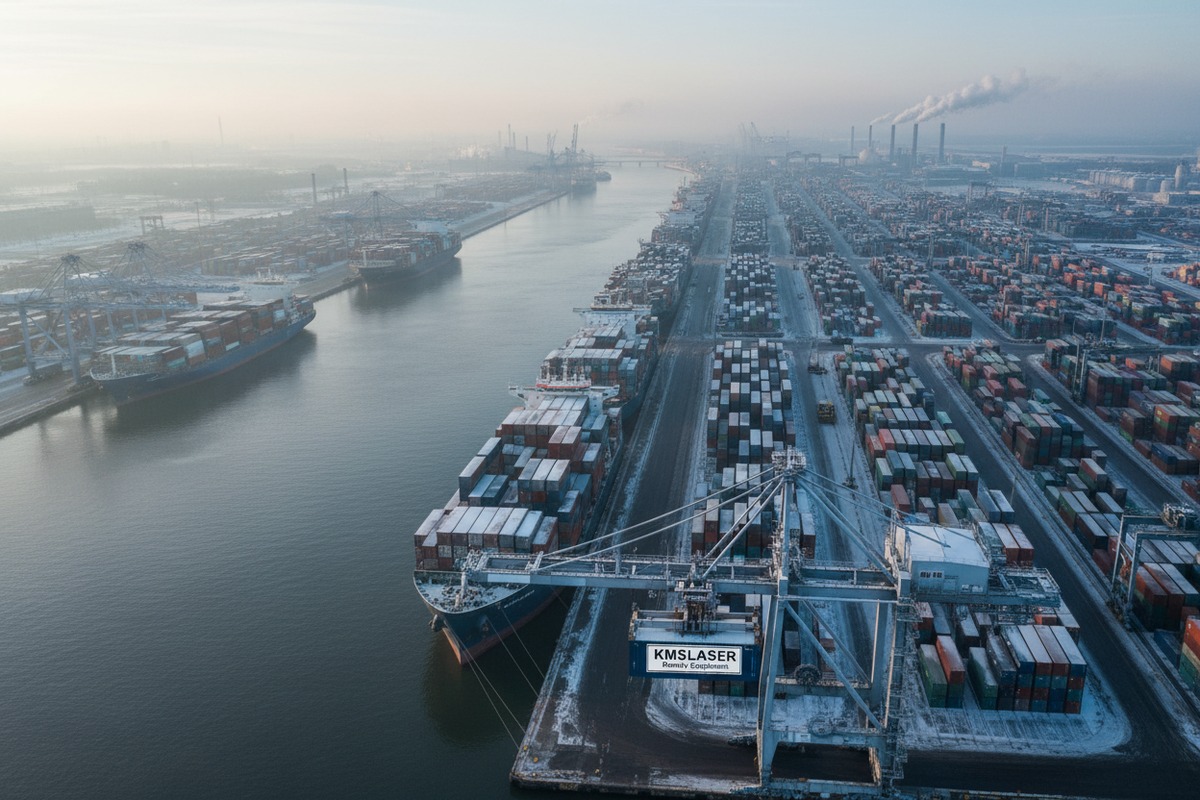
Every week, our export team in Guangzhou fields urgent calls from European distributors asking the same question: “Where is my pressotherapy machine?” The delays are real. The frustration is mounting. And the root cause sits thousands of miles away at congested ports in Rotterdam, Hamburg, and Antwerp.
European port congestion adds 2–14 days to pressotherapy machine deliveries from China. Winter storms, Red Sea rerouting via the Cape of Good Hope, labor strikes, and record cargo volumes have pushed yard utilization at major ports to 75–95%. Importers should expect total lead times of 35–50+ days on Asia-Europe routes.
This guide breaks down exactly what is happening at European ports right now, how it affects your pressotherapy orders, and what practical steps you can take to protect your inventory and avoid costly surprises.
How will current European port delays impact my pressotherapy machine delivery schedule?
When we ship pressotherapy machines from our Guangzhou facility, we monitor vessel schedules daily. Right now, our logistics team is seeing delays at every major European gateway. The situation has not been this severe since the pandemic peak in 2021–2022.
Current European port delays extend pressotherapy machine delivery schedules by 5–14 days beyond normal transit times. Hamburg terminals operate at 80–95% yard utilization, Rotterdam faces intermittent suspensions due to winter weather, and vessel waiting times at some Mediterranean ports exceed 4 days.

What Is Happening at Major European Ports Right Now?
The situation at European ports in early 2026 is challenging. Severe winter weather has pushed European port congestion 1 to its highest levels since the pandemic, with storms and snowfall cutting terminal productivity across northwest Europe and delaying inland transport links.
Severe winter weather is impacting terminals and inland transport across Northern Europe, causing delays and congestion at key hubs such as Rotterdam and Hamburg. This is not a short-term problem. These conditions have continued since January 2026 and are significantly impacting operations at numerous ports in the region while disrupting inland transport networks, particularly in and around the Port of Hamburg.
Port-by-Port Breakdown
| Port | Yard Utilization 2 | Current Wait Times | Key Issues |
|---|---|---|---|
| Hamburg (CTH) | 90–95% | 1.5–6 days | Ice buildup, crane slowdowns |
| Rotterdam (MVII) | 85–90% | 1–3 days | Fog, terminal suspensions |
| Antwerp | 81% | 1.5–2 days | Strike risk, truck delays |
| Bremerhaven | Elevated | 2–3.8 days | Weather disruptions |
| Koper (Slovenia) | Congested | ~3 days | Limited alternatives |
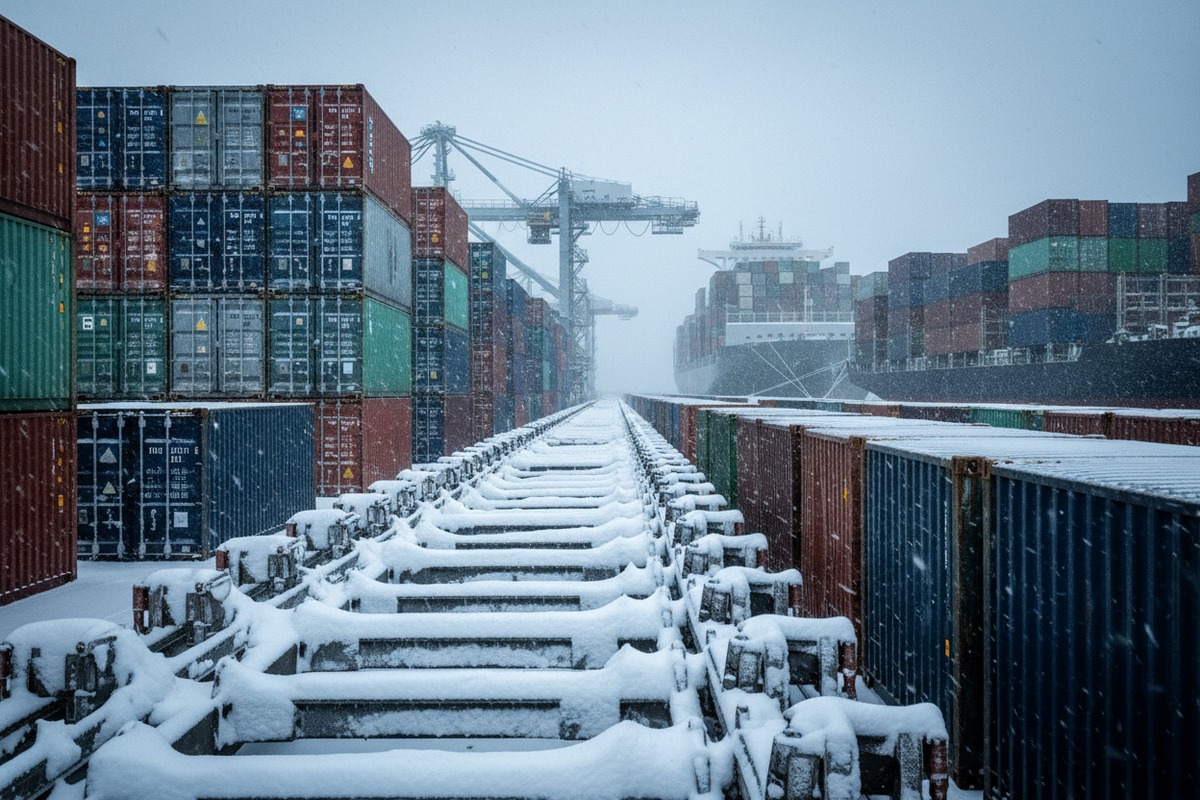
Hamburg's CTA terminal yard sits at an elevated level of 80–85%, while CTH terminal yard is currently at an elevated level of 90–95%. Both terminals face severe challenges to operations due to heavy snowfall and continued subzero temperatures hindering yard operations.
How This Affects Your Pressotherapy Machine Shipment
For pressotherapy machines shipped in standard dry containers, the delays compound at multiple points:
- Vessel arrival delays: Ships bunching at port entrances
- Discharge delays: Reduced crane productivity in cold weather
- Yard delays: High utilization means containers wait longer for pickup
- Inland transport delays: Snow and icy road conditions are causing traffic congestion and delays for trucks. Rail services are also being affected by frozen track switches, leading to service disruptions and cancellations.
Multiple north European hubs—including Hamburg, Rotterdam, and Antwerp—are facing slower operations, intermittent suspensions, and weather-related disruptions. These locations remain sensitive to vessel bunching and inland service issues, which can extend cargo availability timelines even when ocean transit is stable.
Realistic Timeline Expectations
| Scenario | Standard Transit | Current Transit | Total Lead Time |
|---|---|---|---|
| Shanghai → Rotterdam (normal) | 30–35 days | 40–50 days | 45–55 days |
| Ningbo → Hamburg (normal) | 32–38 days | 45–55 days | 50–60 days |
| Guangzhou → Antwerp (normal) | 28–33 days | 38–48 days | 43–53 days |
These estimates include the extra transit time from Red Sea diversions plus current port congestion.
Can my Chinese supplier help me bypass shipping bottlenecks at major European ports?
In our experience shipping pressotherapy equipment worldwide, we have learned that smart routing decisions make the difference between on-time delivery and frustrated customers. When one port is gridlocked, alternatives exist. But they require planning and coordination between supplier and buyer.
Yes, Chinese suppliers can help bypass shipping bottlenecks by routing shipments to less congested ports, using alternative terminals within major hubs, or combining sea freight with air freight for urgent components. Effective collaboration requires early communication about port conditions and flexibility on delivery points.
Alternative Port Strategies
Maersk strongly recommends booking from alternative ports that are operating more smoothly, such as Bremerhaven, Rotterdam, or Wilhelmshaven. When Hamburg is congested, we can work with freight partners to redirect shipments.
Maersk expects multiple vessel omissions and instances where cargo will be discharged in Wilhelmshaven or Bremerhaven, resulting in significant delays before containers can be moved back into Hamburg. To minimise disruption, they highly recommend arranging direct pick-up from Wilhelmshaven or Bremerhaven whenever possible.
Which Ports Offer Relief?
| Port | Status | Advantage | Consideration |
|---|---|---|---|
| Wilhelmshaven | ~60% utilization | Less congested | Fewer inland connections |
| Gothenburg | Brief halts only | Northern alternative | Longer truck routes south |
| Trieste | 20–40 hr wait | Mediterranean access | Rail to Central Europe |
| Barcelona | 3.1 day wait | Southern routing | Distance to Northern markets |
Trieste, Italy has 20–40 hours of waiting time with high efficiency of cargo handling and less congestion. It is a convenient alternative for multimodal transportation 3 with rail and road modes.
What Your Supplier Can Do
A capable Chinese supplier should offer these options:
- Multi-port routing: Pre-arrange shipments to discharge at backup ports
- Split shipments: Divide orders across multiple vessels and routes
- Air freight pivot: Ship urgent or high-value pressotherapy components by air
- Real-time updates: Share tracking data so you can plan pickup in advance
Air Freight as a Backup
For pressotherapy machines, air freight costs significantly more than ocean freight. However, when port delays threaten to cost you sales, air becomes a viable option for:
- Urgent replacement parts
- Initial demo units for new customers
- High-margin specialized equipment
If you usually ship ocean freight, consider alternate modes such as air or rail if possible. Even better, use a combination of different modes. Shipping your freight in different ways helps move goods faster during peak season.
The Red Sea Factor
Due to security concerns in the Red Sea region, major carriers have rerouted vessels via the Cape of Good Hope 4 instead of the traditional Suez Canal passage. The Cape of Good Hope route adds approximately 7–14 days to transit times compared to the Suez Canal passage.
This rerouting is not something suppliers can bypass. The Red Sea crisis has affected shipping across the globe. Most of the largest shipping companies have been forced to reroute ships via the Cape of Good Hope in Africa, leading to much longer journey times of 10–14 days from Asia to Europe.
What suppliers can control is booking early, selecting reliable carriers, and maintaining communication about expected arrival windows.
How should I adjust my inventory planning if European port congestion persists?
Our production planning team has noticed a clear pattern: the buyers who order pressotherapy machines 8–12 weeks ahead of their sales season weather supply chain disruptions better than those ordering 4–6 weeks out. This is not about being pessimistic. It is about math.
If European port congestion persists, importers should increase safety stock by 15–25% above normal levels, extend order lead times by 3–4 weeks, and maintain buffer inventory to cover a 6–8 week disruption window. Just-in-time strategies are not viable under current conditions.

Why Standard Lead Times No Longer Work
European port congestion is no longer a surprise event. It is a structural feature of the current market. That means the most useful question is not "will congestion end" but "how should we operate as long as it is here."
For pressotherapy machine distributors, this structural congestion means:
- Standard 30–40 day transit assumptions are outdated
- Buffer stock is not optional—it is essential
- Order timing must shift earlier in the calendar
Safety Stock Calculation
| Factor | Normal Conditions | Current Congestion |
|---|---|---|
| Average transit time | 35 days | 45–55 days |
| Transit variability | ±3 days | ±7–14 days |
| Recommended safety stock 6 | 3–4 weeks | 6–8 weeks |
| Order lead time | 6 weeks ahead | 10–12 weeks ahead |
Industry experts recommend building targeted safety stocks in European distribution centers to cover a 4–6 week disruption window.
Chinese New Year Compounds the Problem
The official Chinese New Year 7 public holiday runs from February 15 to February 23, 2026, but the actual disruption spans four to six weeks when you account for pre-holiday slowdowns and post-holiday recovery.
This means if you are reading this in February 2026, you are already in the disruption window. Many factories don't reach full production capacity until well into March. When you add it all up, you're looking at a 6 to 8-week window where supply from China is genuinely reduced—not just paused.
Practical Inventory Adjustments
- Audit current stock levels: Calculate weeks of coverage against your March–April sales forecast
- Identify critical SKUs: Which pressotherapy models cannot be out of stock?
- Place orders now: For freight, aim to book before mid-January to secure space and avoid rate spikes.
- Diversify warehouse locations: Hold buffer stock at multiple EU distribution points
- Accept partial shipments: Better to receive 70% on time than wait for 100%
Post-Holiday Recovery Planning
A factory might "reopen" on February 24 but only be running at 40% capacity for another week or two. Plan your restocking around realistic factory recovery timelines, not official holiday end dates.
Forecast early—analyze sales data at least six to eight months in advance. Finalize orders early—place your final production orders by September or October for any inventory required in March or April.
Will port congestion lead to unexpected surcharges on my pressotherapy machine shipment?
When we quote pressotherapy machine shipments, we build in known costs. But over the past two years, "unexpected" charges have become disturbingly common. Demurrage fees 8, detention charges, peak season surcharges, and emissions levies can add 20–40% to your total landed cost if you are not prepared.
Yes, port congestion leads to multiple unexpected surcharges including demurrage fees ($100–300/day per container), detention charges, peak season surcharges ($200–1,000/TEU), and war risk premiums from Red Sea diversions. These charges can add 20–50% to baseline freight costs.

Types of Surcharges to Expect
Port capacity across Europe has been under severe pressure for the past year, driven by a succession of disruptions including the Red Sea situation, adverse weather conditions, strikes, infrastructural constraints and a global trade war. Beyond the operational inconvenience, port congestion has a direct impact on global supply chains as it increases the risk of demurrage and detention charges.
| Surcharge Type | Typical Cost | When It Applies |
|---|---|---|
| Demurrage | $100–300/day | Container sits at port beyond free days |
| Detention | $100–250/day | Container held outside port too long |
| Peak Season Surcharge | $200–1,000/TEU | High demand periods |
| War Risk Surcharge | $200–500/TEU | Red Sea-related |
| Emissions Surcharge | Increasing in 2026 | EU ETS compliance 9 |
| Low Water Surcharge | Varies | Rhine River levels |
Understanding Demurrage and Detention
Demurrage is a fee charged by ocean carriers or terminal operators when a container remains at the port or terminal longer than the allowed free time after it becomes available.
If the consignee holds on to the carrier's container beyond the allowed free time, detention fees will be imposed. In other words, a detention charge is applied when the container has not returned to the carrier on time.
Demurrage and detention fees have existed for decades. What's changed is how often they occur and how severe they've become. Congestion used to be seasonal. Today, it's persistent.
The Red Sea Cost Factor
Freight costs on key Asia-Europe routes increased by 40–60% in the immediate aftermath of Red Sea diversions, though rates have since stabilized at levels 25–35% above pre-crisis benchmarks. Data indicates that the longer Cape of Good Hope route adds approximately $200–400 per TEU in additional costs, factoring in fuel consumption, crew wages, and vessel positioning expenses.
2026 Emissions Surcharges
As of January 1, 2026, the emissions surcharge for all ocean shipments to and from EU/EEA countries will increase significantly compared to 2025. From 2026, the EU ETS will require shipping lines to cover 100% of verified emissions, increasing from 70% in 2025.
How to Minimize Unexpected Charges
-
Pre-clear customs: Customs delays are one of the fastest ways to burn free time. Pre-clearance allows containers to move immediately upon availability.
-
Book trucks early: Waiting until cargo arrives to book trucks is a recipe for fees.
-
Monitor free time deadlines: Free time is not a guideline—it's a deadline. Leading shippers treat it as a non-negotiable milestone and escalate early when risk appears.
-
Negotiate extended free time: Industry leaders leverage cargo volume to secure 14+ days of free time during the initial contract phase.
-
Use visibility tools: Real-time tracking helps you act before charges accumulate
Conclusion
European port congestion is adding 5–14 days to pressotherapy machine deliveries, with no quick resolution in sight. Build 6–8 weeks of safety stock, work with your Chinese supplier on alternative routing, and prepare for surcharges that can add 20–50% to freight costs. The importers who plan now will protect their inventory and customers through this disruption.
Footnotes
1. Provides current insights into the causes and persistence of European port congestion. ↩︎
2. Defines a key metric for port efficiency and congestion within container terminals. ↩︎
3. Found a working, authoritative definition of multimodal transportation on Wikipedia. ↩︎
4. Offers historical and current context for the Cape of Good Hope as a shipping route. ↩︎
5. Explains the Red Sea crisis and its impact on global shipping routes and transit times. ↩︎
6. Explains the purpose and importance of maintaining safety stock in inventory management. ↩︎
7. Details the annual impact of Chinese New Year on factory production and supply chains. ↩︎
8. Defines demurrage fees as charges incurred for exceeding free time at ports. ↩︎
9. Explains the regulatory requirements and increasing coverage of the EU ETS for shipping. ↩︎

 English
 Español de México
 Deutsch
 Français
 العربية
 Русский
