
When our engineering team first developed app-controlled pressotherapy machines for overseas clients, we underestimated how much smartphone diversity would impact performance. One client in Chicago reported connection drops. Another in London found her Android device showed different pressure readings. These issues taught us that stable app control requires much more than writing good code.
To ensure stable iOS and Android app control for custom pressotherapy machines, manufacturers must implement robust Bluetooth Low Energy (BLE) protocols, conduct rigorous cross-platform testing on real devices, follow medical device software standards like IEC 62304, and establish long-term update commitments to maintain OS compatibility.
In this guide, we break down the technical requirements, testing protocols, and supplier commitments that matter most when sourcing app-controlled pressotherapy equipment. Let us walk you through what we have learned from years of exporting to beauty salons across North America and Europe.
How can I verify the connectivity stability between my custom pressotherapy machine and the mobile app?
When our factory ships a new pressotherapy system, connection stability is the first concern clients raise. A 30-minute treatment session cannot afford random disconnections. Our quality control team has developed specific protocols to test this before any unit leaves our facility.
To verify connectivity stability, test the Bluetooth connection under real-world conditions including signal interference, distance variations, and extended session durations. Check reconnection behavior after interruptions, monitor latency during pressure adjustments, and ensure the machine has fallback manual controls if the app connection fails.

Understanding BLE Communication for Medical Devices
Modern pressotherapy machines rely on Bluetooth Low Energy (BLE) 1 for wireless communication. This technology offers several advantages for beauty equipment. It consumes less power than classic Bluetooth. It provides sufficient bandwidth for transmitting pressure commands and sensor data.
Our engineering team implements custom GATT services 2 for each pressotherapy model. These services define how the app and machine exchange information. They handle pressure level commands, treatment mode selection, timer settings, and real-time feedback data.
Key Connection Tests You Should Request
Before accepting any custom pressotherapy system, ask your supplier to demonstrate these connectivity tests:
| Test Type | What It Measures | Acceptable Standard |
|---|---|---|
| Range Test | Maximum distance before signal drops | 10+ meters in open space |
| Interference Test | Performance near WiFi routers and other devices | No drops during 30-min session |
| Reconnection Test | Time to auto-reconnect after brief interruption | Under 5 seconds |
| Battery Impact | Connection stability at low device battery | Stable above 10% battery |
| Multi-Device Test | Behavior when multiple phones are nearby | Correct pairing without confusion |
Implementing Adaptive Connection Algorithms
At our production facility, we program adaptive algorithms 3 into each machine's firmware. These algorithms dynamically adjust communication parameters based on environmental factors. When signal strength drops, the system compensates by increasing transmission power or reducing data packet size.
This approach prevents mid-treatment disconnections that frustrate salon operators. The algorithm monitors connection quality continuously. If it detects instability, it alerts the app before a full disconnect occurs.
Ensuring Offline Functionality
Critical offline capability protects treatment continuity. Even if the app crashes or the phone dies, the pressotherapy machine should complete its current cycle safely. We build redundant controls into every system. Operators can use physical buttons to pause, resume, or stop treatments.
This design philosophy follows the principle that connected devices must never become useless without their companion apps. Your supplier should demonstrate that pre-set programs can run independently once initiated.
What are the key steps to ensure my branded app functions consistently across both iOS and Android platforms?
Our development team maintains separate testing labs for Apple and Android devices. This investment came after a costly lesson. An app that worked perfectly on Samsung devices failed on certain Xiaomi phones. Cross-platform consistency requires deliberate planning and extensive testing.
To ensure consistent cross-platform performance, choose between native development or reliable cross-platform frameworks, test on both popular and edge-case device models, verify app behavior across multiple OS versions, implement responsive UI design for different screen sizes, and conduct beta testing with real salon operators before full rollout.
Native vs. Cross-Platform Development Approaches
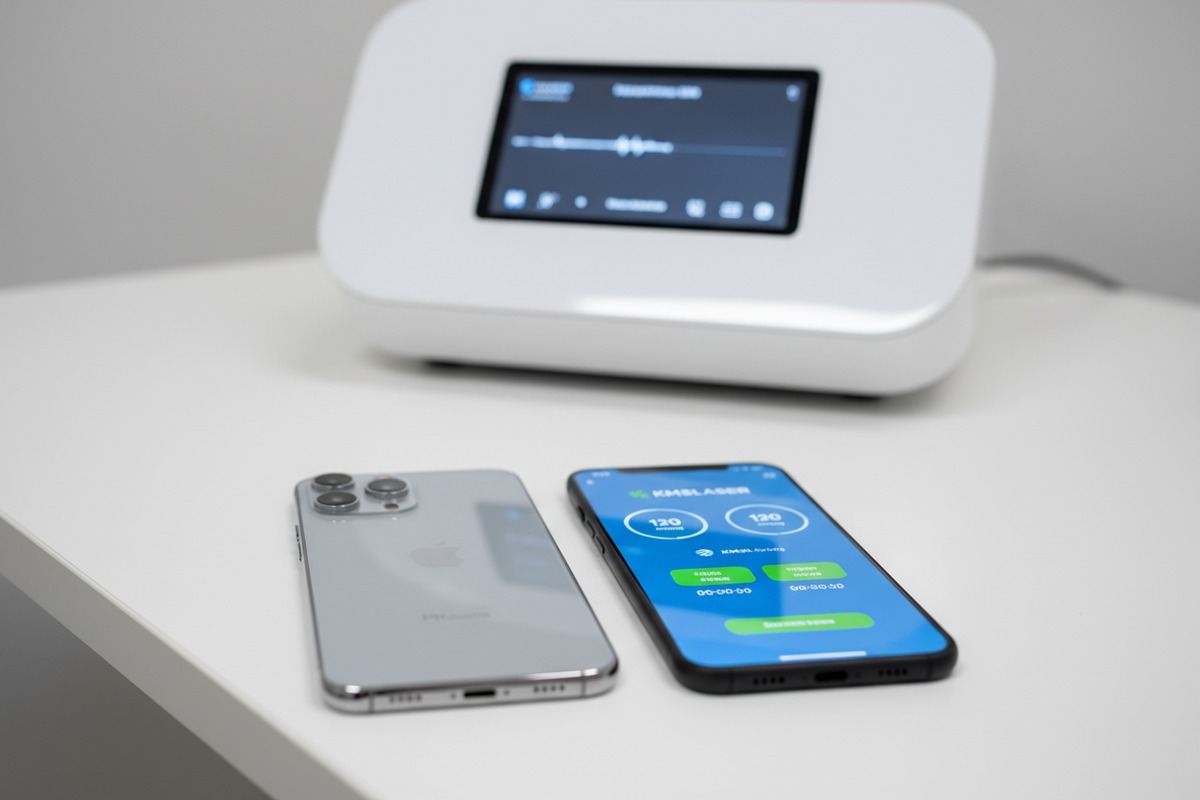
Manufacturers face a fundamental choice when developing companion apps. They can build separate native apps for iOS and Android. Or they can use cross-platform frameworks 4 like React Native or Flutter.
| Approach | Advantages | Disadvantages |
|---|---|---|
| Native Development 5 | Better performance, full platform feature access, easier OS update compatibility | Higher cost, longer development time, separate codebases to maintain |
| Cross-Platform | Single codebase, faster development, lower cost | May have limited access to hardware features, potential performance overhead |
Our factory uses native development for professional-grade equipment. We find it provides better Bluetooth performance and faster response times for real-time pressure adjustments. However, for budget-friendly models, cross-platform frameworks offer acceptable performance at lower development costs.
Device and OS Version Coverage
The fragmentation challenge is real. Android runs on thousands of different phone models. iOS has fewer variations but still requires testing across generations.
Medical and health app developers recommend testing on devices that represent your target market. Research shows that "testing apps on various devices to build a comprehensive compatibility list is a critical step in providing a seamless user experience."
For salon equipment used primarily in North America and Europe, focus testing on:
- iPhone models from the last 4 years
- Popular Samsung Galaxy devices
- Google Pixel phones
- Commonly used tablets for salon reception areas
UI and UX Consistency
Screen sizes vary dramatically between devices. What looks perfect on an iPhone 15 Pro may appear cramped on an older Android phone. Responsive design principles 6 solve this problem.
Our app designers create interfaces that adapt automatically. Buttons remain large enough for easy tapping. Text scales appropriately. Treatment parameter displays stay clear and readable.
We also implement consistent haptic feedback and audio cues. These provide immediate confirmation when operators adjust settings. A subtle vibration confirms a pressure level change. An audio tone indicates treatment completion.
Addressing iOS-Specific Requirements
Apple's stricter app review process creates additional considerations. Health-related apps face particular scrutiny. Your supplier's development team should understand:
- Apple's guidelines for apps that connect to external hardware
- Privacy requirements for any data collection
- Proper handling of Bluetooth permissions
- Background operation limitations on iOS
These platform-specific rules affect how the app maintains connection during treatment sessions when the phone screen is locked.
How does the factory test the software integration to prevent technical glitches for my salon customers?
Quality assurance at our facility goes far beyond simple "does it turn on" checks. Software integration testing for pressotherapy machines involves multiple stages. Each stage catches different types of problems before they reach your customers.
Factory software testing should include unit testing of individual functions, integration testing between app and hardware, stress testing under extended use conditions, regression testing after any software updates, and real-world scenario testing that simulates actual salon environments and operator workflows.

Medical Device Software Standards
Professional equipment manufacturers follow established frameworks for software development. The IEC 62304 standard 7 defines life cycle requirements for medical device software. This standard "specifies life cycle requirements for the development of medical software and software within medical devices."
While pressotherapy machines for beauty salons may not require full medical device certification, following these principles improves reliability. The framework includes software risk management and comprehensive system testing.
Our Multi-Stage Testing Protocol
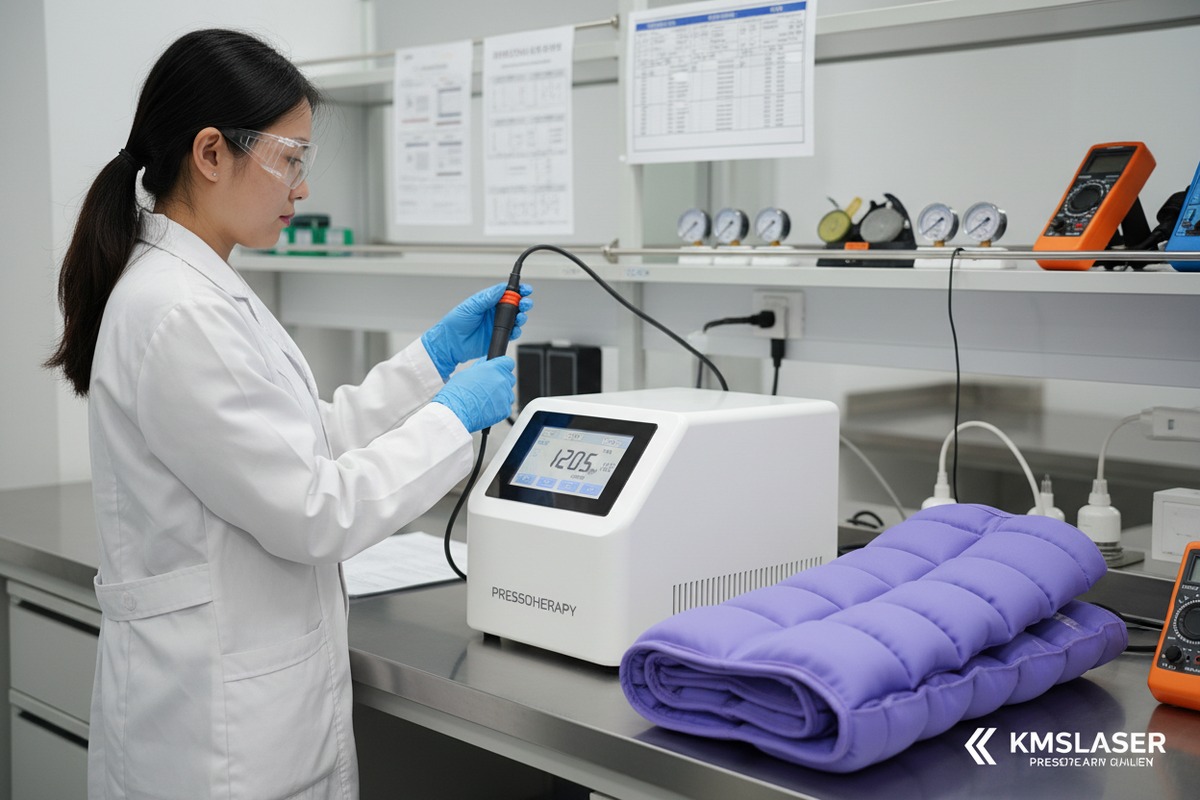
At our production line, every pressotherapy unit undergoes these testing phases:
| Testing Stage | Duration | What We Check |
|---|---|---|
| Component Verification | 2 hours | Individual air valves, pressure sensors, control board functions |
| Firmware 8 Validation | 4 hours | All treatment modes, parameter ranges, safety limits |
| App Integration | 8 hours | Connection pairing, command response, data accuracy |
| Extended Run | 24 hours | Continuous operation, heat management, component fatigue |
| Environmental Stress | 4 hours | Performance at temperature extremes, humidity variations |
Real-World Scenario Testing
Numbers on a test bench do not tell the whole story. Our QA team runs practical scenarios that mimic actual salon use. We simulate:
- An operator rapidly changing pressure settings mid-treatment
- Multiple treatment sessions back-to-back without cool-down
- App background operation while operator answers calls
- Low battery conditions on both phone and machine
- WiFi router interference from nearby equipment
These tests reveal edge cases that automated testing misses. A machine might pass all technical benchmarks but fail when a busy esthetician quickly switches between clients.
Documentation and Traceability
For every unit we produce, we maintain complete test records. This documentation includes:
- Serial number and production date
- Firmware version installed
- Test results for each stage
- Any issues found and corrections made
- Final inspection approval
When you receive your order, you can request these records. They provide assurance that proper testing occurred and help troubleshoot any future issues.
Pre-Shipment Inspection Options
We offer clients the opportunity to witness testing or hire third-party inspectors. This option is particularly valuable for large orders or new product customizations. During pre-shipment inspection, you can verify that software integration meets your specific requirements.
How will my supplier handle long-term app updates to maintain compatibility with new smartphone operating systems?
This question matters more than most buyers realize initially. Smartphones receive major OS updates annually. Apple releases new iOS versions each fall. Google pushes Android updates regularly. Without proper maintenance, your branded app can become incompatible within 1-2 years.
Reliable suppliers commit to long-term app maintenance agreements that include monitoring OS beta releases for compatibility issues, releasing app updates before major OS launches, maintaining support for older OS versions still popular among users, documenting update schedules and communication processes, and providing firmware update mechanisms for the hardware itself.

Understanding the Update Challenge
Both Apple and Google release beta versions of updates before public release. This gives developers time to test compatibility. However, "there are many apps that are no longer supported by new OS versions that plague the app stores, a situation that should certainly be avoided."
Your supplier should actively monitor these beta releases. They should test your branded app against upcoming OS versions months before public release. This proactive approach prevents scrambling after problems emerge.
Firmware Over-The-Air (OTA) Updates
Modern pressotherapy machines can receive firmware updates wirelessly 9 through the companion app. This capability "is possible to update the device firmware in real time using wireless connection." OTA updates provide several benefits:
| Benefit | Why It Matters |
|---|---|
| Bug Fixes | Resolve issues without shipping hardware back |
| Feature Additions | Add new treatment modes remotely |
| Security Patches | Address vulnerabilities quickly |
| Compatibility Fixes | Adjust for new phone models or OS changes |
| Regulatory Updates | Modify parameters if standards change |
When evaluating suppliers, confirm they have implemented OTA update capability. Ask about their update deployment process and how they communicate updates to end users.
Backward Compatibility Commitments
Not all salon operators update their phones immediately. Some still use devices running older iOS or Android versions. Your supplier should maintain app compatibility with operating systems from at least 3-4 years back.
This commitment requires ongoing testing across multiple OS versions. The development team must ensure new features do not break functionality for users on older devices.
What to Include in Your Agreement
Before finalizing your supplier relationship, negotiate clear terms for long-term support:
- Minimum support period: Typically 3-5 years from product launch
- Update frequency commitment: At minimum before major OS releases
- Response time for critical bugs: Usually 48-72 hours
- Communication channels: Email notifications, app store update notes
- Cost structure: Whether updates are included or priced separately
- Source code access: What happens if the supplier goes out of business
Planning for the Unexpected
Technology evolves unpredictably. New Bluetooth standards emerge. Apple or Google may change their policies. Your supplier should have contingency plans for significant platform changes.
At our company, we maintain technical partnerships with component manufacturers and stay engaged with developer communities. This network helps us anticipate changes and adapt quickly when platforms evolve.
Conclusion
Stable app control for custom pressotherapy machines requires attention to connectivity protocols, cross-platform testing, factory quality assurance, and long-term update commitments. By asking the right questions and verifying your supplier's capabilities in these areas, you protect your brand reputation and ensure your salon customers receive reliable, professional equipment.
## Footnotes

<span id="footnote-1">
1. Replaced broken link with a comprehensive and authoritative Wikipedia page on Bluetooth Low Energy. <a href="#ref-1" class="footnote-backref">↩︎</a>
</span>

<span id="footnote-2">
2. Official specification for Generic Attribute Profile (GATT) services. <a href="#ref-2" class="footnote-backref">↩︎</a>
</span>

<span id="footnote-3">
3. Replaced broken link with a comprehensive and authoritative Wikipedia page on adaptive algorithms. <a href="#ref-3" class="footnote-backref">↩︎</a>
</span>

<span id="footnote-4">
4. Replaced broken link with an authoritative source from Kotlin, a key technology in cross-platform development, detailing cross-platform frameworks. <a href="#ref-4" class="footnote-backref">↩︎</a>
</span>

<span id="footnote-5">
5. Explains what native app development is and its characteristics. <a href="#ref-5" class="footnote-backref">↩︎</a>
</span>

<span id="footnote-6">
6. Outlines the core principles of responsive web design for adapting to various screen sizes. <a href="#ref-6" class="footnote-backref">↩︎</a>
</span>

<span id="footnote-7">
7. Official page for the IEC 62304 standard for medical device software. <a href="#ref-7" class="footnote-backref">↩︎</a>
</span>

<span id="footnote-8">
8. Provides a clear definition and explanation of firmware from a reputable tech company. <a href="#ref-8" class="footnote-backref">↩︎</a>
</span>

<span id="footnote-9">
9. Replaced broken link with a comprehensive and authoritative Wikipedia page on over-the-air updates, which includes firmware updates. <a href="#ref-9" class="footnote-backref">↩︎</a>
</span>


 English
 Español de México
 Deutsch
 Français
 العربية
 Русский
Join the Conversation
Have a question or insight to share? We read every comment — whether you're a distributor, salon owner, or just curious about the technology. Your real-world experience helps others make better decisions. Drop your thoughts below.