

Every year, our shipping team deals with frantic calls from buyers whose shockwave therapy machines are stuck at US ports. The reason? Wood crates that fail quarantine inspection 1. A single faded stamp can cost you thousands in fees and weeks of delay.
To ensure your shockwave therapy machine’s wood packaging clears US quarantine, verify your Chinese supplier uses ISPM 15 compliant wood that is heat-treated or fumigated, bears a legible IPPC mark with country code CN, producer number, and treatment type, and obtain proper documentation before shipment.
This guide walks you through every step. You will learn how to verify compliance, what documents to demand, and when to switch to alternative packaging materials. Let us dive in.
How do I verify that my shockwave therapy machine's wood crate complies with ISPM 15 standards?
When our export team prepares shipments for US-bound clients, we check every wood crate before sealing. Missing this step has caused major headaches for importers who trusted suppliers without verification.
To verify ISPM 15 compliance, inspect the wood packaging for a clear IPPC stamp showing the country code (CN), producer registration number, and treatment method (HT for heat or MB for fumigation). The mark must appear on at least two opposite sides and remain legible throughout transit.

Understanding the IPPC Mark Components
The IPPC mark is your proof of compliance. It tells US inspectors that the wood has been treated to kill pests. Here is what each element means:
| Mark Element | Description | Example |
|---|---|---|
| IPPC Logo | Wheat-ear symbol indicating international compliance | Stylized plant design |
| Country Code | Two-letter ISO code for origin country | CN (China) |
| Producer Code | Unique number assigned by China's NPPO | XX-123 |
| Treatment Code | Method used to treat the wood | HT (heat) or MB (fumigation) |
| Debarking Symbol | Indicates bark has been removed | DB |
Where to Look for the Stamp
Do not assume one stamp is enough. APHIS inspectors check multiple sides of each crate. The stamp must appear on at least two opposite sides. We photograph all four sides of every crate before shipping. This creates a record if questions arise later.
Common Stamp Problems We Have Seen
Over the years, our quality control team has caught many stamp issues. Faint ink that fades during ocean transit is the most common. Some suppliers use low-quality ink that smears when wet. Others place stamps where strapping covers them.
We also see mismatched stamps. Old wood pieces with expired certifications get mixed with new treated wood. This creates a compliance nightmare. Each piece of wood in the packaging must carry the same valid certification.
How to Verify Your Chinese Supplier
Before placing an order, ask your supplier for their IPPC registration number. Then verify it through China's National Plant Protection Organization 2. Any legitimate supplier will provide this without hesitation.
Request photos of their treatment facility. Ask for heat treatment logs showing core temperatures reached 56°C for at least 30 minutes. These records prove the treatment was done correctly.
Consider hiring a third-party inspection company 3 like SGS or Bureau Veritas. They visit the supplier's facility, check the treatment process, and photograph the stamps before your shipment leaves China. This small investment prevents massive problems later.
What documentation must my Chinese supplier provide to ensure my shipment clears US quarantine?
In our experience shipping hundreds of shockwave therapy machines to US distributors, paperwork saves shipments. We have seen compliant crates held at ports simply because the documentation was incomplete or unclear.
Your Chinese supplier must provide a packing list specifying ISPM 15 compliance, a treatment certificate with producer code and treatment date, a bill of lading noting wood packaging material is treated, and ideally pre-shipment photos of all IPPC stamps on the crates.

Essential Documents Checklist
Here is every document you should request before your supplier ships:
| Document | Purpose | Who Provides It |
|---|---|---|
| Treatment Certificate 4 | Proves wood underwent HT or MB treatment | Treatment facility |
| Packing List | Details all WPM used, notes ISPM 15 compliance | Supplier |
| Bill of Lading | Shipping document noting treated WPM | Freight forwarder |
| Pre-shipment Photos | Visual proof of stamps on all crate sides | Supplier or inspector |
| IPPC Registration Proof | Confirms supplier's facility is registered | China's NPPO |
Why Treatment Certificates Matter
A treatment certificate links your specific shipment to a verified treatment process. It should include the treatment date, method used, facility name, and the producer code that matches the stamp on your crate.
We keep digital copies of every certificate. When US Customs asks questions, we respond within hours with full documentation. This speed often prevents shipments from being flagged for extended inspection.
Bill of Lading Requirements
Your bill of lading should clearly state that wood packaging material is ISPM 15 compliant. Work with your freight forwarder to include this notation. Vague language creates confusion at the port.
Some importers skip this step. They assume the stamps on the crate are enough. But CBP officers review paperwork before physical inspection. Clear documentation on the bill of lading signals compliance and can speed your shipment through.
Building a Documentation Trail
Create a folder for each shipment. Include the supplier's IPPC registration, treatment certificate, packing list, bill of lading, and photos. Store this digitally and keep backups.
If APHIS issues an Emergency Action Notification 5, you have 24 hours to respond. Having organized documentation lets you act fast. We have seen importers lose shipments simply because they could not find paperwork in time.
Working with Your Customs Broker
A specialized customs broker understands phytosanitary regulations 6. They file entries through the ACE system correctly. They know which ports have stricter WPM enforcement. They can alert you to potential problems before your shipment arrives.
Our US partners use brokers who specialize in medical device imports. These brokers understand both FDA requirements and APHIS wood packaging rules. This dual expertise prevents compliance gaps.
How can I prevent my beauty machine order from being rejected by Customs due to non-compliant wood?
Our production floor has seen the aftermath of rejected shipments. A client once lost $12,000 because their wood crate had a stamp that faded during the 30-day ocean voyage. Prevention is far cheaper than correction.
Prevent rejection by using only IPPC-registered suppliers, conducting pre-shipment inspections with photo documentation, requesting high-durability ink stamps, verifying all wood pieces carry matching marks, and considering non-wood alternatives for high-value equipment like shockwave therapy machines.
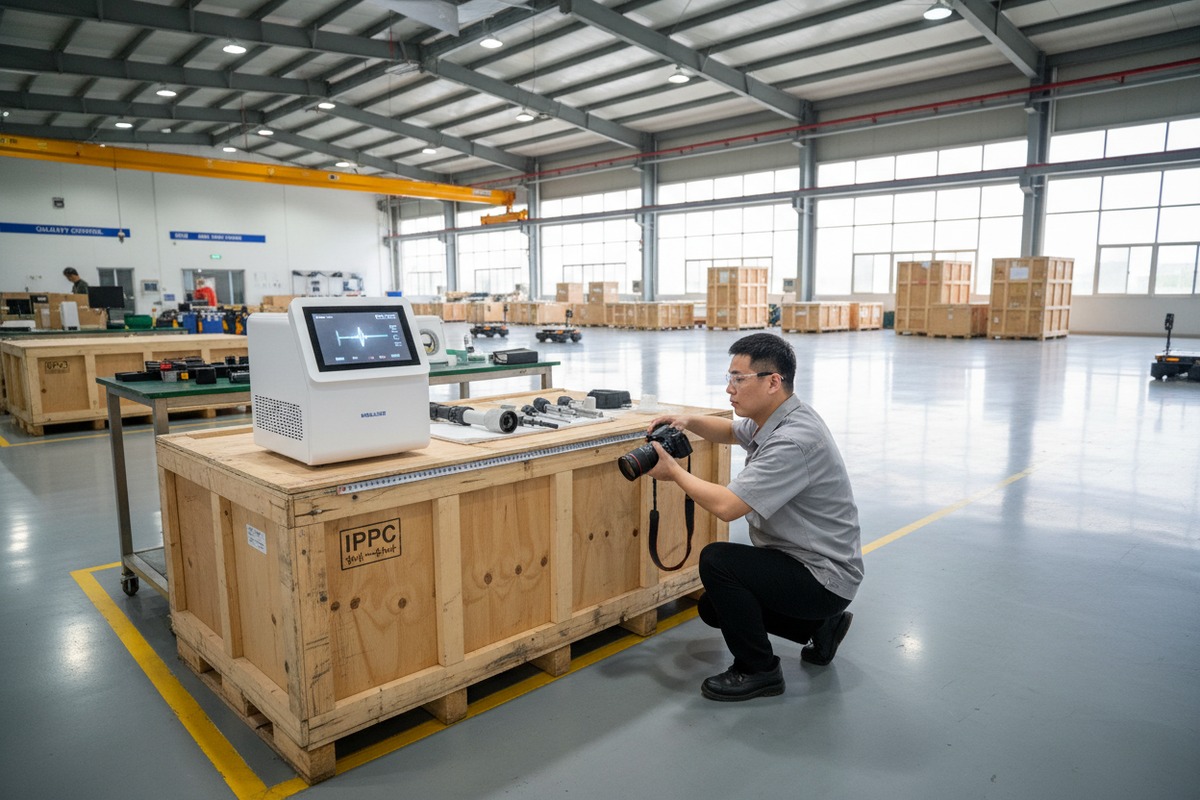
Pre-Shipment Inspection Protocol
Before any shockwave therapy machine leaves our facility, we run a five-point check:
- Stamp visibility on all four crate sides
- Stamp legibility with clear producer code and treatment type
- Consistent markings across all wood components
- No visible pest damage or bore holes
- Proper debarking completion
We photograph each step. These photos travel with the shipment documentation. If questions arise at the US port, we have immediate visual proof.
Common Reasons for Rejection
| Rejection Reason | Frequency | Prevention Method |
|---|---|---|
| Illegible stamp | Very common | Use weather-resistant ink, protect during transit |
| Missing stamp | Common | Inspect all crate sides before shipping |
| Mixed wood sources | Occasional | Use single-source treated wood only |
| Pest evidence | Rare but serious | Visual inspection, clean storage areas |
| Incorrect mark format | Occasional | Verify against IPPC specifications |
The Emergency Action Notification Process
When APHIS finds a problem, they issue an Emergency Action Notification. This document gives you limited options and tight deadlines. You can re-export the shipment, have it treated at a US facility, or destroy it.
Re-export costs include return shipping, port fees, and storage charges. Treatment at a US facility means finding an approved provider, paying their fees, and waiting for processing. Destruction means total loss of the packaging investment.
None of these options are cheap. One rejected shipment can cost more than years of proper prevention measures.
Quality Control at the Source
We visit our wood packaging suppliers twice yearly. We check their treatment equipment, review their temperature logs, and inspect their stamp application process. This relationship building pays off.
Suppliers who know you will verify their work perform better. They understand that a failed shipment damages both parties. This accountability creates better compliance.
Insurance Considerations
Standard cargo insurance 7 often excludes losses from non-compliant wood packaging material. Read your policy carefully. If WPM compliance failures are excluded, you bear the full financial risk.
Consider all-risk cargo insurance that specifically covers phytosanitary issues. Yes, it costs more. But one rejected shipment of shockwave therapy machines can exceed years of premium payments.
Should I request plywood or fumigation-free packaging to avoid potential supply chain delays?
When our engineering team designs packaging for US-bound shockwave therapy machines, we now default to alternative materials. The math simply favors avoiding solid wood altogether for high-value medical equipment.
Yes, requesting plywood, oriented strand board, plastic pallets, or metal frames eliminates ISPM 15 requirements entirely because these processed or synthetic materials are exempt from APHIS wood packaging regulations. This approach removes quarantine risk and speeds customs clearance.

ISPM 15 Exempt Materials
These materials do not require treatment or marking:
| Material Type | Advantages | Considerations |
|---|---|---|
| Plywood | Strong, lightweight, no treatment needed | Slightly higher cost than raw wood |
| Oriented Strand Board | Cost-effective, exempt from rules | Lower moisture resistance |
| Plastic Pallets | Reusable, zero pest risk, durable | Higher initial investment |
| Metal Frames | Extremely durable, tamper-resistant | Heaviest option, highest cost |
| Cardboard/Fiberboard | Lightweight, fully recyclable | Limited weight capacity |
The Business Case for Alternatives
Let me share real numbers from our operations. A standard ISPM 15 compliant wood crate for a shockwave therapy machine costs around $45-60. A plywood crate costs $55-75. The difference is $10-15.
Now consider the risk. One failed inspection costs:
- Port storage fees: $50-150 per day
- Re-export shipping: $500-2,000
- Treatment at US facility: $200-500
- Administrative time: Hours of staff work
- Delivery delay: 1-4 weeks
The extra $15 for plywood looks very different against potential thousands in failure costs.
Heat Treatment vs. Fumigation
If you must use solid wood, heat treatment is preferred over fumigation. Methyl bromide 8 faces increasing restrictions due to environmental concerns. Some countries are phasing it out entirely.
Heat treatment reaches 56°C core temperature for 30 minutes minimum. It leaves no chemical residue. It works well on most wood thicknesses.
Fumigation with methyl bromide penetrates thick wood faster. But the treatment must be documented carefully. And future regulations may restrict it further.
Hybrid Packaging Solutions
We developed a hybrid approach for many clients. The outer crate uses plywood panels. Internal bracing uses small wood pieces under 6mm thick, which are exempt from ISPM 15. This combination provides strength without compliance risk.
For shockwave therapy machines specifically, we also use dense foam inserts. These protect the device better than wood bracing. They add almost no weight. And they have zero quarantine implications.
Making the Switch
Transitioning to alternative packaging requires communication with your supplier. Provide clear specifications. Request samples before committing to a full order.
Some suppliers resist change because they have existing wood inventory. Others lack experience with plywood construction. Vet their capabilities before assuming they can deliver compliant alternatives.
Our packaging team spent months perfecting our plywood crate design. The investment was worthwhile. Our US clients now report near-zero customs delays related to wood packaging.
Conclusion
Getting your shockwave therapy machine through US quarantine comes down to preparation. Verify your supplier's ISPM 15 compliance, demand proper documentation, and seriously consider switching to exempt materials like plywood. The small investment in prevention protects your shipment, your timeline, and your bottom line.
Footnotes
1. Details US import regulations for wood packaging material to prevent pest introduction. ↩︎
2. Provides official contact and organizational details for China’s National Plant Protection Organization. ↩︎
3. Reputable source explaining what a third-party inspection is and its benefits. ↩︎
4. Highlights the role of accredited agencies in overseeing treatment and issuing certifications for ISPM 15. ↩︎
5. Defines Emergency Action Notifications issued by APHIS for non-compliance with regulations. ↩︎
6. Explains the purpose and impact of phytosanitary regulations on international trade. ↩︎
7. Details common exclusions in cargo insurance policies, including those related to packaging. ↩︎
8. Discusses methyl bromide as an ISPM 15 treatment, noting its restrictions and efficacy. ↩︎

 English
 Español de México
 Deutsch
 Français
 العربية
 Русский
