
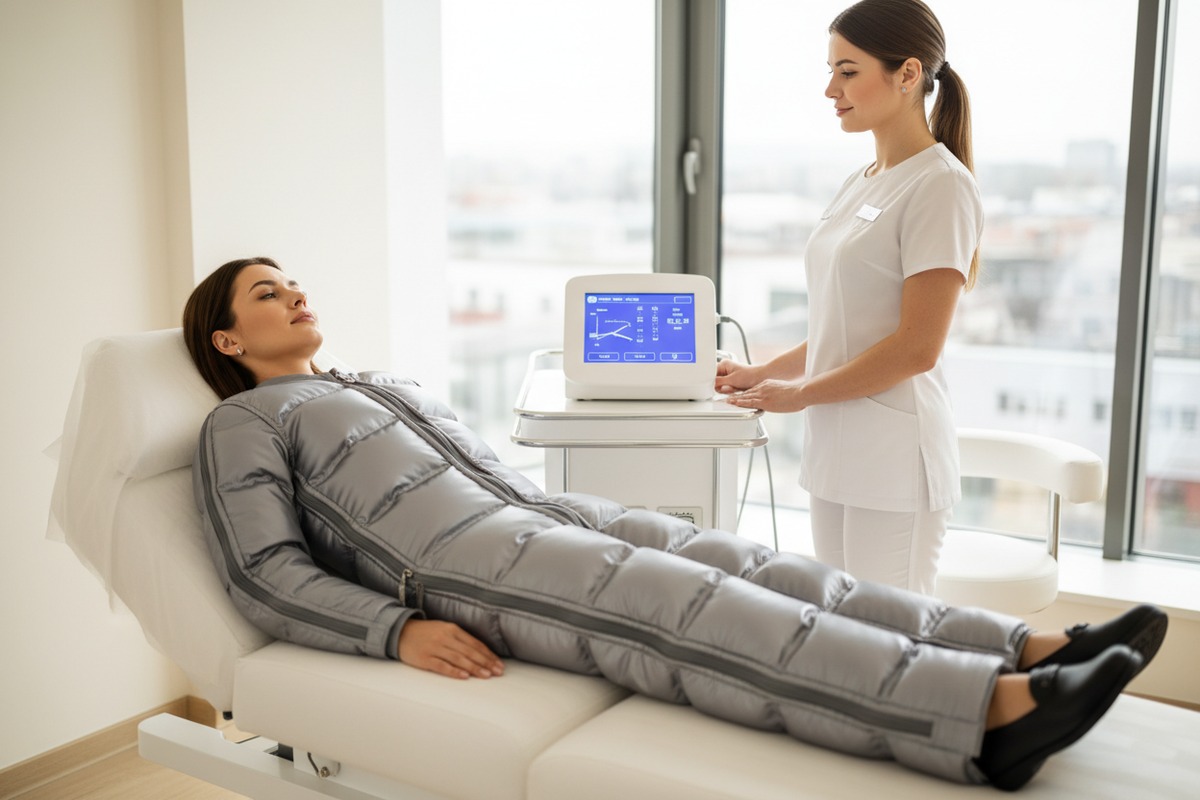
Running multiple clinics means every treatment must feel the same consistent pressure calibration 1. But here is the problem. When you buy pressotherapy machines from different batches or suppliers, results vary. Clients notice. Staff struggle. Revenue suffers. Our engineering team faces this challenge daily—designing systems that deliver identical performance across thousands of units shipped worldwide.
To choose the right pressotherapy machine specs for clinic chains, focus on consistent pressure calibration (30–240 mmHg), multi-channel output for simultaneous treatments, intuitive touch interfaces, durable PU garments, and CE/FDA safety certifications. Prioritize manufacturers offering OEM customization, strict QC protocols, and door-to-door logistics with protective packaging.
In the following sections, we will break down each critical specification CE/FDA safety certifications 2. We will cover technical parameters, customization options, quality benchmarks, and shipping protection. Let’s dive in.
How do I select the right technical specifications to ensure consistent treatment results across all my clinic locations?
Every clinic manager dreads this scenario: clients complain that treatments at Location A feel different from Location B sequential compression modes 3. Our production floor has tested hundreds of pressure sensors to eliminate this exact problem. When machines vary even slightly, trust erodes fast MDSAP (Medical Device Single Audit Program) 4.
Select machines with calibrated pressure ranges (30–240 mmHg), 20+ overlapping air chambers, 4+ output channels, sequential compression modes, and standardized touch screen interfaces. These specs ensure identical treatment delivery across all locations, reduce staff retraining, and maintain client satisfaction chain-wide.

Understanding Pressure Range and Calibration
Pressure range is the foundation of treatment consistency double-wall corrugated cartons 5. Machines typically operate between 10–320 mmHg depending on the model. For clinic chains, we recommend a range of 30–240 mmHg. This covers gentle post-operative recovery (low pressure) and aggressive cellulite treatment (high pressure).
Automatic pressure determination is a game-changer. It reduces human error. Staff don't guess. The machine adjusts based on preset protocols. This is critical when you have new team members at different locations.
Chamber Configuration Matters
The number of air chambers directly impacts treatment quality. More chambers mean smoother compression waves. Fewer chambers create abrupt pressure changes—uncomfortable for clients.
| Chamber Count | Treatment Quality | Best Application |
|---|---|---|
| 6–8 chambers | Basic lymphatic drainage | Entry-level clinics |
| 16–20 chambers | Smooth sequential compression | Standard aesthetic clinics |
| 24–48 chambers | Professional-grade full-body treatment | High-end medical spas |
Overlapping chamber design prevents lymphatic backflow during treatment. This is not optional—it's essential for effective drainage.
Output Channels and Treatment Capacity
Single-output machines treat one client at a time. Multi-channel systems change the math entirely. A 4-channel system treats two clients simultaneously—or treats arms and legs on one client in parallel.
For high-volume clinic chains, this specification directly impacts revenue per treatment hour. Our engineering data shows that 4-channel systems can increase daily patient capacity by 40–60% compared to single-output devices.
Compression Modes and Programmability
Treatment flexibility requires preset programs. Standard machines offer 5–8 compression modes. Advanced models provide 13+ therapeutic programs covering lymphedema management, DVT prevention, cellulite reduction, and post-surgical recovery.
Look for machines with touch screen interfaces (5.7" or larger). This simplifies staff training. New employees can follow visual prompts rather than memorizing complex button sequences.
Can I customize the machine's hardware and software to fit my brand's specific aesthetic and functional requirements?
Brand identity matters in medical aesthetics. When clients walk into your clinic, they should see your brand everywhere—including on equipment. Our design team works with distributors who want seamless brand integration. Generic machines with factory logos don't cut it anymore.
Yes, reputable manufacturers offer comprehensive OEM and ODM customization. This includes logo placement on machine casings and startup screens, custom UI colors and language options, branded packaging, and even modified pressure protocols. Customization strengthens brand recognition and differentiates your clinics from competitors using identical off-the-shelf equipment.

OEM vs. ODM: What's the Difference?
Understanding these terms helps you communicate with manufacturers effectively.
| Service Type | Definition | Best For |
|---|---|---|
| OEM (Original Equipment Manufacturing) 6 | Your specifications, their production | Brands wanting unique features or designs |
| ODM (Original Design Manufacturing) | Their standard design, your branding | Fast market entry with minimal R&D investment |
| Private Label | Off-the-shelf products with your logo | Budget-conscious distributors |
Most clinic chains choose ODM with enhanced customization. You get proven technology with your brand identity layered on top.
Hardware Customization Options
Hardware customization ranges from simple to complex. Here's what's typically available:
Exterior branding: Logo etching on machine casing, custom color panels, branded garment tags. High-quality printing ensures durability against cleaning agents.
Control unit modifications: Custom button layouts, branded control panels, color-matched components. Some manufacturers support complete casing redesigns for large orders.
Garment customization: Branded compression suits, custom sizes for specific demographics, private-labeled accessories. Garments made from durable PU material with double-layer construction last longer under heavy clinical use.
Software and Interface Customization
Modern pressotherapy machines feature digital touch screens that are highly customizable:
Startup screen: Your logo appears when the machine powers on. This reinforces brand presence with every treatment.
User interface: Custom color schemes matching your brand guidelines. Multilingual support (English, French, German, Spanish, Chinese) for international clinic chains.
Treatment protocols: Pre-programmed sequences tailored to your signature treatments. Staff follow standardized protocols across all locations.
Data management: Some advanced systems support centralized analytics—tracking treatment patterns, machine utilization, and maintenance schedules across your entire network.
Minimum Order Quantities for Customization
Customization costs money. Manufacturers require minimum orders to justify tooling and programming changes.
| Customization Level | Typical MOQ | Lead Time |
|---|---|---|
| Logo on startup screen | 5–10 units | 1–2 weeks |
| Custom UI colors/language | 10–20 units | 2–3 weeks |
| Exterior branding/etching | 20–50 units | 3–4 weeks |
| Complete hardware redesign | 100+ units | 8–12 weeks |
Plan customization early. Rush orders cost significantly more.
What quality control benchmarks should I demand from a manufacturer to prevent equipment downtime in my clinics?
Equipment downtime is expensive. A single broken machine means cancelled appointments, refunds, and frustrated clients. Worse, it damages your reputation. Our QC department inspects every unit before shipment because we've seen what happens when manufacturers cut corners.
Demand manufacturers with ISO 13485 certification, CE/FDA compliance, 100% pre-shipment inspection, documented failure rate data (under 2%), and minimum 24-month warranties. Request inspection reports with photos. Verify in-house testing capabilities for pressure sensors, air pumps, and electronic components. These benchmarks predict long-term reliability.

Essential Certifications to Verify
Certifications aren't just paperwork—they indicate manufacturing discipline.
CE Marking: Required for European markets. Confirms compliance with health, safety, and environmental protection standards.
FDA Clearance: Required for U.S. distribution of Class II medical devices. Proves the manufacturer has registered with the FDA and maintains device listings.
ISO 13485: International standard for quality management systems specific to medical devices. Ensures consistent manufacturing processes.
MDSAP (Medical Device Single Audit Program): Recognized by regulators in the U.S., Canada, Brazil, Australia, and Japan. One audit satisfies multiple regulatory bodies.
Pre-Shipment Inspection Protocols
Never accept machines without documented inspection. Here's what a proper QC process includes:
Functional testing: Every compression mode activated. Pressure sensors calibrated. Treatment timers verified.
Visual inspection: Casing integrity, screen clarity, connector fit, garment stitching quality.
Electrical safety: Ground continuity, leakage current, insulation resistance. Emergency stop button functionality.
Documentation: Inspection checklist with technician signature, timestamped photos, serial number logging.
Request sample inspection reports before placing large orders. If a manufacturer hesitates, find another supplier.
Failure Rate Data and Warranty Terms
Ask directly: "What is your field failure rate?" Good manufacturers track this data. Industry benchmark for professional-grade equipment is under 2% within the first year.
| Warranty Component | Industry Standard | What to Demand |
|---|---|---|
| Main machine | 12 months | 24–36 months |
| Compression garments | 3–6 months | 6–12 months |
| Control screen | 12 months | 18–24 months |
| Spare parts availability | 3 years | 5+ years |
Extended warranties cost extra but protect your investment. Calculate the cost of one week of downtime at each location. That number usually justifies the warranty upgrade.
Random Factory Inspections
For large orders, consider third-party factory inspections. Companies like SGS, Bureau Veritas, and Intertek offer pre-production, during-production, and pre-shipment inspections.
These audits verify that the factory matches its marketing materials. You'd be surprised how often facilities don't measure up.
How can I verify that the logistics and door-to-door delivery will protect my high-end equipment during international transit?
Shipping destroys careless packaging. We've seen machines arrive with cracked screens, bent frames, and malfunctioning sensors—all from preventable transit damage. Our logistics team learned painful lessons over the years. Now we treat packaging as a critical product feature, not an afterthought.
Verify that your manufacturer uses custom foam inserts, double-wall corrugated cartons, shock indicators, and moisture barriers for international shipments. Demand door-to-door tracking via FedEx, DHL, or UPS. Require photographic documentation of packing and confirm cargo insurance coverage. These precautions prevent costly damage claims and clinic launch delays.

Packaging Requirements for Fragile Medical Equipment
Medical aesthetic equipment contains delicate components: pressure sensors, LCD screens, electronic control boards, and precision air pumps. Standard packaging fails these items.
Custom foam inserts: Tailored cushioning that immobilizes each component. Generic packing peanuts shift during transit—foam inserts don't.
Double-wall corrugated cartons: Single-wall boxes collapse under stacking pressure. Double-wall construction provides structural integrity for heavy units.
Shock and tilt indicators: These small devices change color when packages experience excessive impact or improper handling. They create accountability throughout the shipping chain.
Moisture barriers: For ocean freight, humidity inside containers can reach 95%. Vacuum-sealed barrier bags with desiccants prevent corrosion and electrical damage.
Carrier Selection and Tracking
Not all carriers handle medical equipment equally.
| Carrier | Strengths | Considerations |
|---|---|---|
| FedEx International Priority | Fast transit, excellent tracking | Higher cost |
| DHL Express | Strong Asia-Europe network | Size/weight limits |
| UPS Worldwide Expedited | Good damage claims process | Variable transit times |
| Sea Freight | Cost-effective for bulk | Longer transit, moisture risk |
Door-to-door service means the manufacturer handles customs clearance and final delivery. This removes friction and reduces your administrative burden. Confirm that the quoted price includes customs duties, brokerage fees, and last-mile delivery.
Documentation and Insurance
International shipping requires proper documentation to avoid customs delays:
Commercial invoice: Accurate product descriptions, HS codes, declared values.
Packing list: Item counts, serial numbers, package dimensions and weights.
Certificate of Origin: Required for preferential tariff treatment in many countries.
Compliance certificates: CE declarations, FDA documentation as applicable.
Insurance is not optional for high-value equipment. Standard carrier liability covers only a fraction of replacement cost. Require all-risk cargo insurance 8 covering the full declared value. This protects against damage, loss, and theft.
Pre-Shipment Documentation
Ask your manufacturer to send photos before dispatch:
- Unpacked machine showing serial number plate
- Machine wrapped in protective materials
- Machine placed in foam-fitted box
- Sealed outer carton with shipping labels
- Shock indicator attached to exterior
This creates evidence for any damage claims. Without documentation, carriers routinely deny responsibility.
Conclusion
Choosing pressotherapy machines for clinic chains requires systematic evaluation of technical specs, customization options, quality benchmarks, and logistics protection. Focus on consistency, reliability, and brand integration. Your investment in proper due diligence pays dividends through reduced downtime, satisfied clients, and scalable operations across all locations.
Footnotes
1. Explains the importance of accurate pressure for medical devices. ↩︎
2. Details essential regulatory compliance for medical aesthetic equipment. ↩︎
3. Describes a key therapeutic method in pressotherapy treatments. ↩︎
4. Explains a program for auditing medical device quality systems globally. ↩︎
5. Details a robust packaging solution for fragile equipment during transit. ↩︎
6. Clarifies a common manufacturing model for product branding. ↩︎
7. Highlights a crucial quality management standard for medical device manufacturing. ↩︎
8. Provides a clear definition of all-risk cargo insurance from a reputable logistics company. ↩︎

 English
 Español de México
 Deutsch
 Français
 العربية
 Русский
