
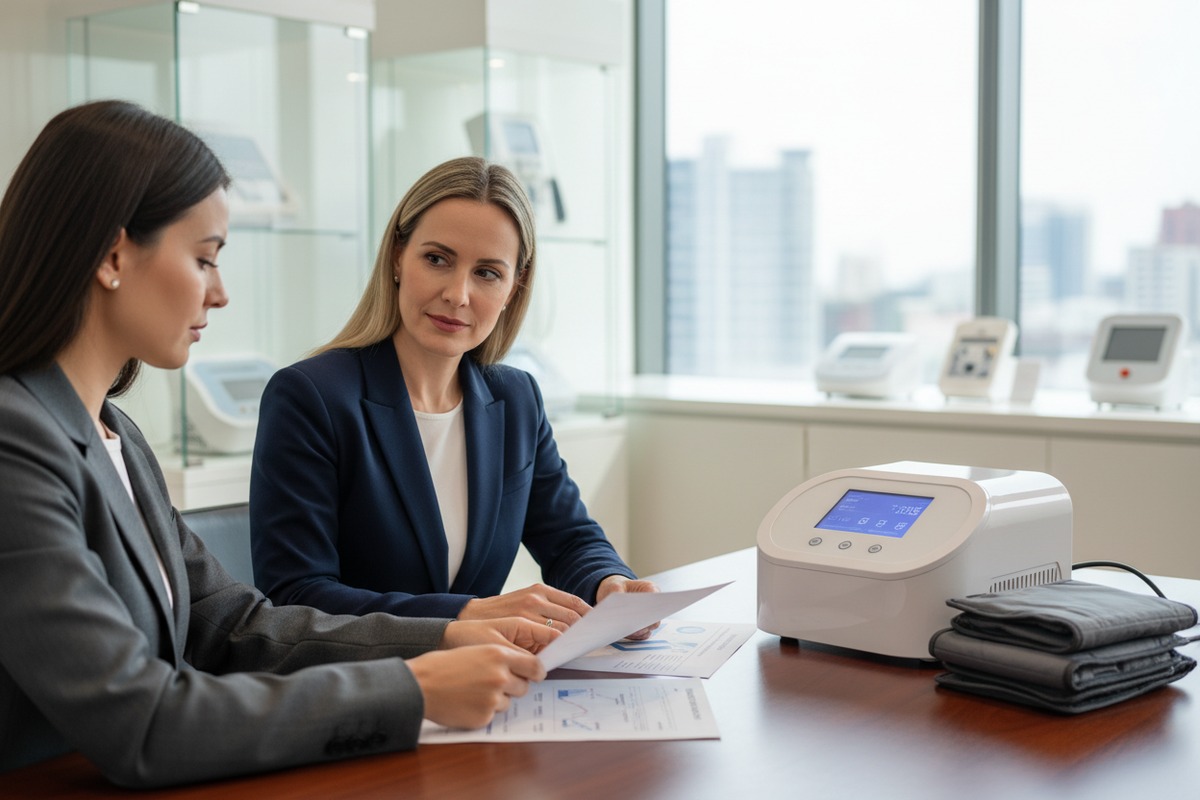
Our production team fields dozens of questions each month about antibacterial coatings 1. Most buyers understand the value of a hygienic surface. Yet few know which questions reveal a supplier’s true technical capabilities JIS Z 2801 2. The result? Purchasing managers accept vague claims and discover—often too late—that coatings fail within months of salon use.
To properly evaluate antibacterial coating lifespan, ask suppliers about the coating type (contact-killing or release-based), request ISO 22196 or JIS Z 2801 test reports, inquire about compatible sanitizers, and demand specific degradation timelines under real-world cleaning conditions. These questions separate reliable manufacturers from those making unsupported marketing claims.
Below, we break down four critical questions you should direct at any pressotherapy machine supplier surface adhesion test 3. Each section includes practical verification methods, red flags to watch, and the technical benchmarks our engineering team uses when advising overseas brand owners.
How can I verify the actual durability of the antibacterial coating during my pre-shipment inspection?
Many buyers assume pre-shipment inspection only covers cosmetic defects and functionality Silver ion coatings 4. In our experience exporting to U.S. and European markets, we have seen coating issues slip past basic visual checks. The real question is whether you can confirm coating integrity before your machines leave the factory floor.
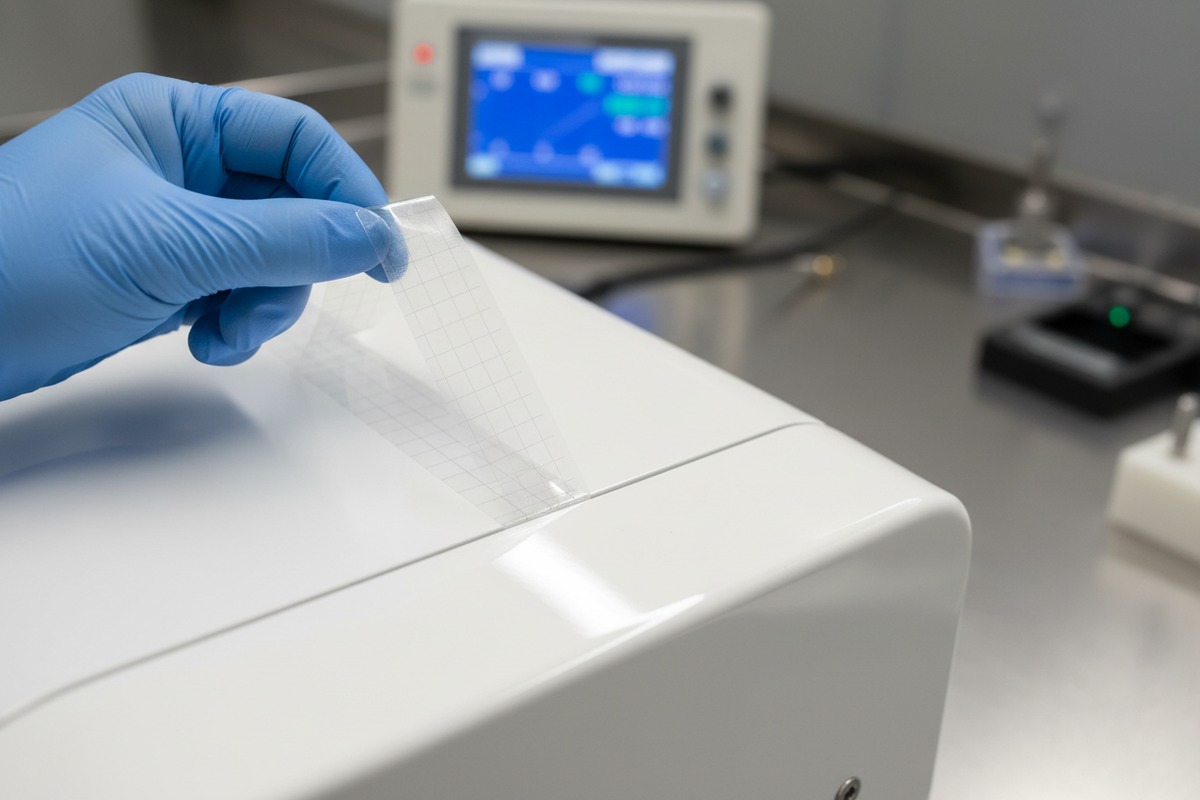
During pre-shipment inspection, request a surface adhesion test and visual comparison against a golden sample. Ask inspectors to verify coating uniformity using UV light if applicable, check for peeling or discoloration, and confirm the supplier provides batch-specific coating application records. These steps confirm durability before shipment.

Why Standard PSI Protocols Miss Coating Issues
Pre-shipment inspections typically follow the ANSI/ASQ Z1.4 sampling standard. Inspectors count finished products, verify packaging, and check for visual defects. But coating durability is not visible. A surface can look perfect yet fail after two weeks of sanitization.
Our quality control team addresses this gap by adding coating-specific checkpoints to every inspection protocol. We recommend buyers do the same.
Practical Steps for Coating Verification
| Verification Method | What It Checks | How to Request |
|---|---|---|
| Surface adhesion tape test | Coating bond strength | Ask inspector to apply and remove adhesive tape per ASTM D3359 5 |
| Golden sample comparison | Color and texture consistency | Provide a reference unit from initial samples |
| UV light inspection | Coating uniformity (for certain formulations) | Request inspector bring UV flashlight |
| Batch documentation review | Application consistency | Ask for coating batch records and curing times |
| Abrasion spot check | Surface hardness | Have inspector test with mild abrasive per supplier specs |
Critical Documentation to Request
Before inspection, send your third-party inspector or supplier a clear checklist. This checklist should include:
- Coating specification sheet from the manufacturer
- Curing time and temperature records for the production batch
- Any in-process quality control photos of coating application
- Reference to the specific ISO or JIS standard the coating meets
Pre-shipment inspection gives importers assurance that goods meet required standards before dispatch. However, coating verification requires proactive communication. Do not assume your inspection agency automatically includes these checks.
Red Flags During Inspection
Watch for these warning signs:
- Supplier cannot produce batch-specific coating records
- Coating appears uneven under angled lighting
- Different units show visible color variation
- Supplier refuses to allow adhesion testing
When we prepare orders for export, our team documents every coating application step with timestamped photos. Buyers should expect similar transparency from any quality-focused manufacturer.
What specific testing reports should I request from my manufacturer to prove the coating's long-term effectiveness?
When our sales team receives inquiries about coating performance, we notice many buyers accept whatever certificate the supplier provides. This approach invites trouble. Not all test reports are equal. Some test conditions differ dramatically from real salon environments.
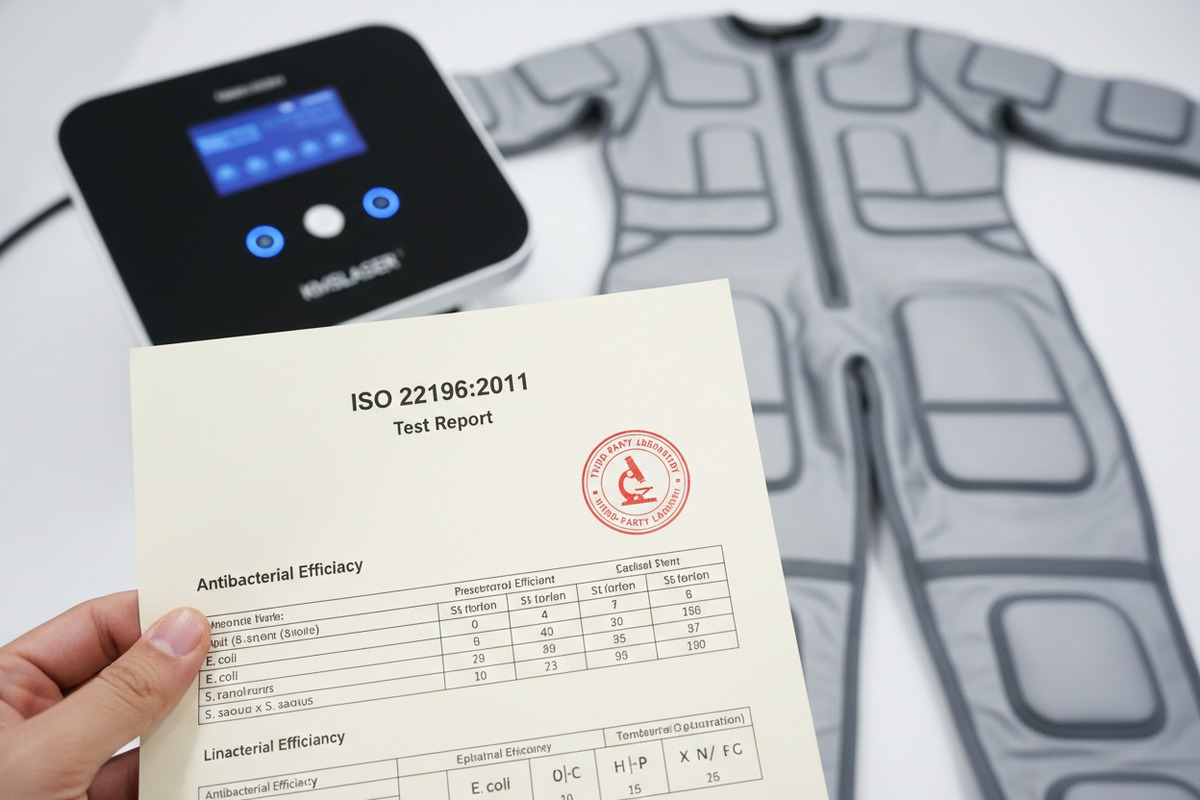
Request ISO 22196:2011 or JIS Z 2801 test reports showing antibacterial efficacy against S. aureus and E. coli. Ask for third-party laboratory certification, pathogen-specific kill rates, and data on efficacy duration at 6 months, 12 months, and 24 months. Reject suppliers who only provide internal test results.
Understanding the Key Testing Standards
ISO 22196 6 and JIS Z 2801 are the most widely used test methods for antibacterial surfaces. These standards measure how effectively a surface kills bacteria over a 24-hour period under controlled laboratory conditions.
The ISO 22196:2011 standard provides a procedure to quantitatively evaluate antimicrobial activity on plastic or non-porous materials. The test involves inoculating samples with bacteria, incubating at 35°C, then comparing bacterial counts on treated versus untreated surfaces. Results are expressed as a logarithmic reduction 7.
What Test Reports Should Include
| Report Element | Why It Matters | Red Flag If Missing |
|---|---|---|
| Laboratory accreditation | Confirms independent verification | In-house testing only |
| Specific bacterial strains tested | Shows pathogen spectrum | No strain identification |
| Log reduction values | Quantifies kill rate | Vague "99.9% effective" claims |
| Test duration and conditions | Reveals real-world relevance | Only 24-hour data |
| Sample preparation method | Shows coating consistency | No methodology details |
| Date and batch information | Confirms relevance to your order | Generic certificate |
The Laboratory Condition Problem
Here is a critical point most suppliers will not volunteer. Standard ISO 22196 testing occurs at 35°C with greater than 90% relative humidity. These conditions favor bacterial growth and may inflate antibacterial efficacy results. Your salon operates at room temperature with 40-50% humidity.
One academic review noted that "incubation of the inoculated and treated surfaces at 35°C and at >90% relative humidity, as required by the standard, will lead to inflated antibacterial activity." This means laboratory data may not reflect real-world performance.
Questions to Ask Your Supplier
- Which accredited laboratory performed your testing?
- Can you provide test data from dry surface conditions (ISO 7581:2023)?
- What is the coating efficacy at 6 months and 12 months post-application?
- Have you conducted any field studies in operational salon environments?
- Which specific pathogens has the coating been tested against?
Beyond Standard Testing
Some advanced coating technologies now include additional verification methods:
- Simulated wear testing (multiple wash cycles)
- Accelerated aging tests
- Field performance data from reference facilities
- Third-party monitoring over extended periods
Our engineering team reviews test reports from our coating suppliers quarterly. We match laboratory claims against feedback from our export clients. This closed-loop verification gives us confidence in the durability data we provide.
How will frequent sanitization in a high-volume salon environment impact the lifespan of my machine's coating?
This question separates informed buyers from the rest. Our production team has tracked field performance data for years. We know that the single biggest factor affecting coating lifespan is not temperature or humidity—it is cleaning protocol compatibility.
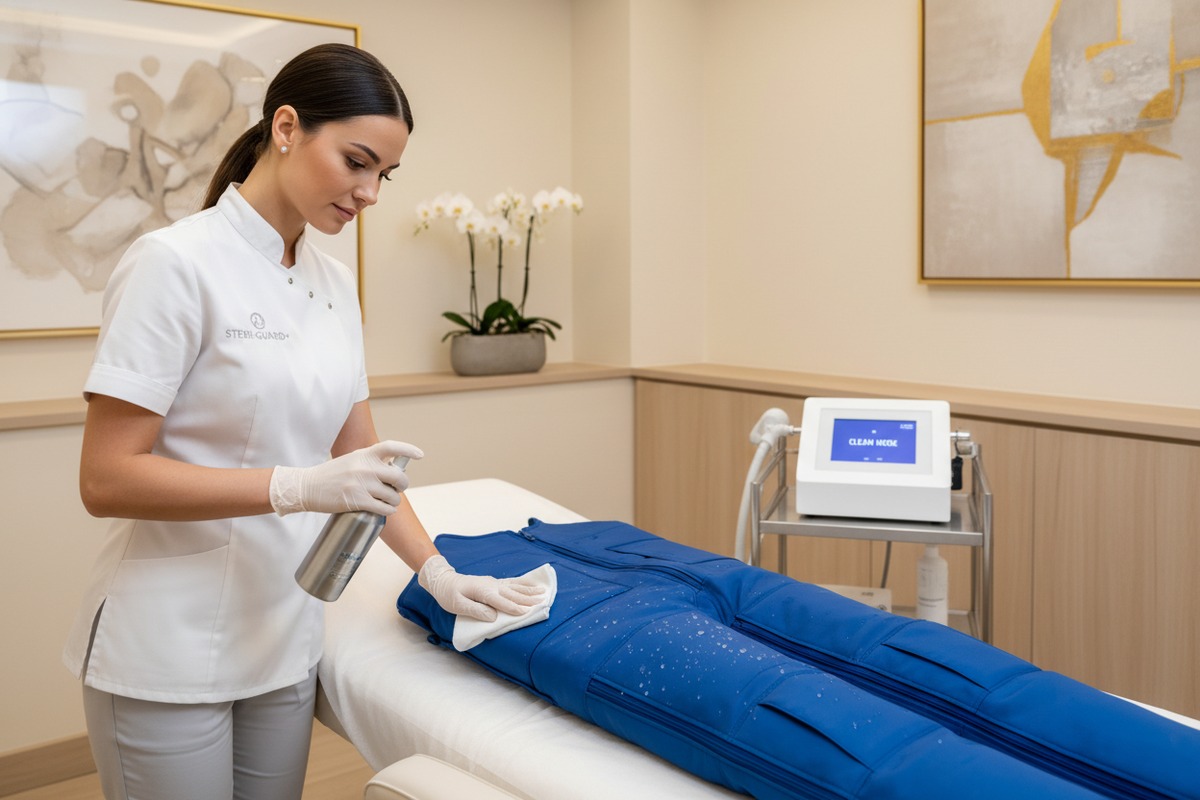
Frequent sanitization can significantly reduce antibacterial coating lifespan if incompatible cleaning agents are used. Some quaternary ammonium compound coatings lose efficacy after just one week of regular cleaning. Request compatibility data for your specific sanitizers and ask about recommended reapplication intervals to maintain protection.
The Hidden Interaction Between Cleaning and Coatings
Research has shown that the efficacy of antimicrobial surface coatings can be "reduced to near zero after being cleaned with hypochlorite or a quaternary ammonium compound 8 disinfectant." This finding contradicts many manufacturer claims of 30-day or longer protection.
In one study testing a commercial quaternary ammonium compound coating, researchers found "no antimicrobial activity was observed after 7 days" on surfaces cleaned in the usual manner—despite manufacturer claims of 30-day efficacy.
Coating Types and Their Cleaning Sensitivities
| Coating Type | Mechanism | Cleaning Sensitivity | Typical Lifespan Under Heavy Use |
|---|---|---|---|
| Non-leaching bonded (QAS) | Contact-killing | Moderate—can be removed by aggressive cleaning | 3-12 months |
| Release-based (drug-eluting) | Releases antimicrobial agents | High—cleaning accelerates depletion | 1-6 months |
| Metal ion (silver, copper) | Ion release | Low to moderate | 6-24 months |
| Polymer integrated | Built into material | Low | Product lifetime |
Questions for Your Supplier
- Which cleaning agents are compatible with your coating?
- What cleaning frequency do you recommend to maintain efficacy?
- Has the coating been tested after repeated exposure to alcohol-based sanitizers?
- Can the coating be reapplied? What is the cost and process?
- Do you have field data from high-volume facilities?
Creating a Compatible Cleaning Protocol
When we advise our wholesale clients, we recommend developing a standardized cleaning protocol before purchasing. This protocol should specify:
- Approved sanitizer brands and concentrations
- Maximum cleaning frequency
- Proper application technique (spray vs. wipe)
- Visual indicators of coating degradation
- Scheduled efficacy monitoring
Real-World Performance Expectations
For high-volume salons performing 20 or more treatments daily, expect more aggressive coating wear. Our clients in busy medical spas report the following typical outcomes:
- Light cleaning (water and mild soap): Coating may last 12-18 months
- Moderate cleaning (hospital-grade disinfectants 2x daily): Coating may last 6-12 months
- Aggressive cleaning (alcohol-based sanitizers after each use): Coating may last 3-6 months
These timelines assume quality coatings properly applied. Budget coatings from unverified suppliers often fail within weeks.
Protecting Your Investment
Consider negotiating coating reapplication terms in your purchase agreement. Some suppliers offer annual coating refresh services. Others provide DIY reapplication kits for field maintenance. Either option extends equipment value and maintains hygiene standards.
Can I collaborate with my supplier to customize the antibacterial coating for my private-label brand requirements?
Brand differentiation matters. When we work with private-label clients from the U.S. and Europe, they often want unique coating specifications that match their brand positioning. The question is whether your supplier has the technical capability and willingness to customize.
Yes, customization is possible with capable suppliers. Options include selecting specific coating technologies (QAS, silver ion, or hybrid), specifying pathogen targets, adjusting coating thickness, integrating visual indicators, and documenting custom formulations for regulatory compliance. Expect 2-4 months for development and additional testing costs.
Customization Options Available
When buyers approach our product development team, we discuss several customization dimensions:
| Customization Area | Options | Development Timeline | Cost Impact |
|---|---|---|---|
| Coating chemistry | QAS, silver ion, zinc, hybrid | 4-8 weeks | Moderate |
| Target pathogens | Bacteria, fungi, viruses | 6-12 weeks (testing) | Significant |
| Application coverage | Full machine, high-touch areas only | 1-2 weeks | Minimal |
| Visual indicators | Color-change degradation alerts | 8-12 weeks | Moderate |
| Documentation | Custom test reports under your brand | 2-4 weeks | Minimal |
| Regulatory support | FDA, CE documentation assistance | 4-8 weeks | Significant |
Technology Selection Considerations
Different coating technologies suit different brand strategies:
Quaternary ammonium salts (QAS): These contact-killing coatings offer long-term antibacterial activity without releasing agents. They avoid resistance development concerns but may require more careful cleaning protocols.
Silver ion coatings: Well-established antimicrobial technology with broad-spectrum activity. Silver ion release can be controlled through formulation. Generally more resistant to cleaning damage.
Hybrid approaches: Combining multiple technologies can address limitations of single-agent coatings. For example, a contact-killing base layer with release-based top coating provides both immediate and sustained protection.
What to Expect from a Capable Supplier
Quality ODM partners should offer:
- Access to coating technical specialists
- Sample development with your specifications
- Third-party testing under your brand
- Batch-to-batch consistency protocols
- Documentation for your regulatory filings
- Ongoing technical support post-launch
Red Flags in Customization Discussions
Be cautious if your supplier:
- Cannot explain the coating chemistry in technical detail
- Offers "customization" that is only color changes
- Refuses to provide third-party test samples
- Has no documented quality control for coating application
- Cannot reference other successful customization projects
Regulatory Considerations
For U.S. and European markets, your customized coating may need to meet specific regulatory requirements. FDA regulates antimicrobial claims 9 on medical devices. CE marking requires documentation of safety and performance.
Our compliance team assists clients with regulatory pathway planning. This includes determining whether your coating claims trigger additional review requirements and preparing appropriate documentation.
Building a Long-Term Development Partnership
Coating customization works best as an ongoing partnership. Initial development establishes the baseline. But real value comes from continuous improvement based on field feedback.
We recommend scheduling quarterly reviews with your supplier to discuss:
- Field performance reports from your distribution network
- Customer complaints related to coating issues
- Emerging coating technologies
- Regulatory updates affecting antimicrobial claims
Conclusion
Asking the right questions about antibacterial coating lifespan separates successful importers from those facing warranty claims and customer complaints. Request ISO 22196 test reports, verify coating compatibility with your cleaning protocols, include coating checks in pre-shipment inspections, and partner with suppliers who can customize to your brand requirements. Your investment in these conversations upfront protects your brand reputation for years to come.
Footnotes
1. Provides a general overview of antibacterial coatings, their purpose, and common agents. ↩︎
2. Explains the Japanese Industrial Standard for testing antimicrobial activity on hard surfaces. ↩︎
3. Describes various methods for testing coating adhesion, including tape and pull-off tests. ↩︎
4. Explains the mechanism and application of silver ion antibacterial coatings in medical settings. ↩︎
5. Provides the official ASTM standard for measuring adhesion by tape test on coated surfaces. ↩︎
6. Details the ISO standard for evaluating antibacterial activity on plastics and non-porous surfaces. ↩︎
7. Authoritative and comprehensive explanation of logarithmic reduction. ↩︎
8. Discusses the antimicrobial mechanism and applications of quaternary ammonium compounds. ↩︎
9. Outlines FDA’s role in regulating medical devices that include antimicrobial agents and claims. ↩︎

 English
 Español de México
 Deutsch
 Français
 العربية
 Русский
