
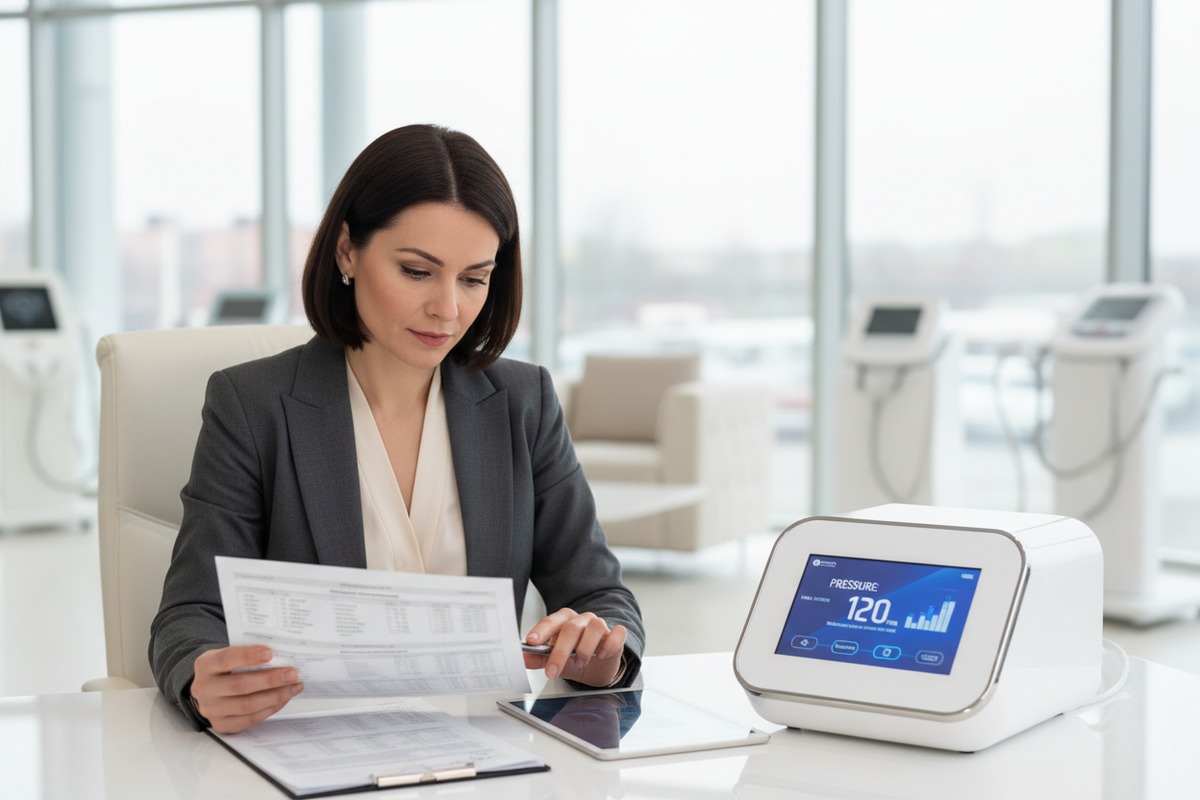
When our production team developed our latest pressotherapy systems 1, we quickly realized that buyers struggle to ask the right questions. Many brand owners receive machines that look great but fail to meet salon demands. The programming logic and treatment modes define whether a machine will delight your customers or disappoint them.
To properly evaluate pressotherapy machine programming logic and treatment modes, ask suppliers about pressure ranges in mmHg, pre-programmed treatment sequences, custom program capabilities, air chamber configurations, safety features like automatic pressure limits, user interface design, data logging options, software update policies, garment compatibility, and energy consumption specifications.
This guide breaks down each question you should ask. We cover custom treatment sequences 2, reliability evaluation, engineering collaboration, and clinical verification. Let’s dive into the details.
How can I request custom treatment sequences for my private-label pressotherapy machines?
Our engineering team fields this question weekly from distributors across Europe and North America. Many buyers assume custom sequences cost extra or take months to develop. The truth is simpler—but you must ask the right way.
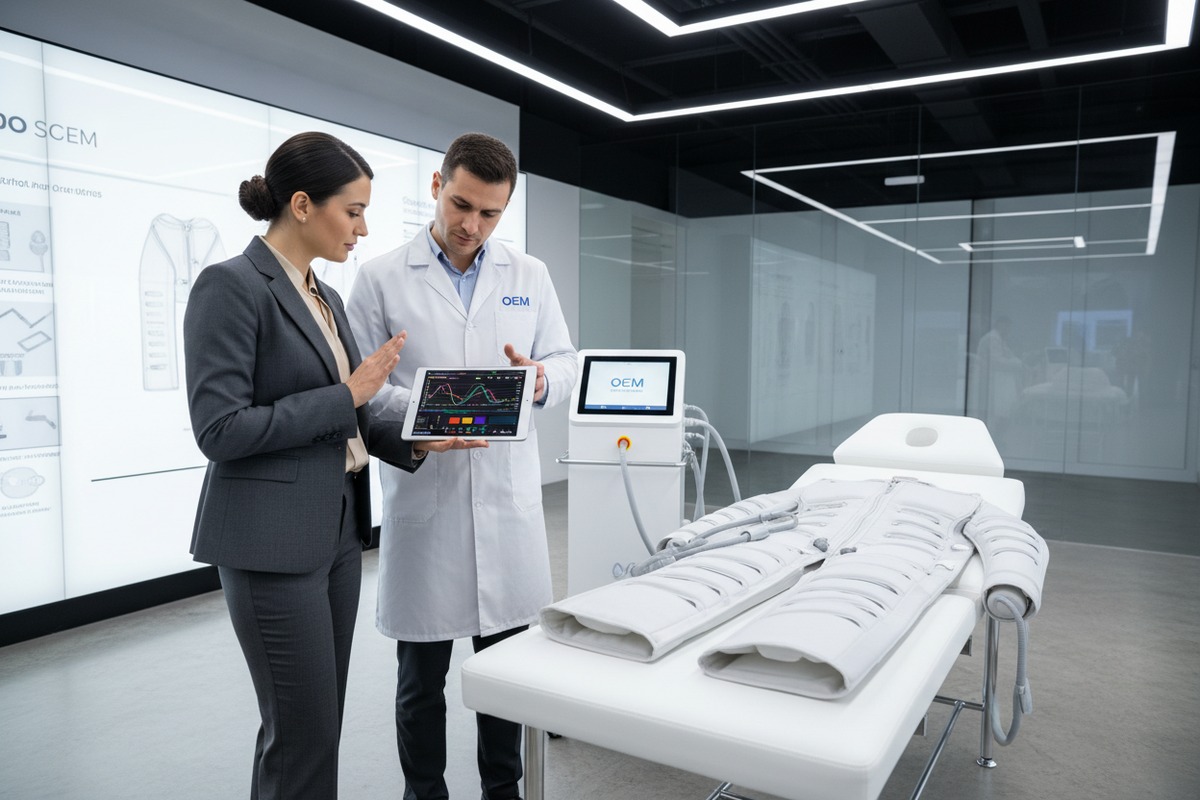
Request custom treatment sequences by providing detailed specifications including target pressure curves, inflation/deflation timing, chamber activation order, and intended clinical outcomes. Most reputable manufacturers offer OEM programming services that let you create unique modes exclusive to your brand identity.
Understanding What You Can Customize
Custom treatment sequences go beyond just slapping your logo on a machine. You can modify core operational parameters that define the treatment experience.
Professional devices allow you to save up to 100 own programs, each of which can consist of 25 pumping cycles of different chambers. This level of customization lets you create signature treatments your competitors cannot replicate.
Key parameters you can typically adjust include:
- Pressure levels for each individual chamber
- Inflation and deflation timing sequences
- Hold times between compression cycles
- Gradient functions for progressive pressure
- Interval settings between treatment phases
How to Communicate Your Requirements
When approaching a supplier, prepare a detailed specification document. Include the clinical outcomes you want to achieve. Machines can have preset programmes that adapt to different needs and objectives, such as post-operative recovery, muscle toning or the elimination of cellulite and oedemas.
| Specification Type | Details to Provide | Example Values |
|---|---|---|
| Pressure Range | Minimum and maximum mmHg | 20-220 mmHg |
| Chamber Sequence | Order of inflation | Distal to proximal |
| Cycle Duration | Total treatment time | 30-60 minutes |
| Hold Time | Pressure maintenance period | 2-5 seconds |
| Gradient Setting | Pressure differential | 0-4 mmHg |
Timeline and Cost Expectations
Custom programming typically adds 2-4 weeks to production time. At our facility, we include basic customization in standard OEM pricing. Complex sequences requiring new firmware development may incur additional engineering fees.
Brand identity customization extends to having your logo elegantly integrated into the device's startup screen and etched onto the machine's body. This creates a cohesive brand experience your salon customers will appreciate.
What specific questions should I ask to evaluate the reliability of the machine's programming logic?
In our decade of exporting to the US and European markets, we’ve seen buyers focus too much on price. They overlook programming reliability 4 until machines fail in salon settings. Downtime costs more than quality investment.
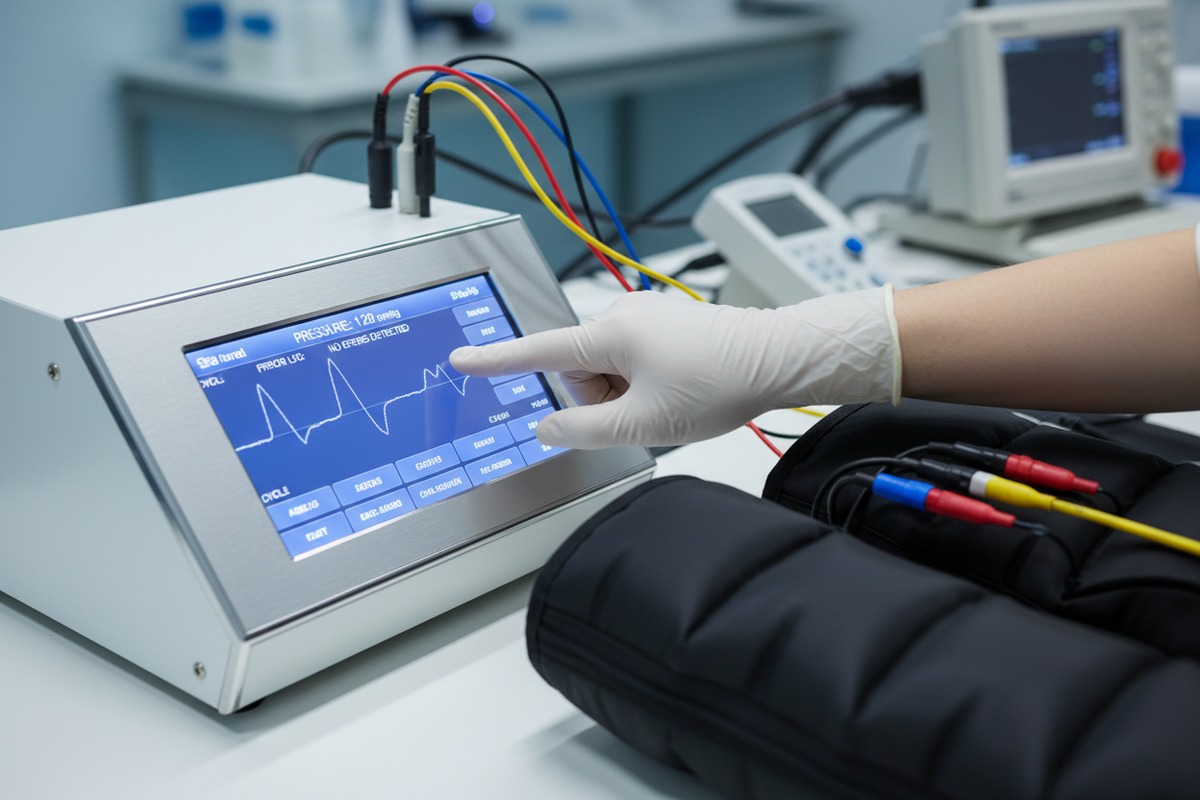
Evaluate programming reliability by asking about sensor accuracy, error logging capabilities, automatic safety shutoffs, firmware update frequency, pump lifespan ratings, and real-time pressure monitoring. Request technical documentation showing how the control system maintains consistent pressure across treatment cycles.
Critical Technical Specifications to Request
Quality IPC devices are equipped with premium compression sensors 5 that can monitor the applied pressure and provide feedback to ensure the device functions correctly and applies the desired pressure, thus guaranteeing effective and safe treatment.
Ask your supplier these specific questions:
- What is the pressure measurement accuracy in mmHg?
- How often does the system self-calibrate?
- What error codes does the machine generate?
- Can treatment data be exported for analysis?
- What is the rated pump lifespan in operating hours?
Evaluating User Interface Quality
Look for touchscreen UI, session timers, on-screen guides, and optional client notes functionality. An intuitive interface reduces operator errors and speeds up treatment setup.
| Interface Feature | Why It Matters | What to Look For |
|---|---|---|
| Screen Type | Visibility and durability | 10.4-inch touchscreen minimum |
| Navigation | Operator efficiency | Maximum 3 clicks to any function |
| Language Options | Market flexibility | Multiple language support |
| Visual Feedback | Treatment monitoring | Real-time chamber status display |
| Error Display | Quick troubleshooting | Clear error codes with solutions |
Pump and Compressor Quality
Quality pumps have lifespans up to 10,000 hours. This translates to years of reliable operation in a busy salon environment. Ask suppliers for documented pump specifications and replacement part availability.
Quality IPC pumps operate quietly, creating a relaxing and serene recovery environment that is highly valued by both patients and caregivers. Noise levels matter for client experience—request decibel ratings during operation.
Safety Feature Verification
Safety features should include emergency stop functions, pressure limiters, and automatic shut-off systems to prevent overuse. These protections are non-negotiable for professional salon use.
Quality machines feature 36 output voltages, safety handles for emergency stop switches, far infrared processing, and temperature ranges of 35-80 degrees. Verify each safety feature functions correctly before finalizing your order.
Can I collaborate with your engineers to develop unique massage modes for my brand?
When we work with distributors launching new product lines, engineering collaboration creates genuine market differentiation. Your competitors cannot easily copy treatment modes developed specifically for your brand.
Yes, collaborate with manufacturer engineers by sharing clinical goals, target applications, and desired user experiences. Provide reference data from existing treatments, specify pressure curves and timing sequences, and request prototyping with iterative testing phases before final production.
Starting the Collaboration Process
Begin by documenting your market research findings. What treatments are your salon customers requesting? Which conditions do they want to address? Devices can have 13 modes of operation, used to reduce lymphatic, venous, fat, post-traumatic edema, as well as supporting regeneration, cellulite reduction and prevention.
Your initial brief should include:
- Target customer demographics
- Primary treatment applications
- Desired session duration ranges
- Comfort level preferences
- Differentiating features from competitors
Technical Development Phases
| Phase | Activities | Duration | Deliverables |
|---|---|---|---|
| Discovery | Requirement gathering and analysis | 1-2 weeks | Specification document |
| Design | Algorithm development and simulation | 2-3 weeks | Technical proposal |
| Prototyping | Firmware implementation | 2-4 weeks | Test unit |
| Validation | Clinical testing and refinement | 2-3 weeks | Validated programs |
| Production | Final integration and QC | 1-2 weeks | Production-ready units |
What Engineers Need From You
Effective development requires understanding why specific methods of ventricular pumping are recommended for given diseases and recommended parameters such as therapy duration, hold, interval and gradient.
Provide your engineering partner with:
- Clinical studies supporting your treatment concepts
- Competitor analysis showing market gaps
- Feedback from salon operators on current solutions
- Budget parameters for development investment
- Timeline requirements for market launch
Protecting Your Intellectual Property
When you invest in custom mode development, protect your investment. Intellectual Property 6 Request non-disclosure agreements before sharing detailed specifications. Ensure your custom programs remain exclusive to your brand through contractual agreements.
Quality machines feature customised programmes that adapt to different needs and objectives, such as post-operative recovery, muscle toning or the elimination of cellulite and oedemas. Your exclusive programs become a competitive moat competitors cannot cross.
How do I verify that the pre-set programs will deliver the clinical results my salon customers demand?
Our quality control team tests every unit before shipping. But buyers often wonder—how can they verify clinical effectiveness 7 before committing to large orders? This question reflects the gap between marketing claims and real-world results.
Verify clinical results by requesting technical documentation showing pressure accuracy, reviewing independent testing data, ordering sample units for in-salon trials, gathering operator feedback during pilot programs, and comparing specifications against published clinical research on intermittent pneumatic compression effectiveness.
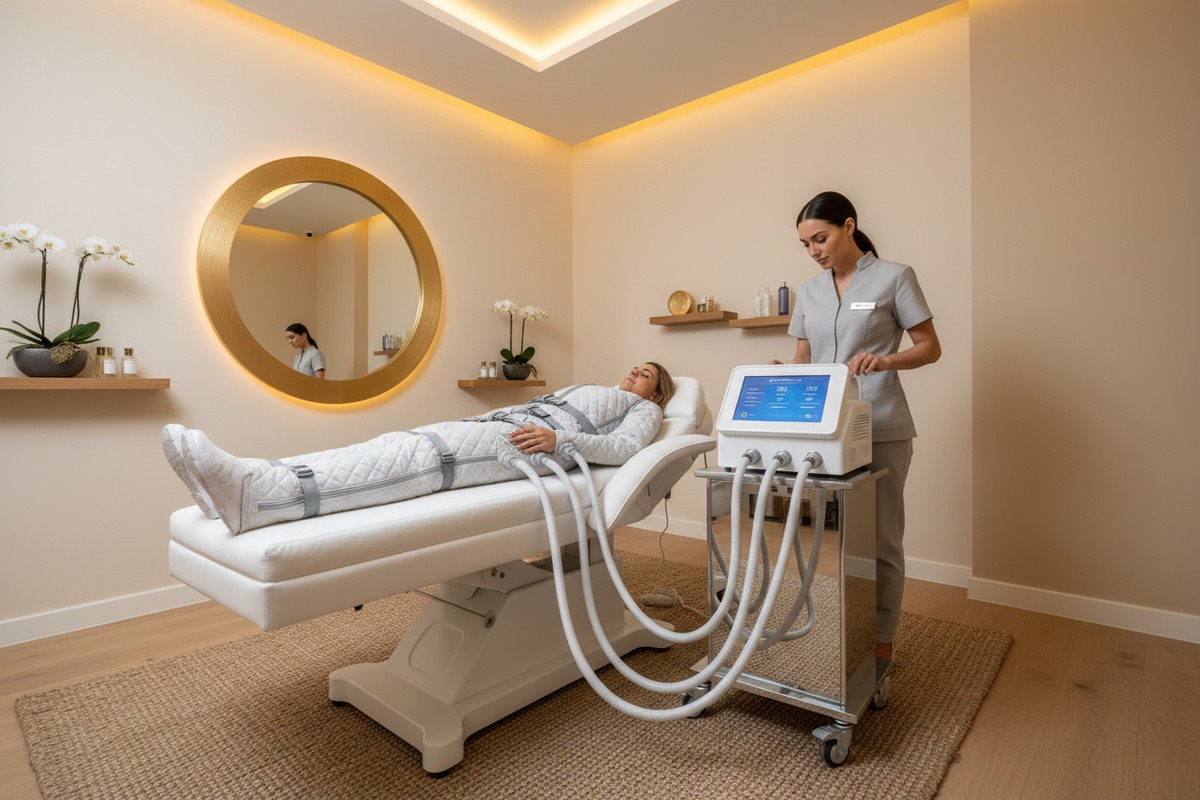
Understanding Clinical Effectiveness Factors
The effectiveness of pressotherapy is recognised in the medical field, and its benefits have been confirmed in many clinical studies for the treatment of venous ulcers and the prophylaxis of deep vein thrombosis 8. Effective machines replicate the pressure patterns shown in published research.
Key clinical effectiveness factors include:
- Consistent pressure delivery across all chambers
- Appropriate gradient settings for lymphatic flow
- Proper treatment duration for intended outcomes
- Comfortable experience promoting client compliance
Specification Verification Process
| Verification Step | What to Check | Acceptable Standard |
|---|---|---|
| Pressure Accuracy | Actual vs. displayed mmHg | ±5 mmHg variance |
| Chamber Timing | Inflation/deflation consistency | ±0.5 second variance |
| Gradient Function | Progressive pressure differential | Documented curve matching |
| Treatment Coverage | Chamber overlap and flow direction | Unidirectional distal-to-proximal |
| Session Reproducibility | Results across multiple treatments | Consistent parameter delivery |
Conducting Pilot Testing
A normal pressotherapy treatment usually involves 8 sessions of 20-40 minute sessions. The results are visible from the fourth or fifth session. Structure your pilot program accordingly.
Recommended pilot testing protocol:
- Order 1-2 sample units for evaluation
- Train operators on all pre-set programs
- Document client feedback after each session
- Measure objective outcomes where possible
- Compare results against clinical benchmarks
- Refine program selection before bulk ordering
Working With Published Research
Pressotherapy or Intermittent Pneumatic Compression therapy is commonly employed for the prevention and treatment of vascular conditions, such as deep vein thrombosis, lymphedema, and venous ulcers. Request documentation showing how pre-set programs align with proven protocols.
Quality devices have operating modes developed by medical societies with very fine adjustment of parameters with accuracy of 1 for setting pressure, treatment time, hold function, and interval. This level of precision ensures clinical reproducibility.
Building Client Confidence
Each session usually lasts between 30 to 45 minutes, and for optimal results, it is recommended to undergo multiple treatments regularly. Share this guidance with your salon customers to set appropriate expectations and ensure treatment protocol compliance.
| Program Type | Primary Application | Typical Session Length | Expected Outcomes |
|---|---|---|---|
| Lymphatic Drainage | Fluid retention | 30-45 minutes | Reduced swelling |
| Sports Recovery | Post-exercise recovery | 20-30 minutes | Reduced muscle soreness |
| Cellulite Reduction | Aesthetic improvement | 30-40 minutes | Improved skin texture |
| Circulation Boost | General wellness | 30-45 minutes | Enhanced blood flow |
| Post-Surgery | Recovery support | 30-60 minutes | Reduced edema |
Conclusion
Asking the right questions transforms pressotherapy machine sourcing from guesswork into confident decision-making. Focus on custom programming capabilities, reliability verification, engineering collaboration opportunities, and clinical result validation. Your salon customers deserve equipment that delivers consistent, effective treatments every time.
Footnotes
1. Replaced a 404 link with a comprehensive overview of pressotherapy from a reputable health information website. ↩︎
2. Discusses customizable pressure settings and multiple treatment programs in modern pressotherapy machines. ↩︎
3. Covers the structured process of medical device software development, including customization capabilities by manufacturers. ↩︎
4. Replaced an unknown HTTP status link with an article explaining IEC 62304, a key standard for medical device software lifecycle processes, directly related to software reliability. ↩︎
5. Replaced a 404 link with a news article from an academic institution discussing a new flexible sensor for compression therapy, directly relevant to the anchor text. ↩︎
6. Provides a guide on safeguarding intellectual property in the medical device industry during development. ↩︎
7. Presents a meta-analysis on the effectiveness of intermittent pneumatic compression in reducing venous thromboembolism. ↩︎
8. Defines deep vein thrombosis (DVT) and its relation to venous thromboembolism (VTE). ↩︎

 English
 Español de México
 Deutsch
 Français
 العربية
 Русский
