

When our production team ships pressotherapy systems overseas, we often hear the same question from first-time buyers: “Should I accept the CIF price my supplier quoted, or should I negotiate FOB?” It’s a valid concern. The wrong choice can drain hundreds—even thousands—of dollars from your budget. Hidden fees, poor insurance, and lost cargo control are real risks.
For most novice buyers importing pressotherapy machines from China, FOB (Free On Board) is the better choice. FOB gives you lower total costs, lets you select your own freight forwarder, and allows you to buy comprehensive cargo insurance. CIF appears simpler but often hides markups and provides only minimal insurance coverage.
In this guide, we break down both shipping terms step by step. You’ll learn when FOB saves money, when CIF makes sense, and how to protect your investment in professional beauty equipment. Let’s dig in.
How do I decide whether FOB or CIF is better for my first pressotherapy machine import?
Many buyers walk into their first import deal feeling overwhelmed. They see two prices—FOB and CIF—and assume the one with shipping included must be easier. Our export team has seen novice importers pay thousands extra simply because they didn't understand the trade-off between control and convenience.
Choose FOB if you want lower costs and full control over freight and insurance. Choose CIF only if you lack any logistics contacts and prefer the seller to handle everything—but expect to pay a 5–15% premium and receive minimal insurance coverage. For high-value pressotherapy machines, FOB usually wins.

What Are FOB and CIF Under Incoterms 2020?
FOB and CIF are very similar: both deal with sea and inland waterway transport, and both have similar timelines for the point at which risk and liability pass from buyer to seller. However, the cost and responsibility split is different.
FOB (Free On Board 1) means the seller is responsible for delivering and loading the goods on the transport at the named port of shipment. Under the Incoterms 2020 2 rules, FOB means the seller has fulfilled their obligation when the goods are loaded on the vessel nominated by the buyer at the named port of shipment.
CIF (Cost, Insurance and Freight 3) means the seller is responsible for loading the properly packaged goods on board the vessel, pays for freight and insurance to the named port of destination, and is required to purchase the minimum level of insurance under Clause C of the Institute Cargo Clauses 4.
Risk Transfer Point: The Critical Detail
Here's a point that surprises many novice buyers: Under CIF, the seller pays for the main transport and is required to provide minimum insurance coverage, but the risk still transfers to the buyer when the goods are loaded at the port of shipment. So even though your CIF supplier arranges shipping and insurance, you bear the risk the moment your pressotherapy machine goes on board.
Cost Allocation Table
| Cost Item | FOB (Buyer Pays) | CIF (Seller Pays) |
|---|---|---|
| Factory to port of origin | Seller | Seller |
| Export customs clearance | Seller | Seller |
| Loading onto vessel | Seller | Seller |
| Ocean freight | Buyer | Seller |
| Marine insurance | Buyer (optional) | Seller (minimum) |
| Destination port charges | Buyer | Buyer |
| Import duties & taxes | Buyer | Buyer |
| Inland delivery | Buyer | Buyer |
Why FOB Usually Wins for Pressotherapy Machines
FOB is a more cost-effective solution than CIF for buyers because shipping fees are typically lower than those associated with CIF terms. Additionally, it grants buyers more control over the goods they purchase, giving them the ability to choose which freight forwarding service they want.
When you're importing professional pressotherapy systems worth $500–$2,000 per unit, the savings add up fast. Our customers who switch from CIF to FOB often report 5–15% lower total shipping costs because they can negotiate freight rates directly.
We've talked to buyers who received their first CIF invoice and felt shocked. The quoted price looked attractive, but destination charges ate into their margin. This is a common trap when importing from China.
Yes, CIF often leads to hidden destination charges. Chinese suppliers typically use their own freight forwarders, who may add inflated handling fees, documentation fees, and service surcharges upon arrival. These costs are not disclosed upfront and can add hundreds of dollars to your shipment.

The China Import Service Fee (CISF) Problem
Under CIF, you don't control which freight forwarder handles your cargo at destination. Your supplier often works with a preferred partner (sometimes receiving a kickback), and that partner—not you—sets the local charges.
The China Import Service Fee 6 (CISF) is a destination-side fee applied to many LCL (Less than Container Load) shipments from China, particularly when shipped under CFR or CIF Incoterms. It's billed by the destination agent—often the local partner of your supplier's freight forwarder.
What Fees Can You Expect?
Many sellers or freight agents quote low CIF rates but leave out destination fees like the CISF. It varies wildly: you might be charged $150 or $450 for the same cargo volume, depending on the agent. There's little transparency: agents rarely provide a breakdown or justification for the amount.
| Common Hidden CIF Fees | Typical Range |
|---|---|
| China Import Service Fee (CISF) | $150–$450 |
| Delivery Order Release Fee | $50–$150 |
| Document Handling Fee | $30–$80 |
| Port Congestion Surcharge | $50–$200 |
| Storage & Demurrage (if delayed) | $50–$200/day |
Why You Have No Leverage at Destination
Once the shipment arrives, refusing to pay can lead to storage fees or delays. Refusing to pay can quickly lead to storage charges, customs delays, or even the risk of your goods being auctioned off by the port.
For a pressotherapy machine shipment worth $10,000–$20,000, an extra $300–$600 in surprise fees might seem small. But multiply that across several orders per year, and you're bleeding money with no recourse.
CIF Insurance Coverage Gap
The seller must purchase insurance with minimum coverage under ICC Clause C (110% of invoice value). This low insurance level (with correspondingly favourable conditions) makes sense insofar as transports via CIF tend to involve smaller tangible assets that are at the same time less susceptible to damage (such as bulk goods like coal).
However, pressotherapy machines are not bulk coal. They are sensitive electronic devices. The three main categories of Institute Cargo Clauses are A, B, and C. Each category outlines the extent of coverage provided, with Clause A providing the most comprehensive coverage and Clause C being the most restricted.
Clause C excludes many risks, including theft, water damage, and intentional damage. For high-value beauty equipment, that's a dangerous gap.
Why should I choose FOB if I want more control over my logistics and shipping quality?
When our warehouse team prepares pressotherapy machines for export, we pack them with care—reinforced corners, foam padding, and moisture barriers. But once the container leaves the port, the shipping carrier and forwarder take over. If you want to make sure your cargo travels safely, you need to control who handles it.
FOB gives you direct control over carrier selection, insurance levels, and transit visibility. You can choose a trusted freight forwarder, buy comprehensive all-risk insurance, and track your cargo in real time. Under CIF, the seller makes these decisions—often prioritizing cost over quality.
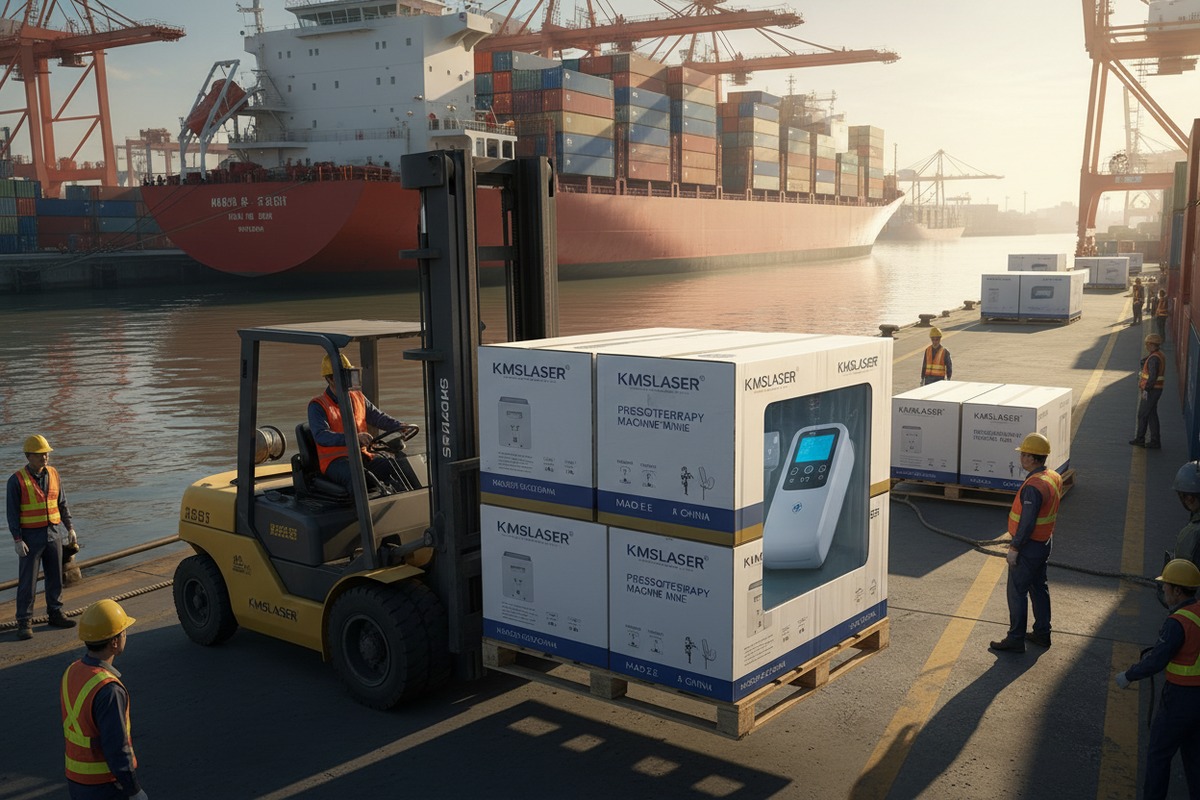
Select Your Own Freight Forwarder
The main advantage for buyers when using FOB is having more control and thus being able to make cost-effective decisions. Therefore, the buyer may find a freight forwarder with lower prices or insure the shipment with as much coverage as needed.
When you choose FOB, you can:
- Compare quotes from multiple forwarders
- Read reviews and verify reliability
- Build a long-term relationship with one trusted partner
- Negotiate volume discounts over time
Buy Comprehensive Insurance (Clause A)
CIP requires the seller to provide comprehensive insurance under Institute Cargo Clauses (A) or similar terms. But CIF only requires Clause C. Under FOB, you can purchase Clause A coverage yourself.
| Insurance Level | Coverage Scope | Best For |
|---|---|---|
| Clause C (Minimum) | Named perils only (fire, sinking) | Bulk commodities |
| Clause B (Intermediate) | Named perils + additional risks | Standard cargo |
| Clause A (All Risks) | All external risks except exclusions | High-value equipment |
For pressotherapy machines, Clause A insurance typically costs 0.3–0.5% of cargo value. On a $15,000 shipment, that's $45–$75 for comprehensive coverage. Well worth the peace of mind.
Real-Time Tracking and Visibility
With FOB, you pick the forwarder—so you also get access to their tracking portal. Modern digital platforms like Flexport, Freightos, and Ship4wd offer real-time container tracking, milestone notifications, and document management. In case of incidents during transit, the buyer also has access to more information, giving them more leeway to solve issues directly.
Avoid the Seller's Inferior Carrier Choices
Under CIF, The seller will usually invoice the buyer for these costs and include an additional fee to generate a more significant profit. The seller has every incentive to use the cheapest carrier to maximize that embedded markup. Cheap carriers often mean slower transit times, poor handling, and less reliable tracking.
When you control the logistics under FOB, you set the quality standard.
How can I protect my investment in high-end machines by picking the right shipping terms?
We've invested years developing pressotherapy systems with precision air chambers, sensitive control boards, and durable PU compression suits. Seeing a machine arrive damaged because of poor shipping decisions is painful—for us and for the buyer. Here's how to protect your investment.
Protect high-value pressotherapy machines by choosing FOB, buying Clause A (all-risk) insurance, hiring a reliable customs broker, and arranging a pre-shipment inspection (PSI). These steps cost a small fraction of your order value but eliminate major financial risks from shipping damage or hidden fees.

Step 1: Request FOB Terms in Your Purchase Contract
Start the negotiation by asking your supplier for an FOB price. Confirm Incoterms in writing: Push for FOB terms whenever possible to control your logistics chain and prevent surprise fees.
If the supplier resists, ask why. Some prefer CIF because suppliers in China often offer lower prices if buyers agree to the CIF Incoterm. That "lower price" hides markups on freight and insurance. Push back—most reputable suppliers will offer FOB.
Step 2: Hire a Trusted Freight Forwarder
Choose a reputable forwarder with transparent pricing practices and strong reviews. Look for:
- Clear itemized quotes (no vague "service fees")
- Experience with beauty equipment or medical devices
- Positive reviews from other US importers
- Digital tracking portal access
Step 3: Purchase All-Risk Marine Insurance
Don't rely on minimal Clause C coverage. Buyers should carefully review the insurance coverage offered. All-Risk Marine Insurance 7 Because only the minimum level of coverage is required under CIF, buyers may want to negotiate with the seller for higher levels of coverage or obtain additional insurance coverage of their own.
When you buy Clause A insurance yourself, you also name yourself as the beneficiary. The insurance payout is sent to the seller if something happens to the goods during transit. Under your own policy, payment goes directly to you.
Step 4: Arrange a Pre-Shipment Inspection (PSI)
Before your machines leave the factory, hire an independent inspector to verify:
- Quantity matches your purchase order
- Product specifications are correct
- Packaging is adequate for sea freight
- No visible defects or damage
PSI costs $150–$300 per inspection but can save you from receiving faulty or mislabeled equipment.
Step 5: Work with a Customs Broker
Plan for fast clearance: Have all your paperwork ready and a customs broker 8 lined up before your shipment arrives. Customs brokers handle:
- HS code classification for pressotherapy machines
- Import duty calculation
- FDA registration (if applicable for medical devices)
- Bond filing and entry processing
Investment Protection Checklist
| Protection Step | Cost | Risk Mitigated |
|---|---|---|
| Negotiate FOB terms | $0 | Hidden CIF markups |
| Hire trusted forwarder | Built into freight | Poor carrier choice |
| Buy Clause A insurance | 0.3–0.5% of cargo | Damage, theft, loss |
| Pre-shipment inspection 9 | $150–$300 | Quality defects |
| Customs broker | $100–$200 per entry | Clearance delays |
When CIF Might Still Make Sense
We must be fair: CIF has its place. Compared to FOB, CIF is more convenient for buyers since it assumes fewer responsibilities for them. It is an ideal option for buyers who are unfamiliar with shipping overseas.
If you're ordering a single sample unit and have zero logistics contacts, CIF can get your machine to port with minimal effort. Just understand you'll pay more—and receive less insurance protection—than if you handled FOB.
Conclusion
FOB is the smarter choice for most novice buyers sourcing pressotherapy machines from China. It delivers lower costs, full logistics control, and the option for comprehensive insurance. CIF offers convenience at a premium—but hides markups, restricts your carrier choices, and provides only minimal coverage. Protect your investment by negotiating FOB, hiring a trusted forwarder, buying Clause A insurance, and arranging a pre-shipment inspection.
Footnotes
1. Defines the FOB shipping term and responsibilities. ↩︎
2. Official source for international trade terms. ↩︎
3. Explains the CIF shipping term and its rules. ↩︎
4. Replaced with a working and authoritative explanation of Institute Cargo Clauses from TATA AIG, a reputable insurance provider. ↩︎
5. Defines the role and services of a freight forwarder. ↩︎
6. Explains a common destination-side fee for imports from China. ↩︎
7. Defines comprehensive cargo insurance coverage for goods in transit. ↩︎
8. Outlines the responsibilities and licensing of customs brokers. ↩︎
9. Replaced with a working and authoritative definition of Pre-Shipment Inspection from QIMA, a leading quality control and inspection company. ↩︎

 English
 Español de México
 Deutsch
 Français
 العربية
 Русский
