
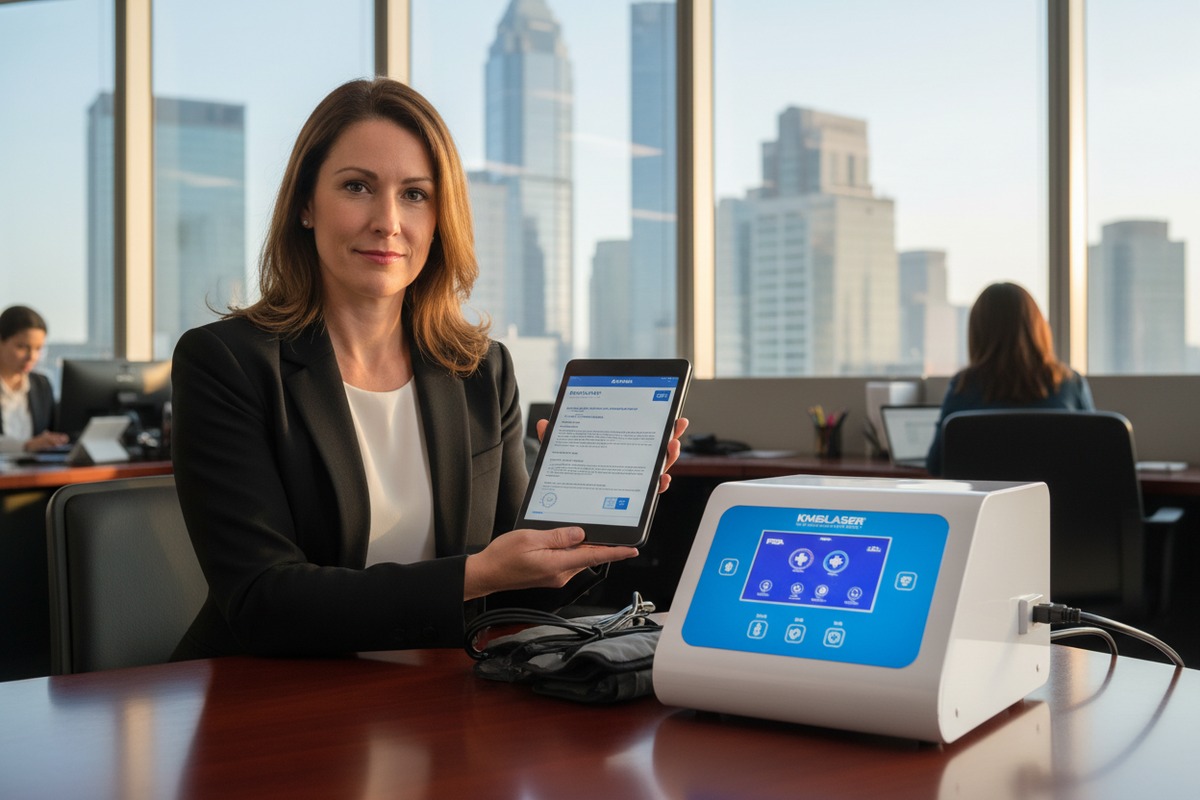
Over the past decade, our factory has shipped thousands of pressotherapy units worldwide FDA device classification 1. Every year, several US clients face the same question at customs: “Where is the FDA documentation?” It’s frustrating when shipments get delayed—or worse, refused entry FDA’s public medical device establishment registration database 2. Yet the regulations surrounding FDA registration remain confusing to many importers.
Yes, FDA establishment registration is required for businesses importing, distributing, or manufacturing pressotherapy machines intended for US commercial sale. Pressotherapy devices are regulated as medical devices. Foreign manufacturers must register before exporting. US importers must also register. However, registration is separate from 510(k) clearance, which may or may not be required depending on the device classification and exemptions.
In this article, we break down the FDA requirements step by step. You will learn how to determine if your device needs 510(k) clearance 3, how to verify a supplier’s credentials, what happens at customs, and how to keep your private-label brand compliant.
How do I determine if my imported pressotherapy machine requires FDA 510(k) clearance or just facility registration?
When we first started exporting pressotherapy units to the US, even our regulatory team felt overwhelmed by FDA terminology. Terms like "510(k) clearance," "establishment registration," and "device listing" are often conflated. Yet they mean very different things. Getting them wrong can cost you time, money, and market access.
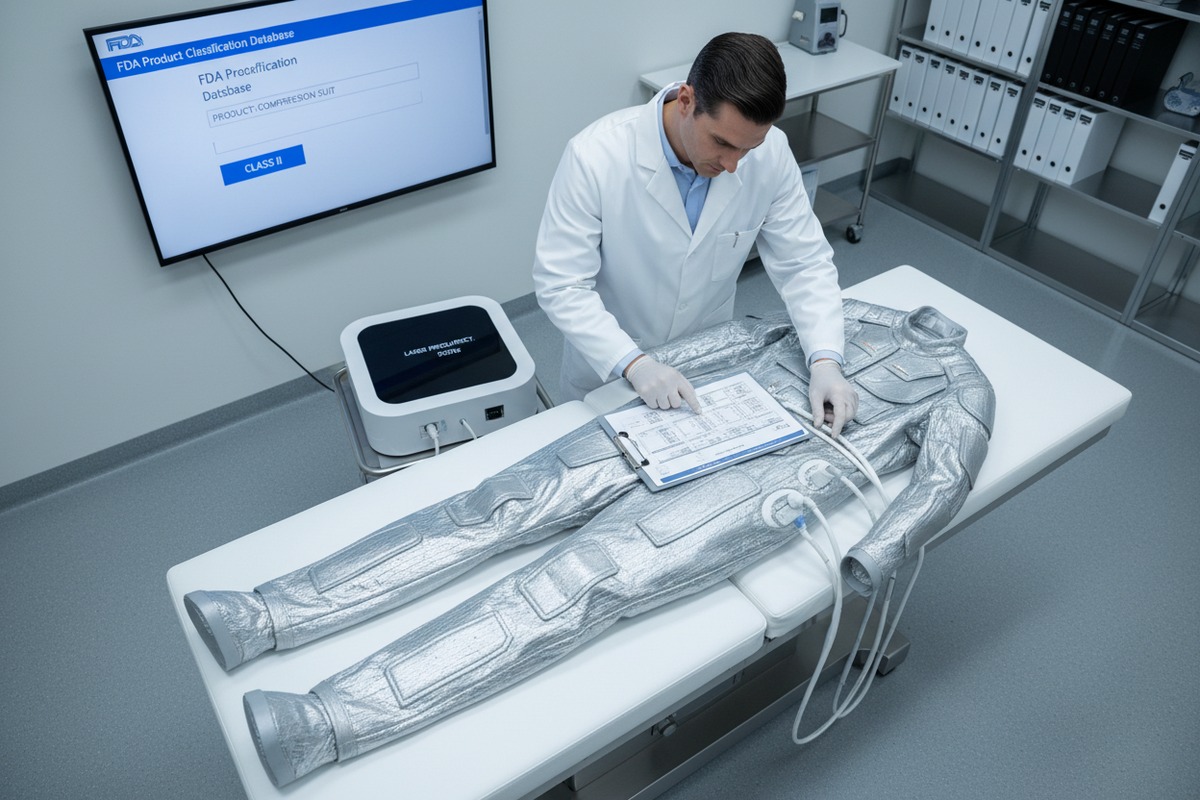
To determine if your pressotherapy machine requires 510(k) clearance, you must first identify its FDA device classification. Most pressotherapy devices are Class II devices, which typically require 510(k) premarket notification unless specifically exempted. All establishments—manufacturers, importers, and distributors—must register with the FDA regardless of whether 510(k) is needed.
Understanding FDA Device Classifications
The FDA classifies medical devices 4 into three categories based on risk. Class I devices pose the lowest risk. Class II devices 5 carry moderate risk. Class III devices present the highest risk and require premarket approval (PMA) 6.
Cleared as a Class II device, PlasmaFlow X is more compact, smarter, and longer-lasting—delivering powerful therapy in a sleek, portable package. This illustrates how sequential compression systems typically fall under Class II. The AIROS 6 Sequential Compression Device system (K172770) is a Class II device that works with leg or arm compression garments to deliver gradient pneumatic compression. The device is used for treatment and management of venous or lymphatic disorders.
| Device Class | Risk Level | Typical Requirement | Examples |
|---|---|---|---|
| Class I | Low | Registration + Listing (usually 510(k) exempt) | Manual compression bandages, elastic stockings |
| Class II | Moderate | Registration + Listing + 510(k) Clearance (unless exempt) | Powered pressotherapy systems, sequential compression devices |
| Class III | High | Registration + Listing + Premarket Approval (PMA) | Implantable cardioverter defibrillators |
Registration vs. Clearance: Key Differences
If a manufacturer's device falls into a generic category of exempted class I devices as defined in 21 CFR Parts 862-892 7, a premarket notification application and FDA clearance is not required before marketing the device in the U.S. However, these manufacturers are required to register their establishment and list the generic category or classification name.
Even when a device is exempt from 510(k), establishment registration remains mandatory. Registration tells the FDA who you are and what devices you handle. Listing tells the FDA which specific devices you make or import. FDA Registration indicates that a facility or products are listed with the FDA and meet regulatory requirements for operation and distribution. It does not involve FDA evaluation or testing.
How to Check Classification Status
To determine your device's classification:
- Identify the product code (e.g., IPF for powered muscle stimulators)
- Search the FDA Product Classification Database 8
- Review regulation number in 21 CFR 800-1299
- Check if your device type has a 510(k) exemption
For medical indications, devices sold in many regions require CE marking 9 (EU) and, in the U.S., may need FDA 510(k) clearance depending on intended use. Always verify the model's approvals for your country.
The Intended Use Factor
Your device's "intended use" heavily influences its regulatory pathway. A compression device marketed purely for relaxation in a spa may be viewed differently than one claiming to treat lymphedema. However, any health-related claim typically triggers medical device classification.
What steps should I take to verify a Chinese manufacturer's FDA credentials before placing my order?
In our experience working with US distributors, we've seen countless cases where buyers trusted a supplier's verbal claim of "FDA registered" status only to discover problems at customs. Verification is essential. And it takes more effort than just accepting a screenshot.
To verify a Chinese manufacturer's FDA credentials, search the FDA's public medical device establishment registration database at accessdata.fda.gov, cross-reference the manufacturer's name and registration number, check for any FDA warning letters or import alerts, and request copies of 510(k) clearance letters if applicable. Also verify their US Agent information is current.
Using the FDA Public Database
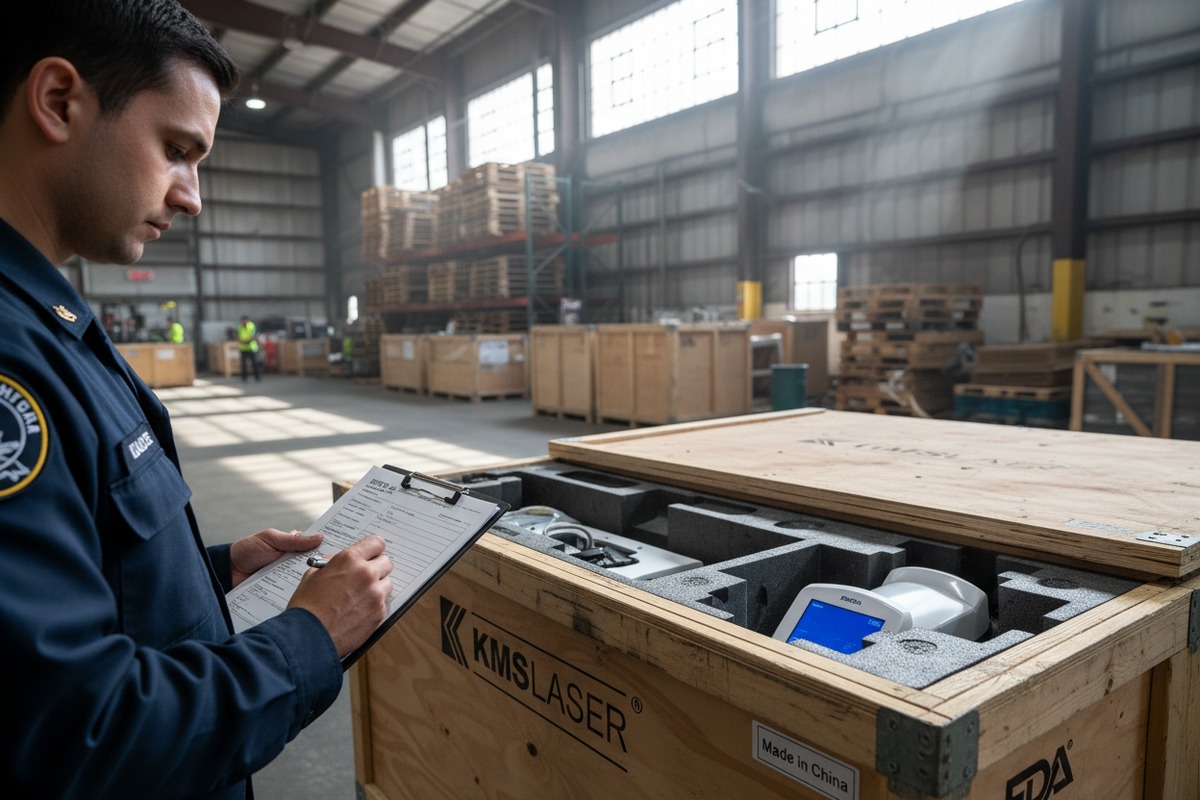
The FDA provides a public database for registered medical device establishments. Upon registration, each establishment receives an owner/operator number that could be accepted as an FDA registration number for shipment clearance purposes. However, the FDA can take 90 days to assign an official FDA number (FEI) to a device establishment.
For medical devices, you can verify registration status directly:
| Verification Method | Resource | What You Can Check |
|---|---|---|
| Establishment Registration | FDA Medical Device Registration Database | Manufacturer name, address, registration status |
| 510(k) Clearance | 510(k) Premarket Notification Database | Device name, clearance date, indications for use |
| Warning Letters | FDA Warning Letters Database | Compliance history, cited violations |
| Import Alerts | FDA Import Alert Database | Detention without physical examination status |
Beyond the Database: Due Diligence Steps
Verification should include three key methods: First, cross-check FDA registration numbers in the official FDA database. Second, request audit reports from third-party inspectors like SGS or Bureau Veritas.
Conduct virtual facility audits, review third-party inspection reports, verify quality certifications like ISO 13485, and check FDA warning letter databases. Additionally, request evidence of recent successful FDA facility inspections and validate supply chain continuity plans.
Key Documents to Request
When vetting a Chinese manufacturer, request:
- FDA Registration Confirmation: The official registration document showing their FEI number
- Device Listing Information: Proof that the specific device model is listed
- 510(k) Clearance Letter: If the device requires clearance, request the FDA decision letter
- US Agent Details: Foreign manufacturers must designate a US Agent; verify this information
- ISO 13485 Certificate: While voluntary, this quality management standard indicates manufacturing consistency
Red Flags to Watch
While having an FDA registration is a necessary step, it doesn't hold much weight on its own. Simply being registered with the FDA does not guarantee that a product is safe or compliant. The real question is whether your supplier is manufacturing the product in a way that ensures its safety or effectiveness.
Watch for these warning signs:
- Supplier refuses to provide registration documents
- Registration number doesn't appear in FDA database
- Claims of "FDA approved" for Class I or II devices (FDA does not "approve" these—they are "cleared" or simply "registered")
- No US Agent information available
- Recent FDA warning letters or active import alerts
Invalid FDA registrations can cause delays in the customs entry process or result in a detention at the port of entry.
Will my shipment face customs delays or seizures if my pressotherapy equipment lacks proper FDA documentation?
When our clients call in panic because their shipment is stuck at Los Angeles port, the story is usually the same. They assumed their supplier handled everything. They didn't verify documentation before shipping. Now they're paying storage fees while trying to resolve the situation.
Yes, your shipment can face customs delays, detention, or outright refusal if your pressotherapy equipment lacks proper FDA documentation. The FDA uses an automated screening system called PREDICT to flag non-compliant shipments. If registration or listing information doesn't match the FDA database, your products may be detained without physical examination and potentially refused entry.

How FDA Screens Imports
These entry declarations are compared to information in the FDA's internal data systems. The FDA uses the internal data systems to verify registration, listing, device approval (when required) or other product requirements and to determine if the firm is subject to DWPE. If the information submitted matches, then compliance is verified; if the information submitted does not match, the FDA may gather additional information or may detain the product.
If the information submitted matches the CDRH establishment registration and listing database, then compliance is verified; if the information does not match, the FDA may gather additional information or may detain the product. If a firm lacks the required registration and listing, the product will be subject to refusal.
The Detention Process
The FDA (Food and Drug Administration) will issue a customs hold when the agency suspects that imported goods need further examination. These holds come after the FDA uses a risk-based screening system called PREDICT. If there are concerns about safety, compliance, or documentation, the agency will hold the shipment for further testing.
| Stage | What Happens | Your Timeline |
|---|---|---|
| FDA Hold | Shipment flagged for further review | Immediate |
| Detention | FDA issues Notice of Detention and Hearing | ~20 days to respond |
| Response Period | You provide testimony or evidence | Extension possible |
| Refusal | If violations not overcome, entry denied | 90 days to export or destroy |
If, however, FDA decides that any of the products appear to violate the law, they will detain those products and issue a corresponding Notice of FDA Action – Detention (a detention notice) to the importer, the owner, the consignee, and the customs broker. FDA does not need much evidence to detain a shipment – the only evidence of an appearance of a violation. In fact, they do not even need to examine or test the specific products in question if FDA has other evidence that the products appear to violate the law.
Consequences of Refusal
A refusal is FDA's final decision that a detained shipment is in violation of FDA laws and regulations. A refused shipment must either be destroyed or exported under the supervision of Customs and Border Protection (CBP) and FDA within 90 days of the date of the Notice of FDA Action (Refusal Notice).
However, if the FDA refuses the shipment, the importer must either export or destroy the goods within 90 days. Failing to do so could lead to Customs taking action against the importer's bond. If goods are worth more than the bond limit, Customs can impose higher penalties.
How to Prevent Customs Issues
The submission of correct and accurate entry data along with the relevant A of C codes will help expedite the entry review process. Supplying this information accurately increases the likelihood that your shipment will be processed electronically and not held for manual review because the FDA's screening tool, PREDICT, can verify the declared information against the FDA's internal data systems. Note: Submitting inaccurate or incomplete information may delay the review of your entry.
Before shipping, ensure:
- Foreign manufacturer's registration is active
- Device is properly listed with FDA
- All required 510(k) clearances are in place
- Affirmation of Compliance (A of C) codes are accurate
- Labeling meets FDA requirements
How can I ensure my private-label pressotherapy brand remains fully compliant with US medical device regulations?
Running a private-label operation means wearing multiple hats. At our facility, we work with brand owners who want their logo on our machines. But they often underestimate the regulatory responsibilities that come with putting their name on a medical device destined for the US market.
To keep your private-label pressotherapy brand compliant, you must register as either a manufacturer (if you own the specifications) or as a contract manufacturer relationship. As a private-label brand owner, you may qualify as a "specification developer" and need your own FDA establishment registration. You must also ensure device listings, maintain quality system documentation, and handle adverse event reporting.

Understanding Your Role in the Supply Chain
The FDA cares about who does what. Your regulatory obligations depend on your role:
| Your Role | Registration Required? | Device Listing Required? | QSR Compliance? |
|---|---|---|---|
| Manufacturer (design & produce) | Yes | Yes | Yes (full) |
| Contract Manufacturer (produce to specs) | Yes | Yes | Yes (full) |
| Specification Developer (own design, outsource production) | Yes | May need to list | Partial |
| Initial Importer | Yes | No (list foreign mfr's devices) | Limited |
| Private Label Distributor | Maybe | Depends on activities | Limited |
| Relabeler/Repackager | Yes | Yes | Yes (partial) |
Annual Registration Requirements
FDA Medical Device Establishment registration fee for the year 2026 is USD 11,423. FDA fiscal year 2026 starts on October 1, 2025, and ends on September 30, 2026. The annual establishment registration fee must be paid between October 1, 2025, and December 31, 2025.
The annual establishment registration user fee can be paid any time between October 1 and December 31. If you pay late, there is no penalty, but your registration status will be inactive, and you cannot submit new device submissions or import products to the USA.
Quality System Requirements
In February 2024, however, FDA had published a long-awaited final rule entitled, "Medical Devices; Quality System Regulation Amendments," which amended the device current good manufacturing practice (GMP) requirements of the Quality System Regulations (QSR), primarily to align the U.S. regulations more closely with the International Organization for Standardization (ISO) standard 13485:2016. The rule – commonly referred to as the Quality Management System Regulation (QMSR) – represents a major step toward global harmonization of device regulatory requirements. The QMSR is set to go into effect on February 2, 2026.
ISO 13485 is a voluntary standard establishing quality management system (QMS) requirements for companies that design and manufacture medical devices. This ISO certification demonstrates that the products we manufacture are safe and effective.
Building a Compliance Program
For private-label brand owners, we recommend these steps:
1. Clarify Contractual Responsibilities
Define clearly who handles registration, listing, quality systems, and post-market surveillance in your contract with the manufacturer.
2. Maintain Design History Files
If you specify the design, keep complete documentation of design controls, risk analysis, and verification/validation testing.
3. Implement Complaint Handling
Establish a system for receiving, evaluating, and investigating customer complaints. Some complaints trigger mandatory FDA reporting.
4. Plan for Post-Market Surveillance
The FDA expects ongoing monitoring of device performance. Track and analyze any adverse events or product issues.
5. Keep Records Current
Annual registration renewals, updated listings when product changes occur, and documented quality records must be maintained.
Working With Your Contract Manufacturer
When working with a Chinese manufacturer like ours, establish:
- Clear quality agreements
- Documentation of design ownership
- Audit rights
- Change control procedures
- Regulatory responsibility matrix
Conclusion
FDA registration is not optional when sourcing pressotherapy machines for the US market. Before placing an order, verify your supplier's registration status, understand your device classification, and clarify your own regulatory responsibilities. Taking these steps upfront prevents costly delays at customs and protects your business reputation.
Footnotes
1. Replaced with the FDA.gov page that provides access to the official Medical Device Databases, including the Product Classification Database, which is the primary tool for FDA device classification. ↩︎
2. Direct access to the official FDA database for verifying medical device establishment registrations. ↩︎
3. Describes the premarket notification process for demonstrating substantial equivalence of medical devices. ↩︎
4. Replaced with the main FDA Medical Devices overview page, which is authoritative and comprehensive. ↩︎
5. Explains the characteristics, examples, and regulatory controls for Class II medical devices. ↩︎
6. Defines the most stringent regulatory pathway for high-risk Class III medical devices. ↩︎
7. Refers to the specific section of federal regulations governing medical device classification. ↩︎
8. Provides a direct link to the official FDA database for searching medical device classifications. ↩︎
9. Explains the European conformity certification required for medical devices marketed in the EU. ↩︎
10. Explains the mandatory process for medical device establishments to register with the FDA. ↩︎

 English
 Español de México
 Deutsch
 Français
 العربية
 Русский
