
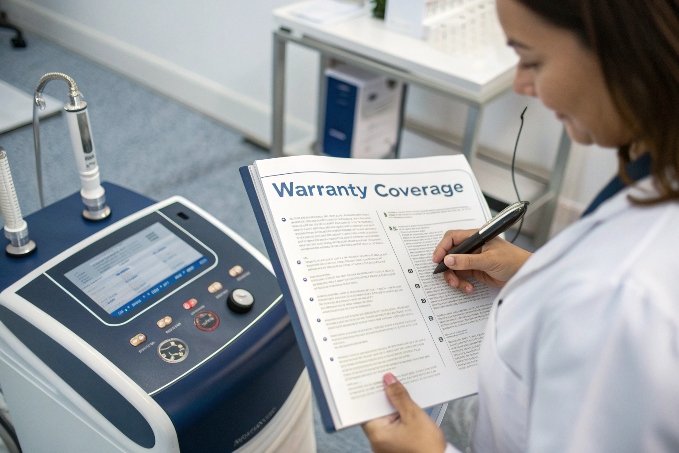
I know buyers worry about after-sales risk. A warranty without details feels like a promise without proof, and that uncertainty slows every purchasing decision.
Yes, reputable suppliers provide written warranty coverage details for imported shockwave therapy machines. Clear documents define coverage scope, duration by component, exclusions, claim steps, evidence requirements, and geographic terms, so buyers can plan maintenance, cost exposure, and downtime with confidence.
A solid warranty is not just protection. It is an operating playbook. The sections below explain what is excluded, how clinics claim from abroad, what evidence suppliers ask for, and how far terms can be customized.
What is usually excluded from warranty?
As a beauty equipment supplier, I always explain exclusions early, so clients are not surprised when normal wear or misuse falls outside coverage.
Warranty exclusions usually include consumables, normal wear, accidental damage, misuse, unauthorized repairs, power issues, and damage from unapproved accessories or poor maintenance. These limits protect safety and keep repairs focused on genuine manufacturing defects.
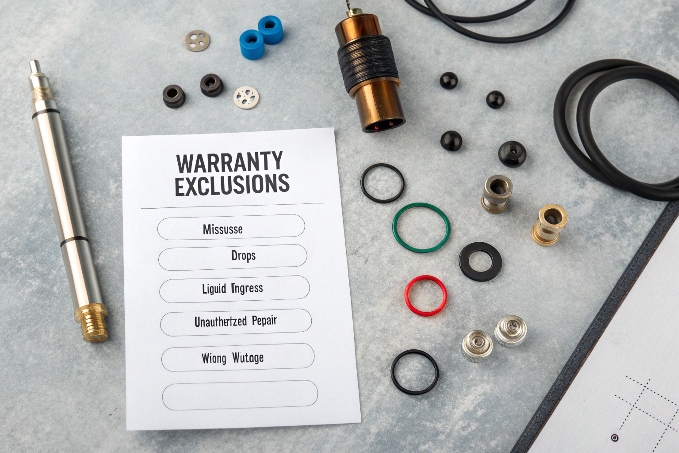
Modern shockwave systems separate durable assemblies from wear items under a limited warranty 1. Warranties typically cover manufacturing defects in the main console, power electronics, and certified handpieces for a fixed period. They usually exclude items that wear by design and parts damaged by incorrect use. Exclusions also address logistics and environmental risks that the supplier cannot control.
Common warranty exclusions at a glance
| Category | Typical examples | Why excluded |
|---|---|---|
| Consumables | O-rings, sleeves, gel pads, membranes, filters, applicator caps | Designed to wear with use |
| Wear-limited parts | Projectiles, bearings, transmitter surfaces, hoses | Pulse-count or time-based life |
| User-caused damage | Drops, liquid ingress, crushed cables, broken connectors | Not manufacturing defects |
| Unauthorized service | Third-party repairs, non-OEM parts, tampering | Safety and compliance risk |
| Power/environment | Wrong voltage, no ground, surge, moisture, dust | Outside supplier control |
| Operation outside spec | Overheating, blocked vents, no maintenance | Preventable misuse |
How clinics can avoid exclusions
Facilities reduce disputes by following simple rules. They keep the machine on the specified voltage and grounded outlet. They store spares, clean filters, and replace seals on schedule. They document preventive maintenance with dates and pulse counts. They never mix non-OEM parts unless the supplier approves them. They protect plugs and cables with strain relief. If a room is humid, they add an air dryer or moisture trap per the manual. These steps keep failures within warranty scope.
Evidence that helps the supplier approve coverage
A short log of usage and service helps. Include the serial number, installation date, pulse counts, filter change dates, and any alerts shown on the screen. When a fault appears, capture a 30-second video, a clear photo of the error message, and a photo of the nameplate. Good evidence speeds decisions and reduces back-and-forth messages. Shipment-level photos, serial tracking, and pre-shipment inspection records using AQL sampling 2 also help document condition at handover.
How to claim warranty from abroad?
I prepare clients with a simple checklist, because fast, complete claims cut downtime and shipping costs.
The standard process is: report the issue, submit proof (serial, videos, logs), complete guided troubleshooting, receive parts or repair authorization, and return the faulty item if requested. Shipping terms and responsibilities should be written in the warranty.
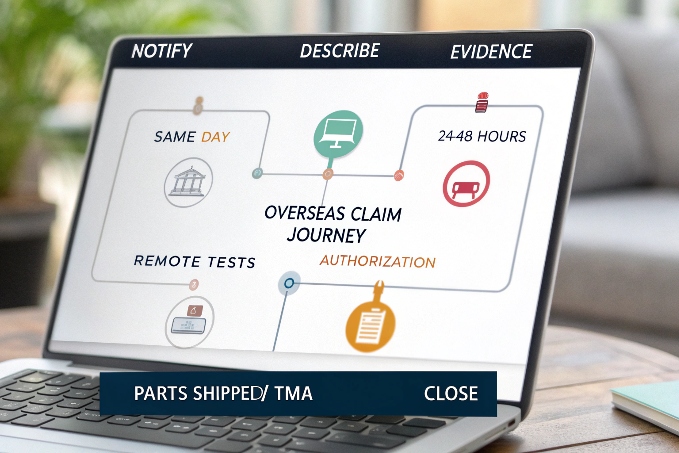
International claims often use an RMA (Return Merchandise Authorization) 3 number to track status and exchanges.
Overseas warranty claim checklist
| Step | What the clinic provides | Supplier action | Time goal |
|---|---|---|---|
| 1. Notify | Device model, serial, purchase date | Open ticket, assign engineer | Same day |
| 2. Describe | Error code, symptom, when it happens | Triage likely causes | Same day |
| 3. Evidence | Short video, photos, pulse count, logs | Validate claim scope | 24 hours |
| 4. Remote tests | Power, cables, filter, pressure, self-check | Confirm failed assembly | 24–48 hours |
| 5. Authorization | Confirm warranty status, shipping plan | Ship parts or arrange RMA | 1–3 days |
| 6. Install | Clinic installs part via video guidance | Remote verification | Same day |
| 7. Close | Record fix and date | Update warranty record | Same week |
Shipping and customs notes
The warranty should specify who pays freight both ways. Many suppliers cover outbound parts shipping while the buyer covers return of faulty parts. The invoice should state “warranty replacement, no commercial value” with correct HS code (Harmonized System code guide) 4 to avoid duty. Terms should reference Incoterms 2020 (ICC overview) 5 so responsibilities are clear.
Documents that speed customs and approval
- Commercial invoice with “warranty replacement” note
- Packing list with part numbers and serials
- Photos of damaged parts and device nameplate
- Short failure description and date
- Contact person for delivery and customs broker info
Do suppliers require proof of damage?
I explain that evidence is not bureaucracy. It protects both sides and prevents wrong parts from being shipped.
Yes. Suppliers usually require proof: photos, short videos, error messages, pulse counts, and sometimes a simple meter reading. Clear evidence validates coverage, identifies the right spare, and shortens the claim cycle.
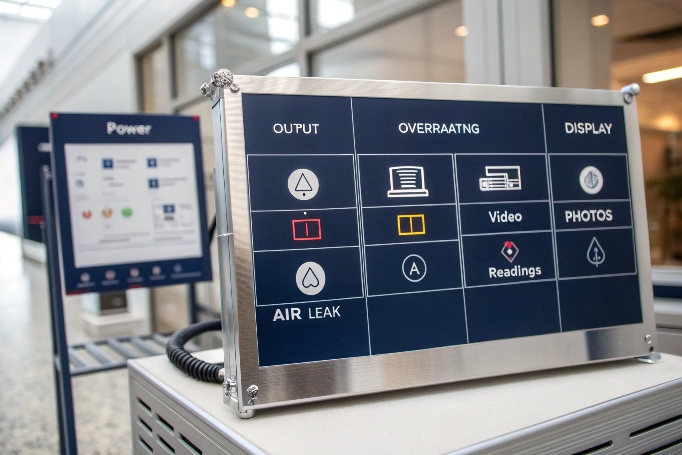
Evidence types depend on the symptom. Intermittent power loss needs a video of the screen shutting off and a photo of the power inlet, fuse, and cord. Weak output requires a clip showing pressure readings and handpiece sound. Overheating calls for a short video of the fan vents and temperature at the grip after a fixed runtime. If the fault involves air leaks, a 10-second clip of the soap-test on joints is useful. For display faults, a still image of artifacts helps. If the supplier suspects a consumable, they may ask to check the O-ring seating or the projectile wear pattern.
Minimum evidence set most suppliers accept
| Fault class | Required proof | Optional proof |
|---|---|---|
| Power / no boot | Nameplate photo, plug and inlet photo, 15-sec boot video | Multimeter voltage reading |
| Output weak / uneven | Video of pressure/energy screen, sound of handpiece, pulse count | Short clip of coupling method |
| Overheating / alarms | Video of vents/fans, temperature after 15-min run | Ambient room temp |
| Display / UI error | Photo or screen capture of error | Firmware version page |
| Air leak / pressure drop | Clip of hoses and joints under test | Filter condition photo |
Suppliers keep these files with the ticket. If further checks are needed, they schedule a live call to repeat tests with guidance. When a covered defect is confirmed, they ship the correct part and reference the evidence so the clinic knows what will arrive.
Can warranty terms be customized?
I offer customization for distributors and high-volume buyers, because one size does not fit every clinic.
Yes, many suppliers customize terms. Common options include longer main-unit coverage, higher pulse limits for handpieces, on-site spare kits, faster shipping commitments, and bundled training. Custom terms should be written into the sales contract or service addendum.
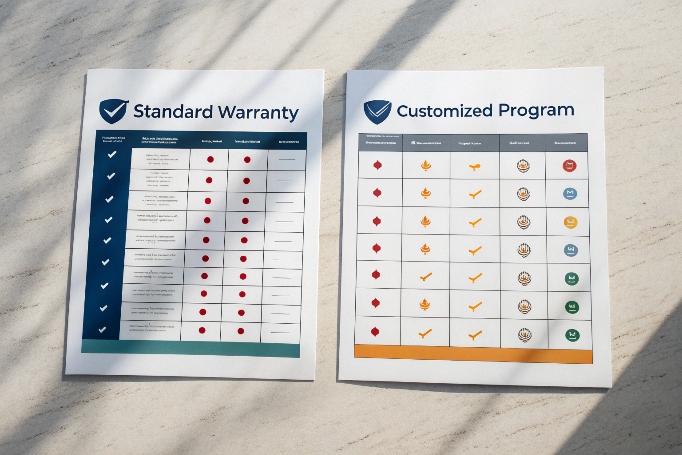
Customization aligns risk with usage. Busy clinics want fewer surprises, so they secure extra coverage on the assemblies that fail most under high load. Lower-volume practices may choose standard terms and rely on pay-as-needed parts. Customization also extends to geography. Buyers can request regional service partners, local spare pools, or bonded stock. These options shorten downtime and improve predictability.
Negotiation levers for tailored warranty
| Lever | What to ask for | Typical outcome | When useful |
|---|---|---|---|
| Term length | 24–36 months main unit | Higher upfront price, lower risk | High-duty clinics |
| Pulse cap | Extra handpiece pulse allowance | Fewer rebuilds billed | Heavy radial use |
| Free spares | O-rings, projectiles, filters | Faster first-year fixes | Remote locations |
| Response time | 24–48 h remote service-level agreement 6 | Prioritized engineering | Multi-site groups |
| Shipping terms | Supplier-paid outbound parts | Lower logistics friction | Import-heavy regions |
| Training | Remote or on-site sessions | Fewer misuse faults | New teams |
Contract language clinics should request
- Component-level coverage table with exact durations
- Clear exclusions list and examples
- Evidence requirements and claim steps
- Shipping responsibilities and incoterms
- Replacement timelines and loaner policy (if any)
- How customized terms apply to future orders
Practical coverage map (put this in your purchase file)
| Component | Typical coverage window | Notes |
|---|---|---|
| Main console / PSU / mainboard | 12–24 months | Defects in materials and workmanship |
| Handpiece assembly | 12 months or pulse-based | Wear parts may be excluded |
| Display / UI panel | 12 months | Excludes impact damage |
| Compressor / fan set | 12–18 months | Requires filter maintenance |
| Cables / foot pedal | 6–12 months | Excludes crushed or cut cords |
| Consumables (O-rings, sleeves, filters) | Not covered (standard) | Often included as free spares |
When I export devices, I include a compliance pack in every shipment—buyers should never have to guess what standards were tested.
Yes, suppliers share independent test reports or certification summaries with buyers. Full reports may be shared under NDA, while public compliance documents (CE certificate, DoC, ISO certificate) are always included.

Most suppliers provide a compliance folder containing:
- CE certificate 7 or FDA approval certificates
- Declaration of Conformity (DoC)
- ISO 13485 certificate 8
- IEC 60601 safety and EMC summaries
- Calibration and performance data (often backed by ISO/IEC 17025 9 lab methods)
If the buyer needs the complete technical report (for tender or regulatory filing), the supplier can release it under a confidentiality agreement (standard NDA 10). This keeps trade secrets protected while satisfying official documentation needs.
Conclusion
Ask for the full warranty in writing, learn the exclusions, follow the claim checklist, document proof, and negotiate terms that fit usage and geography.
Footnotes
1. Definition and scope of a limited warranty in B2B contexts. ↩︎
2. ASQ overview of acceptance sampling/AQL for inspection records. ↩︎
3. What an RMA is and how it structures returns/exchanges. ↩︎
4. Trade.gov guide to using HS codes on international paperwork. ↩︎
5. ICC Incoterms 2020 responsibilities for sellers/buyers. ↩︎
6. Service-level agreements and response-time commitments explained. ↩︎
7. EU CE-marking guidance under MDR for medical devices. ↩︎
8. ISO 13485 standard page for medical-device QMS certification. ↩︎
9. ILAC page on ISO/IEC 17025 accreditation for testing/calibration labs. ↩︎
10. NDA basics and when to use confidentiality agreements. ↩︎

 English
 Español de México
 Deutsch
 Français
 العربية
 Русский
