
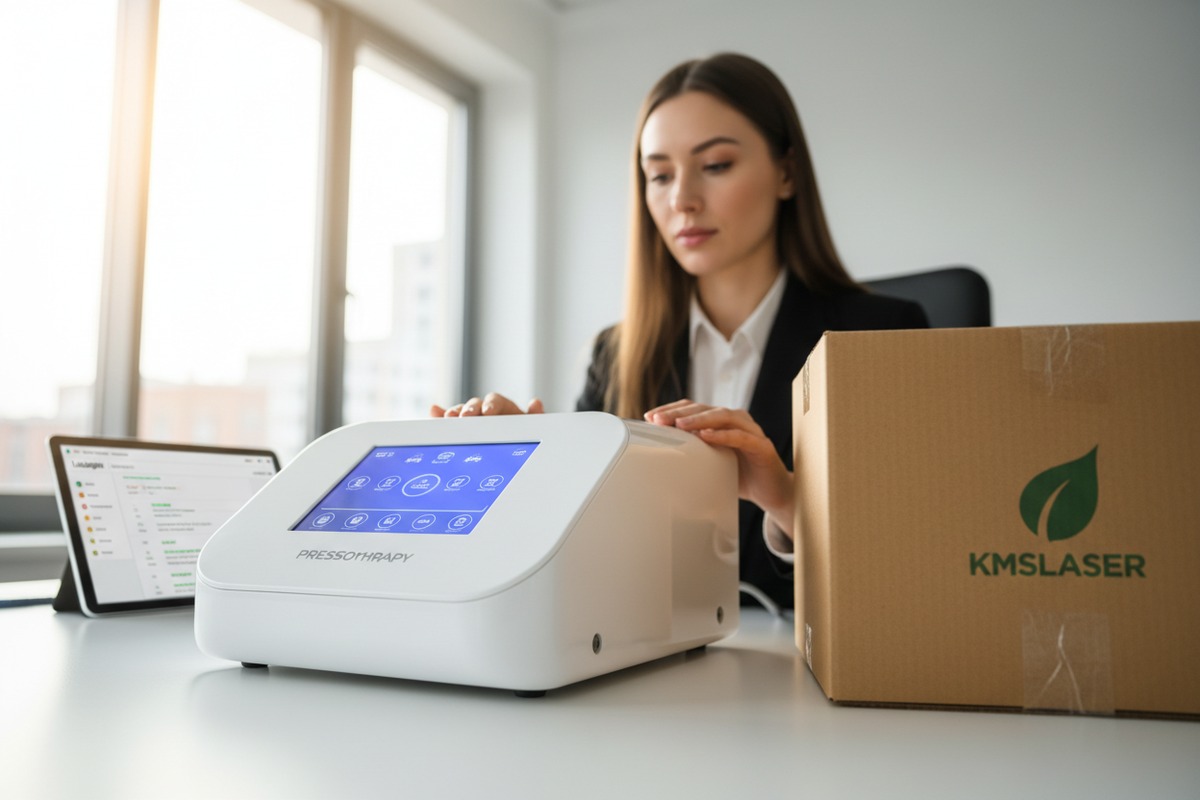
Our production line in Guangzhou ships hundreds of pressotherapy systems 1 every month. We see the same question pop up again and again: does packaging really matter? The problem is clear. Buyers want quality machines. They also care about the planet. But they don’t know if eco-friendly packaging 2 will protect their investment or blow up their budget. This tension keeps many purchasing managers awake at night.
Yes, you should consider packaging recyclability when buying a pressotherapy machine. Sustainable packaging enhances your brand image, meets growing regulatory demands, and aligns with buyer values—without necessarily sacrificing protection or significantly increasing costs when sourced strategically from qualified suppliers.
In this guide, we break down the real impact of recyclable packaging on your brand, shipping safety, procurement costs, and supplier relationships. Let’s dig into each critical question.
How will eco-friendly packaging impact my brand's reputation among salon owners?
Every order we export to North America and Europe teaches us something new. Salon owners talk. They compare notes. When a machine arrives in premium, recyclable packaging, it sends a message. It says: this supplier cares. But the fear is real too. Will eco-packaging look cheap? Will it hurt first impressions?
Eco-friendly packaging significantly boosts your brand reputation among salon owners. Over 54% of consumers deliberately choose products with sustainable packaging, and salon buyers increasingly view green packaging as a sign of quality, innovation, and responsible business practices.

Why Salon Owners Care About Your Packaging
Salon owners are not just buying a machine. They are investing in their business image. When your pressotherapy system arrives, it creates the first tangible brand experience. This unboxing moment matters.
The beauty and wellness industry 3 has shifted dramatically. Eco-conscious packaging has moved from trend to baseline expectation. As one industry report notes, "consumers, especially Gen Z and Millennial shoppers 4, are actively seeking out brands that prioritize sustainability."
Salon owners face their own customers who ask about sustainability. When they can point to eco-friendly vendor practices, it builds trust down the chain.
The Numbers Behind Green Packaging Preference
| Consumer Behavior | Percentage |
|---|---|
| Deliberately choose sustainable packaging | 54% |
| Favor brands with sustainable packaging | 73% |
| Willing to pay premium for refillable systems | 68% |
| Check sustainability before purchase (beauty devices) | 55% |
These numbers translate directly to B2B relationships. Salon owners want partners who share their values.
Building Trust Through Visible Sustainability
Your packaging tells a story before your machine even powers on. Recycled cardboard with minimalist design signals authenticity. FSC-certified boxes prove real commitment. Digital user manuals instead of thick paper booklets show innovation.
We've found that salon owners photograph and share unboxing experiences on social media. Clean, eco-friendly packaging generates positive buzz. Excessive plastic wrap does the opposite.
The long-term benefit extends beyond first impressions. Salon owners who feel proud of their supplier choices become repeat buyers and vocal advocates.
Can recyclable materials provide enough protection for my pressotherapy machine during international shipping?
When we calibrate our packaging designs, protection is non-negotiable. A pressotherapy machine contains delicate airbags, control units, and suits that must arrive intact. The worry is understandable: can recycled cardboard and paper-based cushioning really match foam and plastic wrap?
Yes, recyclable materials can provide excellent protection for pressotherapy machines during international shipping. Modern eco-friendly options like honeycomb paper wraps, molded fiber inserts, and reinforced corrugated cardboard offer comparable or superior cushioning to traditional foam while being fully recyclable.

Understanding Protection Requirements
Pressotherapy machines face multiple hazards during international transit. They change hands from factory to carrier to customs to final delivery. Each transfer introduces risk of drops, stacking pressure, moisture, and vibration.
The key components need specific protection:
- Control unit (electronic, sensitive to impact)
- Airbags (multiple chambers, puncture-sensitive)
- Suits (bulky, need compression protection)
- Connecting pipes and accessories (fragile joints)
Traditional packaging uses expanded polystyrene (EPS) foam 5, bubble wrap, and plastic films. These work well but create waste that often cannot be recycled.
Modern Sustainable Alternatives That Work
| Protection Need | Traditional Material | Sustainable Alternative | Performance Comparison |
|---|---|---|---|
| Shock absorption | EPS foam | Honeycomb paper wrap 6 | Equal cushioning, fully recyclable |
| Void fill | Plastic air pillows | Recycled packaging paper | Effective bracing, biodegradable |
| Edge protection | Molded foam | Molded fiber inserts | Superior, custom-fit, compostable |
| Moisture barrier | Plastic film | Wax-coated kraft paper | Adequate for standard conditions |
Corrugated boxes remain the gold standard for international shipping. They are designed to be strong and durable, protecting products from damage during transit. The fluted structure provides natural cushioning while remaining fully recyclable.
Engineering for Safe Arrival
Smart packaging design matters more than material choice alone. Right-sized boxes reduce movement. Custom-molded fiber inserts cradle components perfectly. Double-walling adds strength without excess weight.
In our experience, well-designed sustainable packaging actually reduces damage rates. Why? Because it forces careful engineering rather than just stuffing boxes with foam.
International shipping requires compliance with regulations. Export packaging must stay strong, survive stacking, resist moisture, deter tampering, and protect products during transit. Sustainable materials meet all these requirements when properly specified.
Addressing Specific Concerns
Bulky pressotherapy suits present a unique challenge. They need compression but cannot be crushed. Paper-based wraps provide gentle containment while allowing the material to breathe and recover.
Electronic control units benefit from custom fiber inserts that immobilize them completely. Unlike loose foam peanuts, these inserts eliminate all movement during transit.
Will choosing sustainable packaging options significantly increase my total procurement costs?
Our pricing discussions with international buyers always hit this question. Budget matters. Margins are tight. The fear is that sustainable packaging will add 30%, 50%, or more to costs. But the reality is more nuanced than the headlines suggest.
Sustainable packaging typically adds a 15-40% premium on material costs compared to conventional options, but strategic sourcing, design optimization, and long-term operational savings often offset or eliminate this difference. Many buyers find total cost parity when considering shipping weight reduction and waste disposal savings.

Breaking Down the Real Costs
The cost conversation must include multiple factors beyond material price per unit. Total cost of ownership tells the true story.
| Cost Factor | Traditional Packaging | Sustainable Packaging | Net Impact |
|---|---|---|---|
| Material unit cost | Baseline | +15-40% | Higher upfront |
| Shipping weight | Heavier | Often lighter | Savings on freight |
| Waste disposal | Standard fees | Reduced/eliminated | Savings |
| Regulatory compliance | Future risk | Already compliant | Avoided penalties |
| Brand value | Neutral | Enhanced | Marketing benefit |
Traditional thinking assumes eco-friendly materials automatically mean higher spend. But modern sustainable packaging applies lean principles to eliminate waste and unlock measurable ROI. When packaging treats waste as a liability to design out, costs come down.
Where Savings Appear
Lighter materials reduce dimensional weight charges on international shipments. A 10% weight reduction can translate to meaningful freight savings across hundreds of units.
Right-sized sustainable packaging eliminates void space. Less wasted space means more units per pallet and container. Shipping efficiency improves significantly.
Many regions now charge waste disposal fees based on recyclability. Companies using excessive plastic face high disposal costs. Recyclable or compostable packaging can reduce these fees substantially.
Strategic Approaches to Cost Management
Work with your supplier on design optimization. Ask about honeycomb structures that provide strength with less material. Request recycled content options that perform identically at lower premiums.
Certifications cost money, which can drive up product price. Some regional suppliers use excellent materials but are not certified due to budget or access. What matters most is verifying clear material specs and sourcing from trusted partners.
Consider that the cost gap is narrowing rapidly. As demand for sustainable packaging increases, economies of scale are starting to kick in. Higher production volumes help reduce per-unit costs across the industry.
Regulatory Cost Avoidance
The EU and many US states now impose requirements on packaging recyclability. Non-compliance can lead to fines. Customs might also block shipments. Sustainable packaging today avoids these costs tomorrow.
The UK Plastic Packaging Tax 7 charges £200 per tonne for packaging with less than 30% recycled content. Similar measures are spreading globally. Early adoption of sustainable practices prevents costly compliance penalties.
How can I ensure my Chinese supplier meets my specific requirements for customized and recyclable packaging?
Our engineering team works with international buyers daily on custom packaging specifications. The challenge is real. Chinese suppliers offer tremendous capability, but communication gaps can derail projects. Getting exactly what you need requires a structured approach.
To ensure your Chinese supplier meets customized recyclable packaging requirements, provide detailed specifications upfront, request material certifications (FSC, recycled content verification), obtain samples before production, conduct pre-shipment inspections, and establish clear quality benchmarks in your supplier agreement.

Setting Clear Specifications
A detailed spec sheet sets the stage for accurate quotes, sample runs, and eventual large-scale orders. Include every length, width, height, and material thickness you require. Even small miscalculations can lead to costly reworks.
Document your sustainability requirements explicitly:
- Minimum recycled content percentage
- Required certifications (FSC, SGS testing)
- Prohibited materials (specific plastics, non-recyclable films)
- End-of-life requirements (curbside recyclable, compostable)
Chinese suppliers do not always display as many packaging styles, detailed info, custom options, or visual pictures. On Alibaba, most suppliers simply say they provide color, size, box thickness, logo, and pattern printing services without more details. You must push for specifics.
Certification and Verification
| Certification | What It Proves | Who Issues |
|---|---|---|
| FSC | Responsibly sourced paper/cardboard | Forest Stewardship Council |
| SGS | Material testing and verification | SGS International |
| ISO 14001 | Environmental management system | ISO accredited bodies |
| EN13432 | Compostability standards | European testing bodies |
| Recycled content | Percentage of recycled material | Third-party auditors |
Look for FSC-certified paper, SGS testing, or recycled-content claims. These badges prove packaging meets recognized sustainability standards.
Ask about material origins and waste-reduction initiatives. Some suppliers offer carbon-neutral production or reusable transport packaging as value adds. These capabilities signal serious commitment.
Sample Validation Process
Always request samples before committing to volume orders. This allows you to verify dimensions, structure, and print quality before production begins. Pay for expedited samples if needed—this small investment prevents large problems.
Test samples against your actual products. Pack a machine, simulate shipping conditions, evaluate protection. Check material quality, print clarity, assembly instructions accuracy.
Quality Control Integration
Investing in pre-shipment inspections guarantees your packaging meets required specifications. It allows for identification of potential issues like missing labels or incorrect labeling before goods leave the factory.
Your goal is to reduce the amount of packaging required while ensuring products arrive safe and sound. Work closely with your supplier, combine practical experience together, and establish ongoing communication channels.
Include packaging specifications in your formal supplier agreement. Define acceptable defect rates, finish standards, and labeling requirements. Clear quality benchmarks cut down on back-and-forth once production starts.
Managing the Relationship
Custom requirements now frequently demand specialist attention. If your country has particular regulations for international shipping, make sure to keep your supplier noted. Non-compliant packaging can be rejected at ports, requiring costly returns or destruction.
Build relationships with suppliers who demonstrate sustainability capabilities. Ask for factory certifications, environmental policies, and client references. Suppliers with ISO 14001 certification 8 have proven environmental management systems.
Regular communication prevents surprises. Video calls to review packaging designs, photo updates during production, and direct contact with quality control teams all contribute to successful outcomes.
Conclusion
Packaging recyclability deserves real consideration when sourcing pressotherapy machines. The benefits extend across brand reputation, product protection, cost management, and supplier relationships. Start the conversation with your supplier early and specify your sustainability requirements clearly.
Footnotes
1. Authoritative source explaining pressotherapy, its benefits, and uses. ↩︎
2. Explains the definition and environmental benefits of eco-friendly packaging. ↩︎
3. Discusses sustainability trends and market growth in the beauty and wellness sector. ↩︎
4. Highlights the strong preference of Gen Z and Millennials for sustainable brands. ↩︎
5. Describes the properties, uses, and structure of expanded polystyrene (EPS) foam. ↩︎
6. Explains honeycomb paper packaging as a sustainable cushioning material. ↩︎
7. Provides official information and rates for the UK Plastic Packaging Tax. ↩︎
8. Defines ISO 14001 as an international standard for environmental management systems. ↩︎

 English
 Español de México
 Deutsch
 Français
 العربية
 Русский
