
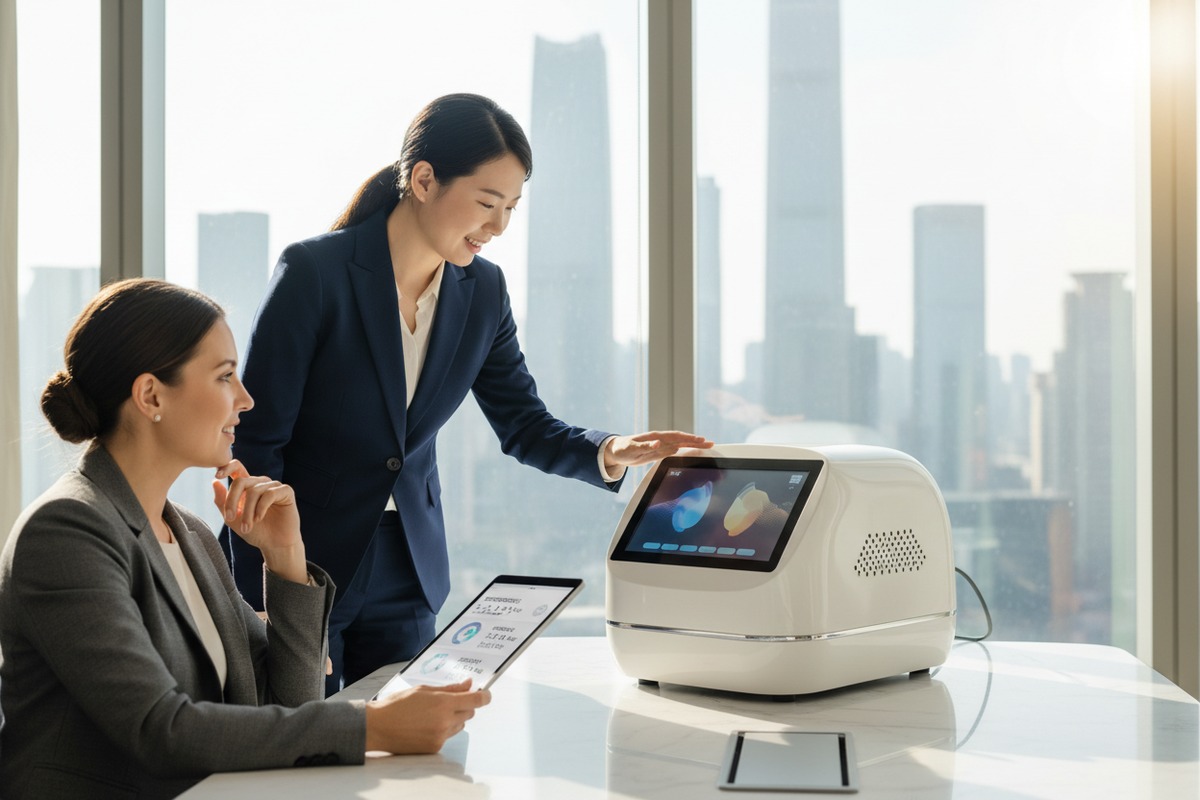
Every week, our production floor receives inquiries from brand owners who feel lost when evaluating shockwave therapy machines 1 for diverse patient populations. They worry about safety for darker skin tones, unclear specifications, and suppliers who cannot provide clinical evidence 2. This uncertainty can lead to costly purchasing mistakes and patient complaints.
When evaluating shockwave therapy machines for skin tone treatments, ask suppliers about energy density ranges (1.2-1.8 bar for facial use), Fitzpatrick-specific clinical data, adjustable pulse counts (2000-10,000 shocks per session), and customizable OEM presets designed for different skin sensitivities and market demographics.
This guide breaks down the essential questions you need to ask before placing your next order. We will cover energy safety, clinical evidence, OEM customization 3, and market-specific optimization in detail.
How do I ensure the energy density parameters are safe for patients with darker skin tones?
Our engineering team has spent years calibrating devices for global markets, and we know firsthand that darker skin tones require careful parameter consideration. Many buyers assume shockwave therapy carries the same pigmentation risks as laser treatments 4. This misconception leads to unnecessary hesitation and missed business opportunities.
To ensure energy density safety for darker skin tones, request machines with adjustable low-energy settings between 1.2-1.8 bar for facial applications. Unlike lasers, shockwave therapy uses acoustic waves without thermal damage, eliminating hyperpigmentation risks across all Fitzpatrick skin types (I-VI).

Why Acoustic Waves Differ from Thermal Devices
Shockwave therapy works through mechanical pressure rather than heat. This fundamental difference matters greatly for melanin-rich skin. Lasers and intense pulsed light (IPL) devices target chromophores in the skin. When these chromophores absorb light energy, they convert it to heat. In darker skin tones, melanin absorbs more energy, increasing the risk of burns and post-inflammatory hyperpigmentation (PIH) 5.
Acoustic wave therapy 6 bypasses this problem entirely. The mechanical pulses stimulate collagen production, enhance microcirculation, and activate fibroblasts without generating heat. Our quality control engineers test every unit to verify zero thermal output before shipment.
Key Energy Parameters to Request
When speaking with suppliers, ask for detailed specifications on these energy metrics:
| Parameter | Safe Range for Facial Use | Purpose |
|---|---|---|
| Pressure/Bar | 1.2-1.8 bar | Controls intensity without tissue damage |
| Energy Density (mJ/mm²) | 0.05-0.25 mJ/mm² | Determines penetration depth |
| Frequency (Hz) | 1-10 Hz | Affects treatment comfort and efficacy |
| Pulse Duration | Short pulses (<1ms) | Reduces discomfort, prevents bruising |
Request written documentation showing these ranges are adjustable through the machine's software interface. Avoid suppliers who offer only fixed energy settings.
Red Flags in Supplier Responses
Watch for these warning signs during negotiations. If a supplier cannot explain how their energy density differs from competitors, they may lack technical expertise. If they claim one energy setting works for all skin types, they misunderstand the market. If they have no written safety protocols for Fitzpatrick V-VI skin, their machine may not suit diverse patient populations 7.
Can my supplier provide clinical data on how shockwave intensity affects different Fitzpatrick skin types?
When our sales team presents machines to international distributors, the first question often involves clinical evidence. Experienced buyers know that marketing claims mean nothing without research backing. Yet many suppliers in this industry cannot produce peer-reviewed studies or even basic treatment outcome data.
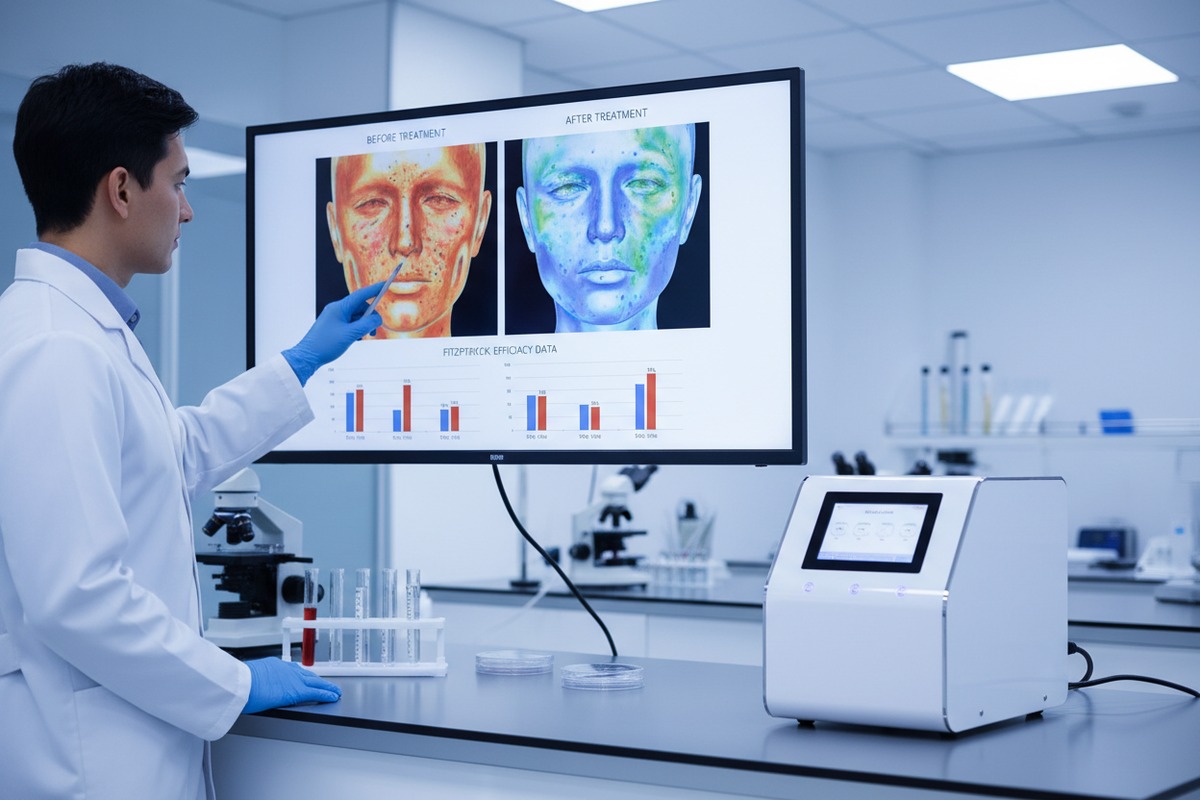
Yes, reputable suppliers should provide clinical studies demonstrating shockwave efficacy across Fitzpatrick types. Key data points include skin roughness reduction (e.g., 17.06 to 11.48 mm³), pore size improvement, and wrinkle depth changes measured via 3D imaging after 6 weekly sessions at 1.2-1.8 bar with 10,000 pulses per treatment side.
What Clinical Evidence Should Look Like
Quality clinical data includes specific metrics, not vague improvement percentages. The most credible studies use objective measurement tools like 3D skin imaging systems. Here is what meaningful research looks like:
| Outcome Metric | Baseline | Post-Treatment | Statistical Significance |
|---|---|---|---|
| Skin Roughness (mm³) | 17.06 | 11.48 | p=0.006 |
| Pore Count | 3.18 | 1.86 | p=0.044 |
| Wrinkle Depth | 0.11 | 0.07 | p=0.029 |
These numbers come from published research using low-energy protocols over six weekly sessions. Ask your supplier to provide similar data. If they offer only testimonials or before/after photos without measurement methodology, their evidence lacks scientific rigor.
Questions to Ask About Their Research
Prepare a checklist before your supplier meeting. First, ask how many patients participated in their studies. Sample sizes under 20 limit statistical reliability. Second, ask which measurement devices they used. Third, ask whether any patients with Fitzpatrick V or VI skin were included. Many studies focus exclusively on lighter skin tones, creating evidence gaps.
Understanding Study Limitations
Be aware that current literature has gaps. Most published shockwave aesthetic research does not include melanin index measurements or chromameter readings. This means quantitative skin tone data remains limited. However, qualitative consensus supports even complexion improvement through enhanced microcirculation.
Our R&D department tracks emerging research continuously. We share new findings with our OEM partners so they can update their marketing materials with current evidence. Good suppliers maintain similar awareness of evolving clinical data.
Building Your Own Evidence Base
Consider requesting demo units for in-house testing before large orders. Document your results systematically. Track patient Fitzpatrick classification 8, treatment parameters, and outcomes. This data becomes valuable for your own marketing and helps identify optimal protocols for your specific market.
What specific OEM presets should I request to accommodate a diverse range of skin sensitivities?
Our factory produces machines for brands serving markets from Scandinavia to Nigeria. Each region has different patient demographics, meaning one-size-fits-all presets fail to meet real-world needs. When we design OEM software interfaces, we prioritize flexibility and ease of use for clinic staff.
Request OEM presets organized by treatment indication (facial tightening, cellulite, scar revision), adjustable for three sensitivity levels (sensitive, normal, tolerant), with modifiable pulse counts (2,000-10,000), pressure ranges (1.2-3.0 bar), and session durations (10-20 minutes). Ensure presets can be renamed and customized through the software interface.

Preset Categories Worth Requesting
Organize your preset requirements by clinical application. Facial treatments need different parameters than body contouring. Here is a framework to guide your customization discussions:
| Treatment Area | Recommended Pressure | Pulse Count | Session Time | Notes |
|---|---|---|---|---|
| Facial Tightening | 1.2-1.8 bar | 2,000-4,000 | 10-15 min | Lowest energy for delicate tissue |
| Neck/Décolletage | 1.5-2.0 bar | 3,000-5,000 | 15-20 min | Moderate settings for thicker skin |
| Cellulite (Thighs) | 2.0-3.0 bar | 4,000-6,000 | 20-30 min | Higher energy for deeper penetration |
| Scar Revision | 1.5-2.5 bar | 3,000-5,000 | 15-20 min | Variable based on scar maturity |
Sensitivity Level Adjustments
Within each treatment category, request three sensitivity tiers. Sensitive presets suit patients with reactive skin, thin tissue, or low pain tolerance. These use the lower end of energy ranges with slower pulse delivery. Normal presets serve the majority of patients. Tolerant presets accommodate patients requesting more aggressive treatment or those with thicker, less reactive skin.
Our software engineers can program automatic safeguards into each tier. For example, sensitive presets might cap maximum pressure at 1.5 bar even if the operator attempts to increase it. This prevents accidental over-treatment by inexperienced staff.
Naming and Branding Considerations
Your presets should carry your brand identity. Request the ability to rename default protocols. Instead of "Protocol A-1," your interface might display "SkinGlow Gentle Facial" or whatever naming convention matches your marketing. This attention to detail improves the end-user experience and reinforces brand consistency across your device fleet.
Training Implications
Complex preset systems require operator training. When negotiating your OEM package, include training materials in your specification. Request video tutorials, quick-reference cards, and suggested treatment protocols in your brand's format. Our team provides these resources in editable formats so our partners can localize content for their markets.
How do I verify that the machine's energy output is optimized for my specific market's skin profiles?
We export to over thirty countries, and our experience shows that verification matters more than supplier promises. Machines calibrated for European markets may not suit Middle Eastern or African patient populations without adjustment. Smart buyers test before committing to large orders.
Verify market optimization by requesting pre-shipment calibration reports, conducting in-market pilot testing with diverse Fitzpatrick skin types, reviewing energy output consistency data across multiple units, and confirming software allows post-delivery parameter adjustments for local protocol refinement based on your patient demographic data.
Pre-Shipment Verification Steps
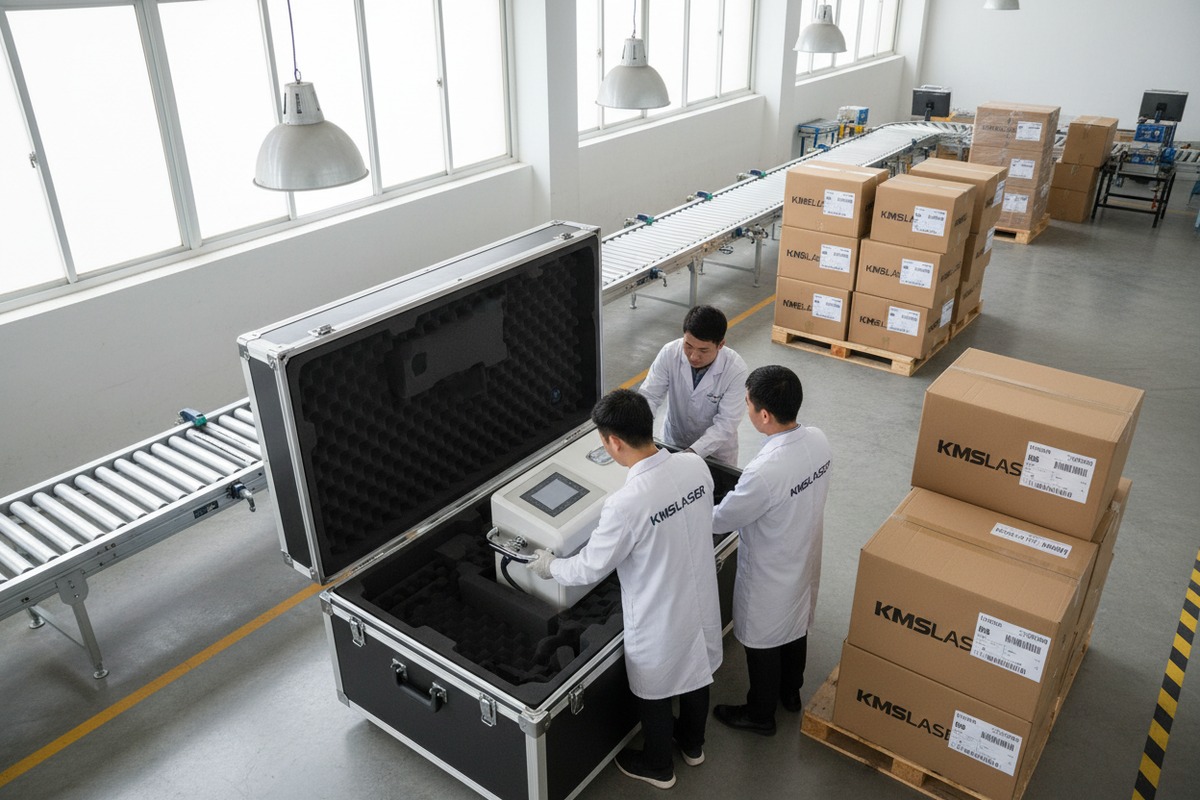
Before your order leaves the factory, insist on documented quality control. Here is what a thorough verification process includes:
| Verification Step | What to Request | Why It Matters |
|---|---|---|
| Energy Calibration Report | Measured output at each bar setting | Confirms stated specs match actual performance |
| Pulse Count Accuracy | Testing documentation for counter accuracy | Ensures treatment consistency |
| Safety System Check | Auto-stop function verification | Protects patients from over-treatment |
| Software Version | Current firmware documentation | Confirms latest safety updates installed |
Our QC team performs these checks on every unit. We provide reports in English with photographs showing test equipment and readings. Ask your supplier for similar documentation.
In-Market Pilot Testing
Even verified machines need real-world validation. Before distributing to your network, conduct pilot testing at one or two locations. Recruit patients representing your market's demographic range. Document Fitzpatrick type, treatment parameters used, patient comfort ratings, and clinical outcomes.
This pilot data serves multiple purposes. It validates that factory calibration suits your market. It generates marketing content for your sales efforts. It identifies whether preset adjustments are needed before wider rollout.
Ongoing Calibration Considerations
Machines require periodic recalibration. Acoustic wave generators experience wear that affects output consistency over time. Ask suppliers about recommended calibration intervals, typically annually. Confirm whether recalibration can be performed locally by trained technicians or requires return shipment to the factory.
Our service philosophy prioritizes local support capability. We train distributor technicians to perform basic calibration using portable test equipment we provide. This approach minimizes downtime and shipping costs for our partners.
Market-Specific Protocol Development
Use your pilot data to develop market-specific protocols. If your testing reveals that patients in your region prefer lower energy settings or respond better to higher pulse counts, document these findings. Create localized treatment guides for your clinic customers. This value-added service differentiates your brand from competitors selling generic equipment.
Conclusion
Selecting the right shockwave therapy machine for diverse skin tones requires asking precise questions about energy parameters, clinical evidence, OEM customization, and market-specific verification. Use this guide as your checklist when evaluating suppliers, and prioritize partners who provide transparent documentation and flexible customization options.
Footnotes
1. NIH article on extracorporeal shockwave treatment, discussing FDA approval and device types. ↩︎
2. Replaced a broken Canada.ca link with a comprehensive guide on FDA clinical data requirements for medical devices, which is highly relevant to ‘clinical evidence’. ↩︎
3. Guide to medical device OEM, defining the role and importance of customization. ↩︎
4. Mayo Clinic overview of laser resurfacing, detailing potential risks like pigmentation changes. ↩︎
5. NIH StatPearls article providing a comprehensive medical overview of post-inflammatory hyperpigmentation. ↩︎
6. Cleveland Clinic explains acoustic wave therapy, its mechanism, and medical applications. ↩︎
7. Replaced HTTP 404 with a current FDA draft guidance on Diversity Action Plans for clinical studies, which directly addresses the inclusion of diverse patient populations. ↩︎
8. Wikipedia article explaining the Fitzpatrick scale, its origin, and use in dermatology. ↩︎

 English
 Español de México
 Deutsch
 Français
 العربية
 Русский
