

Running a medical aesthetics training academy means your equipment faces brutal daily use Mean Time Between Failures 1. Every student needs hands-on practice. Machines break down. Students get frustrated. Your reputation suffers.
For US medical aesthetics training academies, prioritize shockwave therapy machines with electromagnetic generators, dual wave types (radial and focused), intuitive touchscreen interfaces with preset protocols, adjustable energy settings, durable construction for high-volume use, comprehensive OEM customization options, and full supplier support including warranties and quality control systems.
Let me walk you through the critical features that will protect your investment and elevate your training programs.
How can I ensure the shockwave therapy machines I source are durable enough for constant student use?
When we stress-test our shockwave devices before export, we simulate thousands of treatment cycles Electrical safety certifications 2. Most academies underestimate how quickly student use wears down equipment. One semester can age a machine faster than three years of clinical practice tissue phantoms 3.
To ensure durability for constant student use, source machines with electromagnetic pulse generators instead of pneumatic systems, metal-reinforced handpiece connections, industrial-grade touchscreens, minimum 2-year warranties, and documented MTBF (Mean Time Between Failures) ratings exceeding 10,000 hours of operation.

Understanding Generator Types and Longevity
The generator is the heart of any shockwave machine radial and focused 4. In our production line, we've seen electromagnetic generators 5 outlast pneumatic ones by significant margins. Here's why this matters for training environments.
Electromagnetic generators produce stable, consistent output without the mechanical wear of compressed air systems. Pneumatic generators require regular compressor maintenance and seal replacements. Students often forget to drain moisture from air lines. This causes internal corrosion.
| Generator Type | Average Lifespan | Maintenance Frequency | Best For |
|---|---|---|---|
| Electromagnetic | 15,000+ hours | Annual inspection | High-volume training |
| Pneumatic | 8,000-10,000 hours | Monthly servicing | Low-volume clinics |
| Piezoelectric | 12,000+ hours | Bi-annual inspection | Precision applications |
Handpiece Construction Matters
The handpiece takes the most abuse. Students drop them. Cords get tangled. Connection points loosen. Our engineering team reinforces connection points with metal sleeves rather than plastic clips. This simple upgrade extends handpiece life by 40%.
Look for applicator heads with replaceable tips rather than sealed units. When a tip wears out, you replace the $50 component instead of the $500 handpiece.
Housing and Interface Durability
Training academies need splash-resistant housings. Coupling gel gets everywhere. Students spill drinks. The chassis should withstand daily cleaning with medical-grade disinfectants.
Industrial touchscreens rated for 10 million touches will survive student use. Consumer-grade screens fail within 18 months. Always request the screen specification sheet.
What OEM customization options are essential for my academy's private-label shockwave equipment?
Our OEM team works with US academies weekly on branding projects. The difference between a generic machine and a branded training device impacts student perception and your market positioning dramatically.
Essential OEM customization options include custom logo placement on device housing and software splash screens, branded user interface themes, academy-specific preset treatment protocols, private-label packaging with your training materials, custom handpiece colors, and white-label technical documentation with your institution's branding throughout.

Software Customization Creates Training Value
Software customization delivers the highest return on investment. When students see your academy's logo at startup, they associate the technology with your brand. This creates loyalty and referral business.
Custom preset protocols are even more valuable. You can program your proprietary treatment sequences directly into the machine. Students learn your methodology. They carry these protocols into their careers. Your training becomes the industry standard.
| Customization Level | Lead Time | Minimum Order | Investment Range |
|---|---|---|---|
| Logo placement only | 2-3 weeks | 5 units | $200-500 per unit |
| Full interface rebrand | 4-6 weeks | 10 units | $800-1,500 per unit |
| Custom protocols + branding | 8-10 weeks | 15 units | $1,500-3,000 per unit |
| Complete OEM package | 12-16 weeks | 20 units | $3,000-5,000 per unit |
Hardware Customization Options
Beyond software, physical customization builds brand recognition. Color-matched housings to your academy's palette create visual consistency across your facility. Custom handpiece grips with your logo reinforce branding during every treatment demonstration.
We offer chassis modifications including additional USB ports for recording training sessions, integrated tablet mounts for supplementary learning materials, and custom cart configurations for your classroom layout.
Documentation and Packaging Requirements
US training academies need comprehensive documentation. This includes training manuals, quick-start guides, and troubleshooting resources. All should carry your branding.
Packaging matters for first impressions. Custom boxes with your academy logo, foam inserts designed for your specific configuration, and included training materials create a premium unboxing experience. Students remember this. So do accreditation reviewers.
Protecting Your Custom Investment
Request exclusivity agreements for your custom configurations. You don't want competitors ordering identical branded machines. Negotiate geographic or market-segment exclusivity when placing large orders.
Retain ownership of custom software protocols. Your training methodology is intellectual property. Ensure your OEM agreement specifies that custom code remains your property.
How do I verify that the technical performance of these machines meets my US training standards?
When we calibrate shockwave devices for US export, we reference both FDA clearance requirements 6 and practical training needs. Technical specifications on paper don't always translate to classroom performance. You need verification methods that work.
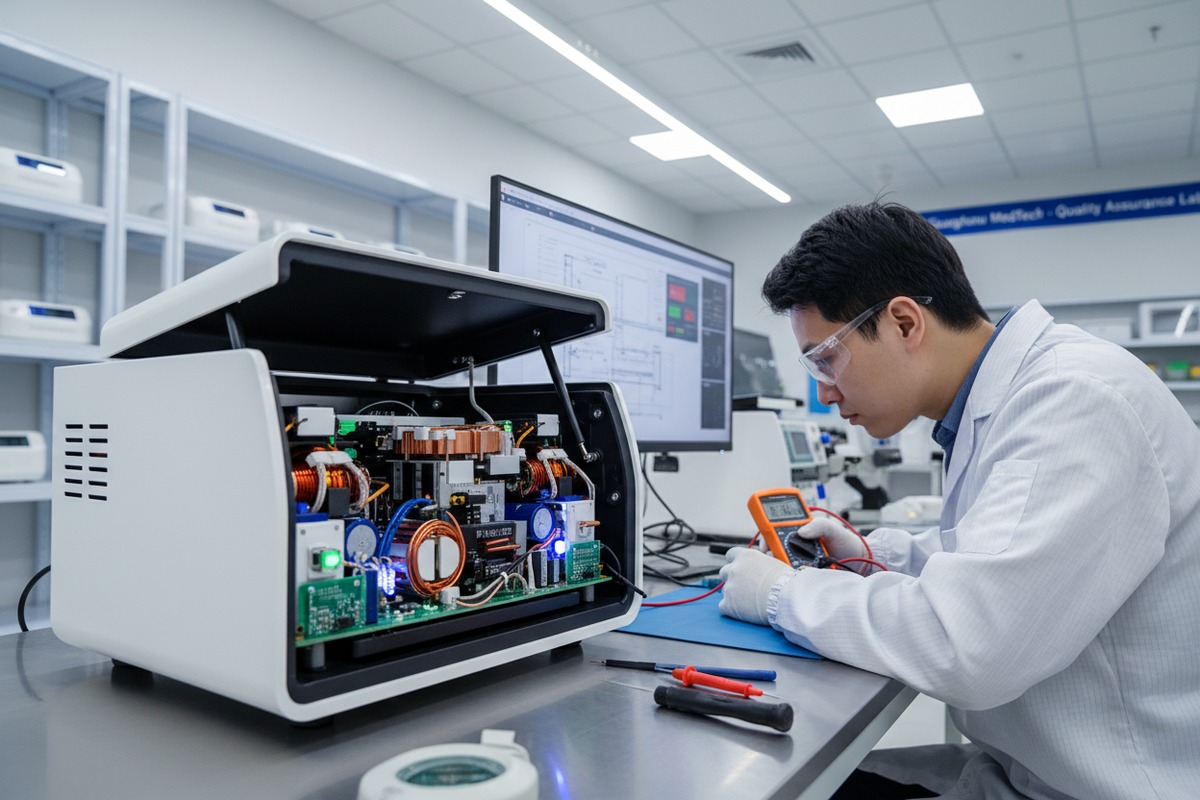
Verify technical performance by requesting third-party test reports from accredited laboratories, demanding live video demonstrations of energy output measurements, confirming adjustable parameters match US aesthetic protocols, testing focal depth accuracy with tissue phantoms, and validating that safety interlocks function correctly under simulated misuse conditions.
Understanding Critical Performance Parameters
Energy output consistency matters most for training. Students need repeatable results to learn proper technique. Machines with output variance exceeding 5% create confusion during demonstrations.
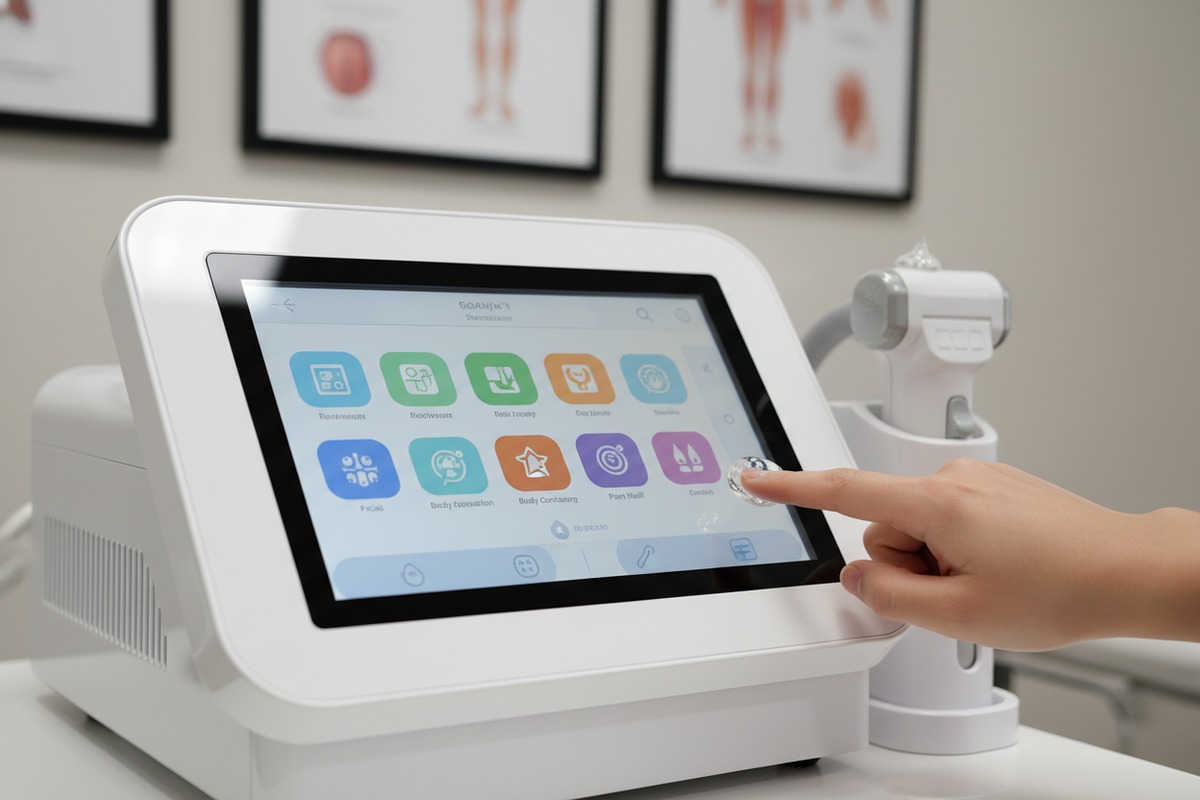
Focal depth control is essential for facial versus body treatments. Our EmFocus-type units offer controllable depth up to 65mm via touchscreen. This range covers everything from delicate periorbital work to deep cellulite treatment on thighs.
| Parameter | Training Requirement | Verification Method |
|---|---|---|
| Energy output variance | <5% deviation | Third-party lab report |
| Focal depth accuracy | ±2mm tolerance | Tissue phantom testing |
| Frequency stability | <3% drift over session | Oscilloscope measurement |
| Pulse consistency | <10% variation | High-speed sensor array |
| Safety interlock response | <100ms activation | Simulated fault testing |
Radial vs. Focused Wave Verification
Both wave types serve training purposes. Radial waves work better for broad body areas like cellulite zones. Focused waves excel for precise facial work and deeper tissue targeting.
Request demonstration of both modes if your machine offers dual capability. The transition between modes should be seamless. Output characteristics should match specification sheets for each mode independently.
Testing Protocols for Academy Evaluation
Before committing to bulk orders, request a sample unit for hands-on evaluation. Run it through your standard training curriculum. Document performance across multiple treatment types.
Create a scoring matrix covering:
- Energy consistency across 100 consecutive pulses
- Interface responsiveness during rapid parameter changes
- Handpiece ergonomics during 30-minute continuous use
- Heat generation at maximum output settings
- Noise levels suitable for classroom instruction
Compliance Documentation Requirements
US training academies need documentation showing FDA registration or clearance pathways. Request copies of 510(k) submissions if applicable. For Class II devices 7, confirm predicate device equivalence.
Electrical safety certifications (UL, CSA, or equivalent NRTL listing) protect your facility from liability. Fire marshal inspections often require these certifications for medical training equipment.
What quality control and logistics support should I demand from my supplier to protect my academy's reputation?
Our quality control team inspects every unit before shipping to US academies. One defective machine can damage years of reputation building. Your students post on social media. Word spreads fast in the aesthetics education community.
Demand pre-shipment video inspection of each unit, documented in-production quality checkpoints, calibration certificates with traceable standards, door-to-door logistics with insurance coverage, dedicated account management with 24-hour response commitments, and comprehensive warranty terms covering parts, labor, and advance replacement options.
Pre-Production Quality Assurance
Quality starts before assembly begins. Component inspection catches problems early. Request documentation of incoming parts inspection procedures. Critical components like generators, touchscreens, and handpiece assemblies should have individual test records.
Ask your supplier about their approved vendor list. Are they sourcing STORZ-equivalent generators or generic alternatives? Component quality directly impacts your machine's reliability and your students' learning experience.
In-Production Checkpoints
Manufacturing should include multiple inspection gates. Our production line includes:
| Checkpoint | Inspection Focus | Pass Criteria |
|---|---|---|
| Component assembly | Mechanical fit, solder quality | Zero visible defects |
| Subassembly test | Individual module function | 100% specification compliance |
| System integration | Full unit operation | All modes functional |
| Burn-in test | 8-hour continuous operation | No failures or drift |
| Final QC | Cosmetic + functional | Customer specification match |
Pre-Shipment Inspection Requirements
Insist on live video inspection before container loading. Your supplier should demonstrate:
- Power-on and boot sequence
- All treatment modes operational
- Parameter adjustment responsiveness
- Handpiece connection and detachment
- Cosmetic condition from all angles
- Custom branding accuracy
Record these videos. They provide evidence for any shipping damage claims.
Logistics and Delivery Support
Door-to-door service eliminates your coordination burden. Your supplier should handle:
- Export documentation and customs clearance
- Freight booking and tracking updates
- US customs brokerage
- Final mile delivery to your facility
- Installation support via video call
Insurance coverage should match shipment value. Request certificate of insurance before shipping. Standard carrier liability limits are inadequate for medical equipment.
Warranty and After-Sales Support
Minimum warranty terms for training equipment:
- 2-year parts coverage
- 1-year labor coverage
- Advance replacement for critical failures
- 48-hour response time for technical support
- Remote diagnostic capability
- Spare parts stocking in US warehouse
Negotiate extended warranty options. Training equipment lifespan should exceed 5 years. Extended coverage protects your investment through multiple student cohorts.
Communication and Account Management
Assign a dedicated account manager. Training academy needs differ from clinic needs. Your supplier should understand educational scheduling, bulk order timing, and accreditation requirements.
Establish communication protocols. WhatsApp or direct messaging for urgent issues. Email for documentation. Weekly status calls during order fulfillment. Your account manager should know your name, not just your order number.
Conclusion
Choosing shockwave therapy machines for your US training academy requires careful attention to durability, customization, technical performance, and supplier support. Every decision impacts your students' education and your institution's reputation. Prioritize these features wisely, and your investment will serve many graduating classes.
Footnotes
1. Defines MTBF as a key reliability metric for equipment operation and maintenance. ↩︎
2. UL Solutions is a leading Nationally Recognized Testing Laboratory (NRTL) providing comprehensive medical device regulatory testing and certification services. ↩︎
3. Defines tissue phantoms as objects mimicking human tissue for medical imaging and treatment development. ↩︎
4. Differentiates between radial and focused shockwave therapy, explaining their generation and application. ↩︎
5. Explains how electromagnetic shockwave generators work and their construction types. ↩︎
6. Explains the FDA’s 510(k) clearance process for medical devices and regulatory pathways. ↩︎
7. Details the FDA classification of medical devices, including Class II devices and their requirements. ↩︎

 English
 Español de México
 Deutsch
 Français
 العربية
 Русский
