
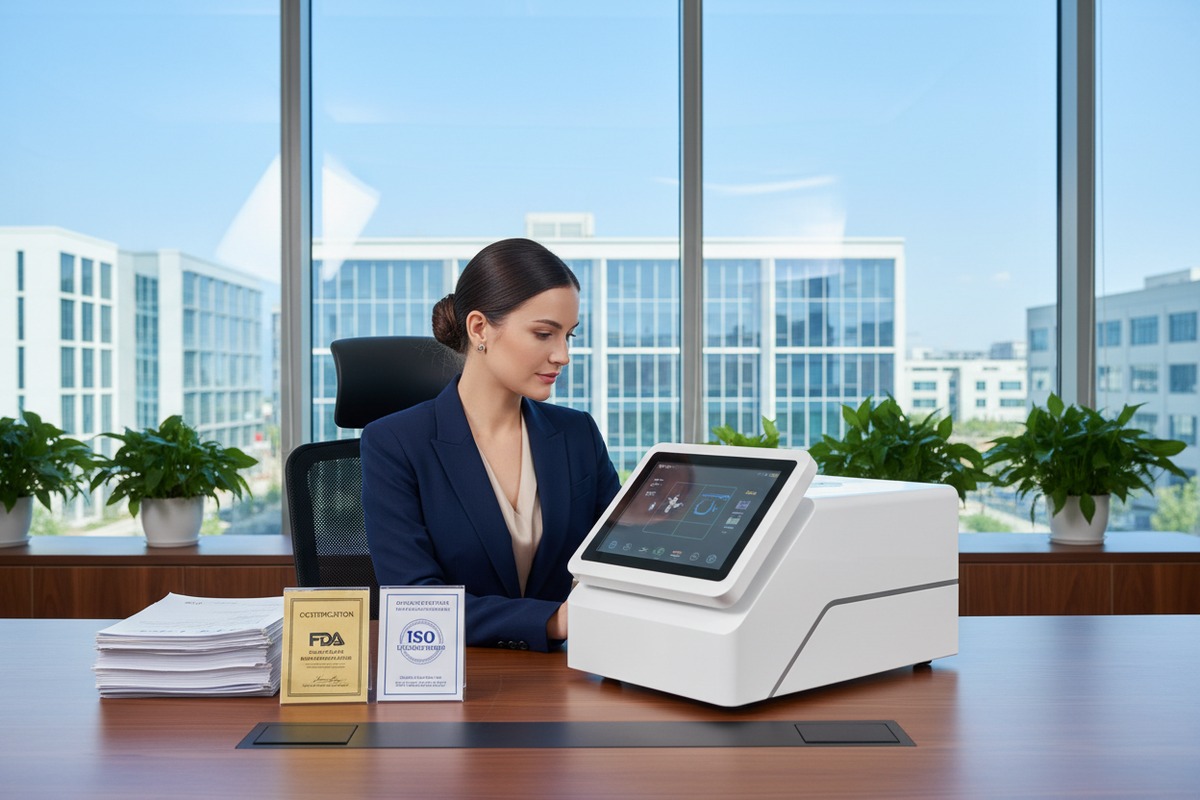
Finding the right shockwave therapy machine 1 supplier feels overwhelming. You want equipment that performs flawlessly, matches your brand’s reputation, and satisfies demanding wellness clients. Our production team has seen countless buyers struggle with inconsistent quality, vague certifications, and suppliers who vanish after the sale.
To evaluate shockwave therapy machine suppliers for integrative wellness expertise, verify their FDA clearance and ISO certifications, assess their OEM customization capabilities, review their quality control protocols, and confirm their ability to deliver complete supply chain support including door-to-door logistics to the US market.
This guide walks you through the critical checkpoints our engineering and export teams use daily CE marking 2. Let’s break down each evaluation criterion so you can make confident purchasing decisions.
How can I verify if a supplier's shockwave technology meets the clinical standards required for my wellness brand?
When our engineers develop shockwave devices, they follow strict regulatory frameworks quality control protocols 3. Yet we know many buyers receive machines with questionable certifications. The gap between genuine compliance and paper credentials costs wellness brands their reputation OEM customization 4.
Verify clinical standards by requesting FDA 510(k) clearance documentation, CE marking certificates, and ISO 13485 certification. Ask for third-party test reports, clinical study references, and specific clearance numbers you can validate independently through official regulatory databases.

Understanding Regulatory Certification Hierarchy
Not all certifications carry equal weight. FDA 510(k) clearance means the device has demonstrated substantial equivalence to a legally marketed predicate device. FDA clearance 5 This is critical for US market entry. CE marking indicates European conformity but varies in rigor depending on the notified body.
ISO 13485 specifically addresses medical device quality management systems. ISO 13485 certification 6 It proves the manufacturer maintains consistent processes. ISO 9001 covers general quality management but lacks medical device specificity.
Key Documents to Request
When evaluating any supplier, request these documents immediately:
| Document Type | What It Proves | How to Verify |
|---|---|---|
| FDA 510(k) Letter | Device cleared for US market | Search FDA 510(k) database with clearance number |
| CE Certificate | European conformity | Verify notified body number on NANDO database |
| ISO 13485 Certificate | Medical device QMS compliance | Contact issuing certification body |
| Clinical Study Reports | Efficacy evidence | Check PubMed or request full study protocols |
| Calibration Records | Equipment accuracy | Review test methodology and frequency |
Technology Type Matters for Clinical Claims
Different shockwave technologies serve different clinical purposes. Focused shockwave reaches deep tissues at specific points. Radial shockwave covers broader superficial areas. Broad-focused acoustic waves claim advantages in treating larger tissue volumes.
Your wellness brand's positioning determines which technology aligns best. Ask suppliers which conditions their devices address. Request evidence supporting those claims. Generic marketing language without specific clinical data suggests weak substantiation.
Red Flags in Certification Claims
Watch for these warning signs during supplier evaluation:
- Certificates without verifiable registration numbers
- Claims of FDA "approval" rather than "clearance" (shockwave devices receive clearance, not approval)
- Inability to provide original certificate copies
- Certifications from unknown or unverifiable bodies
- Reluctance to share test reports or clinical data
Our quality team encounters these issues regularly when auditing potential component suppliers. Legitimate manufacturers provide documentation promptly and welcome verification questions.
What quality control protocols should I demand to ensure my private-label machines are durable and stable?
Our factory runs three QC inspection stages before any machine ships. Still, we hear horror stories from buyers who received defective units from other suppliers. Cosmetic damage, electrical failures, inconsistent performance—these problems destroy buyer-seller relationships fast.
Demand documented incoming material inspection, in-process quality checks at assembly stages, and comprehensive pre-shipment testing. Request specific test parameters, acceptance criteria, failure rates, and third-party inspection options. Quality suppliers provide detailed QC reports with photographs and measurement data.

The Three-Stage Quality Control Framework
Effective QC happens at multiple production points. Catching defects early prevents expensive rework and shipping delays.
| QC Stage | Timing | Key Checks |
|---|---|---|
| Incoming Inspection | Raw materials arrival | Component specifications, supplier certificates, visual defects |
| In-Process Inspection | During assembly | Electrical connections, mechanical alignment, software loading |
| Final Inspection | Pre-shipment | Full functional testing, cosmetic review, packaging integrity |
Critical Test Parameters for Shockwave Devices
When our technicians test completed units, they verify specific performance metrics. You should request data on these same parameters:
Energy output consistency: The machine must deliver stated energy levels (measured in mJ/mm²) repeatedly. Variation beyond ±10% indicates calibration problems.
Frequency accuracy: If specifications claim 1-22 Hz operation, actual output should match across the range.
Pressure stability: Pneumatic systems require consistent pressure delivery. Fluctuations affect treatment efficacy.
Electrical safety: Leakage current, grounding continuity, and insulation resistance protect end users.
Durability Testing Expectations
Beyond functional testing, durability matters for long-term performance. Ask suppliers about:
- Cycle testing (how many treatment cycles before component replacement)
- Environmental testing (temperature, humidity tolerance)
- Drop testing for handpiece durability
- Continuous operation testing under load
Our production line subjects handpieces to 50,000 cycle minimum testing. This simulates approximately two years of clinical use. Suppliers who cannot describe their durability protocols likely skip this step.
Third-Party Inspection Options
Independent inspection services add accountability. Companies like SGS, Bureau Veritas, and Intertek offer pre-shipment inspection in China. They verify:
- Quantity matches order
- Products meet agreed specifications
- Packaging protects during transit
- Documentation accompanies shipment
These services cost $200-500 per inspection but prevent costly surprises at destination.
Requesting QC Documentation
Before ordering, ask for sample QC reports from previous production runs. Legitimate manufacturers maintain detailed records. Reports should include:
- Specific measurements taken
- Pass/fail criteria applied
- Inspector identification
- Photographs of tested units
- Any corrective actions for failed units
How do I assess a manufacturer's ability to provide the technical OEM customization my high-end clients expect?
In our R&D department, customization requests range from simple logo placement to complete system redesigns. We've learned that clear communication about capabilities prevents frustration on both sides. Not every factory handles every customization level equally.
Assess OEM customization capability by reviewing the manufacturer's previous custom projects, evaluating their engineering team credentials, confirming minimum order quantities for different customization levels, and requesting a detailed development timeline with milestone deliverables.

Customization Levels and What They Require
Customization exists on a spectrum. Understanding each level helps you communicate requirements clearly.
| Customization Level | What's Involved | Typical MOQ | Timeline |
|---|---|---|---|
| Private Label | Logo, packaging, manuals only | 5-20 units | 2-4 weeks |
| Cosmetic Modification | Color changes, housing design | 20-50 units | 4-8 weeks |
| Feature Addition | New treatment modes, software updates | 50-100 units | 8-16 weeks |
| Full Custom Development | Ground-up engineering | 100+ units | 6-12 months |
Engineering Team Evaluation
Strong customization requires skilled engineers. Ask about:
Team composition: How many mechanical, electrical, and software engineers work on custom projects?
Experience background: What similar projects have they completed?
Communication capability: Will engineers participate directly in specification discussions?
Prototype process: How do they validate custom designs before production?
Our engineering team includes specialists in acoustic physics, embedded software, and mechanical design. This combination enables comprehensive customization. Suppliers with generalist staff struggle with complex modifications.
Documentation Requirements for Custom Projects
Professional OEM relationships require thorough documentation. Expect to provide or receive:
- Detailed specification documents
- 3D CAD files or drawings
- Electrical schematics
- Software requirement specifications
- Testing and acceptance criteria
If a supplier accepts vague requirements without clarification questions, they likely lack customization experience. Experienced teams ask detailed questions upfront.
Intellectual Property Considerations
Custom development raises IP ownership questions. Clarify before starting:
- Who owns design modifications?
- Are confidentiality agreements required?
- Can the supplier produce similar designs for competitors?
- How are proprietary technologies protected?
Written agreements protect both parties. We require NDA signatures before discussing detailed custom specifications with potential clients.
Evaluating Past Custom Projects
Request case studies or references from previous customization clients. Good suppliers showcase:
- Before and after comparisons
- Technical challenges overcome
- Timeline adherence
- Client testimonials
Reluctance to share examples suggests limited experience or dissatisfied previous clients.
Can my supplier manage the entire supply chain from production quality to door-to-door delivery in the US?
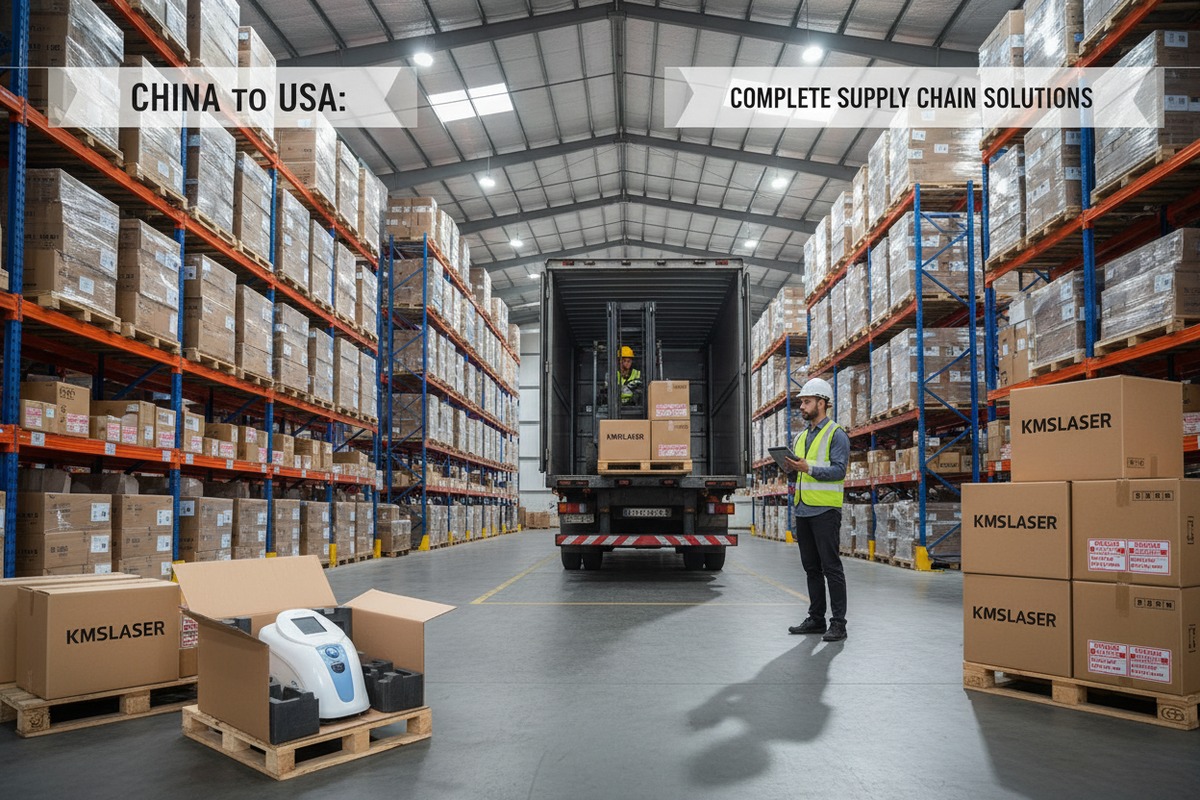
Our logistics team coordinates shipments to North America weekly. We've seen containers delayed by incomplete documentation, damaged by improper packaging, and held at customs for compliance issues. Full supply chain management 7 separates professional suppliers from order-takers.
A capable supplier manages the complete supply chain by providing production progress updates, conducting in-process quality inspections, performing pre-shipment verification, handling export documentation, coordinating freight forwarding, managing customs clearance support, and arranging final delivery to your US location.
Complete Supply Chain Service Components
Full supply chain management encompasses multiple interconnected services:
| Service Stage | Key Activities | Your Benefit |
|---|---|---|
| Production Management | Progress updates, photo documentation | Visibility into manufacturing status |
| Quality Control | Inspection reports, defect resolution | Confidence in product quality |
| Export Preparation | Documentation, packing, labeling | Compliance with import requirements |
| Freight Coordination | Carrier selection, booking, tracking | Optimized shipping cost and timing |
| Customs Support | HS codes, FDA registration 8 assistance | Smooth border clearance |
| Last Mile Delivery | Domestic carrier coordination | Door-to-door convenience |
Documentation for US Medical Device Import
Importing medical devices into the United States requires specific documentation. Missing paperwork causes delays and fines.
FDA Registration: Manufacturers and devices must be registered with FDA. Confirm your supplier maintains current registration.
510(k) Clearance Letter: Required if the device has this clearance. Customs may request evidence.
Commercial Invoice: Must accurately describe goods, value, and country of origin.
Packing List: Detailed contents for each package or container.
Bill of Lading: Transportation document from carrier.
Certificate of Origin: May be required depending on trade agreements.
Packaging Standards for Safe Transit
Shockwave devices contain sensitive electronic and mechanical components. Proper packaging prevents transit damage.
Our packaging specifications include:
- Custom foam inserts matching device contours
- Double-wall corrugated outer cartons
- Moisture barrier bags for humidity protection
- Shock indicators revealing mishandling
- Detailed handling instructions in multiple languages
Ask suppliers for packaging specifications and damage rates from previous shipments. High damage rates indicate inadequate packaging.
Communication and Tracking Expectations
Professional suppliers provide proactive communication throughout the supply chain:
- Order confirmation within 24 hours
- Production start notification
- Weekly progress updates with photos
- QC inspection completion reports
- Shipping booking confirmation
- Tracking numbers immediately after dispatch
- Arrival estimates and delivery scheduling
If you must chase suppliers for updates, their service systems need improvement.
Evaluating Logistics Partnerships
Ask suppliers about their logistics arrangements:
- Which freight forwarders do they partner with?
- What shipping terms do they offer (FOB, CIF, DDP)?
- How do they handle shipping damage claims?
- Can they consolidate shipments with other clients?
- What is their average transit time to US destinations?
Experienced exporters maintain relationships with reliable freight partners. They know customs requirements and anticipate potential delays.
Conclusion
Evaluating shockwave therapy machine suppliers requires systematic verification of certifications, quality protocols, customization capabilities, and supply chain competence. Use the frameworks and checklists provided here to make informed decisions that protect your wellness brand's reputation and satisfy your demanding clients.
Footnotes
1. Provides a comprehensive overview of extracorporeal shockwave therapy, its mechanisms, and applications. ↩︎
2. Official U.S. government resource explaining CE marking requirements for products entering the European market. ↩︎
3. Official FDA page detailing the Quality Management System Regulation (QMSR) and its harmonization with ISO 13485. ↩︎
4. Replaced with the Wikipedia page defining Original Equipment Manufacturer (OEM), a general authoritative source. ↩︎
5. Official FDA page explaining medical device approvals and clearances, including 510(k). ↩︎
6. BSI is a recognized certification body providing information on the ISO 13485 standard for medical devices. ↩︎
7. Official U.S. government page on supply chain management within the Healthcare and Public Health Sector. ↩︎
8. Replaced with the official FDA page for device registration and listing. ↩︎

 English
 Español de México
 Deutsch
 Français
 العربية
 Русский
