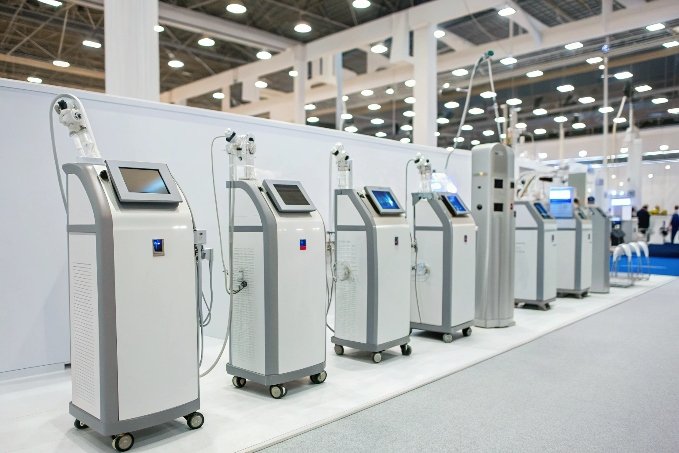
I often hear, “What’s the real power on this shockwave unit?” I get why that worries you. Specs look confusing, sales talk sounds vague, and protocols vary.
Short answer: most clinical “power” is best expressed as energy flux density (EFD) 1 for focused ESWT, and pressure (bar) 2 for radial/pressure-wave devices. Typical therapeutic EFD sits around 0.10–0.30 mJ/mm² (focused), while radial devices are commonly used below \~2.6 bar even though many reach 5 bar.
I will keep the language simple and the comparisons fair. I will also show you how to line up brands side-by-side so you can make a clean choice for your protocol and your market.
What is the typical “power” of a shockwave therapy machine?
I know the term “power” feels fuzzy. I have sat in demos where one rep says “bars,” another says “mJ/mm²,” and a third talks about “watts.”
Here’s the gist: “Power” is not one number. Focused ESWT 3 is usually reported as energy flux density (mJ/mm²). Radial systems lean on pressure (bar). Typical clinical bands are \~0.10–0.30 mJ/mm² for focused ESWT and \~1–3 bar for radial, though devices may reach higher.

Why the words differ
Focused ESWT produces a true shockwave with a tiny focal zone and very fast rise time, so we use EFD in mJ/mm². Radial devices create pressure waves that spread outward; manufacturers list pressure (bar) and frequency (Hz). The International Society for Medical Shockwave Treatment (ISMST) 4 encourages standard terminology and full reporting of parameters (device type, pulses, EFD/pressure, frequency).
Typical ranges you will actually see
Focused devices used for MSK conditions commonly run \~0.10–0.30 mJ/mm², with some platforms allowing up to \~0.55 mJ/mm². Radial devices often list 1–5 bar max, but many clinics stay below \~2.6 bar for comfort and safety.
How does machine power affect treatment results?
I have seen clinics chase “more power” when results slow down. I understand the urge. But results do not improve by turning a single knob to the max.
Bottom line: outcomes track the right dose at the right tissue more than the biggest headline number. Higher EFD can help in some indications, but too much can raise pain and risk. Radial pressure feels stronger to patients at higher bar, yet evidence supports moderate settings with correct technique.
What the literature suggests (in plain English)
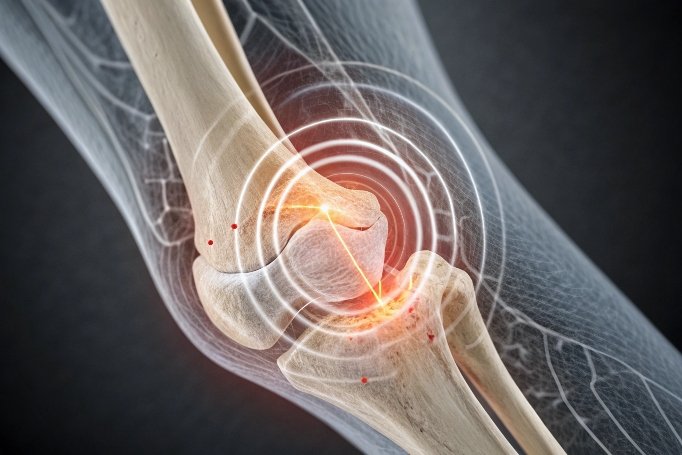
Studies and clinical guidelines 5 split ESWT by energy bands. Some shoulder calcific tendinopathy trials show better effects at ≥0.28 mJ/mm² versus lower EFD, while many soft-tissue protocols succeed within low-to-moderate bands. Focused ESWT can create precise focal stress to stimulate tissue repair. Radial waves spread energy over a larger area and may feel intense without adding focal dose.
What is the safe power range for users?
I have sat with clinicians who fear overtreatment. I share that concern. Safety is the first checkbox before any purchase order.
Safety in practice: use clinically studied ranges, escalate slowly, and follow ISMST/device guidance. For focused ESWT, many MSK protocols sit in low to moderate EFD; for radial, many clinics keep ≤\~2.6 bar even if the device allows 5 bar. Screen contraindications.
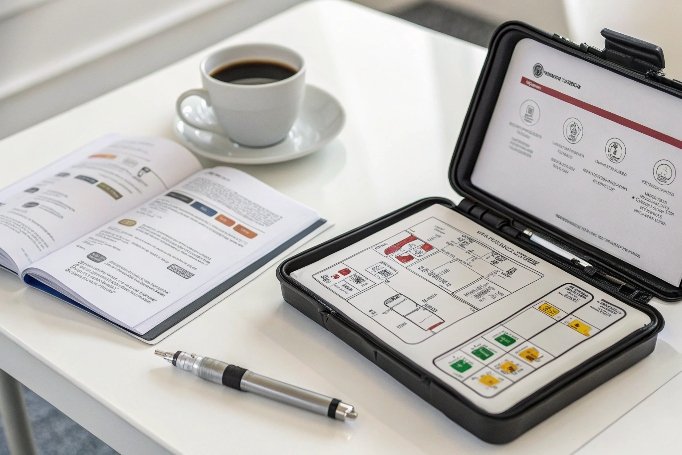
Device manuals 6 recommend conservative starting points. For example, a focused system like the Chattanooga Intelect Focus lists 0.01–0.55 mJ/mm² and recommends starting \~0.10 mJ/mm² with stepwise adjustment.
Are adjustable power settings available?
Yes. Modern devices let you adjust energy/pressure, frequency, pulses, and applicators/stand-offs. Focused units commonly offer 0.01–0.55 mJ/mm² and 1–8 Hz; radial systems often allow 1–5 bar and 4–20 Hz, with swappable transmitters that change feel and depth.
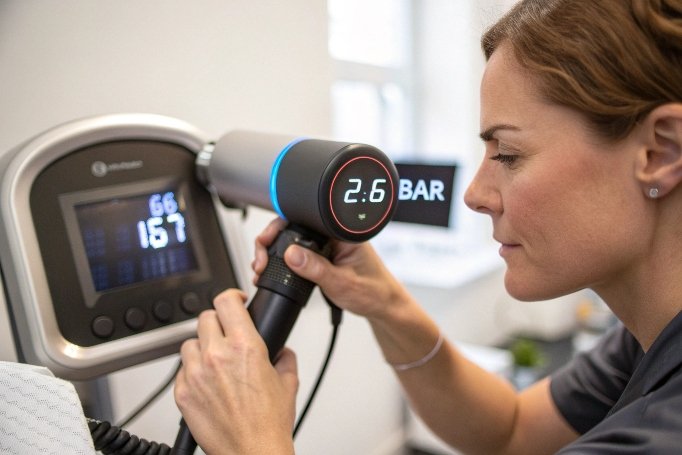
Clinical training resources 7 emphasize correct adjustment of settings to match tissue tolerance and indication, rather than chasing maximum numbers.
How to compare power levels across brands?
I have compared dozens of spec sheets for buyers. The trick is to normalize different units so you can compare target dose, not just marketing.
Use a simple framework: first separate focused vs radial. Then line up dose units (EFD vs bar), frequency, pulse capacity, and depth control. Finally, confirm published ranges and protocol guidance 8 from recognized sources (ISMST, device manuals).
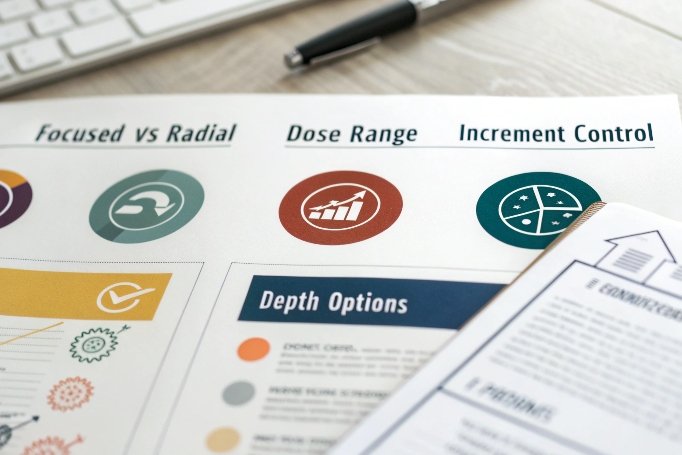
When comparing, it helps to review clinical evidence reviews 9 to see which dose bands are actually supported, rather than just relying on maximum values listed in brochures.
Conclusion
Use the right unit for the right tech. Match dose to tissue. Standardize parameters. Compare brands by ranges, not slogans. For procurement, resources like medical device buying guides 10 ensure informed and safe choices.
Footnotes
1. Explanation of energy flux density in shockwave therapy. ↩︎
2. ISMST protocols describing radial shockwave pressure units. ↩︎
3. Overview of focused ESWT principles and clinical use. ↩︎
4. ISMST official site for terminology and standards. ↩︎
5. Clinical guideline review of ESWT for musculoskeletal disorders. ↩︎
6. Chattanooga Intelect device manual with dosing recommendations. ↩︎
7. Training resources for adjusting shockwave therapy devices. ↩︎
8. ISMST recommended clinical protocols for ESWT. ↩︎
9. Cochrane evidence review on shockwave therapy effectiveness. ↩︎
10. FDA guide for buying safe medical devices. ↩︎

 English
  Español de México
  Deutsch
  Français
  العربية
  Русский