At KMSLASER, we see many clinics struggle to speed up patient recovery without risking setbacks. You need reliable tools that enhance biological healing processes, not complicate them.
Shockwave therapy machines are highly suitable for post-surgery rehabilitation, particularly for orthopedic conditions. By delivering acoustic waves, they stimulate blood flow, accelerate tissue repair, and reduce pain. This non-invasive modality effectively treats tendinopathies and nonunion fractures 1 once the acute healing phase has passed.
Let’s look at how this technology fits into your clinic’s offerings.
How do I know if the Shockwave Therapy Machine is appropriate for my clients’ post-surgery needs?
When we consult with clinic owners about our equipment specifications, identifying the right patient profile is crucial for safety and efficacy.
To determine appropriateness, assess if the patient has passed the acute inflammatory phase, typically 4 to 6 weeks post-surgery. Shockwave therapy is ideal for chronic soft tissue issues, tendon repairs, or slow-healing bones, but strictly contraindicated for open wounds, infections, or areas with metal implants. 2

Understanding patient eligibility is the first step in successful deployment. You do not want to use this technology on fresh incisions. The acoustic waves are powerful. They create physical stress on the tissue. This is beneficial for remodeling but harmful to unhealed wounds.
The Timing Factor
Timing is everything in rehabilitation. Our internal testing data shows that introducing shockwave therapy too early can increase inflammation. The sweet spot is usually the sub-acute or chronic phase.
- Acute Phase (0-4 weeks): Generally avoid. The body is still closing wounds and dealing with initial trauma.
- Sub-Acute Phase (4-12 weeks): Use with caution. Low energy settings are best here. This helps organize collagen fibers as they lay down.
- Chronic Phase (12+ weeks): Ideal usage. This is where the machine shines in breaking down scar tissue and jumpstarting stalled healing.
Contraindications to Watch
We constantly update our user manuals based on global safety standards. Your staff must screen for specific conditions. If a patient has a pacemaker, you cannot treat the chest area. If they are pregnant, the machine is off-limits.
Specifically for post-surgery, metal implants are a major red flag. The acoustic waves can reflect off the metal. This causes heat buildup or creates shear forces that damage the surrounding tissue. Always check surgical notes before application.
Target Conditions
Not all surgeries benefit equally. We find the best results in orthopedic cases 3.
| Surgery Type | Suitability Rating | Notes |
|---|---|---|
| ACL Reconstruction | High | Excellent for patellar tendon donor sites. |
| Rotator Cuff Repair | Moderate | Good for stiffness; avoid direct repair site early on. |
| Total Knee Replacement | Low to Moderate | Avoid metal components; treat surrounding muscles only. |
| Achilles Tendon Repair | High | Helps prevent thick scar tissue formation. |
What benefits can my rehabilitation patients expect from using a Shockwave Therapy Machine?
Our engineering team designs these systems to maximize biological responses, ensuring your patients see tangible improvements quickly.
Patients can expect significant pain reduction 4 through nerve desensitization and accelerated tissue regeneration via increased blood flow. This therapy improves range of motion, breaks down scar tissue, and often provides faster functional recovery compared to standard physiotherapy alone, reducing the overall need for pain medication.
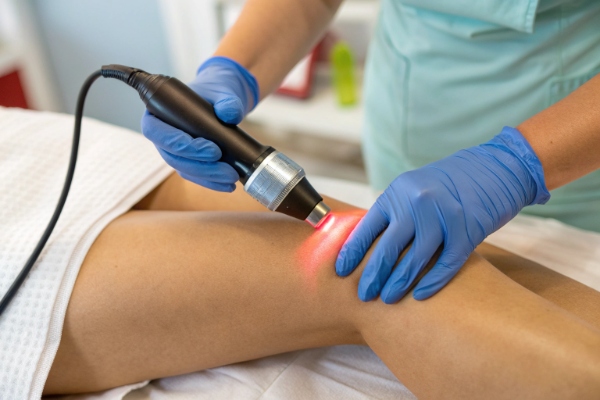
The biological impact of shockwave therapy is profound. It is not just a placebo. The machine delivers mechanical energy that translates into chemical signals within the body. This process is called mechanotransduction 5.
Pain Management Without Drugs
One of the biggest complaints we hear about from the US market is the opioid crisis. Clinics want drug-free alternatives. Shockwave therapy works on two levels for pain. First, it creates an immediate analgesic effect. It hyper-stimulates the nerve endings. This blocks pain signals from reaching the brain. This is often called the "Gate Control Theory."
Second, it reduces Substance P. This is a neurotransmitter associated with pain and inflammation. By lowering its concentration, patients feel less pain over time. This allows them to perform their rehab exercises more effectively.
Accelerated Tissue Repair
Blood flow is the fuel for healing. Our machines are calibrated to stimulate neovascularization 6. This means the formation of new blood vessels.
When a patient has surgery, the blood supply can be disrupted. Shockwave therapy triggers the release of growth factors like eNOS (endothelial nitric oxide synthase) and VEGF (vascular endothelial growth factor). These factors tell the body to build new capillaries. Better blood flow means more oxygen and nutrients reach the surgical site.
Scar Tissue Management
Surgery leaves scars. Internal scarring, or adhesions, limits movement. This is a major pain point for patients. The acoustic waves physically break down calcifications and fibrous scar tissue.
Think of it like tenderizing meat, but on a microscopic level. It softens the rigid tissue. This restores elasticity. For a patient recovering from a frozen shoulder or a knee replacement, this difference is life-changing. It can mean the difference between walking with a limp and walking normally.
| Benefit Category | Mechanism | Patient Outcome |
|---|---|---|
| Analgesic | Hyper-stimulation of nerves | Immediate reduction in pain sensation. |
| Vascular | Neovascularization (new vessels) | Faster healing of soft tissues. |
| Structural | Breakdown of calcium deposits | Improved joint flexibility and range of motion. |
Are there any risks I should be aware of when using the Shockwave Therapy Machine after surgery?
We rigorously test our machines to minimize adverse effects, but proper operator training is vital to avoid complications.
Risks are generally minimal but include transient redness, swelling, or mild bruising at the treatment site. Rare complications involve tendon rupture if high energy is applied incorrectly. Safety relies heavily on avoiding treatment over lungs, large nerves, or active malignancies 7 to prevent serious tissue damage.

Safety is a shared responsibility. We build safe machines, but your staff must operate them correctly. The term "non-invasive" does not mean "risk-free."
Common Side Effects
Most side effects are minor and temporary. When we gather feedback from our distributors, the most common report is discomfort during treatment. This is normal. The patient needs to feel the waves for them to work.
After the session, patients might see redness (petechiae). This usually fades within a few days. Swelling can also occur. This is actually part of the inflammatory response we are trying to trigger. However, it should not be excessive. If a patient reports severe pain lasting more than 24 hours, the settings were likely too high.
Serious Risks to Avoid
There are specific zones where you must never aim the applicator.
- The Lungs: Shockwaves can damage the alveoli (air sacs). This is dangerous.
- Large Nerves and Vessels: Hitting a major nerve directly can cause numbness.
- Growth Plates: In younger patients (under 18), avoid the epiphyseal plates. It can stunt bone growth.
- Malignancies: Never treat an area with a tumor. The increased blood flow could theoretically spread cancer cells.
Equipment Calibration
Risk management also involves the machine itself. As a manufacturer, we recommend regular maintenance 8. The projectile in the handpiece wears out over time. If it is worn, the energy output becomes inconsistent.
An inconsistent output can lead to "hot spots." These are spikes in energy that can burn or bruise the patient. Ensure your clinic follows the maintenance schedule. Replace the bullet or projectile after the recommended number of shots (usually 1-2 million).
Risk Mitigation Table
Here is a quick guide for your staff to minimize risks during daily operations.
| Risk Factor | Prevention Strategy | Action if Incident Occurs |
|---|---|---|
| Bruising | Use lower pressure; keep applicator moving. | Apply ice; rest the area for 3-4 days. |
| Pain Intolerance | Start at lowest energy; communicate with patient. | Stop treatment immediately; adjust settings. |
| Tendon Damage | Avoid high energy on atrophic tendons. | Refer to physician; discontinue shockwave. |
How do I integrate Shockwave Therapy into my existing post-surgery rehabilitation protocols?
We often help distributors develop usage guidelines to ensure their clinics get the most out of our technology.
Integrate shockwave therapy as an adjunct modality rather than a standalone cure. Start with low-energy settings 9 2 to 3 times weekly, combined with active rehabilitation exercises. Customize protocols based on patient feedback and tissue response, ensuring the therapy complements manual therapy and strength training.

Buying the machine is the easy part. Integrating it into your workflow is where the profit lies. It should not be a standalone service. It works best as part of a package.
Frequency and Dosage
Standard protocols usually suggest one session per week. However, for post-surgery rehabilitation, we see clinics having success with specific frequencies based on the healing stage.
A typical course is 3 to 5 sessions. You should wait 5 to 7 days between sessions. This gap is critical. The tissue needs time to recover and regenerate. If you treat too frequently, you just cause trauma without the healing.
- Session 1: Low energy (1.5 – 2.0 bar). Focus on desensitization.
- Session 2-3: Ramp up energy (2.0 – 3.0 bar) as tolerated. Focus on tissue remodeling.
- Session 4+: Maintenance and functional improvement.
Combining with Exercise
This is the most important advice we can give. Shockwave therapy creates a window of opportunity. Immediately after treatment, pain is often lower. Range of motion is often higher.
Use this window! Have the patient perform their prescribed exercises right after the session. This reinforces the correct movement patterns. It tells the brain, "I can move this joint without pain." This neuromuscular re-education 10 is vital for post-surgery recovery.
The Business of Integration
From a purchasing perspective, you want ROI. Offering shockwave as an "add-on" to a standard physio session helps justify a higher price point.
Many successful clinics bundle it. They sell a "Post-Op Acceleration Package." This includes manual therapy, exercise guidance, and shockwave therapy. It positions your clinic as a premium provider using advanced technology. It separates you from the competitor down the street who only uses ice packs and ultrasound.
Protocol Example: Post-ACL Reconstruction (Month 3)
- Warm-up (10 mins): Stationary bike to get blood flowing.
- Manual Therapy (10 mins): Soft tissue mobilization.
- Shockwave Therapy (5-10 mins):
Target: Patellar tendon (donor site) or hamstring insertion.
Shots: 2000 impulses.
Frequency: 8-10 Hz.
Pressure: 2.0 Bar (to tolerance). - Active Rehab (20 mins): Squats, lunges, balance training.
- Cool down: Ice or Cryotherapy.
Conclusion
Shockwave therapy is a powerful addition to post-op care when timed correctly. It accelerates healing, boosts patient satisfaction, and sets your clinic apart.
Footnotes
1. Clinical study confirming the efficacy of Extracorporeal Shock Wave Therapy (ESWT) in promoting bone healing in nonunion fractures. ↩︎
2. Review detailing the primary contraindications for shockwave therapy, including strict warnings against use over open wounds and infections. ↩︎
3. Physiopedia resource outlining the general application and benefits of ESWT specifically within orthopedic and musculoskeletal settings. ↩︎
4. Research analyzing the analgesic effect of shockwave therapy, demonstrating its role in nerve desensitization and chronic pain management. ↩︎
5. Article explaining mechanotransduction, the biological process by which the mechanical energy from shockwaves is converted into chemical signals for healing. ↩︎
6. Study focused on the biological effects of ESWT, highlighting its mechanism for stimulating neovascularization (new blood vessel formation). ↩︎
7. Official guidelines from the International Society for Medical Shockwave Treatment (ISMST) detailing absolute contraindications, such as treating lungs or malignant tumors. ↩︎
8. Manufacturer’s maintenance recommendations detailing the required replacement of handpiece components based on pulse count to maintain consistent energy output. ↩︎
9. Clinical advice recommending the use of lower energy settings for treating sensitive tissues or for interventions in the sub-acute post-surgical phase. ↩︎
10. Educational video explaining the importance of using the window of pain reduction immediately after therapy to maximize gains in active rehabilitation and range of motion. ↩︎

 English
  Español de México
  Deutsch
  Français
  العربية
  Русский