

Every week, our sales team receives questions from U.S. buyers worried about customs seizures and fake certifications FDA’s 510(k) database 1. The fear is real. One wrong purchase can mean thousands of dollars stuck at the port. Worse, your business reputation could suffer permanent damage if non-compliant devices reach your customers.
To verify a valid medical device license for shockwave therapy machines, check the FDA’s 510(k) database for clearance numbers, confirm establishment registration through FURLS, request state-level distributor licenses, and cross-reference all documentation with official government databases before placing any order.
This guide walks you through every step of the verification process. We cover federal FDA requirements, state licensing variations, OEM verification methods, and customs clearance strategies. Let’s protect your investment and your business.
How do I verify that my supplier's medical device license for shockwave therapy machines is authentic?
Our export team has helped dozens of U.S. distributors navigate FDA compliance over the years. The biggest mistake we see? Buyers trust PDF certificates without checking official databases. Fake documents look convincing. Only database verification reveals the truth.
Verify supplier authenticity by searching the FDA's Establishment Registration Database for their registration number, confirming 510(k) clearance status through the official FDA database, requesting original documentation with traceable numbers, and checking for any FDA warning letters or import alerts against the company.

Understanding FDA Establishment Registration
Every company that manufactures, distributes, or imports medical devices into the U.S. must register with the FDA annually. This registration happens through the FDA Unified Registration and Listing System 2 (FURLS). When our facility completes this process each year, we receive a unique registration number. This number is searchable by anyone.
To check a supplier's registration, visit the FDA's Device Registration and Listing database. Enter the company name or registration number. The system shows registration status, facility address, and listed devices. If your supplier cannot provide a verifiable registration number, walk away immediately.
The 510(k) Clearance Verification Process
Shockwave therapy machines typically fall under FDA Class II medical devices 3. This classification requires 510(k) premarket notification. The manufacturer must demonstrate substantial equivalence to a legally marketed predicate device. Without 510(k) clearance, the device cannot be legally sold in the United States.
| Verification Step | Where to Check | What to Look For |
|---|---|---|
| 510(k) Clearance | FDA 510(k) Database | Clearance number, device name, applicant |
| Establishment Registration 4 | FURLS Database | Active status, facility address, owner info |
| Device Listing | FDA Device Listing | Specific product models covered |
| Warning Letters | FDA Warning Letters Database | Any compliance issues |
| Import Alerts | FDA Import Alert System | Detention history |
Red Flags That Signal Fake Licenses
Watch for these warning signs during verification. First, the company name on certificates does not match the FDA database entry exactly. Second, the registration address differs from the shipping address without explanation. Third, the supplier cannot provide the actual 510(k) clearance number. Fourth, certificates show expired dates or lack official FDA formatting.
Our quality control team always recommends requesting multiple forms of documentation. Ask for the FDA establishment registration confirmation, the 510(k) clearance letter, and the device listing printout. Cross-reference all three. Legitimate suppliers provide this information without hesitation.
Third-Party Verification Services
Some buyers prefer using commercial verification services. Companies like Verisys offer real-time license monitoring. These services track expiration dates, sanctions, and compliance history across multiple states and federal courts. For high-volume importers, automated monitoring prevents surprises.
However, primary source verification remains essential. Commercial services supplement but never replace direct FDA database checks. The FDA databases are free, public, and updated regularly. Use them as your foundation.
What specific certifications should I request to ensure my imported equipment meets US safety standards?
When we prepare shipments for American distributors, documentation requirements are extensive. Missing even one certificate can trigger customs holds. Understanding exactly what paperwork you need saves time, money, and stress.
Request FDA 510(k) clearance documentation, establishment registration confirmation, device listing records, Quality System Regulation compliance certificates, state-specific distributor licenses if applicable, and calibration records. Also verify CE marking if the manufacturer exports to multiple markets as this indicates broader compliance capability.

Essential Federal Certifications
The foundation of U.S. medical device compliance starts with federal requirements. Every shockwave therapy machine needs documented 510(k) clearance. This clearance letter specifies the cleared indications for use. Make sure your intended applications match the cleared uses exactly.
Beyond 510(k), request proof of Quality System Regulation 5 (QSR) compliance. The FDA requires manufacturers to follow QSR standards outlined in 21 CFR Part 820 6. This covers design controls, production processes, and corrective actions. While QSR inspection reports are not always available, suppliers should provide quality management certificates.
| Certification Type | Issuing Authority | Purpose | Validity Period |
|---|---|---|---|
| 510(k) Clearance | FDA | Premarket authorization | Indefinite unless modified |
| Establishment Registration | FDA | Facility authorization | Annual renewal required |
| Device Listing | FDA | Product registration | Annual renewal required |
| State Distributor License | State Boards | Distribution authorization | Varies by state |
| ISO 13485 | Third-party auditors | Quality management system | Three years |
| CE Marking | Notified Bodies (EU) | European conformity | Varies |
State-Level Licensing Requirements
At least 20 U.S. states require separate medical device distributor or manufacturer licenses. These requirements vary significantly. California, Florida, Texas, and New York have particularly strict licensing programs. If you distribute in these states, you need state-specific authorization.
Our compliance specialists often remind customers that federal FDA compliance alone is insufficient. State boards conduct their own inspections and enforce local regulations. Penalties for non-compliance include fines, product seizures, and distribution bans.
Quality Management Certifications
ISO 13485 certification 7 demonstrates a manufacturer's commitment to quality management. This international standard applies specifically to medical device production. When evaluating our facility, U.S. buyers frequently request ISO 13485 certificates. This certification requires third-party audits and ongoing surveillance.
Request the full ISO certificate, not just a logo. Verify the certificate through the issuing certification body. Check the scope of certification covers the specific product type you are purchasing. Some manufacturers hold ISO 13485 for certain products but not others.
Electrical Safety and EMC Compliance
Shockwave therapy machines must meet electrical safety standards. IEC 60601-1 8 is the primary international standard for medical electrical equipment. Request test reports showing compliance with this standard. Additionally, electromagnetic compatibility (EMC) testing ensures the device does not interfere with other equipment.
For U.S. import, UL or ETL listing provides additional assurance. These marks indicate the product has been tested by a Nationally Recognized Testing Laboratory. While not always required by FDA, these certifications reduce liability risk.
How can I confirm that the manufacturer's registration actually covers the OEM models I want to private-label?
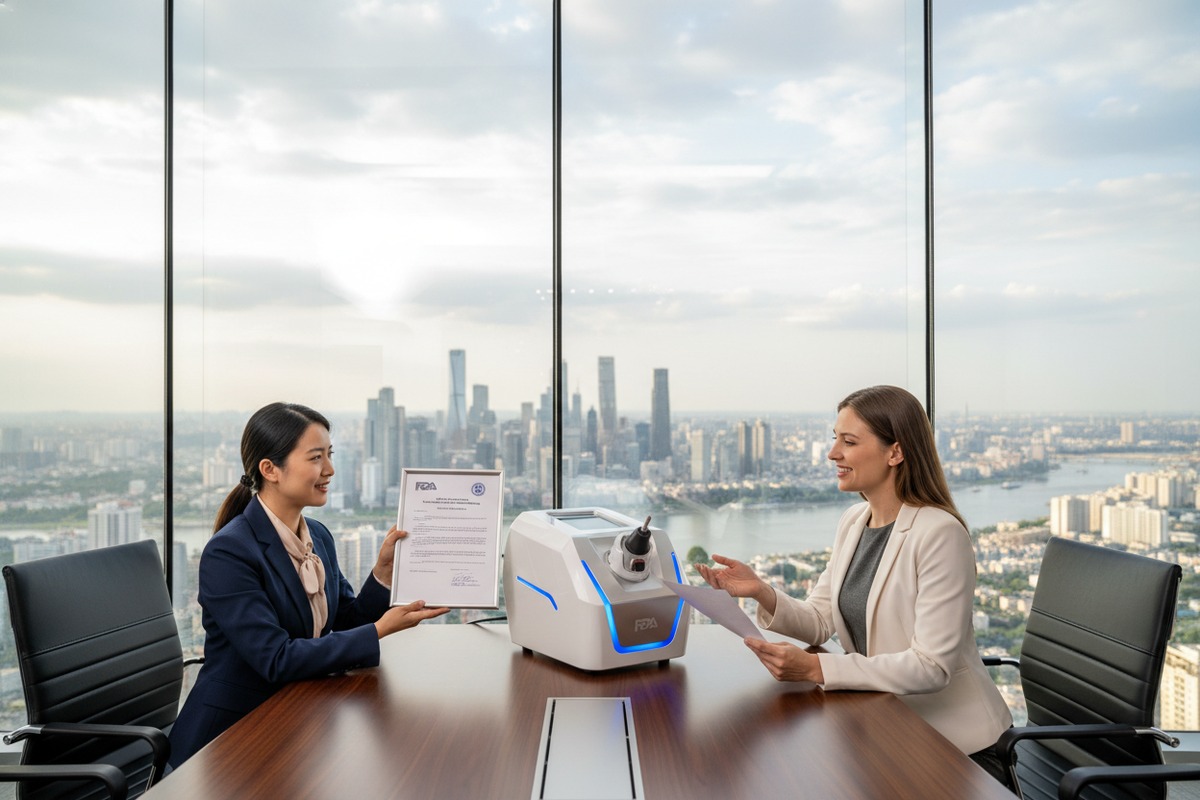
At our production facility, we manufacture shockwave devices for multiple private-label brands. Each brand configuration requires separate consideration under FDA regulations. The registration covering one model does not automatically cover all variations. This distinction causes confusion among first-time importers.
Confirm OEM model coverage by checking the FDA device listing for specific model numbers, verifying the 510(k) clearance covers your intended configuration, requesting a written confirmation from the manufacturer detailing which models fall under their registration, and ensuring any modifications do not require a new 510(k) submission.
Understanding Device Listing Specifics
FDA device listing is more granular than establishment registration. When manufacturers list devices, they specify product codes, proprietary names, and model numbers. Your private-label model must appear in this listing. Generic descriptions are insufficient.
Our regulatory team maintains detailed listing records for every product configuration we produce. When customers request OEM verification, we provide the exact listing entry showing their model. If a manufacturer cannot show your specific model in their listing, the product technically lacks proper FDA registration.
510(k) Clearance Scope Analysis
The 510(k) clearance document specifies exactly what was cleared. This includes the device description, indications for use, and technical specifications. Private-label configurations must fall within this cleared scope. Significant modifications may require a new 510(k) submission.
| Modification Type | 510(k) Impact | Action Required |
|---|---|---|
| Brand name change only | No new 510(k) | Update device listing |
| Minor cosmetic changes | Usually no new 510(k) | Document in design history |
| Different energy levels | May require new 510(k) | Consult regulatory expert |
| New indications for use | Requires new 510(k) | Full submission process |
| Software functionality changes | Often requires 510(k) | Technical review needed |
Private-Label Agreement Documentation
Professional OEM relationships include clear documentation of regulatory responsibilities. Request a private-label agreement that specifies who holds the FDA registration and who maintains quality system compliance. The agreement should state which party handles adverse event reporting and recall procedures.
When we establish OEM partnerships, we provide detailed regulatory support documents. These outline exactly which clearances cover the private-label products. Buyers should never assume coverage exists without written confirmation.
Verification Steps for OEM Buyers
Follow this process to verify OEM coverage. First, obtain the manufacturer's FDA establishment registration number. Second, search the FDA device listing database for that registration. Third, locate the specific product category for shockwave therapy devices. Fourth, confirm your model name or number appears in the listing.
If your private-label model does not appear, the manufacturer must update their listing before your products can legally enter the U.S. market. This update process takes time. Factor it into your purchasing timeline. Our team typically completes listing updates within two to three weeks when customers provide complete information.
Contract Manufacturing Considerations
Some buyers use contract manufacturers separate from the brand owner. In these cases, both the contract manufacturer and the specification developer may need FDA registration. The regulatory structure becomes more complex. Ensure every entity in your supply chain maintains proper registration.
Document the chain of custody from manufacturing through distribution. FDA inspectors may request this information. Clear documentation demonstrates compliance and reduces inspection complications.
Where can I cross-reference a supplier's license number to prevent my shipment from being seized at customs?
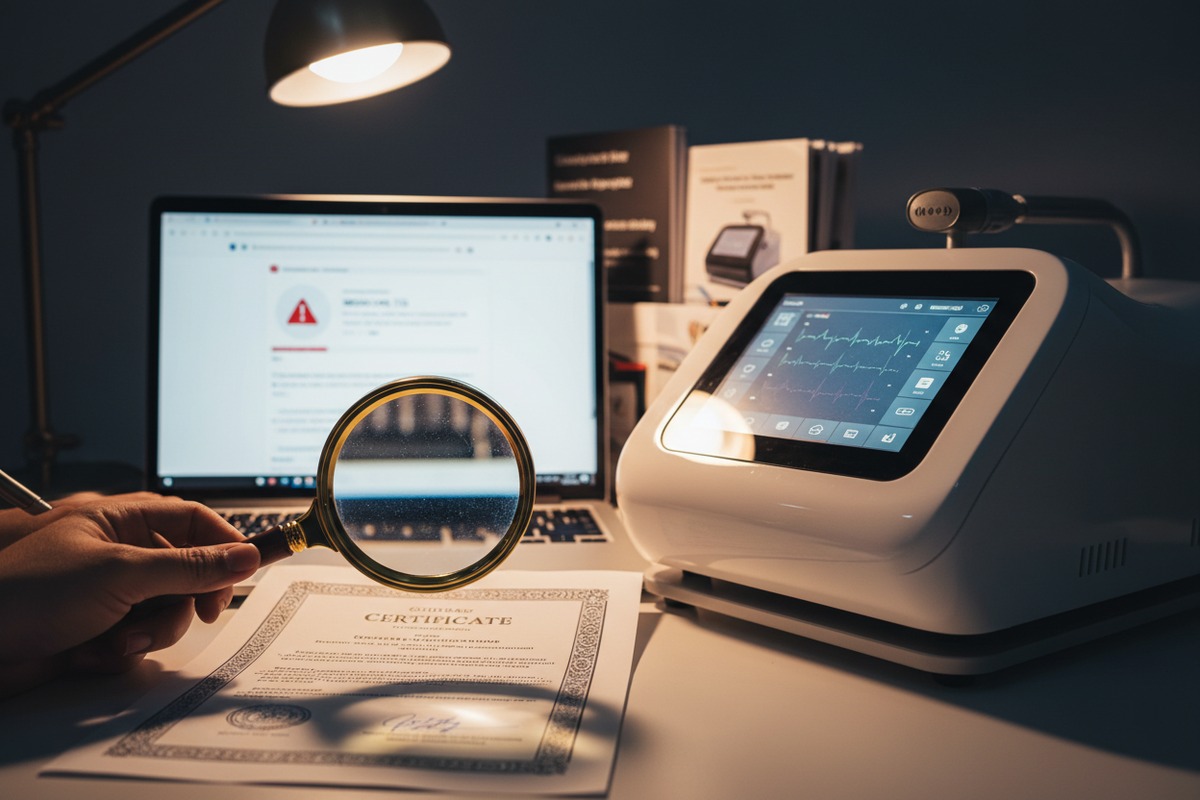
Our logistics team has witnessed too many shipments held at U.S. ports due to documentation errors. Customs and Border Protection works closely with FDA to screen medical device imports. Incomplete or incorrect license information triggers automatic detention. Prevention requires thorough pre-shipment verification.
Cross-reference supplier licenses through the FDA's FURLS database for establishment registration, the FDA 510(k) database for clearance status, the FDA Import Alert list for detention history, state licensing board websites for distributor authorizations, and commercial verification services for comprehensive compliance profiles.
FDA Import Alert System
The FDA maintains an Import Alert list identifying products and companies subject to Detention Without Physical Examination (DWPE). Before purchasing, search this database for your supplier's name and country. Products from flagged companies face automatic detention. Clearing detained shipments requires extensive documentation and FDA review.
Import alerts target companies with compliance violations, including unapproved devices, misbranding, and quality system failures. Our facility has never appeared on import alert lists because we maintain strict compliance protocols. Ask potential suppliers directly about their import alert status.
Customs Documentation Requirements
Proper documentation prevents customs delays. Medical device imports require the FDA product code, establishment registration number, device listing number, and 510(k) clearance number if applicable. The commercial invoice must accurately describe the product and its intended use.
| Document | Purpose | Consequence if Missing |
|---|---|---|
| Commercial Invoice | Value and description | Shipment hold |
| FDA Product Code | Device classification | Automatic review |
| Establishment Registration | Facility authorization | Detention likely |
| 510(k) Number | Premarket clearance | Detention likely |
| Entry Bond | Financial guarantee | Cannot clear customs |
Prior Notice Requirements
FDA requires prior notice for all imported food and medical products. Your customs broker typically handles this filing. However, verify that prior notice has been submitted correctly. Errors in prior notice filings cause delays even when all licenses are valid.
The prior notice must include the FDA registration number of the foreign manufacturer. Cross-reference this number with your verification records. Mismatches between prior notice and actual documentation trigger FDA review.
State-Level Import Considerations
Some states require additional documentation for medical device imports. California's Food and Drug Branch, for example, may request evidence of state registration before products can be distributed within the state. Plan for these requirements before your shipment arrives.
Our shipping coordinators maintain updated records of state requirements for major distribution hubs. We advise customers which states have additional requirements and what documentation to prepare. This proactive approach prevents post-arrival complications.
Building a Verification Checklist
Create a standardized verification checklist for every import. Include FDA establishment registration status, 510(k) clearance verification, import alert search results, state license confirmations, and supplier agreement documentation. Complete this checklist before issuing a purchase order.
Store verification records for at least three years. FDA may request this documentation during inspections. Demonstrating due diligence protects your business if compliance questions arise later. Our quality assurance process includes maintaining these records for all our distribution partners.
Working with Customs Brokers
Choose a customs broker experienced with medical device imports. They understand FDA requirements and can identify potential problems before shipment. Provide your broker with all verification documentation. Clear communication prevents filing errors.
Some brokers offer FDA compliance consulting services. This can be valuable for first-time importers. However, ultimate responsibility for compliance rests with the importer of record. Never rely solely on broker assurances without conducting your own verification.
Conclusion
Verifying medical device license 9s requires systematic checks across multiple databases and authorities. Protect your investment by confirming FDA registration, 510(k) clearance, state licenses, and OEM coverage before every purchase. The verification process takes time but prevents costly seizures and legal complications.
Footnotes
1. Direct link to the official FDA searchable 510(k) premarket notification database. ↩︎
2. Provides direct access to the FDA’s official FURLS system. ↩︎
3. Official FDA explanation of medical device classification, including Class II. ↩︎
4. Official FDA guidance on medical device establishment registration. ↩︎
5. Official FDA information on the Quality Management System Regulation (QMSR), which superseded QSR. ↩︎
6. Direct legal text of the FDA’s Quality System Regulation. ↩︎
7. Official information on the international standard for medical device quality management systems. ↩︎
8. Official information on the international standard for medical electrical equipment safety. ↩︎
9. Explains FDA medical device registration and its legal requirements. ↩︎

 English
 Español de México
 Deutsch
 Français
 العربية
 Русский
