

Every week, our production floor receives urgent calls from clinic owners who just discovered their newly imported shockwave machines have uncertified power plugs. These devices sit useless, blocked by insurance requirements and local inspectors. The financial loss hurts. The reputation damage hurts more.
To verify UL or ETL certification for shockwave therapy machine power plugs, locate the certification mark and file number on the plug label, then search the UL Product iQ database or Intertek ETL directory online. Cross-reference the file number with your product specifications to confirm authentic certification status.
This guide walks you through the exact steps our quality team uses daily. We cover database searches, common fakes, and ongoing compliance. Let us protect your business together.
How do I verify the UL or ETL listing numbers for my shockwave therapy machine power plugs?
When we ship shockwave machines to North American clinics, verification requests come constantly. Buyers want proof. They need to show inspectors real documentation. A simple mark is not enough anymore.
To verify UL or ETL listing numbers, first find the certification mark on your power plug. Note the file number printed near the mark. Then visit UL's Product iQ database or Intertek's ETL directory. Enter the file number and confirm the product category matches your shockwave machine specifications.

Understanding the Certification Mark Anatomy
Every genuine UL or ETL mark contains specific elements. Missing any one element signals a potential fake. Our incoming inspection team checks these points on every power cord we receive from suppliers.
The mark itself is just the beginning. File numbers are unique identifiers assigned during testing. Category codes tell you what safety standards apply. Together, they create a verification trail.
| Mark Element | UL Example | ETL Example | What to Check |
|---|---|---|---|
| Logo | UL in circle | ETL intertwined letters | Sharp, clear printing |
| Geographic Indicator | US or C-US | US or C-US | Must match your market |
| File Number | E123456 | 5012345 | 6-7 digit number |
| Category Code | AVLV2 | Product category | Safety standard reference |
| Word "Listed" | Listed | Listed or Certified | Must say Listed or Certified |
Step-by-Step File Number Search
Start with the physical plug. Turn it over. Look for small text near the prongs. You should see a logo plus numbers. Write these down exactly.
Next, open UL's Product iQ website. Create a free account if needed. UL Product iQ database 1 Enter your file number in the search bar. The results page shows the certificate holder, product category, and covered models.
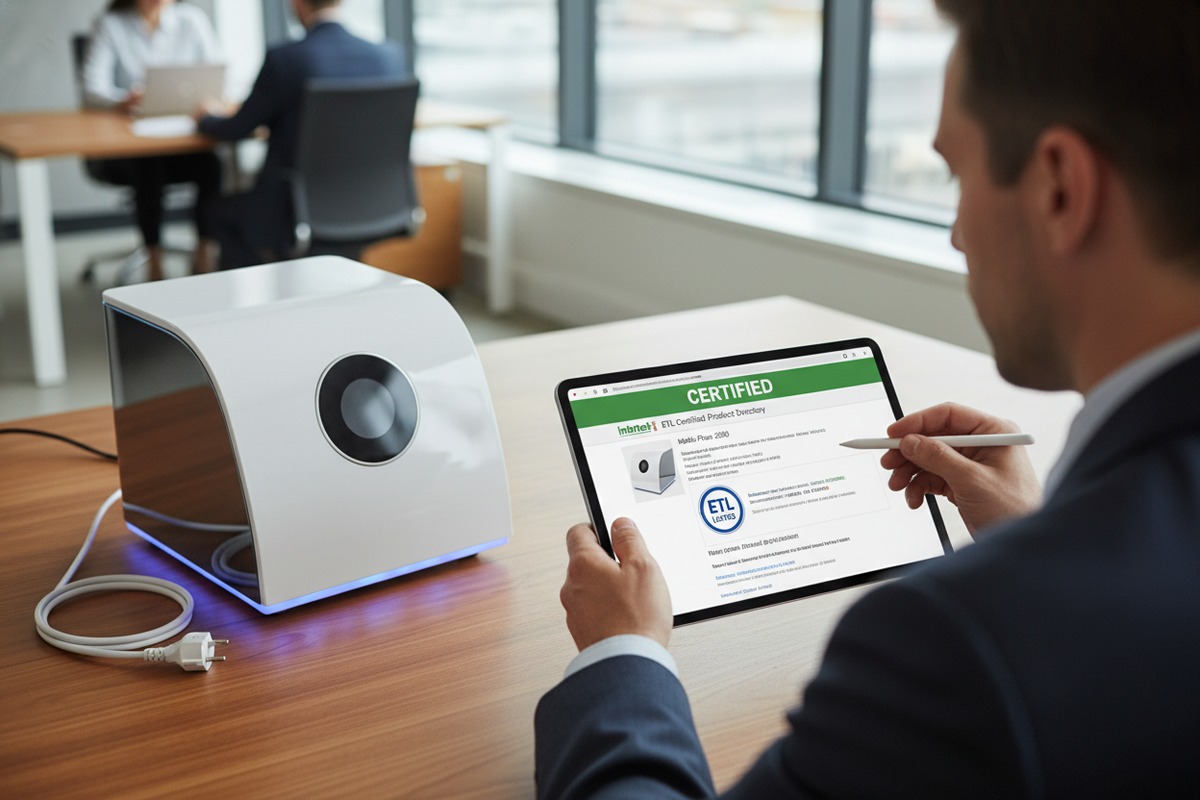
For ETL marks, visit the Intertek directory. The process mirrors UL. Intertek ETL directory 2 Enter your file number. Review the listing details. Compare against your plug specifications.
What If Numbers Do Not Match?
Mismatches happen often. We see three common scenarios. First, the plug model differs from the listed model. This means your specific plug was never tested. Second, the certificate holder name differs from your supplier. This suggests unauthorized use. Third, no results appear at all. This confirms a fake mark.
In any mismatch case, reject the product. Contact your supplier immediately. Request proper documentation. Do not install uncertified plugs in your machines.
Where can I check the online database to confirm my supplier's electrical safety certifications?
Our engineering team bookmarks two websites above all others. These databases save hours of back-and-forth emails with suppliers. They give you direct access to certification truth.
Check UL certifications at UL Product iQ (productiq.ulprospector.com) and ETL certifications at the Intertek Directory (intertek.com/directories). Both databases are free to search. Enter the file number from your product label to view complete certification details including product scope and certificate holder information.
UL Product iQ Database Navigation
UL Product iQ replaced the old Online Certifications Directory in 2020. The new system offers better search functions. You can search by company name, file number, or product category.
For power plugs, search under "Wire and Cable" categories. Enter your E-file number. The results show covered products, manufacturing locations, and applicable safety standards. Print these results for your records.
Pro tip from our quality team: Download the certificate PDF when available. Keep it with your purchase order. Inspectors appreciate complete documentation packages.
Intertek ETL Directory Features
The Intertek directory works similarly but looks different. Navigate to their certification directory page. Select "North America" as your region. Enter your file number in the search field.
Results display the certificate holder, product description, and testing standards applied. ETL listings often show both US and Canadian certifications together. Look for "US" or "C" indicators matching your target market.
| Database | URL | Search Options | Best For |
|---|---|---|---|
| UL Product iQ | productiq.ulprospector.com | File number, company, category | UL Listed products |
| Intertek Directory | intertek.com/directories | File number, company name | ETL Listed products |
| CSA Group | csagroup.org/testing-certification | Certification number | Canadian market focus |
Advanced Search Techniques
Sometimes basic searches fail. The file number format may vary. Try removing leading zeros. Try adding the letter prefix. Try searching by your supplier's company name instead.
When searching by company, review all their certified products. Confirm your specific plug model appears in the listing scope. Generic company certification does not cover every product they sell.
Requesting Documentation from Suppliers
Database searches verify current status. But you should also request test reports directly. Legitimate suppliers provide these willingly. Hesitation signals problems.
Ask for the complete test report, not just the certificate. Reports show exact models tested, components used, and test conditions. Compare these against what you actually receive. Any deviation invalidates the certification.
Why is it critical for my private-label beauty equipment to have UL or ETL certified power cords?
We learned this lesson early in our export business. A client's machine caused a minor electrical fault. The investigation revealed an uncertified power cord. Insurance denied the claim entirely. The clinic sued our client. Everyone lost.
UL or ETL certified power cords are critical for private-label beauty equipment because they satisfy OSHA workplace safety requirements, enable insurance coverage, protect against liability lawsuits, and ensure acceptance by local inspectors. Uncertified cords can void warranties, block installations, and create serious fire or shock hazards in clinical settings.

OSHA Requirements and Legal Compliance
OSHA mandates that electrical equipment in workplaces meet safety standards verified by Nationally Recognized Testing Laboratories 3. UL and ETL are both NRTLs. Their marks satisfy federal requirements.
Clinics operating without NRTL-certified equipment face fines. They also face shutdown orders. Your clients cannot afford this risk. Your brand cannot afford association with unsafe products.
Shockwave therapy machines generate high-voltage electromagnetic pulses. The power demands are significant. Undersized or poorly insulated cords overheat. Fires start. People get hurt.
Insurance and Liability Protection
Insurance companies investigate equipment thoroughly after incidents. They look for certification marks first. Missing marks give them grounds for denial. Claims worth hundreds of thousands disappear.
Our legal advisor emphasizes documentation. Keep certification records for every component. Power cords especially. They connect your machine to building electrical systems. They represent a critical failure point.
| Risk Category | Certified Cord | Uncertified Cord |
|---|---|---|
| Insurance Claims | Typically covered | Likely denied |
| OSHA Compliance | Meets requirements | Violation risk |
| Liability Lawsuits | Strong defense | Weak position |
| Inspector Approval | Usually passes | Often fails |
| Fire/Shock Risk | Minimized | Elevated |
Medical Device Standards: IEC 60601-1
Shockwave therapy machines fall under medical device regulations in most jurisdictions. The relevant safety standard is IEC 60601-1 4. This standard covers electrical safety, mechanical safety, and electromagnetic compatibility.
Power supplies for medical devices must incorporate Means of Protection. MOOP protects operators. MOPP protects patients. Leakage current limits are strict. Only certified components meet these requirements reliably.
Brand Reputation and Market Access
Beyond legal requirements, certification affects market perception. Professional buyers verify certifications. Purchasing managers like your target customer Elizabeth check databases. Uncertified products signal corner-cutting throughout your supply chain.
Major distributors require certification documentation upfront. Hospital systems demand it contractually. Without UL or ETL marks, your market access shrinks dramatically. Premium buyers disappear.
We have seen competitors lose major accounts over certification gaps. The initial cost savings evaporated. The lost business far exceeded any manufacturing savings.
How can I ensure my OEM manufacturer uses genuine certified components for my shockwave machines?
Trust but verify. This principle guides every factory audit we conduct. Suppliers promise certified components. Production realities sometimes differ. Protecting your brand requires active oversight.
To ensure your OEM manufacturer uses genuine certified components, implement incoming inspection requirements in your contract, conduct periodic factory audits, request component traceability documentation for each production batch, verify file numbers against online databases, and establish consequences for non-compliance including shipment rejection and contract termination.

Contractual Specifications
Your manufacturing agreement must specify certification requirements explicitly. List the required certifications by name: UL Listed, ETL Listed, or equivalent NRTL marks. Specify that substitutions require written approval.
Include right-to-audit clauses. Reserve authority to inspect incoming components at the factory. Require notification before any component supplier changes. These clauses give you enforcement tools.
Define consequences clearly. Non-compliant shipments get rejected at your cost. Repeated violations trigger contract termination. Financial penalties for certification failures encourage compliance.
Factory Audit Protocols
On-site audits reveal truth that paperwork hides. Visit your manufacturer's facility. Inspect their incoming materials storage. Check component labels against your specifications.
Pull random power cords from inventory. Photograph the certification marks. Record file numbers. Verify these against databases later. Discrepancies indicate systemic problems.
| Audit Checkpoint | What to Inspect | Red Flags |
|---|---|---|
| Incoming Storage | Component labels | Mixed certified/uncertified inventory |
| Assembly Line | Components being installed | Unmarked or blurry certification marks |
| Documentation | Supplier certificates | Expired certificates or missing file numbers |
| Finished Goods | Completed machines | Cords different from approved samples |
| Records | Purchase orders | Suppliers not matching approved vendor list |
Component Traceability Systems
Professional manufacturers maintain traceability records. Each production batch links to specific component lots. Each component lot links to supplier certificates. The chain should be complete and auditable.
Request batch-specific documentation with each shipment. This includes component purchase orders, supplier certificates, and incoming inspection reports. Review these documents systematically.
Our quality team developed a checklist for this purpose. We verify component file numbers match approved specifications. We confirm certificate dates remain valid. We check quantities align with production records.
Third-Party Inspection Services
You cannot audit every shipment personally. Third-party inspection agencies fill this gap. Companies like SGS, Bureau Veritas, and Intertek offer pre-shipment inspection services. Third-party inspection services 6
Brief your inspector specifically on certification verification. Provide the approved file numbers. Instruct them to photograph power plug labels. Have them verify marks against databases during inspection.
Building Long-Term Supplier Relationships
Verification works best within trusting relationships. Suppliers who value your business maintain standards willingly. They see certification compliance as investment in partnership.
We work with component suppliers for years before recommending them to clients. Track records matter. Past performance predicts future reliability. Price-only decisions often backfire.
Conclusion
Verifying UL or ETL certification 8 protects your business, your clients, and their patients. Use the databases. Audit your suppliers. Document everything. Your brand reputation depends on these details.
Footnotes
1. Provides direct access to UL’s official product certification search database. ↩︎
2. Direct access to Intertek’s official product certification search directory. ↩︎
3. Official OSHA explanation of NRTLs and their role in workplace safety. ↩︎
4. Provides information on the international standard for medical electrical equipment safety. ↩︎
5. Explains general electrical safety hazards and OSHA standards in the workplace. ↩︎
6. Explains the role and benefits of independent third-party inspections in manufacturing. ↩︎
7. Details the importance and methods of tracking components throughout the supply chain. ↩︎
8. Explains the purpose and comparison of UL and ETL safety certifications. ↩︎

 English
 Español de México
 Deutsch
 Français
 العربية
 Русский
