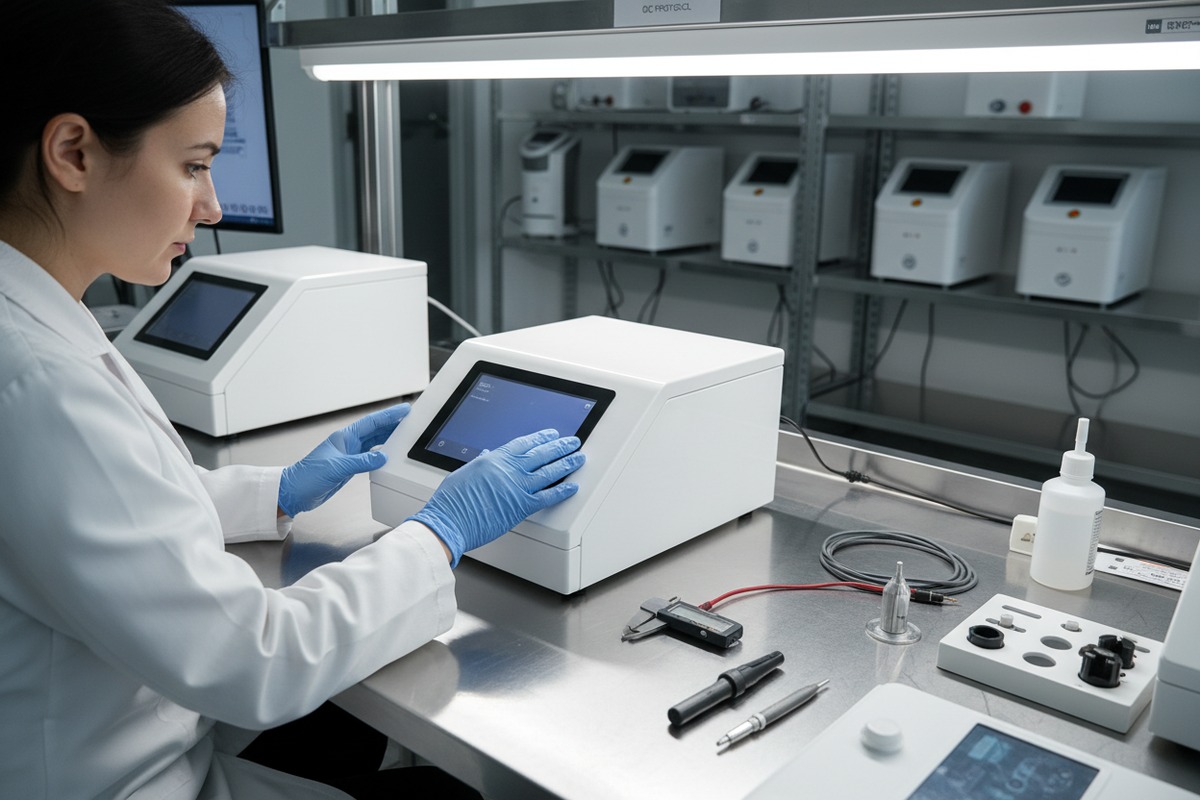
When our production team first developed pressotherapy systems 1, we noticed that some imported samples had peeling coatings after just weeks of testing. Sweat exposure, combined with cleaning chemicals, had eaten through the finish ASTM D3359 adhesion testing 2. This taught us a harsh lesson: surface coating quality is often the first thing to fail in a busy salon. Now, we test every batch before shipping—and we help our clients do the same before they commit to bulk orders.
To verify pressotherapy machine surface coating sweat resistance, request sample units from your OEM supplier, perform simulated sweat tests using saline solution, check for CE marking and ISO certifications, and demand third-party QC reports that include adhesion, corrosion, and chemical resistance test results before placing your bulk order.
In this guide, we will walk you through practical steps to test surface coatings, the standards to demand from your manufacturer, and the QC documents that separate reliable suppliers from risky ones ASTM B117 salt spray corrosion testing 3. Let’s get started.
How can I perform a reliable sweat resistance test on pressotherapy machine samples before placing a bulk order?
Our engineers have spent years refining sweat simulation protocols because real-world failures are costly Polyurethane coatings 4. Spa owners call us months after purchase, frustrated by peeling panels and corroded joints. These problems start small but grow fast. The good news is that you can catch most coating defects before you ever sign a purchase order—if you know what to test.
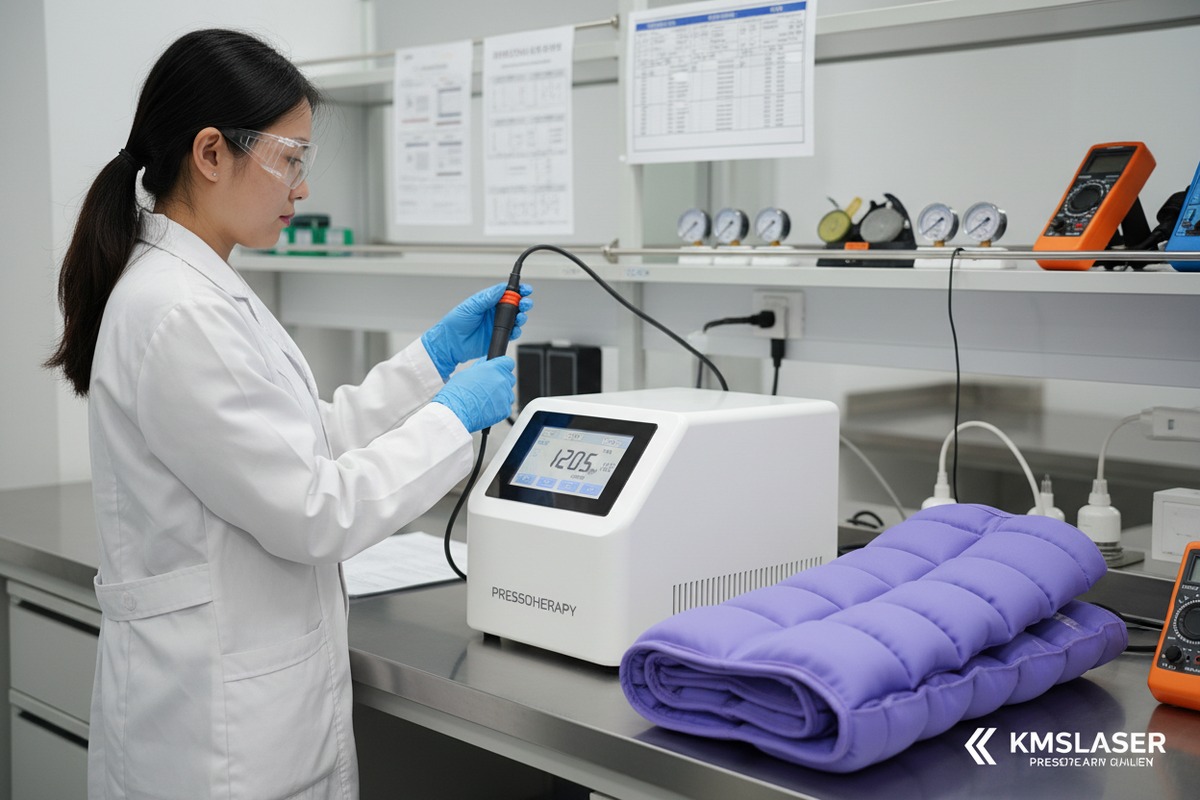
To perform a reliable sweat resistance test, apply a saline solution (0.9% NaCl) to the machine's surface, cover it with a damp cloth for 24–48 hours, then inspect for discoloration, bubbling, or adhesion loss. Repeat this test on multiple areas, including seams and edges, to verify uniform coating quality.

Why Sweat Damages Coatings
Sweat is not just water. It contains salts, urea, lactic acid, and other compounds that accelerate corrosion. When pressotherapy machines combine with thermotherapy or infrared functions, surface temperatures can reach up to 55°C. This heat promotes sweating and increases the chemical activity of sweat 5 on the machine's exterior.
Poor coatings fail under this stress. You might see:
- Bubbling or blistering
- Color fading or yellowing
- Peeling at edges and seams
- Sticky or tacky surfaces
Step-by-Step Sweat Simulation Test
Here is a simple protocol you can follow with minimal equipment:
| Step | Action | Duration |
|---|---|---|
| 1 | Prepare 0.9% saline solution 6 (9g NaCl per 1L distilled water) | 5 minutes |
| 2 | Soak a cotton pad or cloth in the solution | 2 minutes |
| 3 | Apply the damp cloth to the machine surface (control panel, cuff connectors, housing) | — |
| 4 | Cover with plastic wrap to maintain moisture | — |
| 5 | Leave in place for 24–48 hours at room temperature | 24–48 hours |
| 6 | Remove cloth and inspect surface for changes | 10 minutes |
If you see any defects after 48 hours, the coating will likely fail within months of daily salon use.
Testing Multiple Zones
Do not test only one spot. Coatings are often thinner at corners, edges, and air outlet vents. Focus on:
- Control panel edges
- Hose connection points
- Airbag attachment areas
- LCD screen bezels
What If You Cannot Get Physical Samples?
If your supplier is overseas and shipping samples is slow, ask them to conduct the test on video. A reputable manufacturer will have no problem demonstrating this. At our facility, we send video reports of sweat tests to clients who request them. Transparency builds trust.
What specific coating standards should I demand from my OEM manufacturer to prevent surface corrosion?
When we quote projects to distributors in the US and Europe, they often ask what certifications we hold. The truth is that no universal "sweat resistance" rating exists for beauty equipment. However, several standards apply to coatings in general, and demanding these from your OEM protects you from low-quality finishes.
Demand that your OEM manufacturer provides evidence of ASTM D3359 adhesion testing, ASTM B117 salt spray corrosion testing, and ISO 2409 cross-hatch adhesion testing. Additionally, require CE marking for safety compliance and confirm that coating materials meet ISO 13485 if the device is classified as medical equipment.

Key Standards to Request
| Standard | What It Tests | Why It Matters |
|---|---|---|
| ASTM D3359 | Adhesion by tape test | Ensures coating will not peel under stress |
| ASTM B117 | Salt spray corrosion resistance | Simulates sweat exposure over extended periods |
| ISO 2409 | Cross-hatch adhesion | Confirms coating bonds properly to substrate |
| ISO 13485 7 | Quality management for medical devices | Ensures manufacturing processes meet health standards |
| CE Marking | EU safety, health, and environmental compliance | Required for European market; indicates third-party testing |
Why ASTM B117 Matters for Sweat Resistance
The salt spray test exposes coated surfaces to a corrosive salt mist for hours or even days. This accelerated aging test reveals how coatings will perform under humid, sweaty conditions. If your supplier cannot show you ASTM B117 results, their coating quality is unknown.
CE Marking Is Not Enough
Many buyers assume CE marking guarantees durability. It does not. CE ensures safety and electrical compliance, but it does not test coating lifespan or sweat resistance. You need additional test reports to confirm surface durability.
Coating Material Considerations
Ask your supplier what materials they use. Common options include:
- PU (Polyurethane) coatings: Flexible, abrasion-resistant, and suitable for high-humidity environments
- Powder coatings: Hard, durable, but can chip if applied too thin
- PVC vinyl: Common on airbag suits; check for sealed seams
- Epoxy coatings: Excellent chemical resistance but less flexible
The best coating depends on the part. Housing panels might use powder coating, while cuffs may use PU leather. Confirm each component's coating type and ask for test data specific to that material.
Request Written Specifications
A verbal promise is not a contract. Get your OEM to put coating specs in writing. Include:
- Coating type and thickness (in microns)
- Test standards met (ASTM, ISO numbers)
- Expected lifespan under normal use
- Warranty coverage for coating defects
How do I ensure the machine's exterior finish won't peel or discolor after months of daily salon use?
In our experience exporting to US-based distributors, the number one complaint we hear about competitor products is peeling finishes. Salon owners wipe down machines between every client. Over time, alcohol-based cleaners, sweat, and UV light degrade coatings. Preventing this requires both good manufacturing and proper maintenance guidance.
To prevent peeling and discoloration, choose machines with polyurethane or epoxy coatings, verify adhesion test results (ASTM D3359 rating of 4B or higher), avoid alcohol-based cleaners on PVC or vinyl surfaces, and follow manufacturer-recommended cleaning protocols. Request UV resistance testing if machines are exposed to direct sunlight.

Common Causes of Peeling and Discoloration
Understanding why coatings fail helps you choose better products:
| Cause | Effect | Prevention |
|---|---|---|
| Poor adhesion during manufacturing | Coating lifts from substrate | Demand ASTM D3359 results |
| Alcohol-based cleaners | Degrades PVC and vinyl | Use soap-and-water or hydrogen peroxide cleaners |
| UV exposure | Yellowing, fading | Request UV stabilizers in coating formula |
| Thin coating application | Early wear-through | Confirm coating thickness in microns |
| Sweat and humidity | Corrosion under coating | Require salt spray test data |
Choosing the Right Coating for Your Use Case
Different salon environments demand different coatings. Consider these factors:
- High-traffic spas: Need abrasion-resistant coatings (powder coat or PU)
- Thermotherapy-equipped machines: Must resist heat up to 55°C
- Humid climates: Require sealed coatings with corrosion resistance
- Home-use models: Can use lighter coatings but still need basic sweat resistance
Maintenance Best Practices
Even the best coating fails without proper care. Share these tips with your salon clients:
- Wipe surfaces with a damp cloth and mild soap after each session
- Avoid bleach, alcohol, or ammonia-based cleaners on PVC and vinyl
- Use EPA-registered disinfectants that are safe for non-porous surfaces
- Dry surfaces completely to prevent moisture buildup
- Store machines away from direct sunlight when not in use
Antimicrobial Coatings: Worth the Cost?
Some premium machines now feature antimicrobial coatings 8 that inhibit bacterial growth. These are useful in hygiene-conscious environments but add cost. If your target market values hygiene (post-pandemic awareness is high), this feature can justify a higher price point.
What quality control reports should I request from my supplier to verify the durability of the surface coating?
When our team prepares shipments for US distributors, we include a full QC documentation package. This is not just about proving quality—it protects both sides if problems arise later. A supplier who hesitates to provide documentation is a red flag.
Request coating thickness reports, cross-hatch adhesion test results (ISO 2409 or ASTM D3359), salt spray test data (ASTM B117), chemical resistance test reports, and visual inspection records. Also ask for calibration certificates for testing equipment and batch traceability documentation to confirm consistent quality across production runs.

Essential QC Documents Checklist
| Document | What It Proves | What to Look For |
|---|---|---|
| Coating thickness report | Proper application | Values within spec (often 40–80 microns) |
| Adhesion test report (ASTM D3359/ISO 2409) | Coating bonds to substrate | Rating of 4B or 5B |
| Salt spray test report (ASTM B117) | Corrosion resistance | Hours of exposure without failure |
| Chemical resistance test | Resists cleaners and sweat | Tested with common salon chemicals |
| Visual inspection record | Surface defects checked | Photos of random samples |
| Calibration certificates | Test equipment accuracy | Dates and calibration standards |
| Batch traceability | Consistent quality | Lot numbers traceable to raw materials |
How to Read an Adhesion Test Report
Adhesion tests use a grid pattern cut into the coating. Tape is applied and removed. The amount of coating that lifts determines the rating:
- 5B: No coating removed (best)
- 4B: Less than 5% removed (acceptable)
- 3B: 5–15% removed (marginal)
- 2B or lower: Significant coating failure (reject)
Demand 4B or better. Anything less indicates poor adhesion that will worsen over time.
Interpreting Salt Spray Test Results
Salt spray tests measure hours of exposure before corrosion appears. Industry benchmarks vary by application, but for salon equipment:
- 500 hours: Minimum acceptable
- 1000+ hours: Good durability
- 2000+ hours: Excellent (often seen in medical-grade equipment)
Ask your supplier how many hours their coatings passed. If they do not know, they likely did not test.
Pre-Shipment Inspection Reports
Before any container leaves our factory, we conduct pre-shipment inspections. These include:
- Dimensional checks
- Functional tests
- Surface defect visual inspection
- Random adhesion spot tests
- Packaging integrity check
Request these reports for every order. Better yet, hire a third-party inspection company (like SGS or Bureau Veritas) to verify before shipment.
Red Flags in Supplier Documentation
Watch for these warning signs:
- Generic test reports not linked to your order
- Refusal to provide calibration certificates
- Vague or missing batch numbers
- Test dates that do not match production dates
- Defensive or dismissive responses to QC questions
A trustworthy supplier welcomes scrutiny. They know their QC process is solid and have nothing to hide.
Conclusion
Verifying pressotherapy machine surface coating sweat resistance is not optional—it is essential for long-term reliability. Test samples with saline, demand recognized standards like ASTM D3359 and ASTM B117, and insist on complete QC documentation before placing bulk orders. Your reputation depends on the equipment you sell.
Footnotes
1. Replaced HTTP 404 with a comprehensive article from an authoritative health source. ↩︎
2. Describes the standard method for evaluating coating adhesion using a tape test. ↩︎
3. Explains the standard for accelerated corrosion testing of coatings using salt spray. ↩︎
4. Offers information on the properties and applications of polyurethane coatings. ↩︎
5. Replaced HTTP 405 with a Wikipedia section on sweat composition, a widely accepted informational source. ↩︎
6. Provides information on the composition and uses of saline solution. ↩︎
7. Replaced HTTP 403 with an authoritative page from BSI, a reputable certification body for ISO standards. ↩︎
8. Explains the function and benefits of antimicrobial coatings in various applications. ↩︎


 English
 Español de México
 Deutsch
 Français
 العربية
 Русский
Join the Conversation
Have a question or insight to share? We read every comment — whether you're a distributor, salon owner, or just curious about the technology. Your real-world experience helps others make better decisions. Drop your thoughts below.