
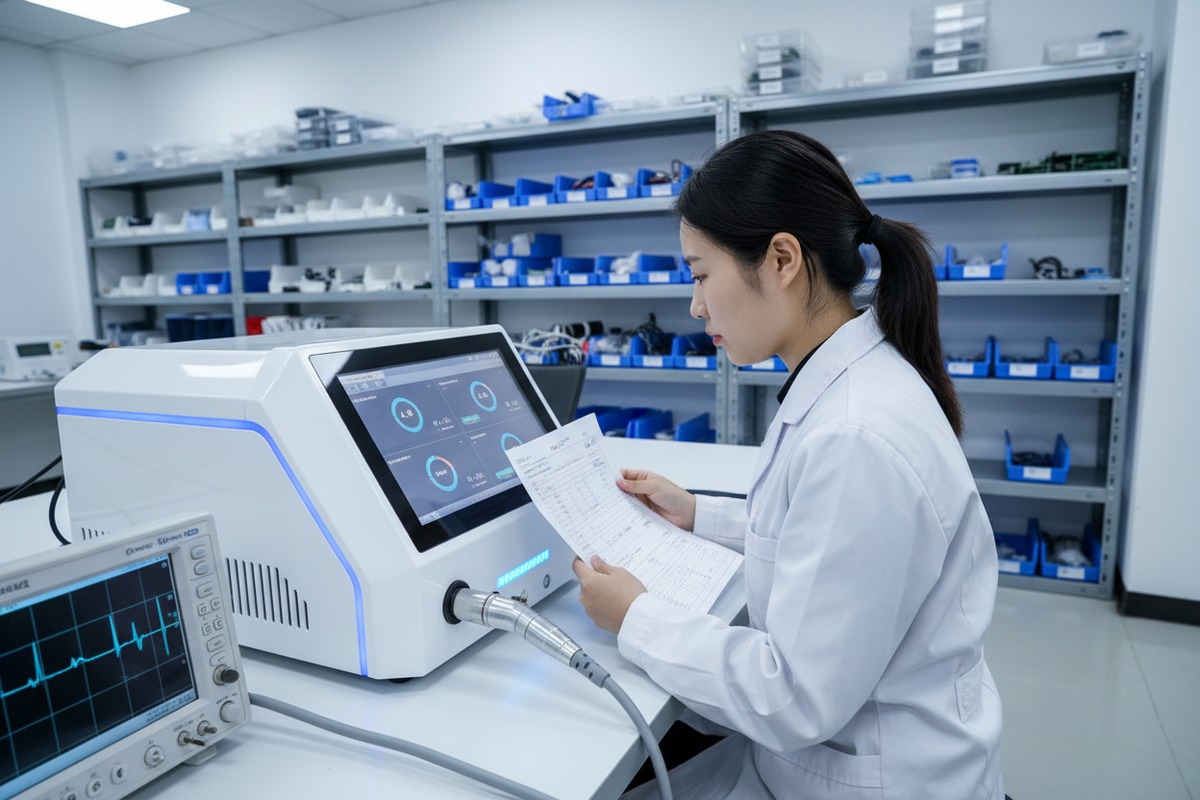
When our engineers first started testing shockwave devices 1 on our production line, we discovered something alarming. Many machines claiming 5 bar maximum output barely delivered 2 bar under continuous operation calibrated pressure gauges 2. This gap between specification sheets and real-world performance costs buyers thousands in ineffective equipment.
To verify if shockwave therapy machine max energy is exaggerated, use calibrated pressure gauges or hydrophones during live testing, monitor output stability over 1,000+ pulses, cross-reference IEC 61846 test reports from accredited labs, and check for FDA 510(k) clearance rather than mere registration.
In the following sections, I’ll walk you through practical verification methods we use in our factory and share red flags that signal inflated specifications.
How can I use a pressure gauge to verify the actual bar output during my factory inspection?
During factory visits, our quality control team has encountered buyers who simply trust the digital display readings. This approach often leads to disappointment when machines underperform in clinical settings. The display shows programmed values, not actual output.
To verify actual bar output, connect a calibrated fiber-optic hydrophone or ballistic force sensor to the applicator head, submerge in a water tank per IEC 61846 standards, and record peak pressure across multiple energy settings while comparing readings to the manufacturer's claims.

Understanding Measurement Equipment
The most reliable tool for verifying shockwave output is a fiber-optic hydrophone 3 with at least 100µm tip diameter. This device measures pressure-time curves in water, giving you objective data rather than relying on manufacturer displays.
If professional hydrophones aren't available during your inspection, request that the supplier demonstrate testing with their own calibrated equipment. Any reputable manufacturer maintains such tools for internal quality control.
Setting Up the Water Tank Test
Water tank testing follows IEC 61846 protocols. IEC 61846 standards 4 The water must be degassed to prevent air bubbles from distorting measurements. At our facility, we use closed-circuit systems with automatic degassing to ensure consistent results.
Position the hydrophone at the focal point for focused shockwaves or at a standardized distance for radial devices. Record measurements at minimum, medium, and maximum energy settings.
| Energy Setting | Claimed Output (Bar) | Actual Measured (Bar) | Acceptable Variance |
|---|---|---|---|
| Low (Level 1-3) | 1.0 – 2.0 | Should match ±10% | 0.9 – 2.2 |
| Medium (Level 4-6) | 2.5 – 3.5 | Should match ±10% | 2.25 – 3.85 |
| High (Level 7-10) | 4.0 – 5.0 | Should match ±10% | 3.6 – 5.5 |
Documenting Your Findings
Record every measurement with timestamps. Take photos of the test setup and equipment calibration certificates. This documentation protects you if disputes arise later.
Compare your findings against the supplier's technical data sheets. Variances exceeding 15% indicate either equipment issues or exaggerated specifications. In our experience, honest manufacturers welcome this scrutiny because it demonstrates their product quality.
Environmental Factors to Consider
Temperature affects pneumatic and electromagnetic generators. Test at room temperature between 20-25°C for accurate results. Humidity can also impact performance, particularly for piezoelectric systems.
Verify the power supply is stable. Voltage fluctuations directly affect output consistency. We recommend using a regulated power source during testing to eliminate this variable.
What are the red flags that my supplier is inflating the energy specifications on their data sheets?
Our sales team frequently receives inquiries from buyers who purchased cheap machines elsewhere, only to find the specifications were completely fabricated. These experiences taught us to recognize warning signs before problems occur.
Red flags include missing IEC 61846 test reports, no FDA 510(k) clearance for therapeutic claims, frequency drops at maximum energy settings, absence of accredited lab certifications, vague or inconsistent technical documentation, and refusal to provide live testing demonstrations.

Missing or Incomplete Documentation
Legitimate manufacturers provide comprehensive technical files. These include IEC 61846 acoustic parameter reports, IEC 60601-1 safety certifications, and EMC compliance documents. If a supplier cannot produce these, question their claims.
Watch for certificates from unknown testing labs. Accredited facilities like TÜV, SGS, or Intertek carry weight. Self-declared conformity without third-party verification is a major warning sign.
The Frequency-Energy Trade-off Deception
Some manufacturers advertise impressive maximum bar ratings without mentioning frequency limitations. For example, a device might claim 5 bar output, but only achieve this at 2 Hz instead of the advertised 15 Hz.
| Advertised Claim | Reality Check | What to Ask |
|---|---|---|
| "5 Bar Max Energy" | May only achieve at 1-2 Hz | "What frequency maintains max bar?" |
| "21 Hz Frequency" | Often drops to 5 Hz at high energy | "Show energy stability at max frequency" |
| "FDA Approved" | Usually only FDA registered (Class I) | "Provide 510(k) clearance number" |
| "Medical Grade" | May lack clinical validation | "Show clinical evaluation reports" |
Regulatory Claim Confusion
The distinction between "FDA registered" and "FDA cleared" matters enormously. Registration (Class I) means the facility notified FDA of its existence. Clearance (510(k), Class II) means the device demonstrated substantial equivalence to a legally marketed device through actual testing.
Many suppliers exploit buyer confusion here. They prominently display "FDA" logos while burying the fact that they only have registration, not clearance for therapeutic use. In our documentation, we clearly distinguish these categories because transparency builds trust.
Inconsistent Technical Specifications
Compare specifications across the supplier's marketing materials, user manuals, and technical files. Discrepancies suggest careless documentation or intentional inflation.
Check if energy flux density (EFD) values 5 align with bar measurements. The conversion should follow physics principles. If a supplier claims high EFD but low bar ratings, or vice versa, their data may be fabricated.
Warranty and Support Evasions
Suppliers confident in their specifications offer meaningful warranties. If warranty terms exclude "normal performance degradation" within the first year, or if the supplier avoids discussing output consistency guarantees, proceed cautiously.
We provide two-year warranties specifically covering energy output stability because our production standards support such commitments.
How do I confirm the shockwave energy stays stable and doesn't drop after several thousand pulses?
One client shared a frustrating experience with us. Their previous supplier's machine delivered consistent energy for the first 500 pulses, then dropped to 60% output. By 2,000 pulses, it barely functioned. This pattern destroys clinical efficacy and patient trust.
Confirm energy stability by requesting continuous operation tests of 3,000+ pulses at maximum settings, monitoring for output drops below 90% of initial values, checking for automatic frequency reduction mechanisms, and verifying the supplier's maintenance protocols for wear components.

The Physics of Energy Degradation
Shockwave generators naturally experience some output variation. Electromagnetic systems heat up, affecting coil resistance. Pneumatic systems may lose air pressure. Piezoelectric crystals can fatigue.
The question is whether degradation stays within acceptable limits. Industry standards consider 90% output maintenance over a treatment session acceptable. Dropping below this threshold indicates design or quality problems.
Designing Your Stability Test Protocol
Request a test that mirrors clinical use patterns. A typical session involves 2,000-3,000 pulses. Run the machine continuously at maximum advertised settings and record output every 500 pulses.
| Pulse Count | Acceptable Output | Warning Level | Failure Level |
|---|---|---|---|
| 0-500 | 100% baseline | N/A | N/A |
| 500-1,000 | ≥95% of baseline | 90-95% | <90% |
| 1,000-2,000 | ≥92% of baseline | 85-92% | <85% |
| 2,000-3,000 | ≥90% of baseline | 80-90% | <80% |
| 3,000+ | ≥88% of baseline | 75-88% | <75% |
Identifying Hidden Frequency Drops
Some machines maintain bar ratings by secretly reducing frequency. The display shows 5 bar at 15 Hz, but internal sensors have dropped actual frequency to 5 Hz to preserve pressure.
This deception undermines treatment protocols that depend on specific pulse frequencies. Ask suppliers to demonstrate frequency stability alongside energy stability. Both parameters should maintain their advertised values simultaneously.
Component Wear and Maintenance Requirements
Understand which components wear over time. Applicator heads, O-rings, and revision kits require regular replacement. Responsible manufacturers specify replacement intervals based on pulse counts, not just calendar time.
At our production facility, we test every unit for 5,000 continuous pulses before shipment. This burn-in period catches manufacturing defects and establishes baseline performance data we share with buyers.
Thermal Management Systems
Heat buildup causes most stability problems. Quality machines incorporate active cooling systems, thermal sensors, and automatic shut-off protection. thermal management systems 8 Ask about thermal management during your inspection.
Machines without adequate cooling may perform well in air-conditioned showrooms but fail in busy clinics where ambient temperatures rise. Our engineers design for worst-case thermal conditions to ensure consistent performance across environments.
Creating Long-Term Monitoring Protocols
Establish benchmarks during initial testing. Record output values and save this data. Retest periodically—monthly or quarterly depending on use intensity. Gradual degradation indicates normal wear requiring maintenance. Sudden drops suggest component failures.
Can I request a live video demonstration of the energy testing process before I finalize my bulk order?
Before committing to large orders, our international buyers often request video demonstrations. We encourage this practice because it separates serious manufacturers from those hiding behind impressive datasheets.
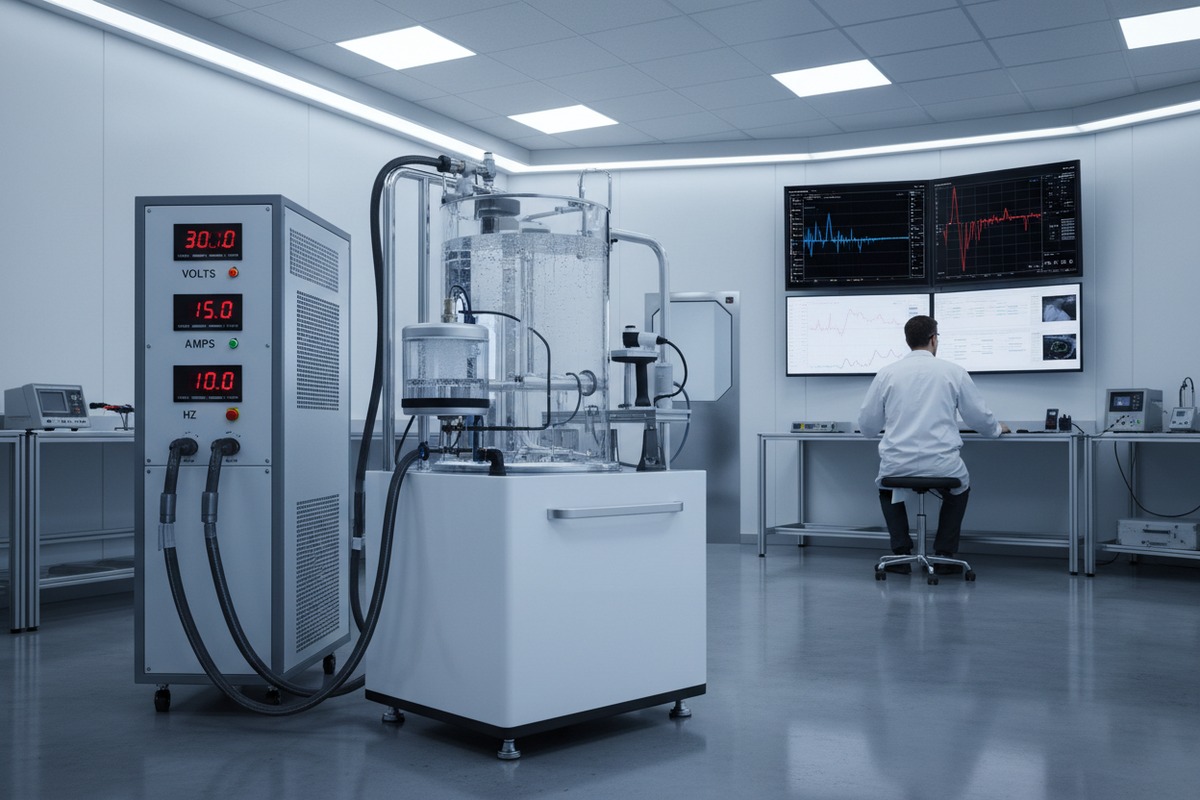
Yes, you should request live video demonstrations showing hydrophone measurements in water tanks, continuous operation tests, frequency stability verification, and calibration certificate reviews. Reputable manufacturers welcome such requests as opportunities to demonstrate quality.
What to Include in Your Video Request
Specify exactly what you want to see. Generic "testing videos" may show cherry-picked results. Request specific tests with clear parameters.
Ask for real-time hydrophone readings during the video. The measurement equipment should be visible, along with its calibration certificates. Request that the operator verbally confirm settings as they adjust them.
Essential Elements of a Legitimate Demo
The video should show the complete test setup, including water tank, hydrophone positioning, and recording equipment. You should see the machine's serial number matching your potential order specifications.
Request tests at multiple energy levels, not just optimal mid-range settings. Maximum energy tests often reveal problems that moderate settings hide.
Remote Verification Technologies
Modern technology enables interactive remote inspections. Video calls allow you to direct the testing process in real-time. You can request specific settings, ask questions, and observe operator responses.
We regularly conduct such sessions via WhatsApp or WeChat video calls. Buyers can watch tests, request repeats, and discuss results immediately. This transparency accelerates decision-making and builds confidence.
Questions to Ask During the Demo
Prepare specific questions before the demonstration. Ask about calibration frequency, maintenance schedules, and component replacement intervals. Inquire about failure modes and warranty coverage.
| Question Category | Specific Questions | Why It Matters |
|---|---|---|
| Calibration | "When was this hydrophone last calibrated?" | Ensures measurement accuracy |
| Stability | "Can you run 2,000 pulses at max settings?" | Reveals thermal management quality |
| Frequency | "Does frequency drop at maximum energy?" | Exposes hidden trade-offs |
| Documentation | "Can you show IEC test reports for this unit?" | Verifies third-party validation |
| Maintenance | "What's the applicator head replacement interval?" | Indicates long-term cost expectations |
Evaluating Manufacturer Responses
How suppliers respond to video requests reveals much about their confidence and transparency. Immediate agreement suggests quality assurance systems are routine. Delays, excuses, or refusals indicate potential problems.
If a supplier claims testing equipment is "unavailable" or "being repaired," consider this a serious warning. Quality-focused manufacturers maintain testing capabilities continuously.
Documenting Video Evidence
Record the video demonstration with supplier permission. Save it alongside your purchase documentation. This record protects you if performance disputes arise later.
Request that suppliers provide written summaries of demonstrated test results. These documents should include machine serial numbers, test dates, measured values, and equipment calibration references.
Conclusion
Verifying shockwave therapy machine energy claims protects your investment and your reputation. Use calibrated measurement tools, demand documentation, test for stability, and request live demonstrations. These steps separate trustworthy suppliers from those hiding behind inflated specifications.
Footnotes
1. Introduces extracorporeal shockwave therapy and its applications. ↩︎
2. Explains the necessity and process of calibrating pressure gauges for accuracy. ↩︎
3. Describes hydrophones as essential tools for underwater acoustic measurement. ↩︎
4. Provides direct reference to the international standard for focused pressure pulse equipment. ↩︎
5. Clarifies the definition and significance of energy flux density in shockwave therapy. ↩︎
6. Explains the FDA’s premarket notification process for medical devices. ↩︎
7. Defines the classification and regulatory requirements for moderate-risk medical devices. ↩︎
8. Highlights the importance of heat control for medical device performance and safety. ↩︎

 English
  Español de México
  Deutsch
  Français
  العربية
  Русский