
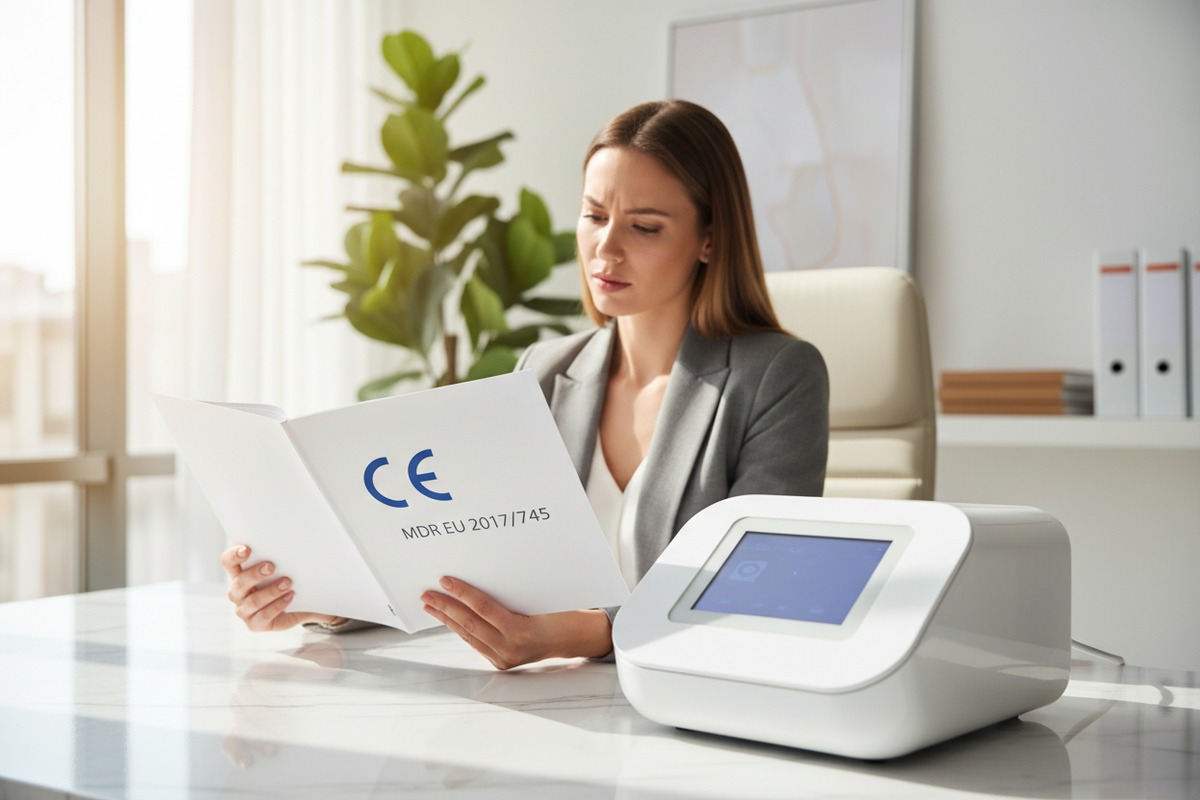
When our production team receives an order from European buyers, one question comes up repeatedly: “Does your manual meet EU standards?” Many distributors and brand owners importing pressotherapy machines from China have faced costly delays, rejected shipments, or even product recalls because their user manuals failed EU regulatory checks Medical Device Directive (93/42/EEC) 2. This is a real and expensive problem.
To verify if your pressotherapy machine user manual meets EU regulatory requirements, check for explicit reference to MDR (EU) 2017/745, confirm CE marking with a valid Notified Body number for Class IIa devices, ensure all required GSPR 23 elements are present, validate translations in destination country languages, and cross-reference with the manufacturer’s Declaration of Conformity.
This guide breaks down the exact steps you need to follow. We will cover MDR compliance checks, safety warning requirements, translation verification, and OEM branding rules. Let’s dive into each area one by one.
How can I check if my pressotherapy machine manual complies with the latest EU Medical Device Regulation (MDR)?
Our engineers spend significant time updating technical documentation whenever EU regulations change. Many buyers assume that a CE mark alone means full compliance. That assumption can lead to serious problems. The shift from MDD to MDR has created stricter requirements that catch many importers off guard.
To check MDR compliance, look for explicit reference to "Regulation (EU) 2017/745" in your manual, verify the Notified Body number (e.g., 0459), confirm the device classification as Class IIa or IIb, and ensure the manual includes all General Safety and Performance Requirements (GSPR) elements as outlined in Annex I, Chapter III.

Understanding the MDR Framework
The EU Medical Device Regulation 2017/745 came into full effect in May 2021. MDR (EU) 2017/745 3 It replaced the older Medical Device Directive (93/42/EEC) with much stricter requirements. This regulation now governs all medical devices sold in the European Union, including pressotherapy machines used for lymphatic drainage and circulatory improvement.
Pressotherapy devices typically fall into Class IIa under MDR. Class IIa devices 4 This classification applies because they use intermittent pneumatic compression for non-invasive therapy. Some devices may reach Class IIb if they involve higher pressure levels or more invasive intended uses.
Key Elements to Check in Your Manual
When reviewing your pressotherapy manual for MDR compliance, scan for these critical elements:
| Element | What to Look For | Red Flag |
|---|---|---|
| Regulation Reference | "CE marked under Regulation (EU) 2017/745" | Only mentions MDD 93/42/EEC |
| Notified Body Number 5 | Four-digit number (e.g., 0459) next to CE mark | No number for Class IIa+ device |
| Device Classification | Stated as Class IIa or IIb | No classification mentioned |
| GSPR Compliance | Reference to Annex I requirements | Generic safety statements only |
| Declaration of Conformity 6 | Document referenced or included | Missing entirely |
Checking the Notified Body Certification
For Class IIa and higher devices, a Notified Body must review and certify the technical documentation. The Notified Body number appears next to the CE marking 7 on your device and manual. You can verify this number against the NANDO database maintained by the European Commission.
If your pressotherapy machine claims Class I certification without Notified Body involvement, this is only valid for non-sterile, non-measuring devices without reusable surgical components. Most professional pressotherapy systems require Notified Body oversight.
Verifying Supporting Documentation
A compliant manual should reference or provide access to several supporting documents. These include the Clinical Evaluation Report (CER), risk analysis following ISO 14971 8, and Post-Market Clinical Follow-up (PMCF) plans. The manufacturer should also have registered the device in EUDAMED with a Unique Device Identifier (UDI) 9.
What specific safety warnings and technical data must be included in my user manual for the European market?
When we design user manuals for our pressotherapy machines, safety content receives the most attention from our compliance team. Incomplete warnings or missing technical specifications are among the most common reasons for regulatory rejection. These requirements exist to protect end users and patients.
EU MDR Annex I, Section 23 requires pressotherapy manuals to include detailed contraindications (such as DVT risk, heart conditions, skin damage), specific pressure settings with minimum 40 mmHg gradient specifications, treatment duration limits, cleaning and maintenance procedures, risk warnings for tissue damage, and complete manufacturer contact information.

Mandatory Contraindications for Pressotherapy
Pressotherapy devices pose specific risks that must be clearly communicated. Your manual must list all conditions where use is contraindicated. Based on current guidelines and device specifications, these typically include:
| Contraindication Category | Specific Conditions |
|---|---|
| Cardiovascular | Heart failure, angina, previous heart attack, pulmonary edema, high blood pressure |
| Circulatory | Deep vein thrombosis (DVT) risk, blood clots, severe arterial disease |
| Skin Conditions | Burns, dermatitis, open wounds, purulent wounds, malignant tumors |
| Post-Surgical | Recent varicose vein surgery, recent skin surgery in treatment area |
| Medical Devices | Patients with implantable medical devices |
| Special Populations | Pregnancy, children under appropriate age |
Technical Specifications Required
The Instructions for Use must detail specific technical parameters. For pressotherapy devices, these include pressure specifications with clear gradients. EU guidelines suggest a minimum 40 mmHg gradient for effective lymphatic drainage treatment.
Your manual should specify:
- Maximum and minimum pressure levels in mmHg
- Number of compression chambers and their sequence
- Treatment program options and their purposes
- Session duration recommendations
- Safety voltage specifications (many devices operate on 36V safety voltage)
- Power requirements and electrical safety information
Risk Warnings and Safety Statements
The GSPR requirements in MDR Annex I mandate comprehensive risk warnings. Your manual must explain potential adverse effects from improper use. This includes warnings about tissue damage from excessive pressure, risks of compartment syndrome, and instructions for recognizing adverse reactions.
Maintenance and Calibration Information
MDR requires clear maintenance instructions. For pressotherapy machines, this includes cleaning procedures for compression garments, calibration requirements (typically quarterly for professional devices), and storage recommendations. The manual should specify when professional servicing is required.
How do I verify that my Chinese manufacturer has correctly translated the manual into all required EU languages?
From our experience exporting to European markets, translation quality causes more compliance failures than most buyers expect. Each EU member state has specific language requirements for medical device documentation. A poorly translated manual is not just inconvenient—it is legally non-compliant.
To verify correct translation, cross-check the manufacturer's translations against the EU language requirements table published by the European Commission, confirm translations cover all 24 official EU languages where you intend to sell, ensure technical terms follow EN ISO 15223-1 symbol definitions, and verify that critical safety sections are fully translated without summaries or abbreviations.

Understanding EU Language Requirements
The MDR allows each member state to determine the official languages required for device documentation. This creates a complex landscape where manufacturers must provide translated materials for each target market.
| Region/Country | Required Language(s) | Notes |
|---|---|---|
| Germany | German | Full IFU required |
| France | French | Full IFU required |
| Italy | Italian | Full IFU required |
| Spain | Spanish | Full IFU required |
| Poland | Polish | GUI also requires Polish for layman use |
| Hungary | Hungarian | Strict requirements for professional use |
| Nordic Countries | Local language or English | Professional use may accept English |
| Netherlands | Dutch or English | Professional devices may use English |
Checking Translation Quality
When reviewing translated manuals from your manufacturer, look for these quality indicators:
Technical Term Consistency: Medical device terminology should follow established standards. Symbols used in labeling should be explained consistently using EN ISO 15223-1 definitions.
Complete Translation: Partial translations or summaries are not compliant. The entire Instructions for Use, including all safety warnings, technical specifications, and maintenance procedures, must be fully translated.
Professional Review: Ask your manufacturer if translations were reviewed by native speakers with medical device expertise. Machine translations often miss critical nuances in safety warnings.
Software Interface Language Requirements
If your pressotherapy machine has a digital display or graphical user interface (GUI), language requirements extend to the software. Some countries like Poland require the GUI to be in the local language for devices intended for non-professional use. For professional-only devices, English may be acceptable in certain countries if the IFU explains all screen elements in the local language.
Verification Checklist for Translations
Before accepting translated manuals from your manufacturer, verify:
- All destination country languages are included
- No sections are marked "translation pending" or left in English only
- Technical symbols are defined in each language version
- Contact information is complete in each language
- Warning symbols and safety statements are culturally appropriate
Can I customize the pressotherapy manual with my own brand while maintaining full EU regulatory compliance?
Our OEM and ODM services include full branding customization for our clients. Many distributors want to build their own brand identity while importing devices from China. This is possible, but it comes with specific regulatory responsibilities that many buyers underestimate.
Yes, you can customize pressotherapy manuals with your brand while maintaining EU compliance, but you must ensure the legal manufacturer remains identified, understand that rebranding may make you the legal manufacturer under MDR, maintain all technical documentation access, and verify your Notified Body is informed of any branding changes.

Understanding OEM and White Label Arrangements
When you add your brand to a pressotherapy machine, your regulatory obligations depend on how the arrangement is structured. There are several scenarios:
| Scenario | Your Role | Regulatory Responsibility |
|---|---|---|
| Simple Rebranding | Distributor with logo | Original manufacturer remains responsible |
| Own Brand Labeling (OBL) | Legal manufacturer on label | You assume full regulatory responsibility |
| Significant Modification | Legal manufacturer | Full MDR compliance required from you |
| Distribution Only | Importer/Distributor | Verify compliance, no modification |
When You Become the Legal Manufacturer
Under MDR, certain actions can shift regulatory responsibility entirely to you. If your name appears as the manufacturer on the label, you become the legal manufacturer regardless of who physically produced the device. This means you must maintain the full technical file, Clinical Evaluation Report, Post-Market Surveillance plan, and all other regulatory documentation.
Safe Rebranding Practices
If you want to add your brand while keeping the original manufacturer responsible, follow these guidelines:
Keep Manufacturer Identification Visible: The original manufacturer's name and contact information must remain on the device label and in the Instructions for Use. Your brand can appear, but it should not replace the manufacturer information.
Document the Arrangement: Have a clear agreement with your Chinese manufacturer that defines who holds regulatory responsibility. This should be documented and available for Notified Body review.
Inform the Notified Body: If significant labeling changes are planned, the manufacturer should confirm with their Notified Body that compliance is maintained. Changes to branding typically require technical file updates.
Importer and Distributor Obligations
Even if you do not become the legal manufacturer, you have obligations as an EU importer or distributor. You must verify that devices bear proper CE marking, that the manufacturer has appointed an EU Authorized Representative, and that labeling meets all requirements including language translations.
Under MDR Article 13, importers must indicate their name and address on the device or accompanying documentation. This information must reach the end user, not just appear on shipping documents.
Technical File Access for Branded Products
When operating under an OEM arrangement, ensure you have appropriate access to technical documentation. While the full technical file may remain confidential, you should receive enough information to answer regulatory inquiries and support any compliance verification requests from authorities.
Conclusion
Verifying EU regulatory compliance for pressotherapy machine user manuals requires systematic checking of MDR references, GSPR 23 elements, language translations, and proper branding structure. Work closely with your manufacturer to ensure all documentation meets current standards. Keep records of your verification process. When in doubt, consult with a regulatory affairs specialist before placing devices on the EU market.
## Footnotes

<span id="footnote-1">
1. Provides detailed information on the General Safety and Performance Requirements (GSPR) in MDR Annex I. <a href="#ref-1" class="footnote-backref">↩︎</a>
</span>

<span id="footnote-2">
2. Official text of the repealed Medical Device Directive. <a href="#ref-2" class="footnote-backref">↩︎</a>
</span>

<span id="footnote-3">
3. Official consolidated text of the Medical Device Regulation. <a href="#ref-3" class="footnote-backref">↩︎</a>
</span>

<span id="footnote-4">
4. Explains the classification and requirements for Class IIa medical devices. <a href="#ref-4" class="footnote-backref">↩︎</a>
</span>

<span id="footnote-5">
5. Direct link to the official NANDO database for Notified Bodies. <a href="#ref-5" class="footnote-backref">↩︎</a>
</span>

<span id="footnote-6">
6. Details the requirements for the EU Declaration of Conformity under MDR Article 19. <a href="#ref-6" class="footnote-backref">↩︎</a>
</span>

<span id="footnote-7">
7. Reference 2. <a href="#ref-7" class="footnote-backref">↩︎</a>
</span>

<span id="footnote-8">
8. Official page for the international standard on risk management for medical devices. <a href="#ref-8" class="footnote-backref">↩︎</a>
</span>

<span id="footnote-9">
9. Reference 9. <a href="#ref-9" class="footnote-backref">↩︎</a>
</span>

 English
  Español de México
  Deutsch
  Français
  العربية
  Русский