
When our engineering team ships shockwave therapy machines overseas, we see buyers struggle with FDA compliance 1 daily. Many U.S. brands face customs holds, surprise fees, and inventory gaps because their Chinese supplier’s paperwork falls short. The stress compounds when you realize a single missing document can halt your entire shipment.
To verify FDA Initial Importer status, search the FDA’s FURLS database using the supplier’s FEI number. Confirm active establishment registration, device listing, and a valid U.S. physical address. Cross-check 510(k) clearance for Class II shockwave devices and ensure no import alerts exist against the manufacturer.
This guide walks you through each verification step. We cover legal risks, compliance checks, and customs protection strategies. Let’s start with the basics of confirming your supplier’s registration.
How do I verify if my Chinese shockwave machine supplier is correctly registered with the FDA?
In our experience exporting to U.S. partners, we notice many buyers accept supplier claims at face value. This mistake costs thousands in delays. A supplier may show you a registration number, but without proper verification, you cannot know if it remains active or matches your specific device.
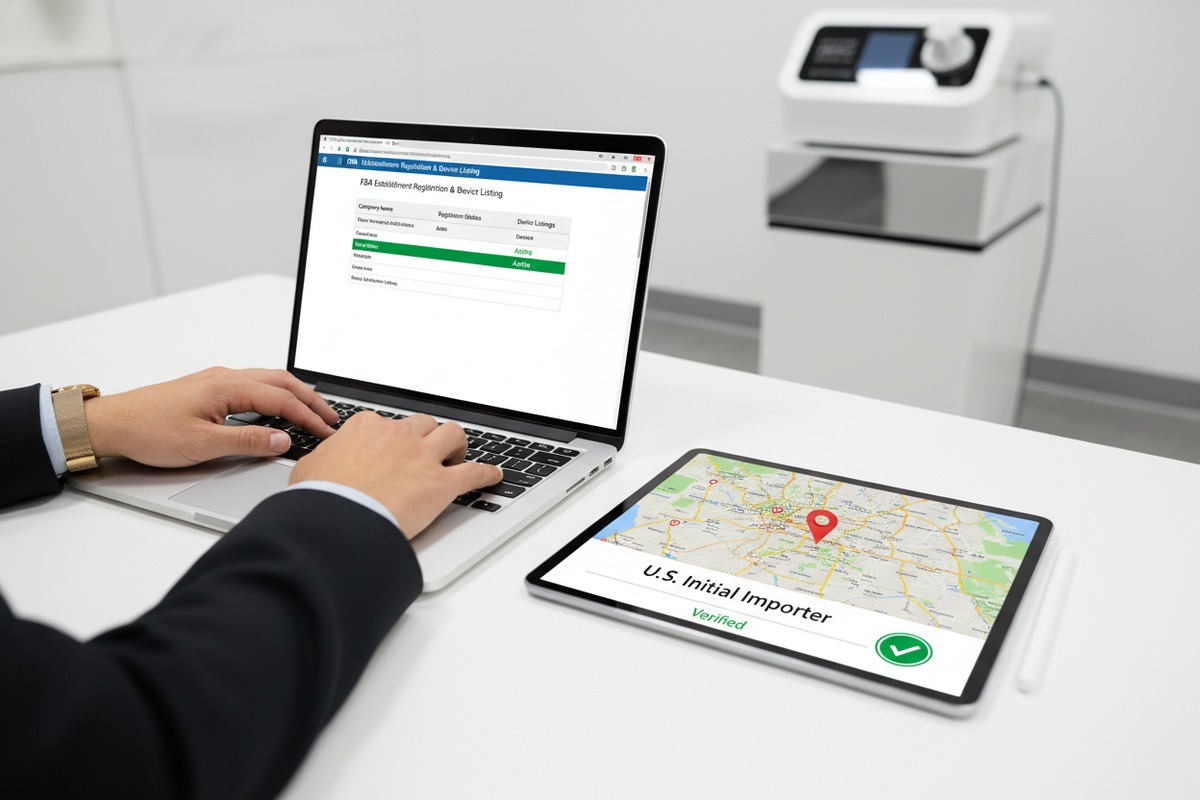
Verify supplier registration by accessing FDA's FURLS database at accessdata.fda.gov. Enter the FEI number to confirm active status. Check that the device listing includes shockwave therapy machines under product code ITX. Confirm the Initial Importer has a real U.S. address and contact person on file.
Understanding the FDA Registration Structure
The FDA requires two separate registrations for imported medical devices. First, the foreign manufacturer in China must register. Second, a U.S.-based Initial Importer 2 must also register. Both must list the specific devices they handle.
The Initial Importer differs from a customs broker or U.S. Agent. Per 21 CFR 807.3(g) 3, this entity furthers marketing of the device without repackaging or altering labels. They serve as FDA's primary contact for compliance issues.
Step-by-Step Verification Process
Follow these steps to confirm your supplier's status:
- Request the FEI number 4 directly from your supplier
- Access the FDA Establishment Registration database
- Enter the FEI and review registration details
- Confirm the establishment type shows "Initial Importer"
- Verify the physical U.S. address exists
- Check device listings match shockwave therapy products
- Note the registration expiration date
Key Data Points to Verify
| Verification Item | Where to Check | Red Flag Signs |
|---|---|---|
| FEI Number | FDA FURLS Database | Number not found or inactive |
| Registration Status | Establishment Registration | Expired or pending status |
| Device Listing | Device Listing Database | Shockwave device not listed |
| U.S. Address | Registration Details | PO Box only or foreign address |
| 510(k) Clearance 5 | 510(k) Database | No clearance for product code |
| Import Alerts | FDA Import Alert Database | Supplier on Alert 89-04 |
Common Verification Mistakes
Many buyers search only for the manufacturer's registration. This misses the Initial Importer requirement entirely. Others accept screenshots from suppliers rather than checking FDA databases directly.
Our quality team has seen suppliers provide FEI numbers belonging to different companies. Always verify the company name matches exactly. A single character difference signals fraud.
Using Third-Party Verification Services
When internal resources fall short, consider hiring FDA compliance consultants. These services cost between $5,000 and $15,000 for initial setup. They provide ongoing monitoring and alert you to registration lapses.
For 2025, the annual FDA registration fee stands at $9,280. This fee applies to both manufacturers and Initial Importers. Budget for this when planning import costs.
What are the legal risks to my brand if my supplier lacks the proper FDA initial importer documentation?
When we discuss compliance with U.S. partners, legal exposure emerges as their top concern. One missing document can trigger cascading problems. Your brand faces detention, fines, recalls, and reputation damage when your Chinese supplier operates without proper Initial Importer status.
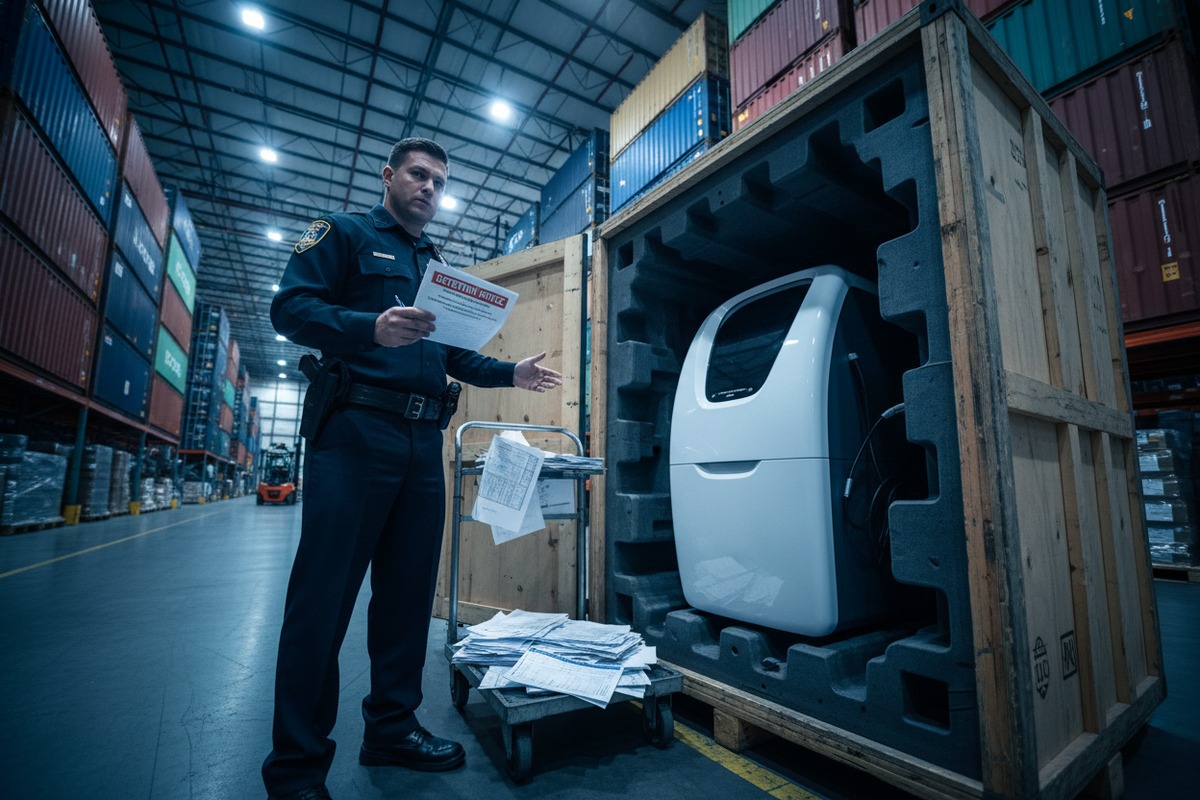
Legal risks include FDA product detention at ports, civil penalties up to $250,000 per violation, mandatory recalls, and Medical Device Reporting failures. Your brand bears liability for adverse events even when the Chinese manufacturer caused the defect. Import refusal records become public, damaging your market reputation permanently.
Direct Financial Penalties
The FDA enforces strict penalties for non-compliance. Medical Device Reporting failures 6 alone carry fines up to $250,000. If your Initial Importer fails to report deaths or serious injuries within 30 days, your brand shares liability.
Beyond fines, consider storage costs during detention. Warehousing seized shipments runs $500-2,000 weekly. A 90-day detention equals $6,000-24,000 in storage alone. Add legal fees, and costs multiply rapidly.
Supply Chain Disruption Costs
| Risk Category | Immediate Cost | Long-Term Impact |
|---|---|---|
| Port Detention | $5,000-50,000 | Lost sales, customer trust |
| Product Recall | $100,000+ | Brand reputation damage |
| MDR Penalty | Up to $250,000 | FDA scrutiny increases |
| Import Refusal | Shipment value | Public record for 5 years |
| Legal Defense | $50,000-200,000 | Ongoing compliance burden |
Reputation and Market Access Risks
FDA import refusals appear in public databases. Your competitors can search these records. A single refusal signals compliance problems to potential partners and customers.
More critically, repeated violations trigger automatic detention without examination. This means every future shipment faces holds regardless of compliance improvements. Recovery takes years of demonstrated good performance.
Liability Chain Analysis
Many U.S. brands assume the Chinese manufacturer bears full responsibility. This assumption proves dangerous. Under FDA regulations, the Initial Importer shares compliance duties. When no proper Initial Importer exists, your company may become the responsible party by default.
Our legal advisors consistently warn against this gap. Even with contracts assigning liability to suppliers, U.S. courts may hold the domestic entity accountable for consumer harm.
Insurance and Indemnification Gaps
Standard product liability insurance often excludes FDA regulatory violations. Review your policy carefully. Coverage gaps leave your brand exposed when compliance failures occur.
Require your supplier to maintain separate regulatory liability coverage. Verify policy limits exceed potential FDA penalties. Request certificates of insurance annually.
How can I ensure my private-labeled shockwave machines meet all FDA requirements before they ship?
Our production floor runs pre-shipment inspections daily. We catch compliance issues before containers leave the dock. But many buyers skip this critical step, discovering problems only at U.S. customs. Pre-shipment verification saves time, money, and regulatory headaches.
Ensure compliance by requesting 510(k) clearance documentation before ordering. Verify labeling meets 21 CFR 801 requirements including English language, intended use statements, and manufacturer identification. Audit Quality System Regulation compliance under 21 CFR 820. Obtain certificates showing device testing to applicable standards.

Pre-Shipment Documentation Checklist
Before any container ships, collect and verify these documents:
| Document Type | Purpose | Verification Method |
|---|---|---|
| 510(k) Clearance Letter | Confirms market authorization | FDA 510(k) database search |
| Quality System Certificate | Proves manufacturing standards | ISO 13485 registrar verification |
| Device Labeling Samples | Ensures regulatory compliance | Compare against 21 CFR 801 |
| Test Reports | Validates safety and performance | Review accredited lab credentials |
| MDR Procedures | Confirms adverse event protocols | Written procedure review |
| Bill of Materials | Verifies component specifications | Cross-check with 510(k) summary |
Labeling Requirements Deep Dive
FDA labeling rules catch many importers off guard. Your private-labeled shockwave machine must display specific information. Missing elements trigger detention.
Required label elements include:
- Device name and model number
- Manufacturer name and address
- Intended use statement
- Adequate directions for use
- Relevant warnings and contraindications
- Lot or serial number for tracking
For private-label products, your brand name appears as the manufacturer. This means your company accepts full regulatory responsibility. Ensure your compliance team understands this transfer of liability.
Quality System Regulation Audits
The FDA's Quality System Regulation 7 under 21 CFR 820 sets manufacturing standards. Chinese suppliers must demonstrate compliance. Request audit reports from recognized certification bodies.
Key QSR elements to verify:
- Design controls documentation
- Production process validation
- Corrective and preventive action procedures
- Complaint handling systems
- Device history records
Our quality assurance team conducts internal audits monthly. We share these reports with buyers upon request. Transparent suppliers welcome such inquiries. Evasive responses signal risk.
Testing and Certification Standards
Shockwave therapy machines face multiple testing requirements. Electrical safety testing per IEC 60601-1 applies universally. EMC testing ensures electromagnetic compatibility with other medical equipment.
For devices with electronic components, additional CDRH oversight may apply. Confirm your supplier understands radiation-emitting device requirements if applicable.
Service Level Agreements for Compliance
Draft detailed agreements covering compliance responsibilities. Your contract should specify:
- Document submission timelines
- Labeling approval processes
- Change notification requirements
- Audit access provisions
- Non-compliance remedies
Our standard contracts include penalty clauses for compliance failures. This incentivizes suppliers to maintain standards throughout production runs.
Will verifying my supplier's FDA status help me prevent customs seizures and inventory shortages?
Our logistics team tracks shipment clearances across dozens of U.S. ports. We observe patterns clearly. Buyers who verify FDA status before ordering experience 70% fewer delays. Those who skip verification face repeated holds, missed sales seasons, and angry customers.
Yes, FDA status verification directly prevents customs seizures and inventory gaps. CBP's ACE system cross-references FDA databases during entry processing. Missing or incorrect Initial Importer information causes 20-30% of FDA holds. Proactive verification identifies problems before shipping, allowing corrections that ensure smooth clearance.
How CBP and FDA Systems Interact
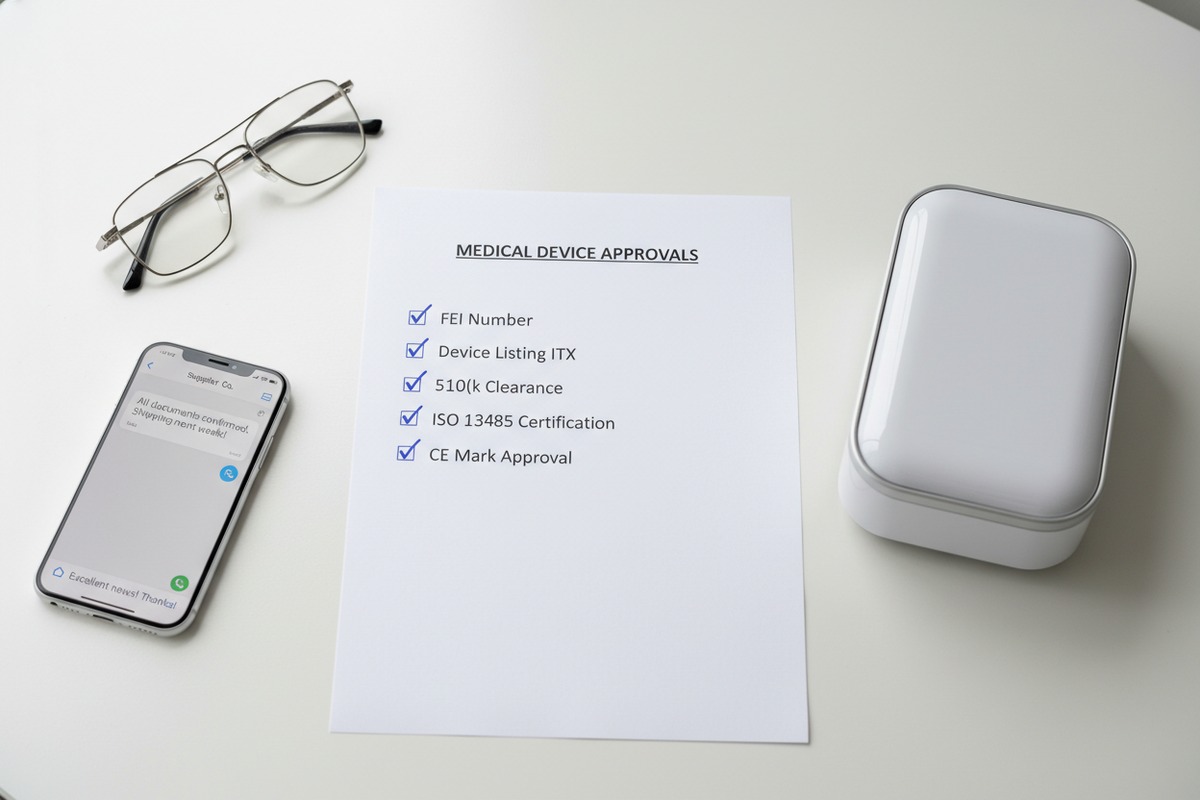
When your shipment arrives at a U.S. port, CBP's Automated Commercial Environment 9 processes the entry. This system connects directly to FDA databases. It automatically flags discrepancies.
Common flagged issues include:
- Unregistered Initial Importer FEI numbers
- Unlisted device types for the importing establishment
- Manufacturer information mismatches
- Missing or invalid 510(k) references
- Suppliers on FDA import alert lists
Import Alert Status Checks
FDA maintains import alerts targeting non-compliant foreign manufacturers. Alert 89-04 specifically addresses GMP violations. Chinese medical device manufacturers appear frequently on these lists.
Check import alert status before every order. A supplier not on the list today may appear tomorrow. Regular monitoring protects against surprise detentions.
Timing and Registration Renewal
FDA registrations expire annually on October 1. Many suppliers let registrations lapse during renewal periods. A shipment arriving in late September with October delivery may face an expired registration.
Build verification into your ordering calendar:
| Order Timeline | Verification Action | Risk Mitigation |
|---|---|---|
| Pre-Order | Full FDA status check | Identify issues before commitment |
| Production Start | Re-verify registration status | Catch lapses early |
| Pre-Shipment | Confirm no new import alerts | Avoid in-transit surprises |
| 30 Days Before Arrival | Final status confirmation | Allow correction time |
| Post-Arrival | Document clearance success | Build compliance record |
Building Buffer Stock Strategies
Even with perfect verification, delays happen. Smart inventory management includes buffer stock for compliance contingencies.
Calculate buffer needs based on:
- Average clearance time (typically 1-3 days for compliant shipments)
- Potential detention duration (30-90 days for issues)
- Your sales velocity and seasonal patterns
- Alternative supplier availability
Our operations team recommends 45-60 days of safety stock for regulated medical devices. This buffer absorbs occasional delays without stockouts.
Documentation Packages for Smooth Clearance
Prepare comprehensive documentation packages for customs brokers. Include copies of:
- FDA establishment registration confirmations
- Device listing printouts from FDA database
- 510(k) clearance letters
- Initial Importer contact information
- Quality certificates and test reports
Proactive documentation demonstrates compliance intent. Customs officers reviewing complete packages clear shipments faster than those requiring information requests.
Recovery from Detention Situations
When detention occurs despite preparation, act quickly. Respond to FDA notices within stated timeframes. Provide requested documentation completely. Partial responses extend holds.
Consider engaging FDA consultants for complex detention cases. Their expertise navigating release processes often recovers shipments faster than internal efforts. The cost typically proves worthwhile compared to extended storage fees and lost sales.
Conclusion
Verifying FDA Initial Importer status protects your brand from costly delays and legal exposure. Use FDA databases, audit supplier documentation, and build compliance into your ordering process. Your investment in verification pays dividends through smooth customs clearance and reliable inventory flow.
Footnotes
1. Explains FDA’s role in ensuring medical device quality and compliance. ↩︎
2. Provides the official FDA definition and responsibilities of an Initial Importer. ↩︎
3. Provides the exact regulatory definition of an Initial Importer from the eCFR. ↩︎
4. Explains what an FEI number is and how to look it up for FDA-regulated entities. ↩︎
5. Details the FDA’s 510(k) premarket notification process for medical devices. ↩︎
6. Outlines mandatory reporting requirements for medical device adverse events and malfunctions. ↩︎
7. Describes the FDA’s Quality Management System Regulation for medical device manufacturing. ↩︎
8. Explains the FDA regulation 21 CFR Part 820 for medical device quality systems. ↩︎
9. Describes CBP’s electronic system for processing import and export data, including FDA-regulated products. ↩︎

 English
 Español de México
 Deutsch
 Français
 العربية
 Русский
Join the Conversation
Have a question or insight to share? We read every comment — whether you're a distributor, salon owner, or just curious about the technology. Your real-world experience helps others make better decisions. Drop your thoughts below.