
Last year, our quality control team received urgent calls from three US distributors. Their shockwave machines overheated during patient sessions. The supplier’s spec sheets looked perfect, but real-world performance failed dramatically. This gap between paper claims and actual output costs businesses thousands in returns and reputation damage.
Third-party testing verifies shockwave therapy machine specs from China by engaging ISO/IEC 17025 accredited labs to independently measure energy flux density, pressure output, frequency, cooling performance, and safety compliance against standards like IEC 63045 and FDA 510(k) requirements, ensuring claims match real-world therapeutic output.
This guide walks you through selecting qualified labs, defining test benchmarks, coordinating factory inspections, and protecting your brand. Let’s dive into the practical steps that separate successful importers from those facing costly surprises.
How do I select a qualified third-party laboratory in China to audit my shockwave machine's technical data?
When we help clients source testing partners, the biggest mistake we see is trusting any lab with a certificate on the wall. Not all testing facilities have the acoustic measurement equipment or medical device expertise needed for shockwave therapy verification.
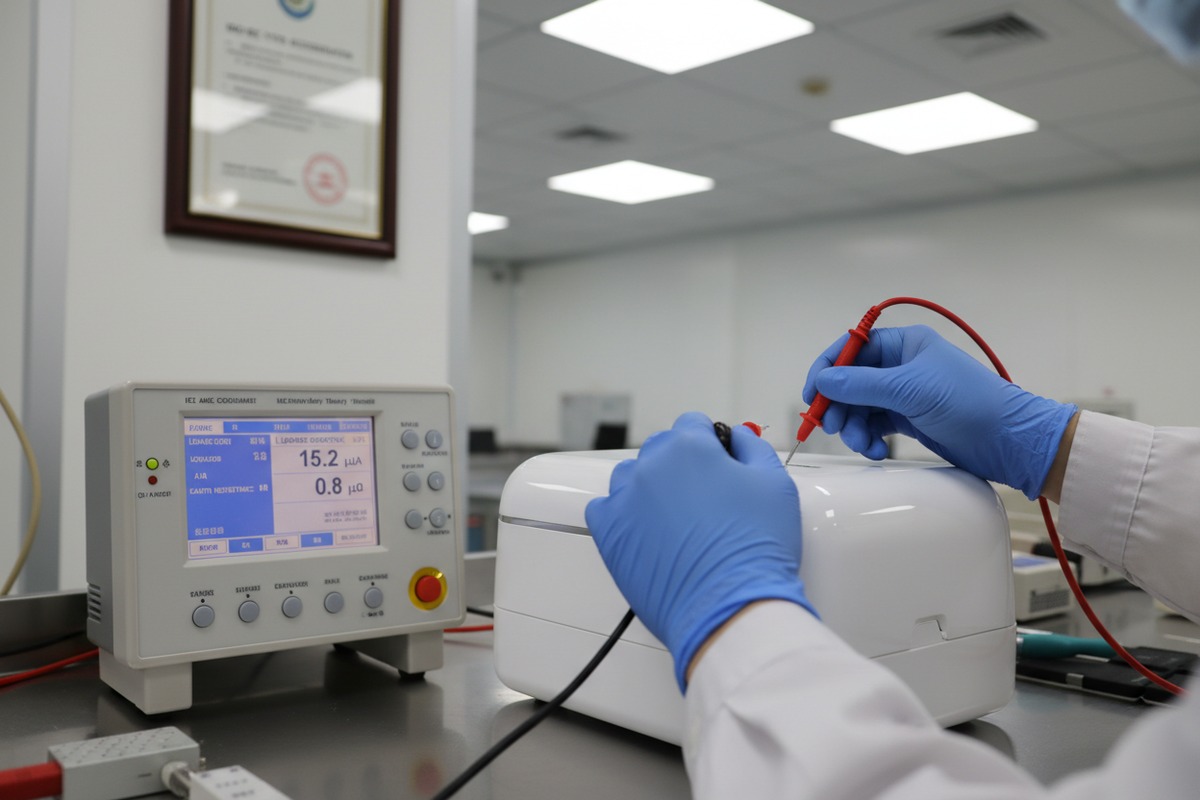
Select third-party labs with ISO/IEC 17025 accreditation and CMA certification for China operations, verified through CNAS database searches. Confirm their scope covers acoustic output mapping, thermal testing, and IEC 60601 medical electrical safety standards specifically for therapeutic ultrasound and shockwave devices.
Understanding Lab Accreditation Types
The first step is understanding what accreditation actually means. ISO/IEC 17025 1 is the international standard for testing laboratory competence. In China, CMA (China Metrology Accreditation) adds local regulatory recognition. Both matter for different reasons.
ISO/IEC 17025 ensures the lab follows standardized procedures and maintains calibrated equipment. CMA certification 2 means Chinese regulatory bodies recognize their test reports. For export purposes, you want both.
How to Verify Lab Credentials
Start with the CNAS (China National Accreditation Service) online database. Search for the lab's name and check their accreditation scope. The scope document lists exactly what tests they can perform. A lab accredited for general electrical safety may not have acoustic measurement capabilities 3.
| Verification Step | Where to Check | What to Look For |
|---|---|---|
| ISO/IEC 17025 Status | CNAS Database 4 | Active accreditation, valid dates |
| CMA Certification | SAMR Website | Current certificate number |
| Scope of Testing | Accreditation Annex | Acoustic output, IEC 60601, thermal |
| Equipment Calibration | Lab Records | Annual calibration certificates |
| Staff Qualifications | Lab Profiles | Biomedical engineering backgrounds |
Matching Lab Capabilities to Your Needs
Shockwave therapy testing requires specialized equipment. Hydrophones 5 measure acoustic output. Pressure sensors verify radial device performance. Thermal imaging cameras capture handpiece temperature during duty cycle tests.
Ask the lab directly about their equipment list. Request photos of their acoustic measurement setup. A qualified facility will have a water tank with positioning systems for precise hydrophone placement.
Red Flags to Avoid
Some labs offer suspiciously fast turnaround times or unusually low prices. These shortcuts often mean skipped procedures or uncalibrated equipment. Our engineering team once compared reports from two labs testing the same unit. The budget lab missed a 15% energy output variance that the accredited facility caught immediately.
Also watch for labs that only offer "pass/fail" results without detailed measurement data. You need actual numbers, not just stamps. The report should show measurement uncertainty, test conditions, and raw data points.
Which specific energy and frequency benchmarks should I require the lab to test on my shockwave therapy equipment?
Our R&D engineers spend weeks calibrating output parameters before production. But we've learned that suppliers without this discipline often claim specs they cannot deliver. The benchmarks you specify determine whether testing catches real problems or misses critical failures.
Require testing of energy flux density (0.08–0.6 mJ/mm² for focused devices), pressure output (1–5 bar for radial), frequency stability (up to 15 Hz), continuous pulse capacity (minimum 6,000 pulses), focal depth accuracy, and thermal management (handpiece below 35°C after 2,000 pulses at maximum settings).
Core Energy Parameters for Focused Devices
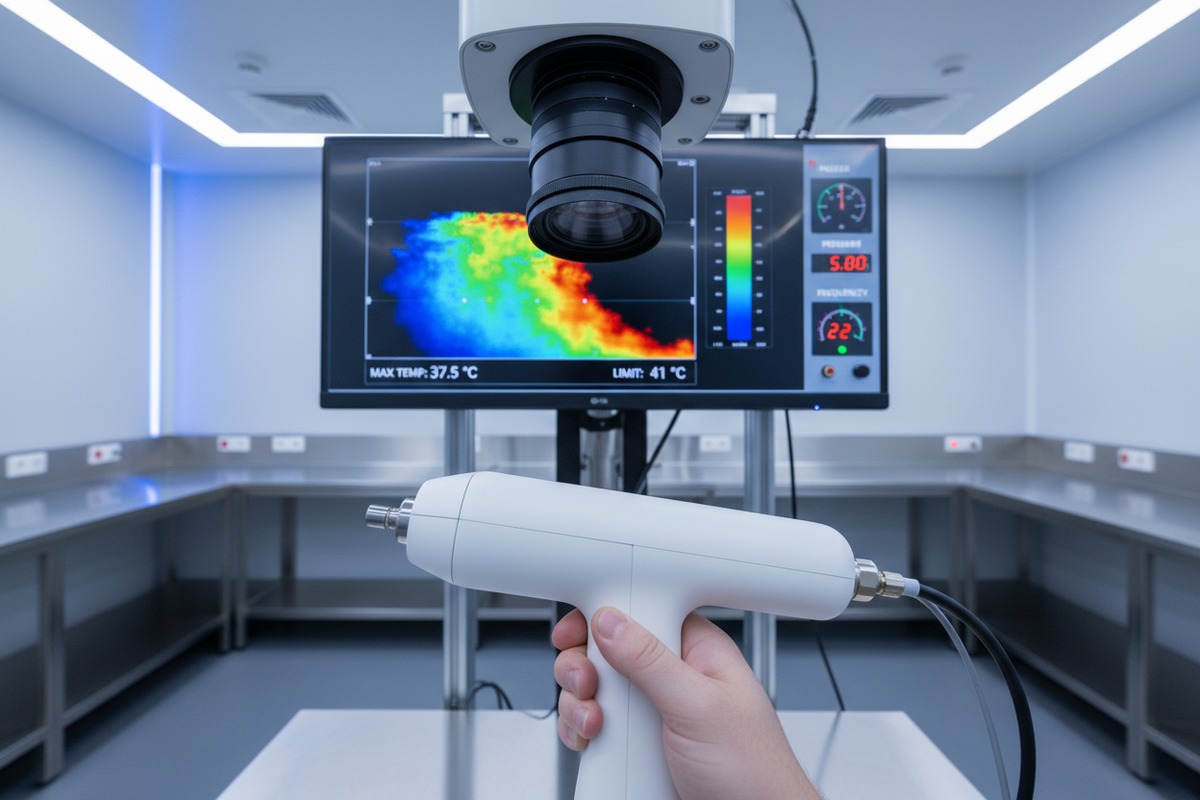
Focused shockwave machines concentrate acoustic energy at specific tissue depths. Energy flux density 6 (EFD) measures this concentration. Clinical applications typically require 0.08–0.6 mJ/mm² depending on the treatment protocol.
The lab should measure EFD at multiple energy settings, not just the maximum. Many devices show acceptable peak output but poor linearity across the range. If your customers need precise dosing, linearity matters.
Pressure and Frequency for Radial Devices
Radial shockwave machines work differently. They generate pressure waves at the skin surface. Pressure output ranges from 1–5 bar for therapeutic applications. Frequency affects treatment efficiency, typically 1–21 Hz for most protocols.
| Parameter | Radial Devices | Focused Devices | Testing Method |
|---|---|---|---|
| Energy Output | 60–185 mJ | 0.08–0.6 mJ/mm² | Hydrophone measurement |
| Pressure Range | 1–5 bar | N/A | Pressure transducer |
| Frequency Range | 1–21 Hz | 1–8 Hz | Electronic counter |
| Focal Depth | Surface | 0–60 mm | Acoustic field mapping |
| Pulse Count | 6,000+ continuous | 2,000+ continuous | Endurance test |
Thermal Performance Under Load
This test separates premium machines from budget failures. The handpiece must stay below 35°C after sustained use. Our standard test protocol runs 2,000 pulses at maximum energy and 10–15 Hz frequency.
Request thermal imaging during the test. Ask for temperature readings at 500, 1,000, 1,500, and 2,000 pulse intervals. A device that reaches 40°C by pulse 1,500 will fail during actual clinical sessions.
Repeatability Across Units
One tested sample means nothing if production units vary. Request the lab test at least three units from the same batch. Calculate the standard deviation for key parameters. Acceptable variance is typically ±5% for energy output and ±10% for pressure.
IEC 63045 Compliance Points
The IEC 63045 7:2020 standard specifically addresses non-focused shockwave devices. It requires documentation of complete therapy dosing parameters, not just single measurements. This includes device model, applicator type, energy level per pulse, and total pulses delivered.
| IEC 63045 Requirement | What to Test | Acceptable Range |
|---|---|---|
| Applicator Identification | Physical marking, electronic ID | Must match documentation |
| Energy Level Accuracy | Actual vs. displayed output | ±15% tolerance |
| Pulse Counter Accuracy | Delivered vs. displayed count | ±2% tolerance |
| Duty Cycle | Continuous operation time | Per manufacturer spec |
| Acoustic Output Stability | Variance over 1,000 pulses | <10% deviation |
How can I coordinate on-site third-party testing at the factory to ensure my order meets my brand's standards?
When our production team hosts buyer inspections, the prepared importers arrive with specific test protocols and calibrated reference equipment. The unprepared ones watch whatever demonstration the sales team offers. The difference in outcomes is predictable.
Coordinate on-site testing by scheduling unannounced or semi-announced visits, bringing your own calibrated measurement tools, defining test protocols in advance, requiring testing on random production units rather than pre-selected samples, and documenting everything with timestamped photos and videos tied to serial numbers.

Pre-Visit Preparation Steps
Send your test protocol to the lab and factory at least two weeks before the visit. Include specific parameters, acceptable tolerances, and testing sequences. This prevents "we don't have that equipment ready" excuses.
Bring your own calibrated tools when possible. A handheld infrared thermometer costs under $100 and independently verifies handpiece temperature. A decibel meter checks acoustic output consistency. These cross-references build confidence in factory equipment readings.
Sample Selection Strategy
Never test only the samples the factory selects. Insist on pulling units randomly from production inventory. If possible, mark sealed cartons during a previous visit and test those specific units later.
| Sample Selection Method | Risk Level | Recommended For |
|---|---|---|
| Factory-selected samples | High | Never recommended |
| Random from finished goods | Medium | Standard orders |
| Marked cartons from production | Low | High-value orders |
| Inline testing during production | Lowest | Ongoing partnerships |
Testing Sequence Protocol
Start with visual inspection. Check build quality, component labels, and firmware versions. Mismatched firmware between tested samples and production units is a common problem. The certification might reference version 2.1 while production runs version 1.8 with different output characteristics.
Next, run functional tests. Power on each unit and verify displayed parameters match actual output. Use the factory's calibrated equipment first, then cross-check with your own tools.
Documentation Requirements
Every test needs documentation that connects specific serial numbers to specific results. Take timestamped photos showing the serial number plate and the measurement display together. This creates traceability if problems emerge later.
Request the raw data files from electronic test equipment, not just printed summaries. Some testing software allows data export in CSV format. These files are harder to falsify than reformatted reports.
Handling Discrepancies
Establish clear acceptance criteria before testing begins. If a unit fails, what happens? Options include 100% inspection of remaining inventory, batch rejection, or rework with re-testing.
Our standard practice specifies that any failed unit triggers testing of four additional random samples. If any of those fail, the entire batch requires sorting. This creates financial incentive for the supplier to maintain quality consistently.
Communication Templates for Scheduling
| Communication Stage | Timing | Key Points to Include |
|---|---|---|
| Initial notification | 2 weeks before | Proposed dates, test scope, equipment needs |
| Confirmation | 1 week before | Final date, inspector names, access requirements |
| Day-before reminder | 24 hours before | Arrival time, contact person, parking instructions |
| Post-visit summary | Within 48 hours | Findings, photos, action items, deadlines |
Why is independent verification of technical specs critical for protecting my private-label reputation in the US market?
Our export customers tell us the same story repeatedly. A competitor's cheaper machine failed during treatment, injured a patient, and triggered an FDA investigation. That competitor's brand never recovered. The cost of proper testing is trivial compared to one product liability lawsuit.
Independent verification protects private-label brands by providing documented evidence of spec compliance for FDA 510(k) requirements, creating legal defense documentation, ensuring clinical efficacy matches marketing claims, preventing patient injuries that trigger regulatory action, and establishing traceability that satisfies US distributor and malpractice insurance requirements.
FDA Regulatory Framework
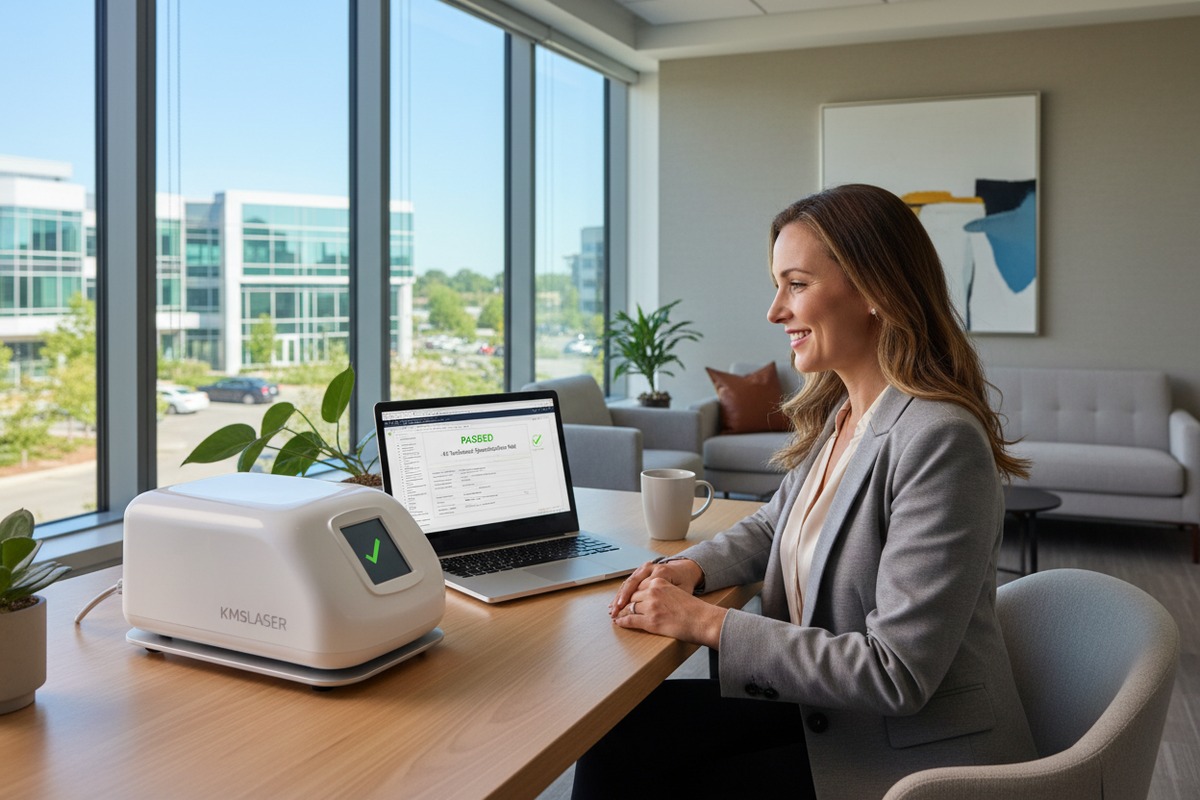
Shockwave therapy devices fall under FDA oversight. Class II devices 8 require 510(k) clearance 9 demonstrating substantial equivalence to predicate devices. The submission must include performance data. Independent testing reports carry more weight than manufacturer self-declarations.
Even if your Chinese supplier holds 510(k) clearance, their clearance doesn't automatically transfer to your private-label version. Significant modifications in branding, accessories, or intended use may require new submissions.
Legal Liability Documentation
When a patient injury occurs, attorneys request all quality documentation. Independent third-party test reports demonstrate due diligence. They show you verified performance before selling the device. This documentation often determines whether lawsuits proceed or settle quickly.
| Documentation Type | Legal Value | What It Demonstrates |
|---|---|---|
| Supplier self-certification | Low | Minimal due diligence |
| Third-party test report | High | Independent verification |
| On-site inspection photos | High | Physical verification |
| Batch traceability records | High | Product accountability |
| Calibration certificates | Medium | Equipment reliability |
Clinical Efficacy and Marketing Claims
Your marketing materials make performance claims. Energy output, treatment depth, and session parameters all appear in promotional content. If tested performance doesn't match these claims, you face false advertising liability.
Independent testing creates alignment between marketing and reality. When you claim 0.5 mJ/mm² energy density, the test report confirms that number. This protects against competitor challenges and regulatory scrutiny.
Insurance and Distribution Requirements
US distributors increasingly require suppliers to provide third-party verification before accepting inventory. Their malpractice insurance carriers demand documentation. Without it, you may lose distribution relationships regardless of product quality.
Professional liability insurance for clinics using your equipment also considers device verification status. Properly documented devices may qualify clinicians for better coverage terms.
Long-Term Brand Building
Brand reputation accumulates over years and disappears in days. A single viral social media post about a device failure can destroy market position. Verified performance provides both prevention and response capability.
When competitors attack your product claims, independent test reports serve as definitive rebuttals. When customers ask for quality evidence, you have concrete documentation rather than vague assurances.
Cost-Benefit Reality
Testing costs range from $2,000–$8,000 depending on scope. A single product liability claim costs $50,000–$500,000 or more. A brand reputation collapse costs everything. The math strongly favors verification investment.
| Scenario | Estimated Cost | Recovery Difficulty |
|---|---|---|
| Full third-party testing | $2,000–$8,000 | N/A – preventive |
| Minor product recall | $25,000–$100,000 | 6–12 months |
| Patient injury lawsuit | $100,000–$1,000,000+ | 2–5 years |
| FDA warning letter | $50,000–$200,000 | 1–3 years |
| Brand reputation collapse | Incalculable | Often permanent |
Conclusion
Third-party testing transforms Chinese shockwave machine imports from risky gambles into controlled investments. Select ISO/IEC 17025 accredited labs, specify precise energy and thermal benchmarks, coordinate rigorous factory inspections, and build the documentation that protects your US market reputation.
Footnotes
1. Replaced 404 link with authoritative Wikipedia page on ISO/IEC 17025. ↩︎
2. Explains the local regulatory recognition in China for testing labs. ↩︎
3. Describes the specialized testing ability required for medical devices. ↩︎
4. Provides a resource for verifying lab credentials in China. ↩︎
5. Replaced 404 link with an authoritative NOAA page explaining hydrophones. ↩︎
6. Replaced 404 link with authoritative Wikipedia page defining energy flux density. ↩︎
7. Replaced unknown HTTP status link with the official IEC standard page for IEC 63045. ↩︎
8. Explains the FDA classification for shockwave therapy devices. ↩︎
9. Clarifies the regulatory pathway for medical devices in the US. ↩︎
 English
 Español de México
 Deutsch
 Français
 العربية
 Русский
Join the Conversation
Have a question or insight to share? We read every comment — whether you're a distributor, salon owner, or just curious about the technology. Your real-world experience helps others make better decisions. Drop your thoughts below.