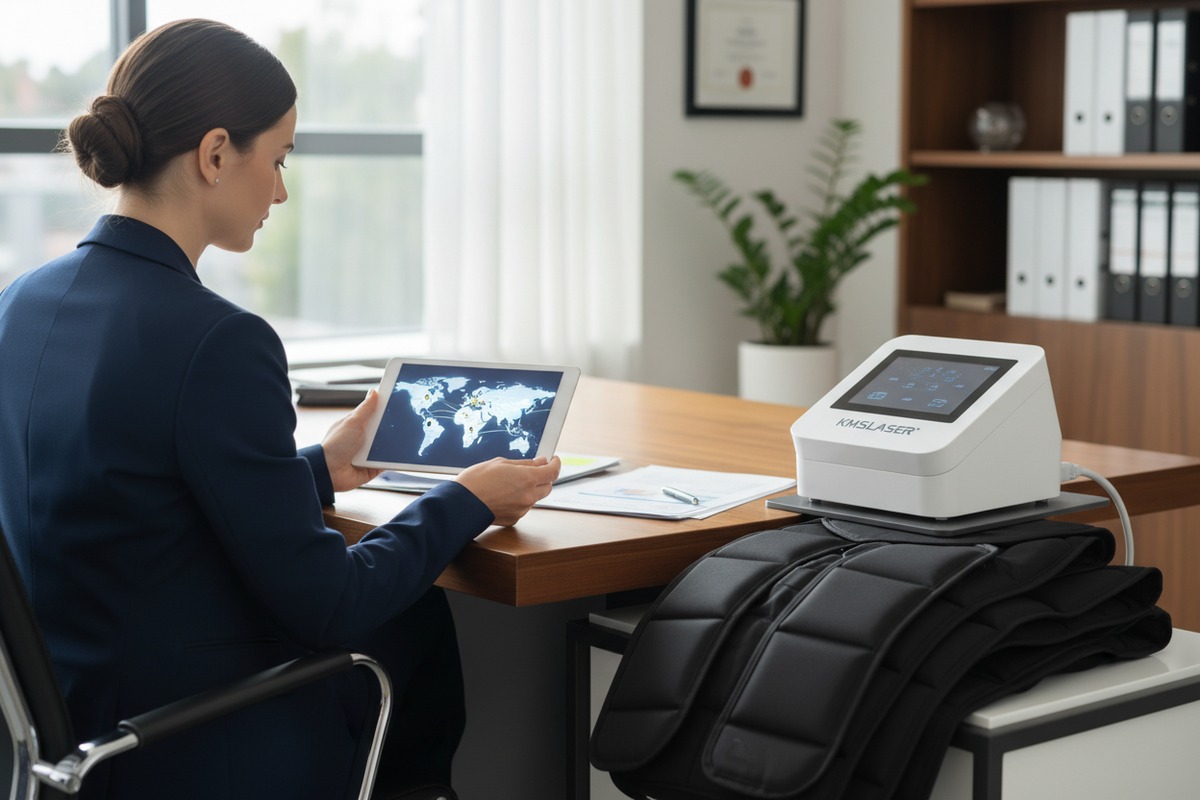
Shipment delays at the border can freeze your inventory and kill salon sales HS codes 1. We see this frustration often when managing logistics for our latest air compression systems heading to the US.
To reduce customs inspection rates for pressotherapy machines, ensure 100% documentation accuracy, use precise HS codes like 9019.10, maintain compliant labeling, and partner with experienced freight forwarders. These steps minimize red flags and help your medical-grade shipments bypass intensive physical examinations at the port.
Navigating the complex world of international trade 2 requires a proactive strategy. Here is how you can secure your supply chain.
How can I ensure my pressotherapy machine documentation is fully compliant to avoid customs delays?
When our factory prepares export paperwork for your private-label orders, we double-check every detail WCO database 3. Missing one small sterilization certificate can trigger a week-long hold that halts your distribution.
Ensure compliance by matching your Commercial Invoice, Packing List, and Bill of Lading exactly. Include clear FDA registration numbers, CE certificates, and detailed product descriptions. Discrepancies between these documents are the primary trigger for manual customs inspections.
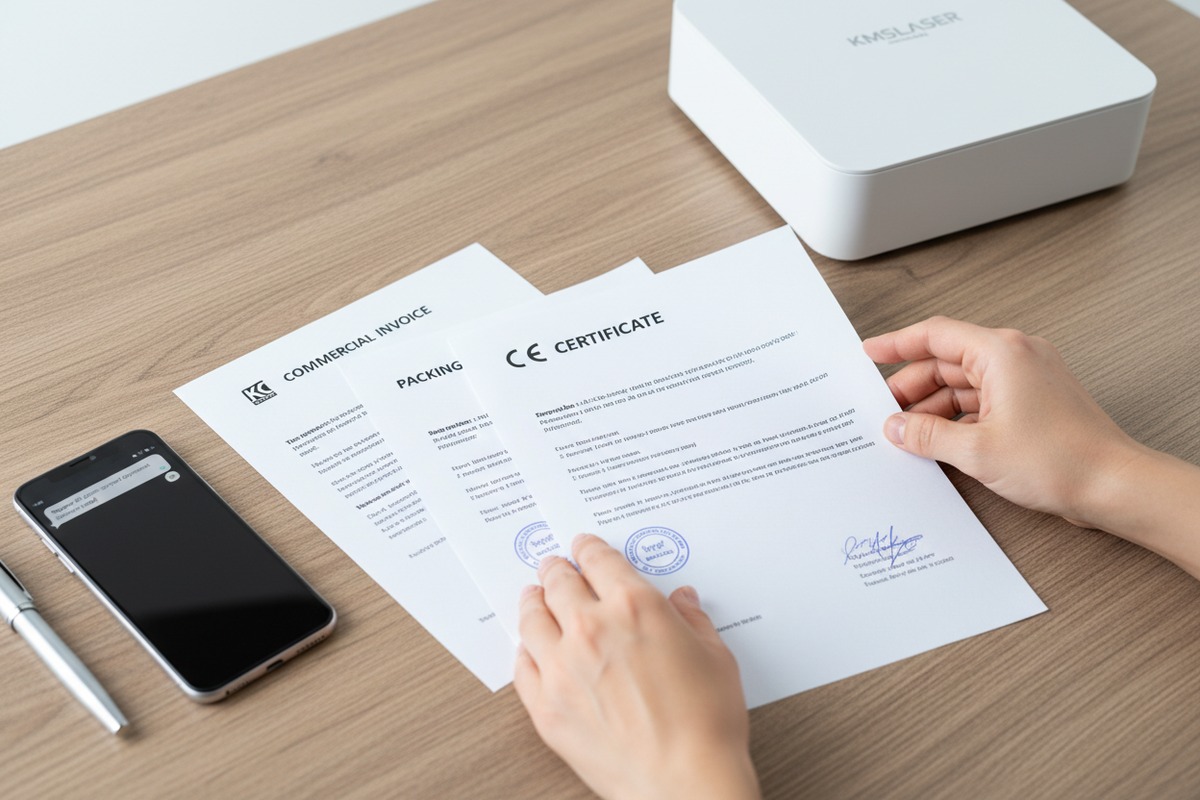
The Importance of Document Consistency
Customs officers look for patterns and outliers. If your Commercial Invoice says "Massage Machine" but your Packing List says "Medical Compression System," the computer will flag the shipment Trusted Trader 4. In our production facility, we use automated systems to generate all export documents from a single data source. This ensures that every piece of paper tells the same story.
Essential Document Checklist
To avoid delays, your documentation set must be comprehensive. For pressotherapy machines, which often fall under medical or therapeutic categories, the requirements are stricter than for general electronics.
| Document Name | Critical Information Required | Purpose |
|---|---|---|
| Commercial Invoice | Unit price, total value, HS code, and manufacturer details. | Determines duties and taxes. |
| Packing List | Net weight, gross weight, and precise box dimensions. | Used for physical verification. |
| Certificate of Conformity | CE or UL marks and testing report numbers. | Proves safety compliance. |
| FDA 510(k) (US only) | Device listing number and owner/operator number. | Required for medical device entry. |
Addressing Valuation and Origin
Never undervalue your goods. While it might seem like a way to save on duties, customs authorities use database averages to check if a price is "too good to be true." If we sell you a high-end pressotherapy unit for $800 but you claim it is worth $50, an inspection is almost guaranteed. Be honest about the value and ensure the Country of Origin (Made in China) is clearly marked on both the product and the paperwork.
What packaging standards should my Chinese supplier follow to reduce my risk of a physical inspection?
We have found that messy, poorly labeled boxes are an open invitation for customs agents to cut them open. Our packing team uses reinforced, standardized cartons 5 to project a professional image to inspectors.
Your supplier should use ISTA-certified packaging with clear, professional labels that include the model number, manufacturer info, and safety marks. Neutral, clean packaging with standardized dimensions suggests a high-compliance shipper, which helps reduce the frequency of random physical "tailgate" inspections.
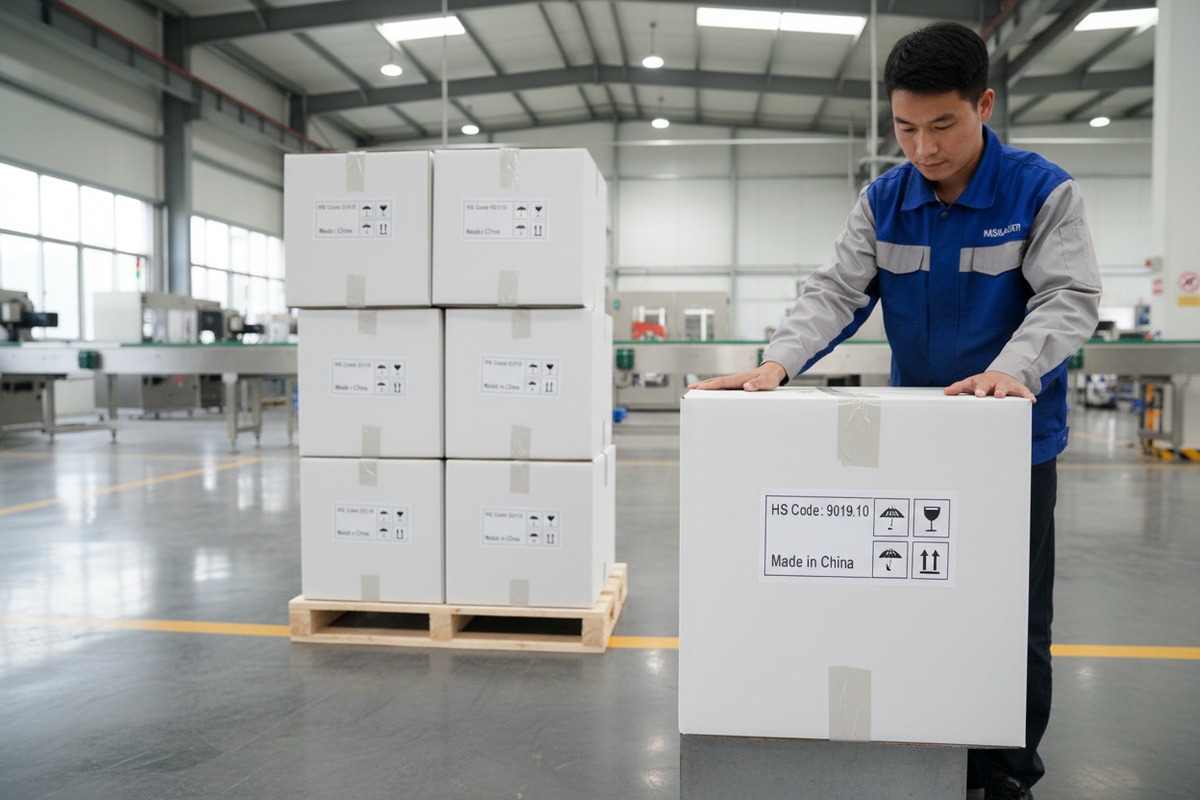
Structural Integrity and Appearance
When a container is opened, the first thing an inspector sees is the "face" of the cargo. If the boxes are crushed or held together with excessive duct tape, it suggests poor quality control. We use double-walled corrugated cardboard and internal molded foam for our pressotherapy units. This doesn't just prevent damage; it signals to customs that the contents are high-value, professional equipment.
Labeling Requirements
Labels must be legible and in the language of the destination country. For shipments to Elizabeth in the US, we ensure all English markings are clear.
- Shipping Marks: Must include the consignee name and order number.
- Safety Icons: Symbols for "Fragile," "Keep Dry," and "This Side Up."
- Product ID: A small sticker with the serial number and "Made in China."
Palletization and Loading
How the goods are placed in the container matters. Using heat-treated (ISPM 15) pallets is non-negotiable. If you use raw wood, customs will reject the entire shipment.
| Packaging Element | Standard Requirement | Impact on Customs |
|---|---|---|
| Outer Carton | Double-wall (5-ply) corrugated board | Prevents sagging; looks professional. |
| Pallet Type | Plastic or Heat-Treated Wood (IPPC stamp) | Avoids immediate quarantine for pests. |
| Unit Labeling | English language, permanent ink | Facilitates quick visual verification. |
By maintaining these standards, we ensure that if an officer does look inside your container, they see a tidy, organized load. This often results in a quick "pass" rather than a deep-dive inspection.
How do I verify that my imported beauty equipment is using the correct HS codes to prevent red flags?
During our R&D phase, we consult with trade experts to classify our machines before the first unit even leaves the dock. Picking the wrong code can lead to a 25% tariff surprise or an audit.
Verify HS codes by comparing your machine's primary function against the WCO database. For pressotherapy, use 9019.10 for massage/therapeutic use or 9018.90 for medical instruments. Request a "binding ruling" from CBP to get a legal guarantee on your classification, effectively neutralizing misclassification risks.
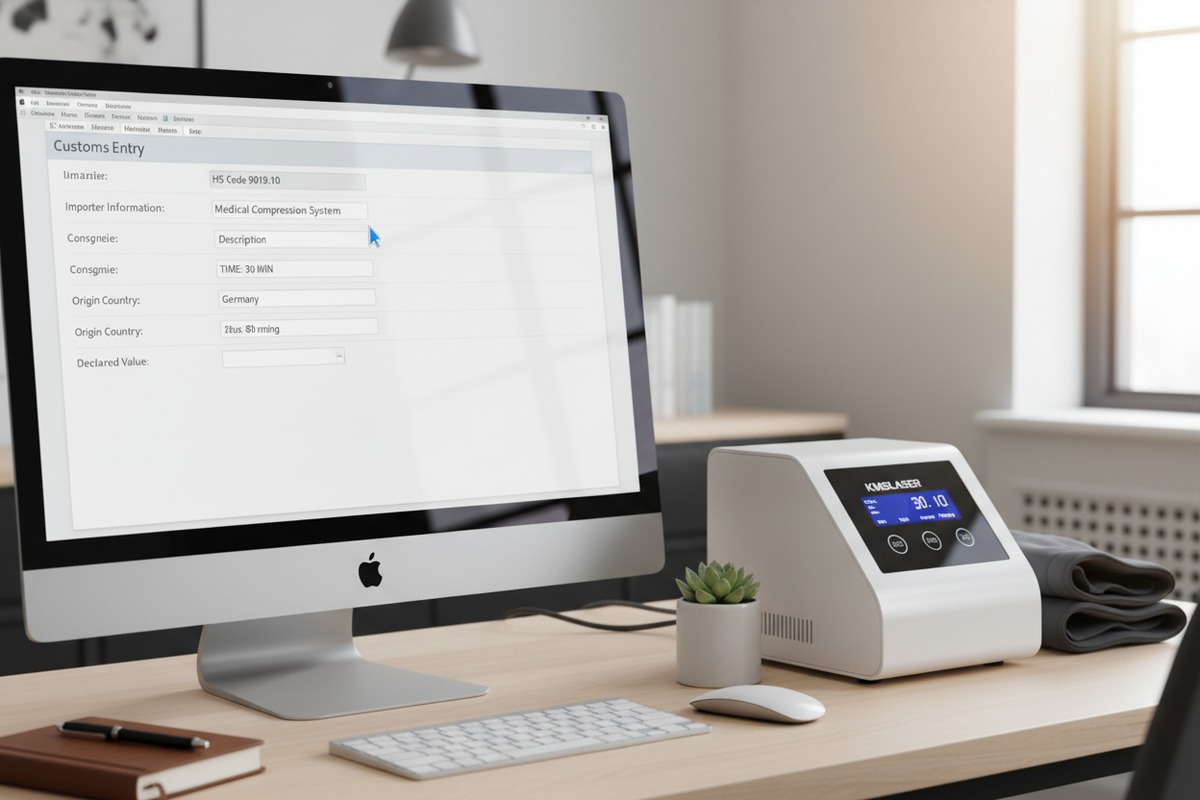
Understanding the Pressotherapy Classification
Pressotherapy machines occupy a gray area between wellness and medical devices 6. This distinction is critical for your bottom line. If the machine is marketed for "lymphatic drainage" in a clinical setting, it might be 9018.90. If it is a general "air massage" unit for salons, 9019.10 is usually more appropriate.
Common HS Codes for Beauty Equipment
Choosing the right code requires looking at the machine’s core technology.
| HS Code | Description | Typical Duty Rate (US MFN) |
|---|---|---|
| 9019.10 | Mechano-therapy; massage apparatus | ~2.7% |
| 9018.90 | Other medical, surgical instruments | 0% |
| 8543.70 | Electrical machines with individual functions | ~2.6% |
The Risk of "Tariff Engineering"
Some importers try to use codes with 0% duties for items that clearly belong in a higher-tax bracket. We advise against this. Customs authorities use AI to flag "outlier" codes. If you import 500 units of what you call a "computer part" (0% duty) but the X-ray shows a body suit and a pump, you will face an inspection and potentially a fraud investigation. We provide our clients with detailed technical specs to justify the chosen HS code during any inquiry.
Why a Binding Ruling is Best
For our large-scale wholesalers, we recommend applying for a Customs and Border Protection (CBP) binding ruling 7. This is a formal letter where customs agrees that your machine belongs under a specific code. Once you have this, you are nearly immune to inspections triggered by classification doubts.
Which shipping and logistics methods will help me minimize customs inspection rates for my bulk orders?
In our years of exporting to North America, we have found that the "who" and "how" of your shipping are just as important as the "what." We work with tier-one carriers to ensure smooth transit.
Minimize inspections by using "Type 11" informal entries for low-value goods or hiring a licensed customs broker for bulk sea freight. Choosing reputable carriers like DHL/FedEx for samples and established freight forwarders for sea freight reduces risk, as these entities have "Trusted Trader" status with many customs agencies.

The Rise of the Trusted Trader
Logistics is not just about moving boxes; it is about moving data. Large carriers and experienced brokers often participate in programs like C-TPAT (Customs-Trade Partnership Against Terrorism). When you ship through these channels, your goods are statistically less likely to be inspected because the carrier has already been vetted for security and compliance.
Air Freight vs. Sea Freight
While air freight is faster, it can sometimes face more scrutiny for electronics due to battery and safety regulations. For bulk pressotherapy orders, sea freight in a "Full Container Load" (FCL) is often safer than "Less than Container Load" (LCL). In an LCL shipment, you share a container with other companies. If their goods are suspicious, your machines will be stuck in the inspection hold right along with them.
Utilizing Bonded Warehouses and FTZs
If you are a large distributor, consider using a Foreign Trade Zone (FTZ). We can ship your machines to an FTZ where they can stay without officially "entering" the country's commerce. This allows you to delay duty payments and gives you time to ensure all paperwork is perfect before the final customs clearance.
- LCL (Less than Container Load): High risk of collateral delays.
- FCL (Full Container Load): Lower risk; you control the whole environment.
- DDP (Delivered Duty Paid): Convenient, but ensure your supplier actually uses a real broker.
Working with a professional team like ours means we manage the door-to-door logistics, ensuring that the broker on the other end has all the info they need before the ship even docks.
Conclusion
Reducing customs inspection rates requires a blend of perfect documentation, professional packaging, and strategic logistics. By following these factory-tested standards, you can ensure your pressotherapy machines arrive on time and ready for sale.
Footnotes
1. Explains the international system for classifying goods. ↩︎
2. Provides a general overview and definition of international trade practices. ↩︎
3. Found the official WCO Trade Tools database platform. ↩︎
4. Describes programs that recognize compliant trade partners and their benefits. ↩︎
5. Highlights the efficiency and cost-saving benefits of standardized packaging. ↩︎
6. Provides information on the definition and classification of medical devices by the FDA. ↩︎
7. Explains the process and benefits of obtaining a binding ruling from CBP. ↩︎


 English
 Español de México
 Deutsch
 Français
 العربية
 Русский
Join the Conversation
Have a question or insight to share? We read every comment — whether you're a distributor, salon owner, or just curious about the technology. Your real-world experience helps others make better decisions. Drop your thoughts below.