
When our engineering team quotes tooling costs for custom shockwave therapy housings, we often see buyers hesitate at the six-figure investment intellectual property ownership 1. The concern is valid. Private mold development for medical-grade devices 2 demands precision materials, complex geometries, and rigorous validation—all of which drive costs upward fast.
To negotiate private mold development cost-sharing effectively, structure agreements around volume commitments, phased tooling investments, milestone-based payments, and clear intellectual property ownership. Leverage your projected order quantities to secure manufacturer contributions of 40-60% on tooling costs while protecting your exclusive design rights through contractual safeguards.
This guide breaks down the exact negotiation frameworks that balance risk between you and your supplier CAD drawings 3. You will learn how to protect margins, secure ownership, and minimize financial exposure throughout the development process.
How can I structure a mold cost-sharing agreement that protects my profit margins?
Our production planning team has watched many promising partnerships collapse over poorly structured cost-sharing terms Dimensional tolerances 4. The math looked good on paper, but hidden obligations eroded profits within the first year.
Structure your mold cost-sharing agreement with tiered payment schedules tied to production milestones, volume-based rebate clauses, and per-unit tooling amortization caps. Define maximum cost recovery periods of 18-24 months, after which tooling costs should be fully absorbed, ensuring your per-unit margins improve predictably over time.
Understanding the True Cost Components
Before negotiating, you must understand what you are actually sharing Minimum purchase agreements 5. Mold development costs for shockwave therapy machines 6 break down into several categories. Each has different flexibility for negotiation.
| Cost Component | Typical Range | Negotiation Flexibility |
|---|---|---|
| R&D and Engineering (NRE) | $20,000–$60,000 | High – Can be amortized |
| Tooling and Molds | $100,000–$250,000+ | Medium – Volume dependent |
| Certification (CE/FDA) | $15,000–$60,000 | Medium – Can be shared |
| Pilot Builds (EVT/DVT) | $10,000–$40,000 | High – Milestone based |
| Packaging and Artwork | $3,000–$15,000 | High – Often absorbed |
The tooling and molds category represents your largest negotiation target. Many brands reduce initial expenses by starting with essential components only. Side trims and front bezels can wait until sales validate the investment.
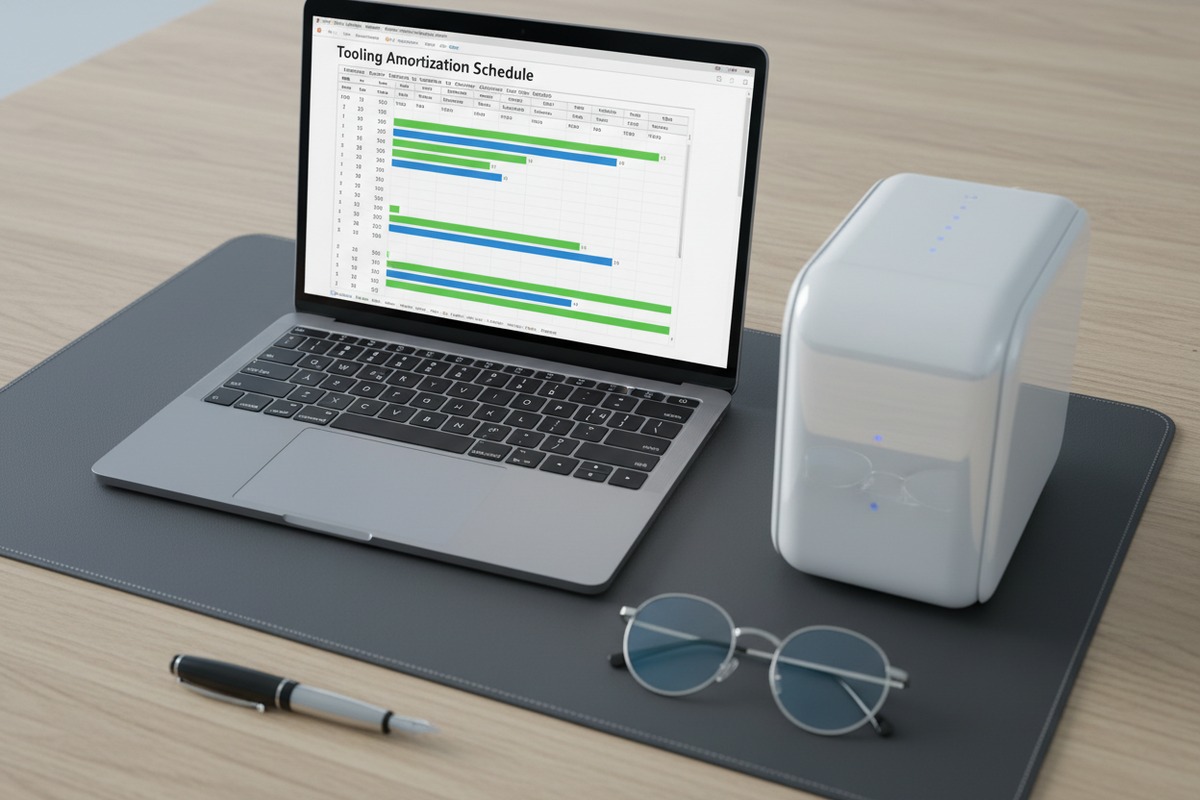
Setting Per-Unit Amortization Caps
Here is where margin protection gets practical. Never agree to open-ended cost recovery. Instead, negotiate a per-unit cap that limits how much tooling cost gets added to each device.
For example, if total tooling costs $120,000 and you commit to 200 units in year one, the simple math suggests $600 per unit. But what happens if you exceed 200 units? Without caps, the supplier keeps collecting the same $600 on unit 201, 202, and beyond.
Protect yourself by specifying: "Tooling cost recovery shall not exceed $600 per unit for the first 200 units. Units 201-400 shall carry $0 tooling surcharge."
Building in Volume-Based Rebates
Smart agreements include rebate triggers. When you hit certain volume thresholds, previously shared costs should flow back to you. volume-based rebate clauses 7
Consider this structure: If you initially share 50% of tooling costs ($60,000 on a $120,000 investment), negotiate that upon reaching 500 cumulative units, the supplier rebates $20,000. At 1,000 units, another $20,000 returns. This rewards your market success and keeps the supplier motivated to support your growth.
The rebate approach works because it aligns incentives. Your supplier wants you to sell more units. Your margin improves as volume increases. Everyone wins.
What order volume should I leverage to get my supplier to waive the private mold fees?
In our experience quoting custom shockwave machine projects, volume commitments change everything. A buyer requesting 50 units gets a very different response than one projecting 500 units over two years.
To secure full mold fee waivers, commit to minimum order quantities of 300-500 units within 18-24 months, backed by binding purchase agreements with penalty clauses. Suppliers typically absorb complete tooling costs at commitment levels representing $150,000-$300,000 in manufacturing revenue, as the production margin over time exceeds their upfront tooling investment.

Calculating the Supplier's Break-Even Point
Your supplier runs their own math before agreeing to absorb costs. Understanding their calculation strengthens your negotiation position.
Assume tooling costs the supplier $100,000. Their manufacturing margin on each mid-range shockwave device might be $800-$1,200 per unit. At $1,000 margin per unit, they need 100 units just to recover tooling. But suppliers want profit, not break-even. They typically target 2-3x return on tooling investment.
This means 200-300 units makes the supplier whole with reasonable profit. Beyond that, everything is gravy.
| Volume Commitment | Supplier Revenue (at $6,000/unit) | Likely Cost Absorption |
|---|---|---|
| 50 units | $300,000 | 0-20% tooling waived |
| 100 units | $600,000 | 20-40% tooling waived |
| 200 units | $1,200,000 | 40-70% tooling waived |
| 300+ units | $1,800,000+ | 70-100% tooling waived |
Making Your Volume Commitment Credible
Empty promises get you nowhere. Suppliers have heard "we expect to order thousands" too many times. They want evidence.
Strengthen your position with market data. Show your distribution network. Provide letters of intent from your customers. Share your sales projections with realistic assumptions. If you operate in the US market, where clinics charge $75-$300 per shockwave session and achieve 2-3 month ROI on equipment purchases, your growth story becomes believable.
Our sales team pays attention when buyers present concrete market analysis rather than vague optimism.
Structuring Binding Commitments
Free waiver negotiations require binding commitments, not handshake promises. The supplier absorbing $100,000+ needs assurance you will actually order.
Standard binding structures include:
- Minimum purchase agreements: Legal obligation to purchase specified quantities within defined periods
- Penalty clauses: Financial consequences for failing to meet committed volumes
- Rolling forecasts: Monthly updated projections with firm commitments on near-term orders
- Deposit structures: Upfront deposits that convert to product credits upon order placement
A typical structure might specify: "Buyer commits to 150 units in year one and 150 units in year two. Failure to order minimum quantities results in penalty payment equal to 30% of shortfall value."
This structure gives the supplier confidence to invest in your tooling.
How do I ensure I maintain exclusive ownership of the shockwave machine design after sharing development costs?
When our legal team reviews partnership agreements, ownership ambiguity ranks among the most common and costly mistakes. Brands invest heavily in custom designs, then discover their supplier selling identical machines to competitors.
Secure exclusive ownership by including explicit IP assignment clauses, mold ownership transfer provisions, and competitor exclusivity periods in your contract. Specify that all design files, CAD drawings, and physical molds become your property upon final payment, regardless of cost-sharing percentage, with contractual penalties for unauthorized production.

Separating Cost-Sharing from Ownership Rights
This point cannot be stressed enough: how much you pay and what you own are separate contractual matters. A 50/50 cost split does not automatically mean 50/50 ownership.
Your contract must explicitly state ownership terms independent of payment terms. Here is the language that matters:
"Upon completion of final milestone payment, regardless of cost-sharing arrangement, all intellectual property rights, design files, tooling, and molds shall transfer exclusively to Buyer. Seller retains no license, right, or permission to manufacture, modify, or sublicense the design."
Critical Ownership Provisions to Include
| Provision | What It Protects | Consequence If Missing |
|---|---|---|
| IP Assignment Clause | Design ownership | Supplier retains usage rights |
| Mold Ownership Transfer | Physical tooling | Cannot move production |
| Design File Delivery | CAD, engineering data | Cannot modify or improve |
| Competitor Exclusivity | Market position | Direct competitors buy same design |
| Derivative Works Clause | Future modifications | Supplier claims rights to improvements |
Addressing the "Platform" Problem
Many shockwave therapy machines build on existing platforms. Your supplier may argue that since the underlying platform is theirs, they retain certain rights.
Negotiate this clearly upfront. Distinguish between:
- Platform technology: Base electronics, software, mechanical systems the supplier developed
- Custom elements: Your unique housing design, interface, branding, specific configurations
You may not gain ownership of platform technology, but your custom elements must be exclusively yours. The contract should specify: "Custom housing designs, aesthetic elements, and branded interfaces developed under this agreement are exclusive property of Buyer. Underlying platform technology remains property of Seller, licensed to Buyer for use in agreed products."
Enforcing Exclusivity Periods
Even with ownership, practical enforcement matters. Your design files sit on the supplier's servers. Their engineers know your specifications. What stops them from producing "similar" devices for competitors?
Contractual exclusivity periods provide protection. Negotiate 24-36 month windows during which the supplier cannot produce visually or functionally similar devices for any other party. Include meaningful penalty clauses—typically 150-200% of your annual purchase value—for violations.
Back this with audit rights. Your contract should permit annual facility inspections and production record reviews to verify compliance.
What milestones should I set to minimize my financial risk during the custom mold development process?
Our project managers have seen development budgets spiral when milestones are vague. Clear checkpoints protect both parties and keep projects on track.
Minimize financial risk by structuring payments across five key milestones: design approval (15%), tooling completion (25%), first article inspection (25%), pilot production validation (20%), and mass production release (15%). Each payment should trigger only after documented acceptance criteria are met, with clearly defined revision allowances and delay penalties.

The Five Essential Milestones
Breaking development into discrete phases limits your exposure at each stage. You pay for completed work, not promises.
| Milestone | Payment % | Acceptance Criteria | Risk Mitigation |
|---|---|---|---|
| Design Approval | 15% | Signed off CAD, engineering specs | Limits commitment before design finalized |
| Tooling Complete | 25% | Physical mold inspection, material cert | Verifies tooling quality before production |
| First Article (FAI) | 25% | Dimensional inspection, fit check | Catches design issues before volume run |
| Pilot Validation | 20% | Functional testing, yield verification | Confirms production readiness |
| Mass Production | 15% | Final QC approval, shipping release | Holds payment until deliverable complete |
Setting Clear Acceptance Criteria
Each milestone needs objective pass/fail criteria. Subjective assessments invite disputes.
For First Article Inspection 8, specify measurable standards:
- Dimensional tolerances within ±0.1mm on critical features
- Surface finish quality grade matching approved samples
- Material composition verified by certificate of analysis
- Assembly fit confirmed with mating components
- Color match within Delta E < 2.0 of approved standard
When criteria are clear, acceptance decisions become straightforward. No arguing about whether something is "good enough."
Building in Revision Allowances
Development rarely proceeds without iterations. Your agreement should anticipate reasonable revisions without opening unlimited cost exposure.
Standard terms might include:
- Two design revision rounds included in base NRE cost
- Additional revisions billed at $2,500-$5,000 per round
- Major scope changes (affecting tooling) trigger formal change order process
- Timeline extensions for buyer-caused delays do not trigger supplier penalties
This approach acknowledges reality while preventing scope creep from destroying your budget.
Incorporating Delay Penalties
Delivery delays cost you money. Lost sales, disappointed customers, damaged reputation. Your agreement should share this risk with the supplier.
Reasonable penalty structures include:
- 1% of milestone value per week of delay, capped at 10%
- Right to cancel without penalty after 30 days delay
- Expedited shipping at supplier cost for production delays
- Exclusion of delays caused by buyer-requested changes
These terms motivate timely delivery without creating unreasonable supplier burden.
Conclusion
Negotiating mold cost-sharing requires balancing volume commitments, ownership protections, and milestone structures. Use these frameworks to protect your margins while building productive supplier partnerships. The investment in clear agreements pays dividends across your entire product lifecycle.
Footnotes
1. Offers foundational information on intellectual property rights and their protection. ↩︎
2. Defines what constitutes a medical device according to the FDA. ↩︎
3. Describes computer-aided design (CAD) and its role in creating technical drawings. ↩︎
4. Explains the concept of engineering tolerances and their application in manufacturing. ↩︎
5. Defines minimum purchase agreements as a contractual tool for securing commitments. ↩︎
6. Provides an overview of extracorporeal shockwave therapy and its medical uses. ↩︎
7. Replaced HTTP 403 with an authoritative legal dictionary definition of volume rebate. ↩︎
8. Replaced HTTP 403 with an authoritative Wikipedia definition of First Article Inspection. ↩︎


 English
 Español de México
 Deutsch
 Français
 العربية
 Русский
Join the Conversation
Have a question or insight to share? We read every comment — whether you're a distributor, salon owner, or just curious about the technology. Your real-world experience helps others make better decisions. Drop your thoughts below.