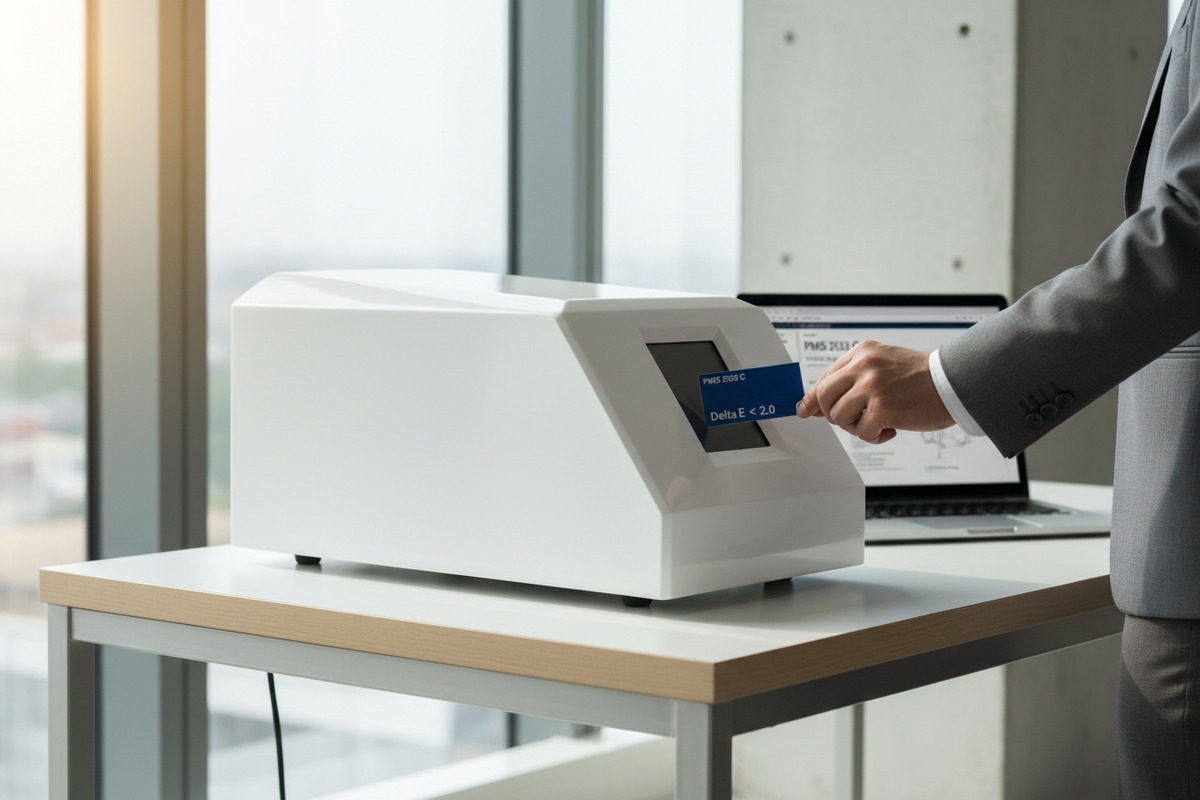
When our production team receives a new shockwave therapy machine 1 order, color specifications often create the biggest communication gaps. Buyers send a brand color, but the final casing arrives in a different shade exact PMS code 2. This wastes time, money, and trust.
To communicate Pantone color customization effectively, provide your supplier with the exact PMS code, physical color chips on the target material, and define acceptable Delta E tolerances. Request pre-production samples, document specifications in writing, and verify your supplier’s spectrophotometer capabilities before mass production begins.
The following guide breaks down each critical step. You will learn how to match colors accurately, handle material variables, approve samples efficiently, and document everything to avoid disputes.
How do I ensure my supplier accurately matches my brand's Pantone code on the shockwave machine casing?
Our engineering team has calibrated countless color batches for clients in the US and Europe. The most common mistake? Sending only a digital screenshot of a Pantone color. Screens display colors differently. Suppliers guess. The result disappoints everyone.
To ensure accurate Pantone matching, provide the complete PMS code with suffix (C or U), send a physical swatch on the same material type, use PantoneLIVE for spectral data sharing, and request a trial sample before full production. Always verify the supplier owns licensed Pantone tools.
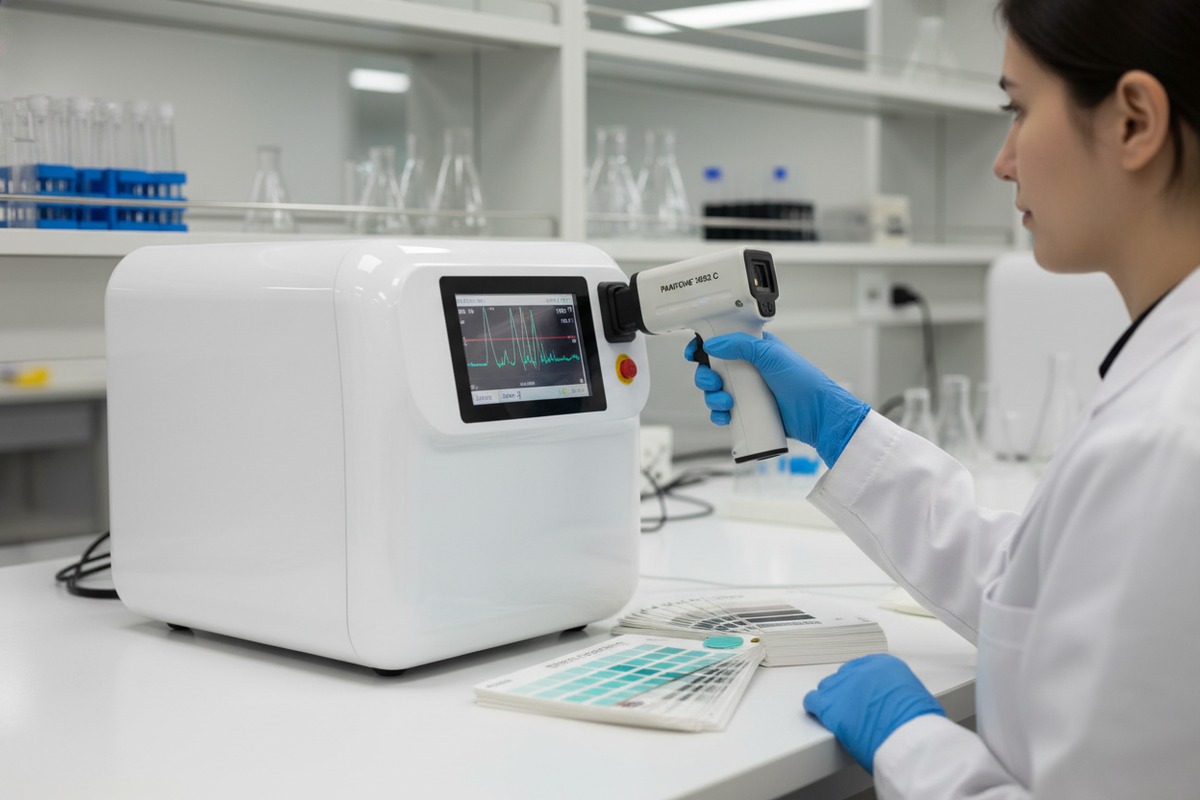
Start with the Right Pantone System
Not all Pantone codes work for plastic casings. The Pantone Matching System (PMS) 3 covers coated and uncoated paper. For shockwave machine casings made from ABS or polycarbonate 4, you need the Pantone Plastics system 5.
| Pantone System | Best Use Case | Material Type |
|---|---|---|
| PMS C (Coated) | Printed materials, packaging | Paper, cardboard |
| PMS U (Uncoated) | Matte printed items | Uncoated paper |
| Pantone Plastics | Injection-molded parts | ABS, polycarbonate, nylon |
| FHI TPG | Textiles, soft goods | Fabric, leather |
When you send a code, include the full suffix. PMS 286 C looks different from PMS 286 U. For plastic casings, specify if you need a Pantone Plastics equivalent.
Provide Physical References
Digital files cannot capture true color. Our quality control staff always requests physical chips from buyers. A Pantone fan deck or chip works best.
Ship the chip directly to your supplier. Ask them to keep it under controlled lighting. Natural daylight or D65 standard lighting is ideal. Fluorescent office lights distort color perception.
If shipping is not possible, use PantoneLIVE. This cloud platform shares spectral data globally. Your design team and your supplier see the same color values.
Verify Supplier Equipment
Before committing to a supplier, ask these questions:
- Do you own a spectrophotometer 6?
- What brand and model?
- Is your Pantone library licensed and updated?
X-Rite and Datacolor are industry standards. If a supplier relies only on visual matching, expect inconsistency.
Request a Pre-Production Sample
Never approve mass production from a digital mockup. Request a physical sample molded in your target material. Compare it under D65 lighting against your original chip.
If the sample deviates, measure the Delta E value. Delta E below 1.0 is nearly invisible to human eyes. Delta E tolerances 7 Delta E below 2.0 is acceptable for most commercial applications. Above 3.0, most people notice the difference.
How will the choice of casing material affect the final color consistency of my customized equipment?
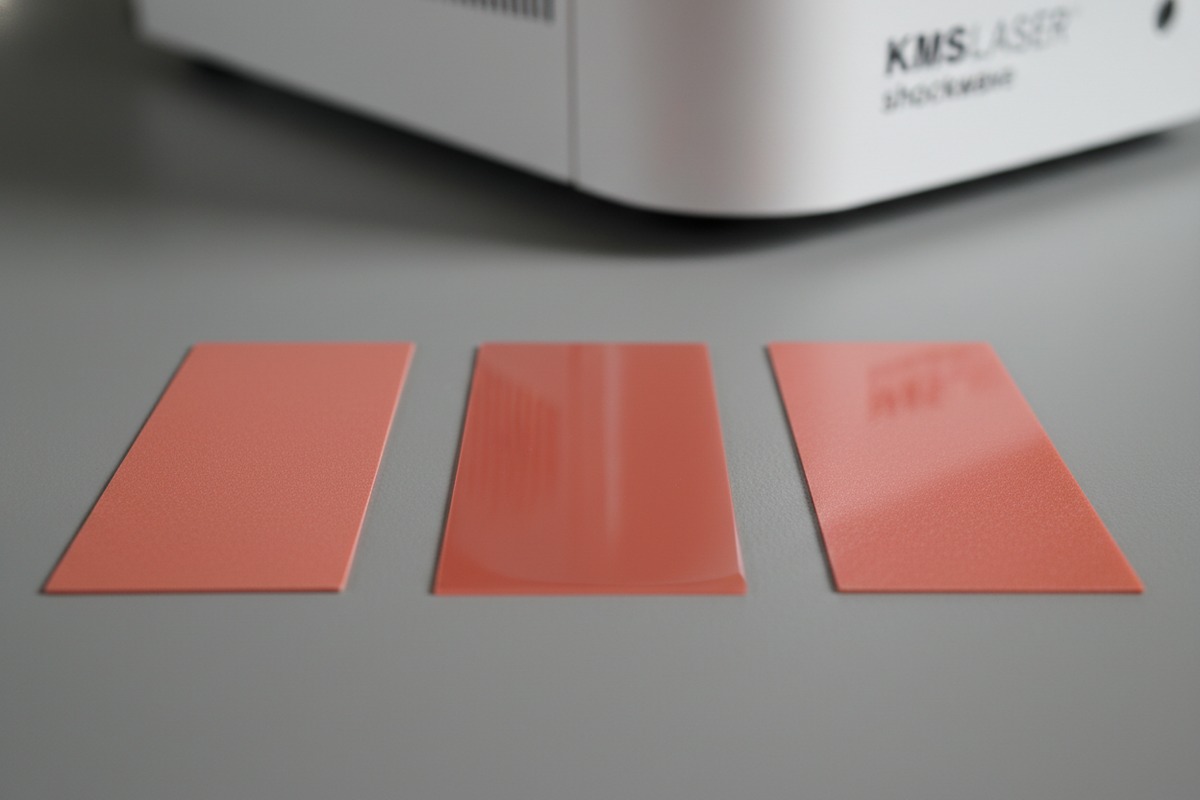
In our factory, we have tested the same Pantone formula on three different plastics. Each produced a visibly different shade. Material choice is not a minor detail. It fundamentally changes how color appears.
Casing material directly impacts color consistency. ABS plastic absorbs pigments differently than polycarbonate. Gloss finishes appear darker than matte. Additives for UV resistance or flame retardancy can shift hue. Always request color samples on your exact production material and finish.
Why Materials React Differently to Pigments
Plastics are not uniform. ABS has a slightly yellow tint. Polycarbonate tends toward gray. When you add the same blue pigment to both, the results differ.
Opacity matters too. Opaque white casings are easier to color-match than translucent parts. Our sleek white shockwave machine chassis uses high-opacity ABS for this reason.
| Material | Base Tint | Opacity Level | Color Matching Difficulty |
|---|---|---|---|
| ABS | Slight yellow | High | Moderate |
| Polycarbonate | Slight gray | Medium-High | Moderate-High |
| Nylon | Off-white | Medium | High |
| PP (Polypropylene) | Milky white | Low-Medium | Very High |
Surface Finish Changes Everything
A high-gloss finish reflects more light. Colors look deeper and more saturated. The futuristic shockwave machines we produce use gloss finishes to enhance visual appeal.
Matte finishes scatter light. The same pigment appears lighter and less vivid. Textured surfaces add another variable. The texture creates micro-shadows that dull the perceived color.
Before finalizing your Pantone choice, specify the exact finish. Then request samples in that finish.
Additives Alter Pigment Behavior
Medical device casings often need UV stabilizers. These protect against yellowing from sunlight or sterilization lamps. However, UV stabilizers can shift color slightly.
Flame retardants are another common additive. They may dull brightness or add a gray cast.
Discuss all additives with your supplier early. If you need UV resistance, test the color with the stabilizer included.
Long-Term Color Stability
Shockwave therapy machines sit in clinics for years. Cleaning chemicals, UV exposure, and heat cycles affect color over time.
Ask your supplier about color fastness testing. Request data on:
- UV resistance (hours under accelerated aging)
- Chemical resistance (common disinfectants)
- Heat stability (operational temperatures)
A color that looks perfect on day one may fade or yellow within months if these factors are ignored.
What is the most efficient process for me to approve color samples before mass production begins?
Our project managers handle dozens of color approvals each month. The fastest approvals follow a clear, documented process. The slowest ones involve endless back-and-forth emails with no structure.
The most efficient color approval process includes three stages: first, a digital proof with spectral data; second, a physical sample on production-grade material; third, a signed approval form with Delta E measurements. Set clear timelines and decision criteria before starting.
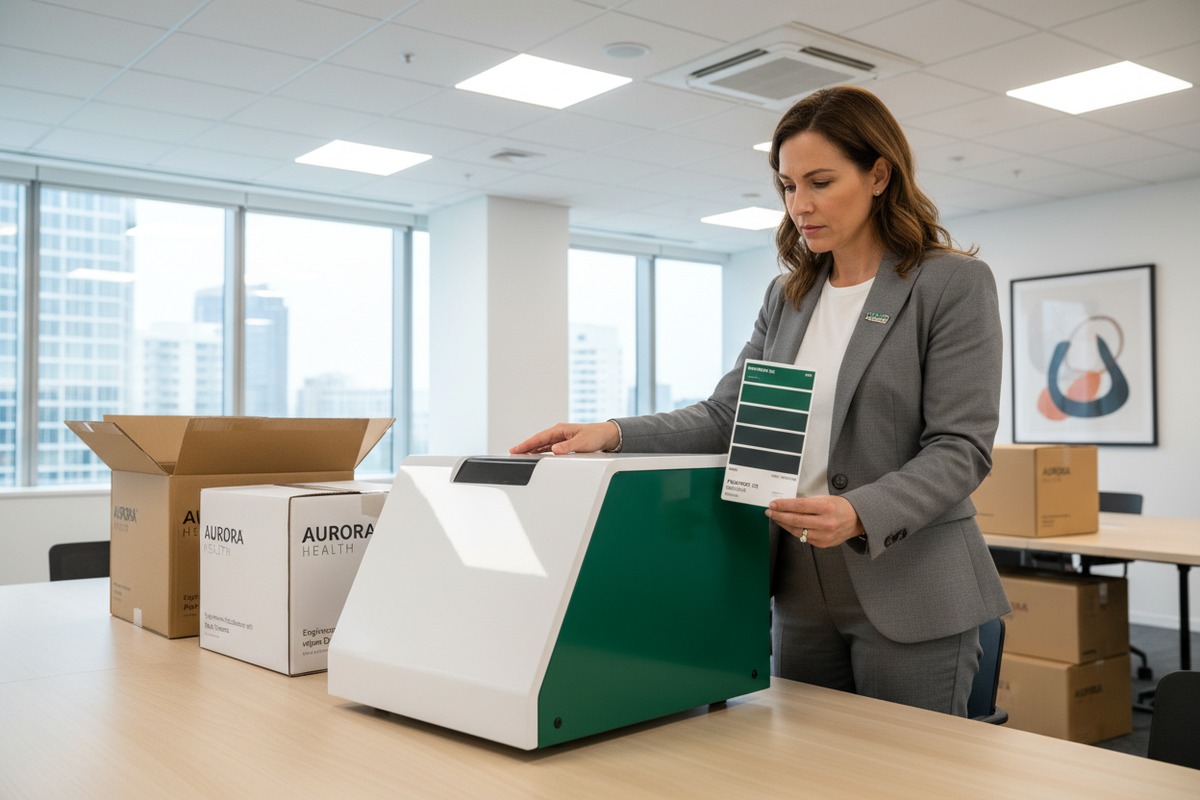
Stage One: Digital Proof
Begin with a digital color file. Your supplier should provide:
- Pantone code confirmation
- CIE Lab* values 8
- Simulated render on product shape
Review this against your brand guidelines. If the values match your specifications, proceed. If not, request corrections before any physical samples are made.
Stage Two: Physical Sample
Once the digital proof is approved, request a molded sample. Specify:
- Exact production material (e.g., ABS V0 grade)
- Exact surface finish (e.g., high gloss)
- All planned additives included
The sample should arrive within 7-14 days for most suppliers. Evaluate it under D65 lighting. Measure Delta E against your reference chip.
| Delta E Value | Perception | Action |
|---|---|---|
| 0 – 1.0 | Unnoticeable | Approve |
| 1.0 – 2.0 | Slight difference, acceptable | Approve with note |
| 2.0 – 3.0 | Noticeable to trained eyes | Request adjustment |
| 3.0+ | Obvious difference | Reject and reformulate |
Stage Three: Signed Approval
Create a formal approval document. Include:
- Pantone code and Lab* values
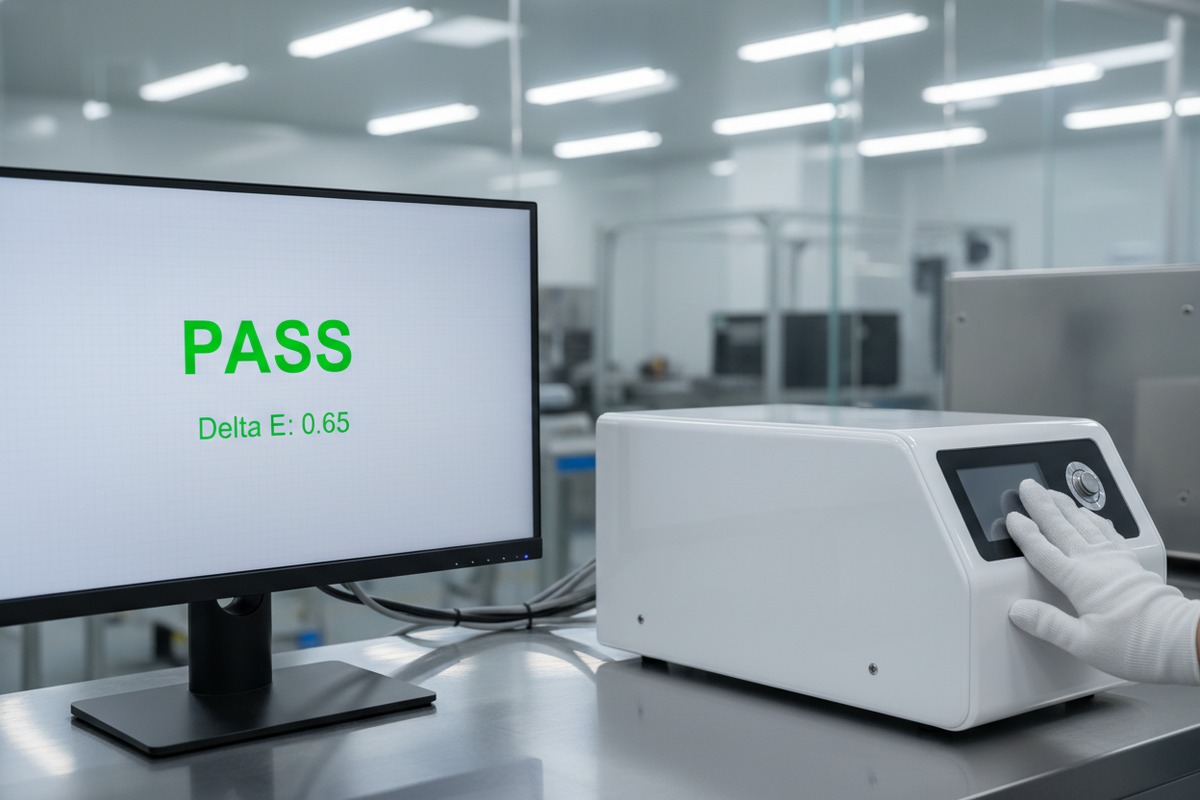
- Delta E measurement result
- Sample reference number
- Date and signatures from both parties
Keep the approved sample. Store it in a cool, dark place. This becomes your golden reference for incoming quality inspections.
Timeline Management
Set deadlines at each stage. A typical efficient timeline:
- Digital proof: 3 business days
- Physical sample production: 10 business days
- Evaluation and approval: 5 business days
Total: approximately 18 business days from request to signed approval. Communicate this timeline upfront to avoid delays.
Handling Rejections
If a sample fails, provide specific feedback. State the measured Delta E. Identify which value (L, a, or b) deviates most. This helps your supplier adjust the formula quickly.
Avoid vague feedback like "it looks off." Precise data accelerates corrections.
How can I document my color specifications to prevent quality disputes during the final inspection?
When disputes happen at final inspection, our quality team pulls the original documentation. If the specs are vague, everyone loses. Clear records protect both sides.
To prevent color disputes, create a comprehensive color specification document that includes the Pantone code, CIE Lab* values, acceptable Delta E tolerance, material and finish details, and an attached physical reference sample. Include this in your purchase contract and quality agreement.
Build a Complete Color Specification Sheet
Your specification sheet is your legal reference. It should contain every detail needed to reproduce and verify the color.
| Specification Element | Example Value | Purpose |
|---|---|---|
| Pantone Code | PMS 2935 C | Universal color reference |
| Lab* Values | L: 47.2, a: -6.1, b: -44.3 | Measurable color coordinates |
| Delta E Tolerance | ≤ 2.0 | Acceptable deviation limit |
| Material | ABS (V0 grade) | Substrate specification |
| Surface Finish | High gloss, Ra ≤ 0.4 | Texture and reflectivity |
| Measurement Conditions | D65 / 10° observer | Lighting and instrument settings |
Attach the Approved Sample
Words and numbers help. But a physical sample eliminates ambiguity.
Attach your golden sample to the specification document. Seal it in protective packaging. Note the sample ID and approval date.
During final inspection, compare incoming goods against this sample under controlled lighting. Measure Delta E with the same spectrophotometer settings.
Include Specifications in Contracts
Do not keep color specs in separate emails. Embed them in your purchase order or quality agreement.
State explicitly:
- Color must match specification sheet version X.X
- Delta E must not exceed Y.Y
- Non-conforming goods will be rejected or reworked at supplier cost
This language creates accountability. It also speeds resolution if problems arise.
Train Your Inspection Team
If your inspection team does not understand Lab* values or Delta E, they cannot enforce your standards.
Provide basic training on:
- How to use a spectrophotometer
- How to read and compare Lab* values
- What Delta E means in practical terms
Alternatively, hire a third-party inspection agency with color measurement expertise.
Document Every Inspection Result
Keep records of every batch inspection. Log:
- Batch number and date
- Measured Lab* values
- Calculated Delta E
- Pass/fail decision
This history helps identify trends. If Delta E creeps upward over time, you can address the issue before it becomes a rejection.
Communicate Changes Immediately
If your brand updates its Pantone color, issue a new specification sheet. Do not assume your supplier will notice a minor change.
Revision control is critical. Label each version clearly (v1.0, v1.1, v2.0). Archive old versions but make the current version obvious.
Conclusion
Color communication for shockwave therapy machine casings requires precision at every step. Specify the correct Pantone system, provide physical samples, account for material effects, approve samples formally, and document everything. These practices protect your brand and build trust with your supplier.
Footnotes
1. Explains what shockwave therapy machines are and their common medical applications. ↩︎
2. Replaced HTTP 404 with an authoritative Wikipedia page explaining the Pantone Matching System (PMS). ↩︎
3. Provides a comprehensive overview of the Pantone Matching System, its history, and applications. ↩︎
4. Describes the properties and characteristics of ABS plastic, a common material for product casings. ↩︎
5. Official Pantone resource detailing color systems specifically designed for plastics. ↩︎
6. Replaced HTTP unknown with an authoritative Wikipedia page explaining spectrophotometry and spectrophotometers. ↩︎
7. Explains the Delta E metric for color difference and provides common industry tolerance values. ↩︎
8. Explains the CIELAB color space, its axes, and how it quantifies color perception numerically. ↩︎


 English
 Español de México
 Deutsch
 Français
 العربية
 Русский
Join the Conversation
Have a question or insight to share? We read every comment — whether you're a distributor, salon owner, or just curious about the technology. Your real-world experience helps others make better decisions. Drop your thoughts below.