
Many spa owners and beauty brand executives contact our factory asking the same question: “Can you set up a custom startup password so only our staff can access the machine?” This is a critical concern. Without proper access control 1, expensive equipment in shared spa environments can be misused, settings tampered with, or unauthorized users can run sessions without supervision.
To negotiate custom startup passwords with your pressotherapy machine supplier, you need to request firmware customization during the OEM/ODM discussion phase, provide clear technical specifications for password complexity and user management, include password features in your contract with IP protection clauses, and secure long-term support for password resets and updates.
In this guide, I will walk you through the entire negotiation process. You will learn what questions to ask suppliers, what specifications to provide, how to structure your contract, and what post-purchase support to expect. Let us dive in.
How can I ensure my pressotherapy machine supplier supports custom startup passwords for my brand?
When our engineering team first started receiving requests for branded boot-up screens and user-specific logins, we realized that standard pressotherapy machines 2 simply did not meet the security needs of modern spas with multiple therapists and client data requirements.
To ensure your supplier supports custom startup passwords, verify their OEM/ODM capabilities early in the inquiry process, ask for samples with firmware customization, review their track record with software modifications, and confirm they have dedicated engineers for UI and security feature development.
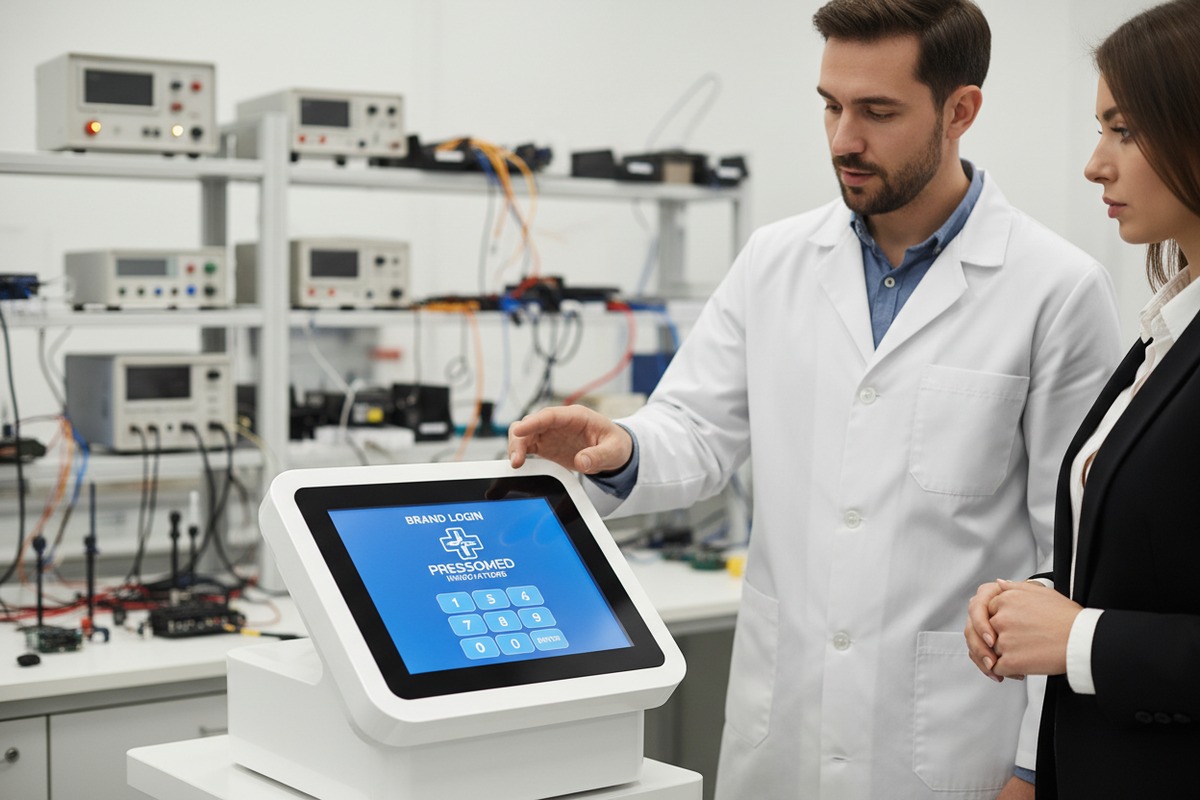
Understanding What Custom Startup Passwords Mean
Custom startup passwords are personalized, secure admin or access codes programmed into the pressotherapy machine's firmware. When you power on the machine, it requires this password before anyone can operate it. This feature serves multiple purposes:
- Prevents unauthorized use in shared spa environments
- Enables branded startup screens for white-labeling
- Supports multi-client management with different user logins
- Protects treatment settings from accidental changes
Key Questions to Ask Your Supplier
Before placing an order, ask these questions to verify the supplier's capabilities:
| Question | Why It Matters | Ideal Answer |
|---|---|---|
| Do you offer firmware customization for OEM orders? | Confirms software modification capability | Yes, with dedicated software team |
| Can you program custom passwords into the boot-up sequence? | Directly addresses your need | Yes, we have done this before |
| What is the MOQ for custom firmware orders? | Budget planning | 10-50 units typical |
| How long does firmware customization take? | Timeline planning | 20-35 working days |
| Can I see a video demo of this feature? | Proof of capability | Yes, we can provide demos |
Evaluating Supplier Capabilities
Not all pressotherapy machine manufacturers offer the same level of customization. Chinese OEM suppliers 3 like those in Guangzhou and Shenzhen typically provide more flexibility. According to industry data, manufacturers in these regions support "logo integration, packaging redesign, voltage adaptation, and software interface localization" as part of their standard OEM services. Advanced customization can include "adjustable pulse frequencies, interchangeable probes, and dual-mode operation settings."
However, some suppliers focus primarily on hardware. They may resist deep software changes due to engineering costs or certification concerns. When evaluating suppliers, look for those with experience in touch-screen interfaces, multi-chamber systems (24-44 airbags), and integrated technologies like far infrared or EMS. These suppliers typically have stronger software teams.
Red Flags to Watch For
Be cautious if a supplier:
- Cannot provide video evidence of previous firmware customization
- Quotes excessive engineering fees without clear justification
- Has no dedicated software development team
- Requires extremely high MOQs just for password features
- Cannot explain how the password system would work technically
What technical specifications should I provide to my manufacturer for custom boot-up codes?
During our firmware development projects, we have learned that vague requests lead to delays and misunderstandings. When clients specify exactly what they need upfront, the development process moves much faster and the final product meets expectations.
You should provide specifications including password length (8-16 characters recommended), character types allowed, number of user accounts needed, password rotation policies, reset mechanisms, admin hierarchy levels, and integration requirements with your existing business management systems.
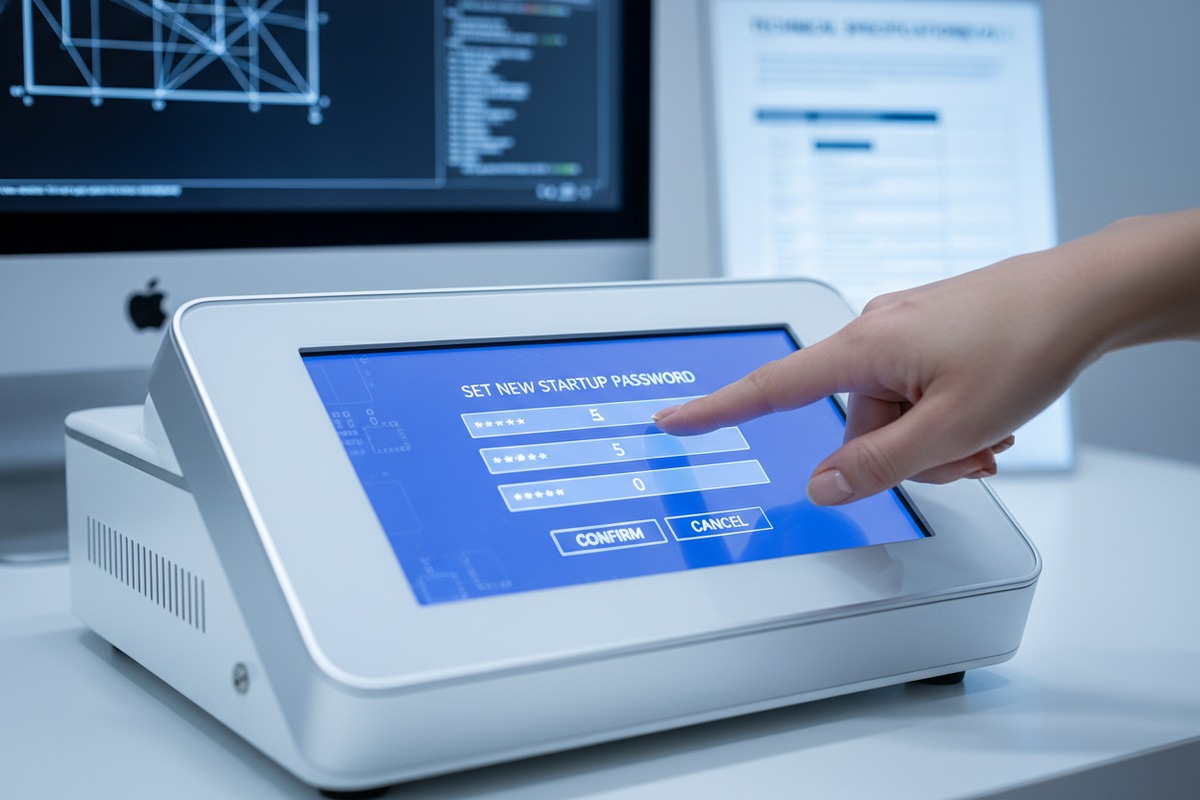
Core Technical Specifications
Provide your manufacturer with a detailed specification document covering these areas:
| Specification | Description | Recommendation |
|---|---|---|
| Password Length | Minimum and maximum characters | 8-16 characters |
| Character Types | Alphanumeric, symbols, case sensitivity | Mixed alphanumeric minimum |
| User Accounts | How many separate logins needed | 5-10 for multi-therapist spas |
| Admin Levels | Hierarchy of access rights | 2-3 levels (admin, supervisor, user) |
| Timeout Setting | Auto-lock after inactivity | 10-30 minutes |
| Failed Attempts | Lock-out after wrong entries | 3-5 attempts |
| Reset Method | How to recover forgotten passwords | Secure admin-only reset |
Password Security Requirements
For medical and aesthetic equipment 5 in healthcare-adjacent environments, security matters. Industry guidelines suggest "strengthening password protection by avoiding hard‑coded passwords and limiting public access to passwords used for technical device access." Your specifications should include:
- No default passwords that remain unchanged after setup
- No hidden backdoors that allow supplier access post-deployment
- Secure storage of password data within the device
- Encryption of password files on the device firmware
User Management Features
If your spa has multiple therapists, you need a user management system. Specify:
- Individual user accounts with unique credentials
- Activity logging to track who used the machine and when
- Permission levels for different staff roles
- Easy credential revocation when employees leave
This is similar to how healthcare facilities implement role-based access control 6. As one access control provider notes, "Role-based access control assigns specific access rights to individuals based on their roles, effectively managing entry and exit points."
Integration Considerations
If you want the pressotherapy machine's password system to work with your spa's existing business management software, specify:
- API requirements for integration
- Data format for user imports/exports
- Network connectivity needs
- Compatibility with your existing identity management system
Documentation to Request
Ask your manufacturer to provide:
- Technical specification confirmation document
- System architecture diagram showing password implementation
- User manual sections covering password management
- Testing protocols for security features
How do I negotiate custom password features as part of my private-label OEM contract?
Negotiating OEM contracts 7 involves more than just price discussions. Through years of working with international buyers, our sales team has found that the most successful partnerships happen when both parties clearly understand the scope of customization, costs, timelines, and ongoing support obligations before signing.
Negotiate custom password features by including them explicitly in your contract scope, defining IP ownership for custom firmware, specifying engineering fees and payment terms, setting clear delivery milestones, and requiring security audit rights before final acceptance and deployment of the machines.
Contract Elements to Include
Your OEM contract should have dedicated sections covering:
| Contract Element | What to Specify | Why It Matters |
|---|---|---|
| Scope of Work | Exact password features needed | Prevents scope disputes |
| IP Ownership | Who owns the custom firmware code | Protects your investment |
| Engineering Fees | Cost breakdown for development | Budget clarity |
| Payment Terms | Milestone-based payments | Risk mitigation |
| Delivery Timeline | Prototype and production dates | Schedule management |
| Testing Requirements | Acceptance criteria | Quality assurance |
| Warranty Coverage | Password feature support period | Long-term protection |
Pricing Negotiation Strategies
Custom firmware development has costs. Here is how to negotiate effectively:
Understand cost drivers: A stock model with minor branding changes takes 10-15 working days. A device requiring custom electronics or adjustments takes 20-35 working days. Completely new designs involving firmware development can extend to 45-60 working days. Time equals cost.
Leverage volume commitments: If you can commit to higher MOQs, suppliers may absorb engineering fees or offer discounts. Standard MOQs range from 1 unit for evaluation to 10+ sets for bulk orders.
Request itemized quotes: Ask for separate line items for hardware, firmware development, testing, and documentation. This helps you understand where costs come from and where negotiation room exists.
Consider phased approach: Start with a pilot order including password features, prove the concept works, then negotiate better terms for larger production runs.
IP and Security Clauses
Protect your interests with these contract clauses:
IP Ownership: Specify that all custom firmware modifications become your property or that you receive a perpetual, exclusive license for your market territory.
No Backdoors: Require written confirmation that no hidden access codes, default passwords, or remote access capabilities exist in the delivered firmware.
Security Audit Rights: Reserve the right to conduct or commission independent security testing 8 on the custom password implementation before accepting delivery.
Confidentiality: Include NDA provisions covering your password specifications and any proprietary business logic implemented in the firmware.
Milestone-Based Payment Structure
Protect your cash flow with milestone payments:
- 10-20% deposit upon contract signing
- 20-30% upon prototype approval with working password features
- 30-40% upon pre-shipment inspection and testing
- Balance after delivery and acceptance testing
This structure incentivizes the manufacturer to deliver quality work at each stage.
Managing European vs. Chinese Supplier Differences
Chinese manufacturers typically offer more OEM flexibility at lower cost. They emphasize "customizable OEM services" and factory-direct pricing. However, quality can vary.
European suppliers may have stricter adherence to medical device standards like CE certification. They might resist deep software changes due to regulatory concerns. However, they often provide better documentation and training.
Choose based on your priorities: cost efficiency and flexibility versus regulatory prestige and standardized processes.
What support can I expect from my supplier if I need to reset or manage my custom passwords?
After delivering hundreds of pressotherapy machines with custom firmware to international clients, our support team handles password reset requests regularly. The key is establishing clear support protocols before you need them, not after a crisis when a spa manager is locked out of their own equipment.
You should expect documented password recovery procedures, remote support options, firmware update capabilities for security patches, responsive technical support with defined SLAs, training materials for your staff, and a clear escalation path for urgent access issues.
Essential Support Services to Negotiate
Before finalizing your contract, secure commitments for:
| Support Service | What to Require | Typical Terms |
|---|---|---|
| Password Reset Support | Remote or on-site reset capability | 24-48 hour response |
| Firmware Updates | Security patches and bug fixes | Free for 1-2 years |
| Technical Hotline | Phone/WhatsApp/email support | Business hours minimum |
| Documentation | Admin guides and troubleshooting | Provided at delivery |
| Training | Video tutorials or remote sessions | 1-2 sessions included |
| Escalation Path | Emergency contact for critical issues | Named technical contact |
Password Reset Mechanisms
A well-designed password system should include:
Admin-level master reset: Your organization should hold a master reset capability. This should never remain solely with the supplier.
Secure verification process: Any reset request should require identity verification to prevent social engineering attacks.
Documented procedure: Clear step-by-step instructions that your IT staff or spa manager can follow.
No factory defaults: After reset, the system should require setting a new custom password, not reverting to a generic default.
Firmware Update and Security Patch Support
Technology evolves. Your support agreement should cover:
Regular security updates: At least annual review and patching of any identified vulnerabilities.
Compatibility assurance: Updates should not break your custom password features or require re-customization.
Notification process: Supplier should proactively inform you of available updates.
Update delivery method: Clear process for how updates are delivered and installed (remote, USB, technician visit).
Long-Term Maintenance Considerations
For pressotherapy machines used in busy spa environments, plan for:
Warranty period: Most manufacturers offer 1-year warranty on machines, with 3-month coverage on parts. Ensure password-related software is covered.
Post-warranty support: Negotiate extended support contracts before you need them. Pricing is usually more favorable upfront.
Spare parts availability: While passwords are software-based, ensure the control panels and display units are available as replacement parts.
Training for new staff: As your team changes, you may need additional training. Clarify if this is included or charged separately.
Building a Support Relationship
The best supplier relationships go beyond transactional. Look for suppliers who:
- Have a dedicated after-sales team
- Respond quickly to inquiries (under 2 hours is ideal)
- Proactively communicate about issues
- Show willingness to help troubleshoot remotely
- Maintain documentation and FAQ resources
As one industry analysis notes, evaluating suppliers requires assessing "technical competence, quality assurance, customization capacity, and after-sales support 9." Support capability should weigh equally with price in your supplier selection.
Conclusion
Negotiating custom startup passwords with your pressotherapy machine supplier requires preparation, clear specifications, proper contract terms, and ongoing support agreements. Start by verifying your supplier's OEM capabilities, provide detailed technical requirements, protect your IP in the contract, and secure long-term support commitments. With the right approach, you can deploy secure, branded equipment that protects your spa investment and enhances your professional image.
Footnotes
1. Explains what access control is and its importance in securing digital assets. ↩︎
2. Provides a comprehensive overview of pressotherapy machines, their benefits, and how they work. ↩︎
3. Explains what Chinese OEM suppliers are, their benefits, and their role in global manufacturing. ↩︎
4. Details the process and importance of firmware development in creating specialized software for hardware devices. ↩︎
5. Provides market analysis and growth insights for the medical aesthetic devices industry. ↩︎
6. Defines role-based access control (RBAC) and its importance in managing user permissions effectively. ↩︎
7. Explains what OEM agreements are, their key terms, and how they work to protect both parties. ↩︎
8. Describes various methods and the importance of security testing in software development to identify vulnerabilities. ↩︎
9. Highlights the importance of after-sales service for customer satisfaction, retention, and loyalty. ↩︎


 English
 Español de México
 Deutsch
 Français
 العربية
 Русский
Join the Conversation
Have a question or insight to share? We read every comment — whether you're a distributor, salon owner, or just curious about the technology. Your real-world experience helps others make better decisions. Drop your thoughts below.