
In our factory, we often see brands struggle when clients compare $200 portable gadgets to professional systems. It is a common challenge that can stall your sales and hurt your margins.
To explain the difference, focus on build quality, clinical efficacy, and long-term value. High-end machines offer multi-chamber precision and medical-grade durability, while budget models provide basic vibration. High-end units ensure safety and superior lymphatic drainage results, justifying their higher price through professional performance and reliability.
Understanding these technical and commercial nuances will help you guide your clients toward the right investment for their wellness goals.
Why should I choose high-end pressotherapy machines over budget models for my brand's reputation?
When we design our high-end production lines, we prioritize stability because we know a single equipment failure 1 can ruin your brand’s standing with a major salon chain or distributor.
Choosing high-end machines protects your brand reputation by ensuring consistent clinical results and minimal downtime. Professional units use medical-grade materials and advanced air pumps, preventing the cheap "plastic" feel and frequent malfunctions common in budget models, thus building long-term client trust.
The Impact of Quality on Brand Perception
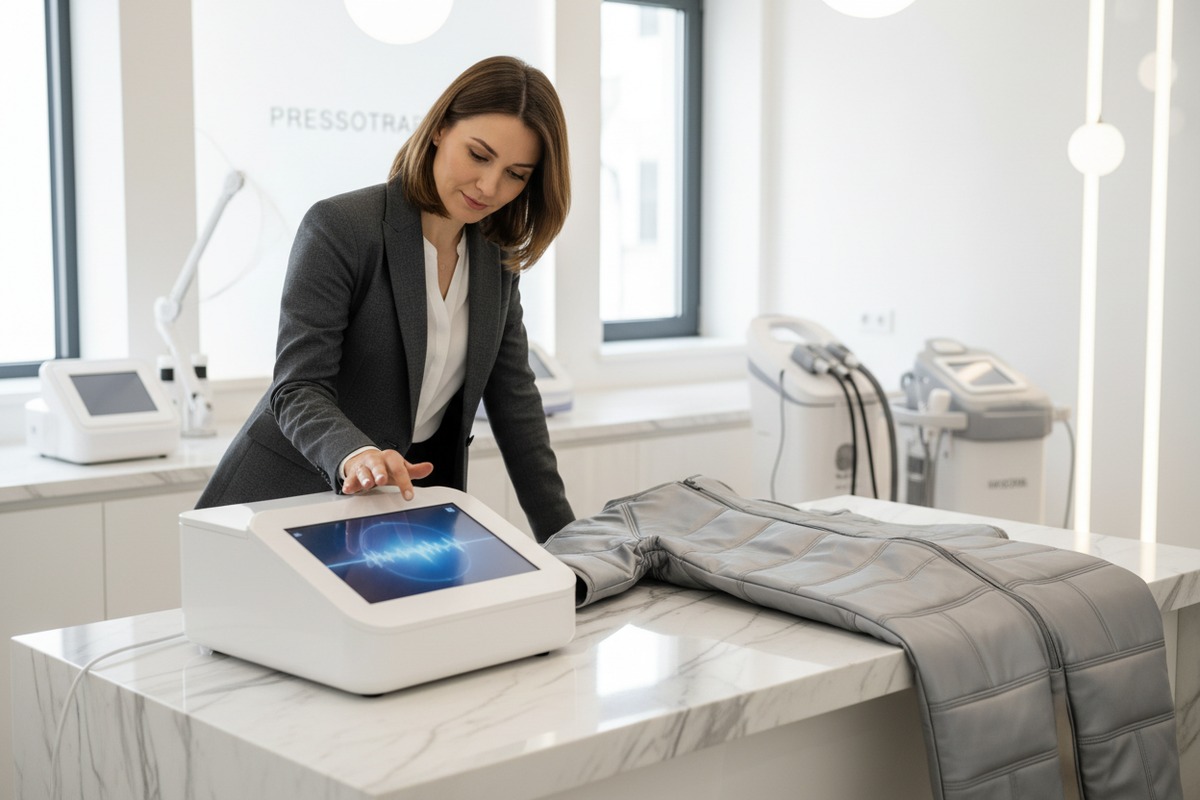
Your brand is only as good as the last machine you sold. In our experience exporting to the US and Europe, we have found that "budget" machines often lead to high return rates. When a machine breaks after three months, the client blames your brand, not the factory. High-end machines utilize premium components that feel substantial. A sleek, matte white tabletop unit with a sloped interface suggests professional authority. This aesthetic value translates to perceived expertise in the eyes of the end-user.
Technical Reliability and Safety
Safety is the cornerstone of any beauty brand. High-end machines often carry certifications like CE or FDA 2, which budget models usually lack. Our engineering team ensures that every valve and hose can withstand thousands of cycles. Budget models often use thin, single-layer cuffs that can leak or burst under pressure. If a client experiences a suit failure during a treatment, it creates a negative association with your business.
Comparison of Brand Impact Factors
| Feature | Budget Models | High-End Professional |
|---|---|---|
| Material Quality | Thin nylon, basic plastic | Double-layered elastic, medical-grade TPU 3 |
| Return Rates | High (5-15%) | Very Low (<1%) |
| Client Perception | "Toy-like" or temporary | Clinical, professional equipment |
| Safety Certifications | Often missing | CE, ISO, or FDA compliant |
When we calibrate the air pressure in our premium units, we aim for a "gradient" effect that budget machines simply cannot replicate due to their hardware limitations.
Communicate superior results by highlighting the number of air chambers and pressure precision. Premium machines use 20 to 24 chambers for targeted drainage, whereas budget units have fewer. This leads to faster reduction in swelling, better cellulite treatment, and a more comfortable, effective therapeutic experience.

The Science of Air Chambers
The secret to effective pressotherapy lies in the number of chambers. In our workshop, we build suits with up to 24 independent air bags. This allows for "peristaltic" movement, mimicking a real manual massage. peristaltic movement 4 Budget machines usually have 4 to 8 chambers. With fewer chambers, the air pressure is "all or nothing," which can be uncomfortable and less effective for moving lymph fluid.
Precision Pressure and Customization
Premium machines allow the operator to adjust the pressure in 1mmHg increments. This level of control is vital for clients with sensitive conditions like mild lymphedema 5. Budget machines often have simple "Low, Medium, High" settings. We have found that price-conscious clients are often willing to pay more once they understand that a premium machine can treat more conditions effectively.
Clinical Capability Comparison
| Capability | Entry-Level Unit | High-End System |
|---|---|---|
| Chamber Count | 4 – 8 Chambers | 16 – 24 Chambers |
| Treatment Modes | 1 – 2 basic modes | 5+ specialized programs |
| Pressure Range | Fixed or 3-step | Fully adjustable (up to 0.25+ bar) |
| Therapy Goal | Relaxation only | Lymph drainage, cellulite, slimming |
Explaining ROI to the Client
You should show your clients that a professional machine pays for itself. If a session costs $100, a high-end machine is paid off in 20 sessions. Because the results are better, clients will come back more often. A budget machine might save money today, but if the client doesn't see results, they won't return for a second session.
What are the key durability differences I should highlight when comparing mid-to-high-end equipment?
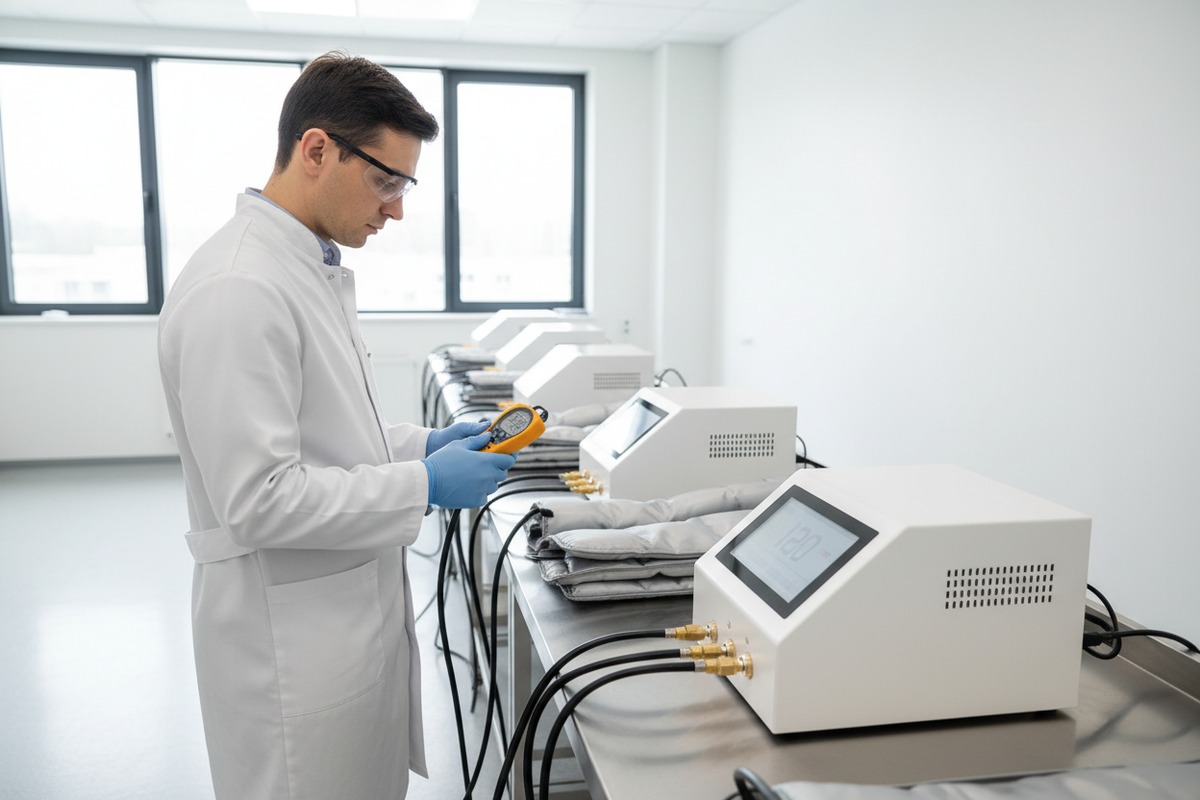
In our factory's testing lab, we run our compressors for 500 hours straight to ensure they don't lose power, a standard budget manufacturers rarely follow.
Highlight durability by focusing on the compressor lifespan, the quality of the suit zippers, and the internal air tubing. High-end machines use heavy-duty pumps and reinforced, double-layer suits that withstand daily back-to-back salon use, whereas budget models often fail under high-frequency operation.

The Heart of the Machine: The Compressor
The compressor is the most expensive and important part of the system. In our mid-to-high-end models, we use industrial-grade pumps designed for hours of continuous work. Budget machines use small, lightweight pumps that overheat quickly. If a salon does six treatments a day, a budget pump will likely fail within months.
Suit Construction and Materials
We use medical-grade TPU and reinforced stitching for our suits. We know that the zippers are the first thing to break on a cheap suit. Our suits are designed to be easily cleaned and sanitized between clients. Budget suits are often made of thin nylon that absorbs sweat and odors, making them unhygienic for professional use over time.
Durability Breakdown
| Component | Budget Components | Premium Components |
|---|---|---|
| Compressor Life | 200 – 500 hours | 2,000 – 5,000+ hours |
| Suit Fabric | Single-layer nylon | Double-layer anti-bacterial TPU |
| Connectors | Plastic push-fits | Secure, locking metal or heavy-duty resin |
| Cooling System | None or basic fan | Dedicated heat sinks and ventilation |
Long-Term Operational Costs
Explain to your clients that the "total cost of ownership" is lower for high-end machines. While the upfront price is higher, they won't spend money on replacement suits or new units every year. High-end machines also come with better warranties and support, which is critical for a business that relies on its equipment to generate revenue.
How can I use custom branding to justify the higher price point of my pressotherapy equipment?
At KMSLASER, we offer OEM services 6 because we see how a custom-branded interface and specialized housing allow our partners to charge a significant premium in their local markets.
Custom branding justifies a higher price by transforming a generic machine into a unique, proprietary solution. By adding your logo, custom software colors, and unique suit designs, you move away from price wars and offer an "exclusive" high-end experience that competitors cannot easily match.

Moving Away from Commodity Pricing
When you sell a generic white box, the client will search for the lowest price on Alibaba. When you sell a branded system with a custom-designed user interface, the client compares the value of your brand. In our Guangzhou facility, we help clients create custom start-up screens. This makes the machine feel like a bespoke medical device rather than a mass-produced consumer product.
Adding Value Through Private Labeling
We can customize the packaging and the exterior of the control unit. A matte finish with your logo in silver or gold immediately signals "high-end." You can also request specific features, such as integrated Infrared or EMS, that are not available in standard budget models. These "add-on" technologies provide a clear reason for the higher price tag.
The Power of Exclusive Features
If your machine has a specific "Slimming Mode" that you helped develop, you are no longer just selling a machine. You are selling a specialized treatment protocol. This exclusivity is a powerful sales tool. Clients are willing to pay for expertise and a unique system that their competitors down the street don't have.
Branding Value Comparison
- Generic Model: Low trust, easy to price-shop, perceived as "cheap Chinese import."
- Custom Branded: High trust, unique market position, perceived as "proprietary technology."
Professional Packaging and Support
Don't forget the unboxing experience. High-end machines come in durable, branded flight cases or reinforced boxes. This protects the investment and makes a great first impression. Our service team supports this by providing branded manuals and marketing materials that match your new, high-end identity.
Conclusion
Distinguishing between high-end and budget pressotherapy machines requires focusing on durability, clinical precision, and brand value. By highlighting these factors, you empower your clients to make smart, profitable investments.
Footnotes
1. This article discusses the costs and consequences of neglecting maintenance and equipment failure, including operational disruption, injuries, and reputational damage. ↩︎
2. This article explains the importance of CE Marking and FDA approval for medical devices, ensuring safety, quality, and market access. ↩︎
3. This article details the properties and applications of thermoplastic polyurethane (TPU) in healthcare, including its mechanical properties, durability, and chemical resistance. ↩︎
4. Describes the physiological mechanism of peristalsis as it relates to lymphatic fluid circulation. ↩︎
5. Offers details about lymphedema, a condition often addressed by pressotherapy treatments. ↩︎
6. Defines OEM (Original Equipment Manufacturer) services in the context of product branding and manufacturing. ↩︎

 English
  Español de México
  Deutsch
  Français
  العربية
  Русский