
In our years of exporting aesthetic equipment to the US and Europe, we have seen how critical verified feedback is for making safe purchasing decisions third-party B2B platforms 1. Sifting through supplier reviews is often the only way to distinguish between a legitimate factory capable of meeting high production standards and a trading company with limited quality control. ISO 9001 quality 2 When you look at new regions like South America, the lack of standardized review platforms can make this process even more challenging.
To evaluate supplier reviews effectively, you must cross-reference buyer profiles on third-party B2B platforms with their professional LinkedIn presence to confirm they are legitimate clinics or distributors. Look for specific technical mentions regarding pressure consistency (mmHg accuracy) and chamber durability rather than generic praise, and prioritize detailed feedback about customs handling and after-sales engineering support to validate logistical and OEM capabilities.
Below, we break down the specific signals and red flags you need to watch for to ensure your supply chain remains secure and your product quality stays high.
How do I verify if the reviews for South American pressotherapy machine suppliers are actually from professional B2B buyers?
When we analyze market feedback to improve our own service protocols, we often notice a distinct difference between professional procurement language and consumer noise pressure consistency (mmHg accuracy) 3. It is easy for suppliers to pad their ratings with generic comments, but professional buyers leave clues that reveal their identity and the true nature of the transaction.
You can verify review authenticity by checking for specific industry terminology such as “ROI,” “patient throughput,” or “clinical outcomes” which are rarely used by retail consumers. Additionally, cross-reference the reviewer’s company name or username with local business registries or aesthetic industry directories to confirm they are an operating clinic or licensed distributor.
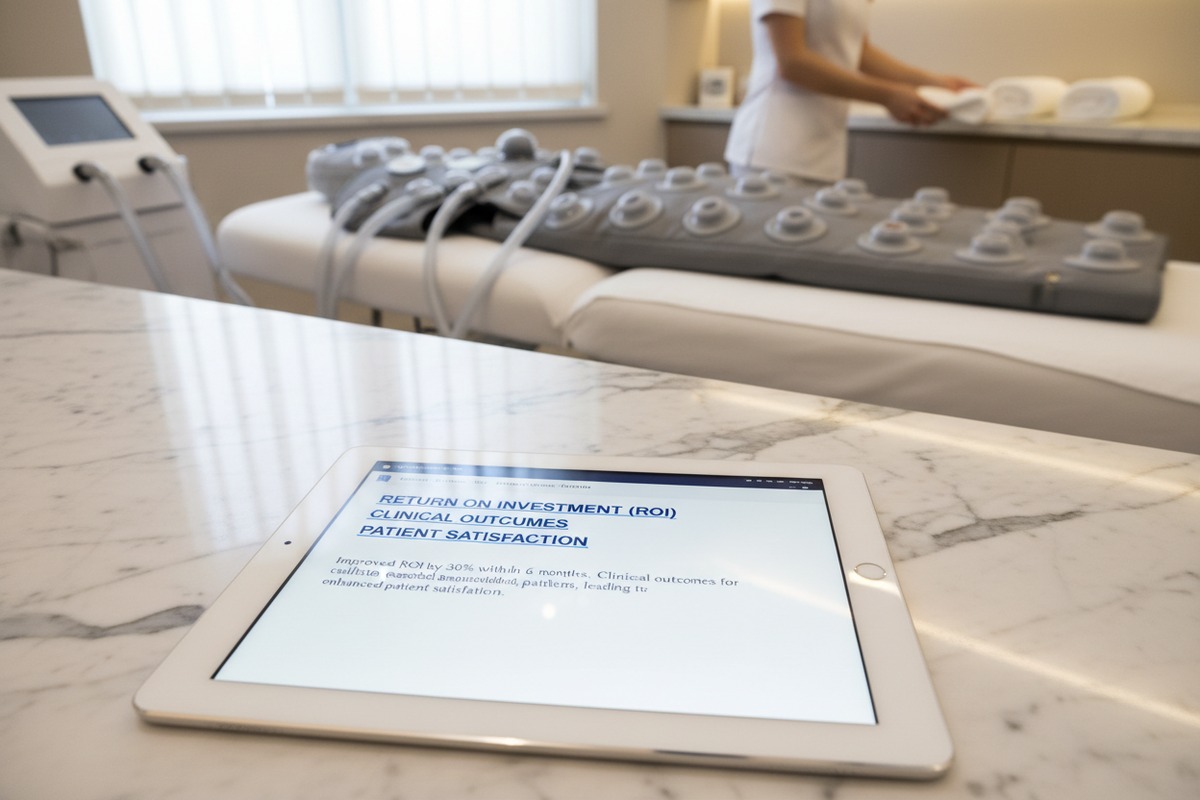
Distinguishing Professional Feedback from Noise
When sourcing pressotherapy machines from regions like South America, you might encounter a mix of reviews on local platforms (like Mercado Libre or regional trade directories) and international export hubs durable TPU 4. The key is to filter out "noise"—reviews that say "good product" or "fast shipping" without context. Professional B2B buyers, like yourself, are concerned with operational stability and patient safety.
In our experience, a genuine B2B review often details the integration of the machine into a business workflow. For example, a spa owner will mention how the 12-chamber suit accommodates different client body types or how the machine performs after six hours of continuous use. If the reviews lack this operational context, they may be fake or from home-users who do not stress-test the equipment to professional standards.
Validating the Source
Since you are looking for a supplier who can handle the demands of a US-based distribution model, you need to ensure the reviews come from businesses with similar scale. South American trade data can sometimes be opaque, so you must rely on the content of the review to validate the source.
Look for these specific identifiers in the feedback:
- Volume References: Mentions of "bulk orders," "container loads," or "restocking spare parts."
- Technical Specificity: References to specific certifications valid in the region (like ANVISA in Brazil 5 or COFEPRIS in Mexico) which professional buyers must navigate.
- Problem Resolution: A professional buyer often writes reviews about how a problem was fixed. A 5-star review that says "The screen broke, but they sent a new PCB in 3 days" is more valuable than a generic perfect score.
H3 – Indicators of Professional vs. Retail Reviews
Use the following comparison to quickly categorize the reviews you find.
| Feature | Professional B2B Buyer Review | Retail/Consumer Review |
|---|---|---|
| Focus | Durability, ROI, patient comfort, service uptime. | "It feels good," "Package arrived nice," "Easy to use." |
| Terminology | Lymphatic drainage 6, mmHg, compression modes, PCB, OEM. | Massage, relaxing, tight, pressure. |
| Pain Points | Customs delays, spare part availability, software glitches. | Shipping cost, box damage, hard to put on. |
| Frequency | Often posted after months of use or upon reordering. | Usually posted immediately after receipt. |
By applying these filters, you ensure that the social proof you are relying on reflects the reality of running a beauty business, not just a one-off consumer purchase.
What specific feedback should I look for to ensure the machines meet my brand's high-end quality standards?
Our engineering team spends weeks testing air pumps and sleeve materials because we know that a single leak can ruin a clinic’s reputation. When reading reviews for other suppliers, you must look beyond the aesthetic appeal of the machine and hunt for comments that expose the hidden build quality of internal components.
Prioritize feedback that explicitly discusses the longevity of the air chambers and connection hoses, as these are the most common failure points in pressotherapy systems. Look for reviews mentioning “pressure stability” over time and the material quality of the suit, specifically confirming the use of durable TPU instead of cheaper PVC.

Analyzing Material Quality Feedback
The external casing of a pressotherapy machine, like the sleek white tabletop units we see in the market, often hides the reality of what is inside. When evaluating South American suppliers, or any international manufacturer, you need to find reviews that talk about the "consumables"—the suits and hoses.
High-end brands require High-Density TPU (Thermoplastic Polyurethane) for the air chambers. Low-end suppliers use PVC, which cracks after a few months of heavy folding and cleaning. Scan reviews for keywords like "leaking," "crack," "stiff," or "smell." A review stating that "the suit material hardened after three months" is a major red flag for a PVC suit that will not meet your US quality standards.
Pressure Accuracy and Pump Performance
In a professional setting, the machine must deliver the exact pressure set on the digital interface. If the screen says 120 mmHg but the machine only delivers 80 mmHg, the treatment is ineffective.
Reviews rarely measure this scientifically, but professional buyers will leave qualitative clues. Look for comments like:
- "Clients complain the pressure is too weak even on max settings."
- "The compression rhythm is uneven."
- "One chamber inflates faster than the others."
These comments suggest that the supplier is using a single, underpowered air pump to drive multiple chambers, rather than the dedicated high-flow pumps required for professional 12-channel systems.
H3 – Critical Quality Metrics to Verify in Reviews
To ensure the product fits a mid-to-high-end portfolio, use this checklist when scanning customer feedback.
| Component | What to Look For in Reviews | The "Red Flag" Keyword |
|---|---|---|
| Air Pump | Quiet operation, consistent power, fast inflation. | Noisy, weak, overheating, vibration. |
| Chambers/Suit | Flexible, easy to clean, sturdy zippers/velcro. | Ripped, leaking, plastic smell, stiff. |
| Control Unit | Responsive touch screen, saves settings, no freezing. | Glitchy, unresponsive, reset error, bad screen. |
| Connections | Secure locking mechanisms, durable tubing. | Popped off, loose air hose, broken clip. |
H3 – The Importance of "inside" Photos
Sometimes, the most valuable review is not the text, but the user-uploaded photo. If a buyer posts a photo of the machine open for repair, look closely. Are the wires organized? Is the pump branded? Professional buyers often post these "autopsy" photos when a machine fails. Finding a review that shows a messy internal layout is a clear sign that the supplier lacks standardized assembly lines, regardless of where they are located.
How can I tell if a supplier's claims about their logistics and delivery times are backed by real customer experiences?
We understand that a delayed shipment means lost sales seasons and frustrated distributors waiting on inventory. Logistics from South America to the US involves different shipping routes and customs procedures than the China-US lanes we usually navigate, making it essential to verify that a supplier’s promised lead times align with reality.
You can validate logistics claims by looking for reviews that mention “door-to-door” service success and specific transit durations that match standard freight schedules. Be wary of suppliers with reviews consistently citing “customs holds” or “unexpected fees,” which indicate a lack of experience in preparing proper export documentation for medical-grade devices.

Verifying Export Capability
Shipping a beauty machine is not the same as shipping a t-shirt. Pressotherapy machines often fall under medical device categories 7 (depending on the specific FDA class in the US or local regulations). A supplier in South America might claim "fast delivery," but do they understand the paperwork?
Scrutinize reviews for mentions of paperwork errors. A review that says, "Great machine, but stuck in Miami customs for 3 weeks because of missing commercial invoice" tells you the supplier does not have a robust logistics department. Conversely, look for praise regarding "DDP" (Delivered Duty Paid) or "smooth clearance." This confirms the supplier takes responsibility for the logistics chain, which is crucial for your business model of importing for distribution. DDP (Delivered Duty Paid) 8
Packaging Integrity in Transit
The journey from South America to the US can be rough. Ground transport infrastructure varies, and sea freight exposes goods to humidity.
Reviews are the best place to check for packaging standards.
- Positive Signs: "Arrived on a pallet," "Double-boxed," "Wooden crate protection," "Foam inserts were perfect."
- Negative Signs: "Box arrived crushed," "Screen cracked upon arrival," "Water damage."
If a supplier skimps on packaging to save weight or money, it will cost you significantly in returns and damaged reputation.
H3 – Decoding Logistics Terminology in Reviews
When buyers leave feedback about shipping, they often use shorthand. Here is how to interpret common phrases found in logistics reviews.
| Review Phrase | What It Really Means for You |
|---|---|
| "Items arrived earlier than expected." | Supplier likely has stock on hand or overestimates lead times to be safe (Good). |
| "Tracking number didn't work for days." | Supplier created the label but didn't hand over the goods immediately (Potential delay). |
| "Had to pay extra fees to the driver." | Supplier used the wrong Incoterm (e.g., DAP instead of DDP) or didn't disclose duties (Bad). |
| "Documentation was provided immediately." | Supplier is organized and understands export compliance (Excellent). |
By focusing on these logistical details in reviews, you can filter out suppliers who might make a great product but cannot get it to your warehouse reliably.
Which red flags in reviews should I prioritize when evaluating a manufacturer's ability to handle my custom OEM requirements?
When we collaborate with clients on private-label projects, we know that success depends on clear communication and engineering flexibility, not just printing a logo. Assessing a South American supplier for OEM work requires digging into reviews for signs of rigidity or misinterpretation, which can be fatal for custom product development.
Prioritize red flags related to “communication gaps,” “ignored specifications,” or “branding errors” in reviews, as these indicate a rigid production line unable to handle customization. Additionally, watch for complaints about inconsistent color matching or software language errors, which suggest the supplier lacks the engineering depth required for true OEM modifications.
Identifying Communication Breakdowns
For a Purchasing Manager like yourself, the biggest pain point is often a supplier who says "yes" to everything but delivers something else. In reviews, this manifests as frustration over details.
Look for patterns in low-to-mid rating reviews:
- "Sent the wrong plug type despite email confirmation."
- "Logo was printed upside down."
- "Asked for a custom color, they sent standard white."
These are not just small mistakes; they are systemic failures in the "Order to Production" transfer process. If a supplier cannot get a standard order right, they will definitely fail at complex OEM requests like changing the chassis shape or modifying the software interface 9.
Software and Interface Customization
Pressotherapy machines today are driven by software. You might want to customize the interface language or add your brand's boot-up screen.
Check reviews for mentions of the user interface (UI).
- Red Flags: "English translation is bad," "Menu is confusing," "Cannot change default settings."
- Good Signs: "Software is intuitive," "They helped us add our logo to the screen."
If reviews complain about "Engrish" or poor Spanish-to-English translations in the manual or interface, it means the supplier does not have a dedicated software team or a strong grasp of the US market. This is a critical barrier for OEM projects where you need the machine to look and feel like a native US product.
H3 – Red Flags for OEM Capabilities
This table summarizes the specific review complaints that should make you walk away if you are planning a private label project.
| Category | The Red Flag Complaint | Implication for OEM |
|---|---|---|
| Flexibility | "Refused to change the package size." | They are likely a reseller or have a rigid factory line; cannot do custom housing. |
| Attention to Detail | "Logo peeled off after a week." | Poor quality control on customization processes; bad for brand image. |
| Engineering | "Machine overheats after 20 mins." | Basic thermal design is flawed; they cannot re-engineer it for your specs. |
| Response Time | "Took 5 days to reply to technical questions." | Project management will be a nightmare during the development phase. |
Evaluating these aspects ensures you partner with a manufacturer who views you as a brand partner, not just a transactional buyer.
Conclusion
Sourcing professional pressotherapy machines requires a detective's eye, whether dealing with partners in South America, China, or Europe. By rigorously vetting reviews for professional buyer signals, scrutinizing technical feedback on components like air pumps and TPU suits, and validating logistics performance, you protect your brand from costly errors. Remember, the goal is to find a partner who demonstrates transparency and engineering competence, ensuring your inventory arrives on time and meets the high standards your US clients expect.
Footnotes
1. Defines B2B marketplaces as third-party digital platforms facilitating commercial exchanges between businesses. ↩︎
2. Replaced 403 with working authoritative ISO 9001 page. Anchor adjusted for specificity. ↩︎
3. Provides a definition and medical context for mmHg as a unit of pressure measurement. ↩︎
4. Compares TPU and PVC, highlighting TPU’s superior durability, flexibility, and biocompatibility for medical use. ↩︎
5. Official website of the Brazilian Health Regulatory Agency, responsible for medical device regulation. ↩︎
6. Explains lymphatic drainage massage, its purpose, and benefits for fluid movement. ↩︎
7. Explains FDA’s risk-based classification system for medical devices (Class I, II, III). ↩︎
8. Defines DDP Incoterm, where the seller assumes all responsibilities and costs until delivery. ↩︎
9. Defines a user interface (UI) as the means through which a user interacts with software or a device. ↩︎


 English
 Español de México
 Deutsch
 Français
 العربية
 Русский
Join the Conversation
Have a question or insight to share? We read every comment — whether you're a distributor, salon owner, or just curious about the technology. Your real-world experience helps others make better decisions. Drop your thoughts below.